


All posts by: UMBC News Staff


Staying in the Loop – A. Jay Nwachu ’03, Psychology

We are proud to announce Staying in the Loop, a new post series from the Chapter of Black and Latino Alumni (CBLA) that seeks to create connections between alumni, faculty, staff, and other supporters of UMBC and CBLA. Click here for more information about CBLA.A. Jay Nwachu_CBLA
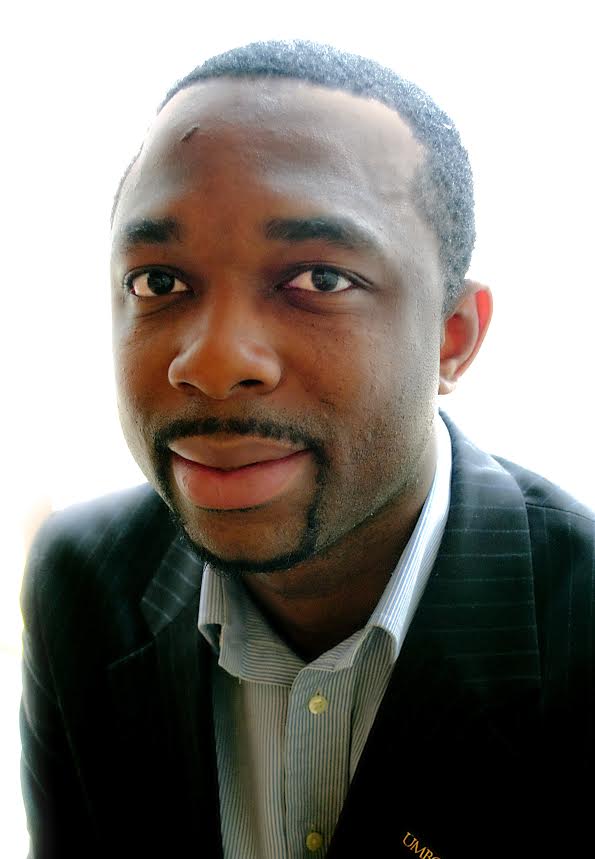
Name: A. Jay Nwachu
Major: Psychology
Grad year: 2003

Q: What do/did you enjoy most about being a part of the UMBC community?

The academically empowering environment as well as the diversity of the student body provided an opportunity for personal, academic and professional growth.

Q: UMBC is approaching its 50th anniversary (2016) and certainly the campus has come a long way – from a small commuter school to the nation’s #1 “up-and-coming” university – in such a relatively short period of time. What, in your opinion, makes UMBC so unique/special? What’s your most memorable experience/moment at UMBC?

UMBC is rather unique given its rapid growth, not necessarily in numbers, but in its ability to compete with the nation’s best institutions in such a short period of time. My most memorable experience, out of many great experiences, was having the opportunity to partner with 2 of my best friends today to address the potential gaps in services that would result when the university administration decided to shut down the Office of Multicultural Affairs which served as an informal home for many on and off campus students. We were able to work with the administration to keep the office open but change its focus to serve the growing diversity at the university with more structured programming. The office remained open and was renamed the Office of Social Justice and Diversity Initiatives and has since been renamed to The Mosaic Center.

Q: If you could meet one person in the world who would it be and why?

Not anyone in particular. I believe that those that I cross paths with at any given space and time can contribute to my life in some capacity. I would rather live life with the anticipation of who next I can share my life with versus wishing to meet a particular person.

Q: What is the best advice you’ve received?

You can’t make everyone happy, just focus on making God happy.

Q: What is one book you think everyone should read?

This is a tough question……

Q: What is one thing you can’t live without?

Airplanes….the ability to travel.

Staying in the Loop – A. Jay Nwachu '03, Psychology

We are proud to announce Staying in the Loop, a new post series from the Chapter of Black and Latino Alumni (CBLA) that seeks to create connections between alumni, faculty, staff, and other supporters of UMBC and CBLA. Click here for more information about CBLA.A. Jay Nwachu_CBLA
Name: A. Jay Nwachu
Major: Psychology
Grad year: 2003
Q: What do/did you enjoy most about being a part of the UMBC community?
The academically empowering environment as well as the diversity of the student body provided an opportunity for personal, academic and professional growth.
Q: UMBC is approaching its 50th anniversary (2016) and certainly the campus has come a long way – from a small commuter school to the nation’s #1 “up-and-coming” university – in such a relatively short period of time. What, in your opinion, makes UMBC so unique/special? What’s your most memorable experience/moment at UMBC?
UMBC is rather unique given its rapid growth, not necessarily in numbers, but in its ability to compete with the nation’s best institutions in such a short period of time. My most memorable experience, out of many great experiences, was having the opportunity to partner with 2 of my best friends today to address the potential gaps in services that would result when the university administration decided to shut down the Office of Multicultural Affairs which served as an informal home for many on and off campus students. We were able to work with the administration to keep the office open but change its focus to serve the growing diversity at the university with more structured programming. The office remained open and was renamed the Office of Social Justice and Diversity Initiatives and has since been renamed to The Mosaic Center.
Q: If you could meet one person in the world who would it be and why?
Not anyone in particular. I believe that those that I cross paths with at any given space and time can contribute to my life in some capacity. I would rather live life with the anticipation of who next I can share my life with versus wishing to meet a particular person.
Q: What is the best advice you’ve received?
You can’t make everyone happy, just focus on making God happy.
Q: What is one book you think everyone should read?
This is a tough question……
Q: What is one thing you can’t live without?
Airplanes….the ability to travel.

Professional Development Day 2015 (4/7)

facstaff5HRSave the date!  And please avoid scheduling other campus events on this date.

Our 2015 Professional Development Day for faculty and staff will be on Tuesday, April 7th.

Organizational Consultant and Executive Coach, Ken Buch will be presenting a half-day session based on the latest brain science: ‘Meet Your Brain: Does it Serve You or Do You Serve It?’

In the world of work today where we need to do more with less, having a basic understanding of your neuroleadership preferences is essential to being both efficient and effective.  Regardless of your position, age, gender or tenure, learning how to take charge of your brain and create your success is a powerful outcome you won’t want to miss.

Basic brain functions are influencing your actions every second of the day.  In certain circumstances your brain takes charge of you quite masterfully and tricks you to do its bidding.  Learning how to take control of it can lead to achieving your desired results and can elevate morale, productivity and collaboration when in the classroom, leading others, influencing outcomes, managing projects and building stronger relationships.

You will leave this session knowing your brain more intimately than you thought possible.  Whether working by yourself or with others, these strategies will create optimum conditions for you to influence positive behavioral change and achieve desired results!

This half-day session will be offered twice.  The morning session runs from 8:15 a.m. – 12 noon.  The afternoon session runs from 12:45 p.m. – 4:30 p.m.

Social Sciences Forum: Data and Discipline: Sampling the Science of Economic Turnaround (2/12)

Peter Blair HenryOn Thursday, February 12 at 4:00 p.m., Peter Blair Henry, Dean of New York University’s Stern School of Business, will present the Social Sciences Forum “Data and Discipline: Sampling the Science of Economic Turnaround.” The event will be held in the Albin O. Kuhn Library Gallery.

The mathematical underpinnings of the “dismal science” can yield surprising results with the power to impact millions of lives around the globe. Using examples from his book, Turnaround: Third World Lessons for First World Growth, Peter Blair Henry discusses how scientific analysis of economic policy experiments can determine which policies, implemented under what conditions, create the most value for the greatest number of people. For more information, click here.

Sponsored by the Department of Economics.

Social Sciences Forum: The Stronghold: How Republicans Captured Congress but Surrendered the White House (2/11)

The StrongholdOn Wednesday, February 11, Political Science Professor and Chair Thomas Schaller will present the Social Sciences Forum “The Stronghold: How Republicans Captured Congress but Surrendered the White House,” at 4:30 p.m. in the University Center Room 310.

Once the party of presidents, the GOP in recent elections has failed to pull together convincing national majorities. Republicans have lost four of the last six presidential races and lost the popular vote in five of the last six. Newt Gingrich’s “Contract with America” set in motion a vicious cycle, Schaller contends: as the GOP became more conservative, it became more Congress-centered, and as its congressional wing grew more powerful, the party grew more conservative. This dangerous loop, unless broken, may signal the future of increasing radicalization, dependency on a shrinking pool of voters, and less viability as a true national party. In this talk, UMBC Political Science Professor and Chair Thomas Schaller discusses his new book, The Stronghold: How Republicans Captured Congress but Surrendered the White House. Schaller is also author of Whistling Past Dixie: How Democrats Can Win Without The South. For more information, click here.

Sponsored by the Department of Political Science.

Ari Ne’eman ’10, Political Science, Wins Inclusion Award

Alumnus Ar Ne’eman ’10, political science, received the second annual Morton E. Ruderman Award in Inclusion from the Ruderman Family Foundation. The award recognizes individuals who have made contributions to the inclusion of people with disabilities in the Jewish world and the greater public.

Ne’eman was honored for his work as the president and co-founder of the Autistic Self Advocacy Network (ASAN) and member of the President’s National Council on Disability. He founded ASAN as a freshman at UMBC and was appointed to the National Council on Disability by President Obama in 2009. “People with disabilities deserve the right to have our voices at the center of the national conversation about us,” Ne’eman said. “I believe that no conversation on autism or any disability is complete without the meaningful inclusion of those most directly impacted: people with disabilities ourselves.”

Read coverage of Ne’eman’s award below:

Autistic self-advocate and Obama appointee Ari Ne’eman wins $100,000 Ruderman prize (Haaretz)
Autism Self-Advocate Cited For Inclusion Work (The Jewish Week)

Investing in UMBC: Clolita Vitale ’75 makes planned gift

Clolita Vitale ’75, theatre, is truly a Retriever Believer. When she first walked onto UMBC’s campus in the late 1960s, she was struck by how new the university was. She even recalls walking around on plywood planks as construction was underway. But where some might have preferred an older, established school, Vitale found UMBC’s newness exciting–a promise of things to come.

Since then, Vitale has been involved with UMBC in just about every way possible. As a student, she decided to study theatre and dance. Though she would later pursue a career in law, she says her time in the performing arts program at UMBC was critically important to her. The tight-knit community and creative ingenuity of faculty and fellow students inspired and supported her, and it’s something she’ll always remember. “They helped me find my sense of self,” she says.

Later on, when she joined the staff at UMBC, she felt that Dr. Freeman Hrabowski and the other campus leaders were supportive. They encouraged her to get involved on campus and grow professionally. Eventually, she became an Assistant Vice President and University Counsel. “They allowed me to evolve,” Vitale says. “It didn’t seem like I was in the same place standing still for 30 years.”

Even after moving on to other career opportunities, Vitale has stayed deeply connected to the campus community. She’s taken UMBC students under her wing, helping them get their start in life. And she’s supported the university with gifts to the arts (including naming two seats in the new PAHB theatre) and now with the decision to make a planned gift to the university.

That pioneering spirit that is so prevalent in UMBC’s earliest faculty and alumni is clearly present in Vitale. She invested in the place that invested in her, and she’s been proud to watch UMBC grow into a nationally recognized research university. “I feel like someone who went from the horse and buggy to the space age,” she says.

Vitale says she felt it important to give early on, even when she could only make smaller donations. “I knew that even if I only had $100, it was important to contribute,” she says. “I knew it would go to something really needed.”

There’s no doubt that Vitale’s passion for UMBC is real–her voice is full of emotion as she reflects on everything she’s experienced at the university. And now, more than 40 years after she first came to campus, Vitale continues to support UMBC. In fact, as she looked forward to retirement, she knew there was no question that she would include UMBC in her will. “You can’t take a place you’ve been associated with for so long and just forget about it,” she explains. She sees her planned gift as an opportunity to leave a legacy at the place that has so deeply impacted her life. “It means something to me,” she says. “I want to be a piece of that.”

Learn more about making a planned gift to UMBC.


UMBC’s Division of Professional Studies Appoints Two New Graduate Program Directors

The Division of Professional Studies at UMBC has appointed Thomas Moore to lead Systems Engineering Graduate Programs and Krystl Haerian to lead the Health Information Technology Master’s Program (umbc/hit). Both appointees bring with them extensive industry experience, aligning with the Division’s mission to deliver relevant graduate programs that are responsive to the needs of working professionals.

TomMoore-8242Systems Engineering Master’s and Certificate Programs will benefit from Moore’s 25 years of experience designing, developing and testing products. Most recently, Moore served as the Director of Systems Engineering and Logistics for Northrop Grumman Electronic Systems. Moore received his B.S., M.S. and Ph.D. degrees in Electrical Engineering from Northwestern University. Moore also serves as UMBC’s Assistant Graduate Program Director for the Engineering Management program. See Moore’s Full biography here.

KrystlHaerian2Haerian’s more than 12 years of medical, informatics and public health experience will be beneficial for the Health Information Technology Master’s program. Among various fellowship experiences, Haerian served as a Commissioner’s Fellow at the Food and Drug Administration’s Center for Tobacco Products, where she employed informatics methods that support the development of policies and regulations intended to decrease morbidity and mortality from tobacco products. Haerian received her B.S. in Biological Sciences from UMBC, a M.S. in Biotechnology from Johns Hopkins University, a M.S. in Biomedical Informatics at Columbia University and a M.D. from the University Of Maryland. See Haerian’s full biography here.

Individuals interested in learning more about Systems Engineering and Health Information Technology Graduate programs at UMBC are encouraged to attend the Professional Programs Open House on April 29, 2015. Moore and Haerian will be at the event to discuss the programs and meet prospective students. Register for the Open House here.

Film/Discussion – Reflections on Indian Manhood (2/10)

Join the Asian Studies Program for a viewing of Mardistan (Macholand): Reflections on Indian Manhood and discussion with Dr. Harjant Gill, a professor from Towson University. The film and discussion will be at the Albin O. Kuhn Library Gallery from 4:00 p.m.- 5.30 p.m. on Tuesday, February 10, 2015.

Mardistan (Macholand) is an exploration of Indian manhood articulated through the voices of four men from different generations and backgrounds. A middle-aged writer trying to make sense of the physical and sexual abuse he witnessed studying in an elite military academy, a Sikh father of twin daughters resisting the pressure to produce a son, a young 20-year-old college student looking for a girlfriend with whom he can lose his
virginity, and a working-class gay activist coming out to his wife after twenty years of marriage. Together, their stories make up different dimensions of what
it means to be a man in India today. Mardistan (Macholand) starts a conversation on critical issues including patriarchy, son preference, sexual violence and homophobia in a nation increasingly defined by social inequalities.

Click here for more information.

Humanities Forum: Panel Discussion on “Slavery by Another Name” (2/9)

On Monday, February 9, Dr. Spencer Crew presents the Humanities Forum “Panel Discussion on ‘Slavery by Another Name.” The event will take place at 4:30 p.m. in the Albin O. Kuhn Library Gallery.

Slavery By Another NameThe film Slavery By Another Name explores a reality that often went unacknowledged: a huge system of forced, unpaid labor, mostly affecting Southern black men, that lasted from the 1800s until World War II. Based on the Pulitzer-Prize-winning book by Douglas Blackmon, the film Slavery By Another Name tells the story of black men who were forced to work as convict laborers in factories, mines, and farms. These men were bought, sold, and abused by law enforcement officers who cited regulations against vagrancy, loitering, or walking near railroads. These ‘black codes’ were laws that essentially re-enslaved blacks; many former slaves and their descendants were not free in reality. These laws existed despite the promise of the Emancipation Proclamation, the Thirteenth Amendment, and the Confederate defeat in the Civil War. Although Congress enacted the Fourteenth Amendment (enshrining birthright citizenship and equal protection of the law) in 1868 and the Fifteenth Amendment (guaranteeing the right to vote for all men regardless of race) in 1870, Southern communities ignored these federal mandates. The film includes interviews with the descendants of victims and perpetrators. Panelists will discuss the film and what it suggests about life in America today.

Dr. Spencer Crew is the Robinson Professor of American, African American, and Public History at George Mason University. He has served as president of the National Underground Railroad Freedom Center and as director of the National Museum of American History, Smithsonian Institution.

For more information, click here.

*The film Slavery By Another Name will be screened at 12 p.m. on February 2nd and 4th in the Albin O. Kuhn Library Gallery.

Sponsored by the Africana Studies Department; the Albin O. Kuhn Library and Gallery; the Dresher Center for the Humanities; and the National Endowment for the Humanities, Created Equal: America’s Civil Rights Struggle.

Film Screening: Slavery by Another Name (2/2, 2/4)

Slavery By Another NameAs part of the Humanities Forum series, on Monday, February 2 and Wednesday, February 4, there will be screenings of the film Slavery by Another Name. They will take place at noon each day in the Albin O. Kuhn Library Gallery.

Slavery by Another Name explores a reality that often went unacknowledged: a huge system of forced, unpaid labor, mostly affecting Southern black men, that lasted from the 1800s until World War II. Based on the Pulitzer-Prize-winning book by Douglas Blackmon, the film Slavery by Another Name tells the story of black men who were forced to work as convict laborers in factories, mines, and farms. These men were bought, sold, and abused by law enforcement officers who cited regulations against vagrancy, loitering, or walking near railroads. These ‘black codes’ were laws that essentially re-enslaved blacks; many former slaves and their descendants were not free in reality. These laws existed despite the promise of the Emancipation Proclamation, the Thirteenth Amendment, and the Confederate defeat in the Civil War. Although Congress enacted the Fourteenth Amendment (enshrining birthright citizenship and equal protection of the law) in 1868 and the Fifteenth Amendment (guaranteeing the right to vote for all men regardless of race) in 1870, Southern communities ignored these federal mandates. The film includes interviews with the descendants of victims and perpetrators.

On Monday, February 9, there will be a Humanities Forum Panel Discussion on this film. For more information, click here.

Robert Provine, Psychology, Responds to EDGE Annual Question

Each year, EDGE.org poses an annual question to leading scientists, philosophers, and artists to tackle some of the world’s most complex issues. The responses are featured as a collection of online essays that is later published as part of a high-profile and top-selling series of books for a general audience, and the annual event draws global news coverage.

Robert ProvineAs he has for all ten of EDGE’s events, Psychology Research Professor and Professor Emeritus Robert Provine contributed to this year’s question: “What do you think about machines that think?” In his response titled “Irrational Machines and Humans,” Provine wrote that humans should not worry about future characteristics of robots and their ability to spur a future clash with their creators.

“Humans will prevail, in part through primal, often disreputable qualities that are more associated with our downfall than salvation. Cunning, deception, revenge, suspicion, and unpredictability, befuddle less flexible and imaginative entities. Intellect isn’t everything, and the irrational is not necessarily maladaptive,” wrote Provine.

He added: “There is no indication that we will have a problem keeping our machines on a leash, even if they misbehave. We are far from building teams of swaggering, unpredictable, Machiavellian robots with an attitude problem and urge to reproduce.”

To read Provine’s complete response, along with other responses from founders of AI and robotics, Nobelists, and many others, click here. For more information on Provine’s responses to the EDGE question in previous years, click here.

On Sunday, February 1, Provine is contributing to an event at Baltimore’s American Visionary Art Museum titled “The Human Guide to Our Creative Brain.” For more information, click here.