All posts by: Tom Moore


Kuhn Library Gallery presents “They Fight with Cameras”

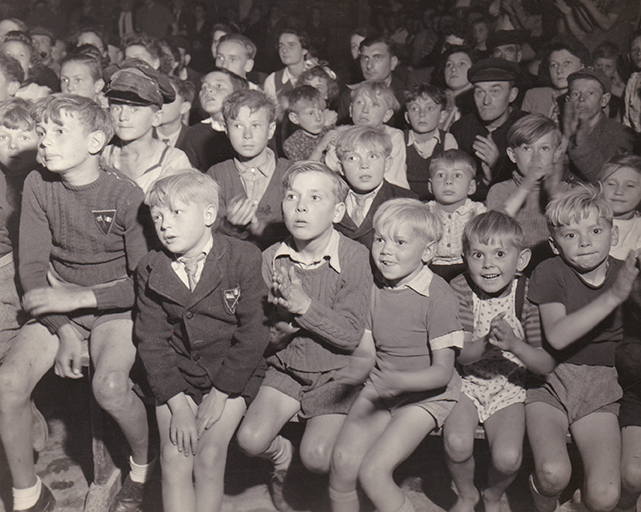
TTWC.FRENCH KIDDIESIn conjunction with the exhibition They Fight With Cameras: Walter Rosenblum in WWII from D-Day to Dachau, the Albin O. Kuhn Library Gallery presents public programs on Wednesday, November 11. A 12 pm film screening of Walter Rosenblum: In Search of Pitt Street will be followed at 6 pm by a talk given by Nina Rosenblum, film producer for Daedalus Productions, Inc.

Admission is free. Complete information is available on the Arts and Culture Calendar here.

Maurice Berger, CADVC, latest “Race Story” column in The New York Times

In the latest essay for his Race Stories column in The New York Times, published September 17, Maurice Berger, research professor at the Center for Art, Design and Visual Culture, examines the work of photographer Marion Palfi and her relatively unknown photo book, There Is No More Time: An American Tragedy. “Juxtaposing portraits,” says Berger, “Ms. Palfi’s written observations and interview excerpts, There Is No More Time chronicles the many faces and viewpoints of white supremacy in Irwinton: the obedience to God and family; the religious and pseudoscientific justifications for believing that black people were inherently inferior; the resentment of outside intervention in the South’s racial affairs; and the determination to protect the legal authority of white people.”

Read “A Meditation on Race, in Shades of White” and view the photographs at The New York Times Lens blog.

Berger’s Race Stories column, which appears monthly on The New York Times website, is “a continuing exploration of the relationship of race to photographic portrayals of race.”

Susan McCully, Theatre, Discusses her new play, Kerrmoor, with Baltimore Sun

Susan_MccullySusan McCully, Theatre, was highlighted in a September 19 article, “Women’s Voices Theater Festival aims to level the playing field,” by Tim Smith of The Baltimore Sun. Her play Kerrmoor will be premiered at the multi-city festival, running from October 29 through November 15, and will be directed by Eve Muson (Theatre) and acted by Katie Hileman (’12, Theatre). “I just decided to be brave and write about Appalachia, where I come from,” McCully explained to Smith. “It’s a place full of amazing, noble people who are all about sacrifice, and at the same time are insular and xenophobic. It’s a dangerous mix. [Kerrmoor] is an Appalachian Greek tragedy. I like to think that if William Faulkner came back as a middle-aged white lesbian who transplanted to Baltimore, he would have written this play.”

Read the article here, and read more about Kerrmoor and the festival here.

Eric Dyer, Visual Arts, at the Baltimore Museum of Art

dsc_0018-2Eric Dyer, associate professor of Visual Arts, will be among six artists featured in an exhibition at the Baltimore Museum of Art that celebrates the winners of the 2014 and 2015 Baker Artist Awards. The exhibition opens Wednesday, September 16 and closes Sunday, November 15, with an opening reception on Thursday, September 17. Professor Dyer was the recipient of the 2015 Mary Sawyer Baker Prize, which included a $25,000 cash award. Read more about the exhibition here and the Baker Awards here.

Dyer’s creations explore a variety of cyclic ideas and themes through zoetrope-like sculptures, several of which can be viewed on the Baker Awards website. During the month of July, his work was featured in Times Square in New York City, where from 11:57 until midnight his work Copenhagen Cycles Journey swirled across electronic billboards — read more here. His artwork has also been exhibited worldwide at events and venues such as the Smithsonian National Gallery of Art, Ars Electronica, the London International Animation Festival, and the Cairo and Venice Biennales. He has been honored as a Fulbright Fellow, Sundance New Frontier Artist, Creative Capital Artist, and Guggenheim Fellow.

First Annual David W. Smith Gala

11800454_845348495551198_4125482370038378146_nThe campus community is invited to the inaugural gala fundraising event for the David W. Smith Scholarship for Vocal Arts. This fund seeks to honor the memory of David W. Smith, an extraordinary singer and a brilliant and dedicated UMBC professor, through its support of young singers pursuing degrees at UMBC. The event will be a concert featuring the amazing bass-baritone, Simon Estes, as well as David’s beloved Camerata and UMBC alumni. A small reception will follow the concert.

The first half of the program will feature a collaboration of alumni, faculty and staff who worked with David Smith and will include art song, operatic selections, and spirituals as well as selections sung by the UMBC Camerata under the direction of Dr. Stephen Caracciolo. Dr. Estes, with Maestro Ed Polochick at the piano, will present the second half of the concert.

Since winning the Bronze Medal in Moscow’s Tchiakovsky competition in 1966, Dr. Estes has performed with 84 of the major international opera companies around the globe.  In high demand as a recitalist and orchestral soloist, he has appeared regularly with over 115 orchestras and is most associated with the roles of King Phillip in Don Carlo, Wotan in Wager’s Ring Cycle, Porgy in Porgy and Bess, and title roles in Boris GodunovThe Marriage of Figaro, and MacBeth.

$100 General Ticket ($25 FMV)
$50 Alumni/Student Ticket ($25 FMV)
Online ticket sales (click here) will close at midnight on September 24. (Some tickets might still be available through the music office or at the door. Please contact the Music Office after September 24 at 410-455-2942. For additional information, please contact Lisa Cella at cella@umbc.edu.)

Funds raised will be administered by the UMBC Foundation for the benefit of UMBC Music. Proceeds from the event will benefit the David W. Smith Scholarship for Vocal Arts. Your contribution above the Fair Market Value (FMV) may be tax deductible.

Click here for complete information.

CADVC’s “Where Do We Migrate To?” exhibition travels to Sweden

web_MigrateThe exhibition Where Do We Migrate To?, organized by the Center for Art, Design and Visual Culture and curated by Niels Van Tomme, is traveling to Sweden, where it will open on Saturday, September 19, at the Värmlands Museum in Karlstad, remaing on display through February 22, 2016.

The exhibition explores contemporary issues of migration as well as experiences of displacement and exile. Situating the contemporary individual in a world of advanced globalization, the artworks address how a multiplicity of migratory encounters demand an increasingly complex understanding of the human condition. As such, the exhibition allows multiple perspectives about its subject matter to unfold simultaneously, opening up a range of political, psychological, poetic, and pragmatic manifestations of the contemporary migrant experience.

Where Do We Migrate To? features the work of nineteen internationally recognized artists and collectives, including: Acconci Studio, Svetlana Boym, Blane De St. Croix, Lara Dhondt, Brendan Fernandes, Claire Fontaine, Nicole Franchy, Andrea Geyer, Isola and Norzi, Kimsooja, Pedro Lasch, Adrian Piper, Raqs Media Collective, Société Réaliste, Julika Rudelius, Xaviera Simmons, Fereshteh Toosi, Philippe Vandenberg, and Eric Van Hove.

The exhibition has been reviewed in eminent publications such as ArtPulse and Art in America, which latter of which said, “Intelligent curatorial decisions transformed what might have been a straightforward thematic survey into a thought-provoking examination of the discontinuities that persist in our steadily globalizing world.”

Originally displayed at the CADVC at UMBC in Spring 2011, the exhibition traveled to the Sheila C. Johnson Center for Design at Parsons, The New School in 2012 and the Contemporary Art Center in New Orleans in 2013. After its presentation in Sweden, Where Do We Migrate To? is scheduled to travel to the Richard E. Peeler Art Center at DePauw University in Fall 2016. A book by the same title is distributed by D.A.P.

Click here to read more information about the exhibition’s visit to the Värmlands Museum.

Maurice Berger, CADVC, Latest “Race Story” in The New York Times

In the latest essay for his Race Stories column in The New York Times, Maurice Berger, research professor at the Center for Art, Design and Visual Culture, examines the research of photographers Martin Parr and Ruben Lundgren, whose exploration of Chinese photobooks has resulted in The Chinese Photobook, published by Aperture. Largely unknown in the West, the photobooks, dating from the early 20th century to current times, document a nation undergoing profound cultural change.

“The sheer quantity of important Chinese photobooks that remain unexamined by scholars within and outside of the country suggests that considerable work remains to done,” says Berger. “In this context, The Chinese Photobook represents an auspicious beginning rather than a definitive end, a turning point in unearthing a long-overlooked history and narrowing the comprehension gap between East and West.”

Read “In China, the Photobook as Art and History” and view the photographs at The New York Times Lens blog.

Berger’s Race Stories column, which appears monthly on The New York Times website, is “a continuing exploration of the relationship of race to photographic portrayals of race.”

James Smalls, Visual Arts, Writes on Race, Gender, and Sexuality in The Conversation

On July 23, James Smalls, professor of Visual Arts and affiliate professor of Gender and Women’s Studies, published an article in The Conversation that discussed the rationale behind his upcoming course, Roaming the Star Trek Universe: Race, Gender, and Alien Sexualities. Sensing that students often seem very “connected” but are simultaneously distanced from the overwhelming complexities of the world around them, Smalls set out to find ways in which to explore the difficult topics of race, gender and sexuality. “I found part of the answer,” he said, “by traveling back to the 1960s, when difficult social change movements around race (civil rights, black power), gender (the women’s movement) and sexuality (the gay and lesbian movement) were in full swing and paralleled the national obsession with technology, the space race and indulgence in popular culture as a way to both escape and liberate ourselves.”

“One way to do this,” he added, “is to ask probing questions so to get students thinking about ways in which interspecies conflicts among humans, Vulcans, Romulans, Klingons, Andorians, Betazoids, Cardassians and Bajorans, to name a few, are portrayed and how they mirror or parallel disagreements between today’s nations, races, genders, religions and classes.”

Read “A teacher uses Star Trek for difficult conversations on race and gender” in The Conversation.

Maurice Berger, CADVC, Latest “Race Story” in The New York Times

In the latest essay for his Race Stories column in The New York Times, Maurice Berger, research professor at the Center for Art, Design and Visual Culture, examines the shifting attitudes toward the Confederate battle flag. “The image was at once mundane and historic. In Alabama last Wednesday, on the order of Gov. Robert Bentley, workers took down the Confederate battle flag on the grounds of the state Capitol and were photographed as they did. The camera, whose role it was to record a reality — and thus to make visible its compelling details of the world — now documented a symbol’s imminent invisibility,” notes Berger, but adds, “In the end, retiring an icon is not the same as dealing with the underlying institutional, emotional, economic and historic complications that it represents.”

Read “Making a Confederate Flag Invisible” and view the photographs at The New York Times Lens blog.

Berger’s Race Stories column, which appears monthly on The New York Times website, is “a continuing exploration of the relationship of race to photographic portrayals of race.”

Linda Dusman, Music, and Eric Smallwood, Visual Arts, Discuss Their Octava App with The Baltimore Sun

octavaLinda Dusman, Music, and Eric Smallwood, Visual Arts, were interviewed by The Baltimore Sun’s Tim Smith about their app Octava, which is designed to enhance the audience experience at symphony orchestra performances. Read the full article on the Sun’s website here.

“The app, called Octava, is aimed at enhancing the musical experience for listeners by delivering information via Wifi, synced with the music being played in the concert hall,” says Smith. In development for several years and formerly known as Symphony Interactive, the project received a $150,000 Maryland Innovation Initiative (MII) grant in 2014 (read more here).

Maurice Berger, CADVC, Discusses “Revolution of the Eye” on WYPR

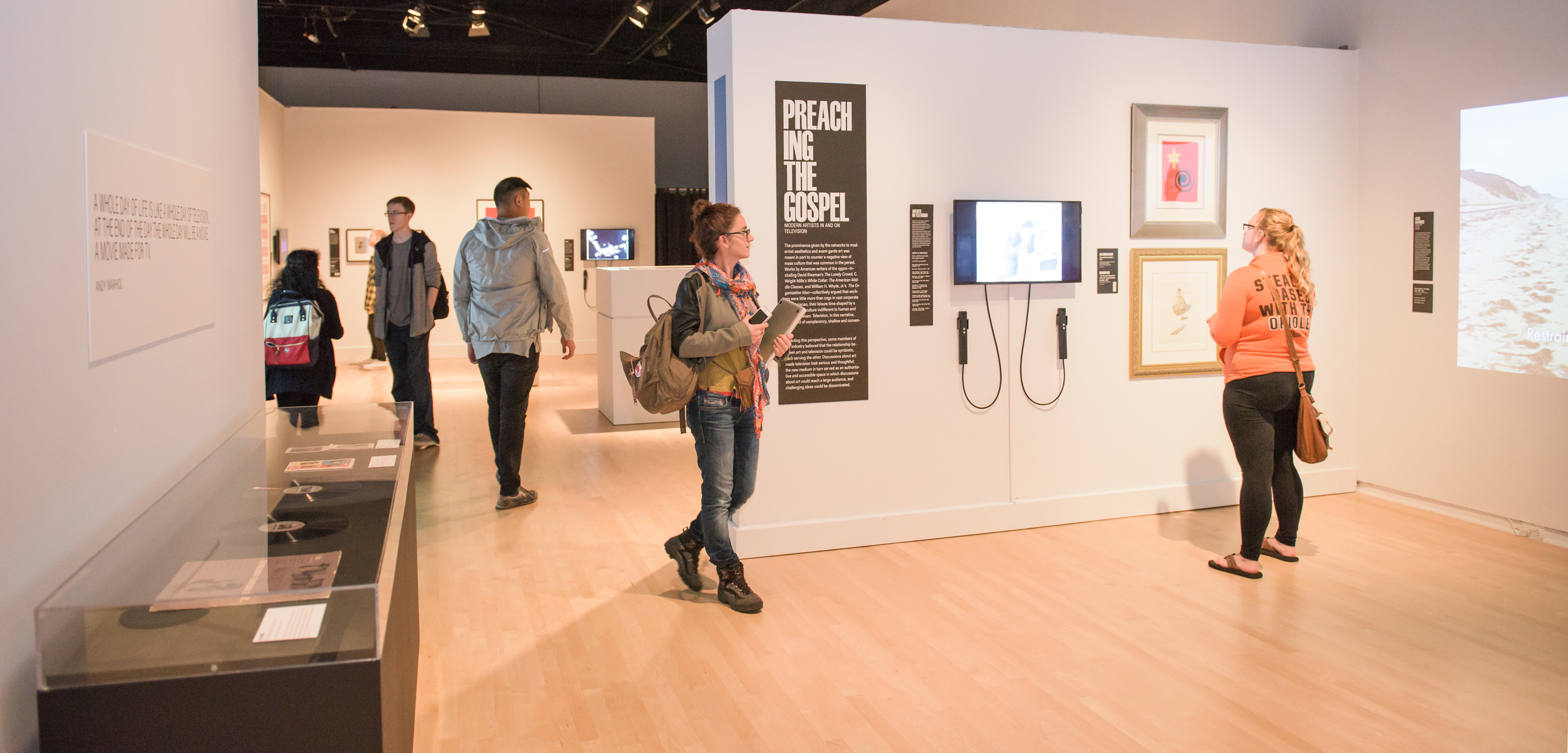
061915_bergerMaurice Berger, research professor and chief curator at the Center for Art, Design and Visual Culture, was interviewed by WYPR’s Culture Editor for Maryland Morning, Tom Hall, about Revolution of the Eye: Modern Art and the Birth of American Television, an exhibition now on display at the Jewish Museum in New York. Berger curated the exhibition, which has been co-organized by the CADVC and the Jewish Museum, and authored the companion book by the same name, published by Yale University Press.

Revolution of the Eye is the first exhibition to explore how avant-garde art influenced and shaped the look and content of network television in its formative years, from the late 1940s to the mid-1970s. “Television and modern art became mutually beneficial forces, starting really at the very early days of television,” Berger explained to Hall. “The pioneers of television…looked to modern art—they were fascinated by it—as something that could help them perhaps prove that television was a discerning medium.”

The exhibition will visit UMBC’s Center for Art, Design and Visual Culture in Fall 2016.

To hear the full interview, which originally aired on WYPR’s Maryland Morning on Friday, June 19, click here.

Maurice Berger, CADVC, Latest “Race Story” in The New York Times

In the latest essay for his Race Stories column in The New York Times, Maurice Berger, research professor at the Center for Art, Design and Visual Culture, examines the work of Charles “Teenie” Harris, an African American staff photographer for the Pittsburgh Courier from the 1930s through the 1970s. Now held in the archives of the Carnegie Museum of Art, a selection of 80,000 images by Harris are now on display in “Teenie Harris Photographs: Cars,” second in a series of exhibitions that began with “Teenie Harris Photographs: Civil Rights Perspectives.” The museum “asked writers — including poets, playwrights and historians — to respond to ‘the social, cultural, and political content’ of Mr. Harris’s photos,” notes Berger.

Read “Past and Present Collide in Pittsburgh” and view the photographs at The New York Times Lens blog.

Berger’s Race Stories column, which appears monthly on The New York Times website, is “a continuing exploration of the relationship of race to photographic portrayals of race.”