All posts by: Magazine Editor


What Is a Clinical Trial? A Health Policy Expert Explains

By Zoe McLaren, associate professor, public policy, UMBC

A commonly used malaria drug was recently proposed as a treatment for COVID-19 during a White House press briefing, even though it hadn’t yet been properly evaluated in clinical trials or approved for this use. Does the urgency of the current pandemic give doctors a good reason to skip evaluation and rush an untested drug to patients?

The field of medicine considers randomized-controlled trials, also known as “clinical trials,” as the gold standard for assessing the effectiveness of new treatments. These studies set up a fair test for treatments and enable researchers to rule out alternate explanations. Without randomized-controlled trial evidence to guide them, doctors risk wasting resources on ineffective treatments or causing harm to patients.

What is a randomized-controlled trial?

A controlled trial means that study participants are split into two groups: One group is given the treatment and the other (the control group) is not. The control group may be given a placebo that mimics the actual treatment, but does not contain the treatment being tested.

For example, a sugar pill or an injection of saline solution may be used instead of a dose of the drug. This ensures the only meaningful difference between the two groups is whether they received the treatment or not.

The control group helps researchers learn what would have happened to the treatment group if they hadn’t received the treatment. For example, some patients may recover on their own. Researchers need to know how often this happens, so they don’t attribute all recoveries to the effect of the treatment.

Study participants are randomly assigned to one group or the other, a process similar to a coin toss. Just as a coin toss is equally likely to end up heads or tails, study participants are equally likely to end up in the treatment or the control group. With enough study participants, this results in two groups that closely resemble each other. The only difference is that one group got “heads” while the other got “tails.”

The randomization of randomized-controlled trials with large enough samples ensures that all possible differences are accounted for, even those that may not be observed, such as genetic traits.

If the treatment and control groups are similar at the start of the study but end up with different outcomes, the treatment is the most likely cause. The randomized-controlled trial allows researchers to rule out alternative explanations.

What if patients aren’t randomly assigned?

If doctors were allowed to choose which patients received the treatment, it’s likely the treatment and control groups would not resemble each other, making it much harder to rule out different factors at play.

For example, malaria drugs aren’t approved for use against COVID-19, but may be prescribed to patients under the Food and Drug Administration’s “expanded access” program. It allows certain drugs to be used as a last resort to treat seriously ill patients when no other treatments are available.

These “last resort” patients are frailer than those who had a milder form of the disease or who responded well to other treatments. When you’re comparing very sick patients to healthier patients, the effect of the treatment is hard to see because it may be obscured by important differences such as age, diet, cigarette use, heart disease or obesity.

If frail patients on treatment fared significantly better than strong patients without it, researchers could conclude the treatment was effective. But this situation is extremely rare, which is why doctors generally can’t draw valid conclusions about a drug’s effectiveness in a “last resort” situation. Too many other factors are likely at play.

Some researchers may be able to use sophisticated statistics techniques to account for the differences between frail and strong patients. But there is a long list of potential differences between frail and strong patients, so it is hard to address them all. Gauging the quality of such statistical analysis is also difficult, so these studies should be viewed with skepticism.

Approving drugs prematurely

Without results from randomized-controlled trials, doctors can’t be sure whether a potential new treatment will help patients, harm them or prove ineffective.

The case of the malaria drug hydroxychloroquine as a potential treatment for COVID-19 underscores this concern. In an early wave of optimism, doctors prescribed and some even stockpiled so much hydroxychloroquine that pharmacies reported shortages of the drug. Within weeks however, randomized-controlled trials demonstrated that not only was this treatment ineffective against COVID-19, it also caused some patients to develop serious heart rhythm problems. Prematurely prescribing this treatment to all but the “last resort” cases instilled false hope, wasted medical resources and, most importantly, put patients at risk.

*****

Zoe McLaren, Associate Professor of Public Policy, University of Maryland, Baltimore County

[You need to understand the coronavirus pandemic, and we can help. Read The Conversation’s newsletter.]

This article is republished from The Conversation under a Creative Commons license. Read the original article.

Header image: Yulia Reznikov/Movement via Getty Images

Alumni Business Q&A: Fearless

UMBC alumni businesses are doing what they can to stay strong and build community during these troubled times. UMBC Magazine will be publishing occasional interviews with alumni business owners to show their resilience in the face of this global pandemic.

Find more alumni businesses at the UMBC Alumni Business Directory.

* * * * * *

Powered by a number of UMBC alumni, Fearless is a digital services firm in Baltimore. Partner John Foster ’04, computer engineering, tells us about the ways the company is giving back, and what it means to thoroughly understand the “why” of what you do.

Can you tell us a little bit about what you do? What’s your favorite part of the work?

I manage the day-to-day operation at Fearless. We are a full-stack digital services firm in Baltimore that delivers sleek, modern, and user-friendly software designed to push the boundaries of possibility. It’s our mission to build software with a soul–tools that empower communities and make a difference–so we can create a world where good software powers the things that matter. As one of Fearless’ earliest team members, I’ve seen the company from many different perspectives, first as a software engineer then moving into executive team roles as Fearless has become a company of 100+ people. 

How do you connect your work back to your experience at UMBC? 

Fearless has many UMBC alumni. CEO Delali Dzirasa ’04, computer engineering, is a Retriever and we used to joke that a prerequisite for working at Fearless was a UMBC degree.  Candace Campbell ’19, computer science, is a DevOps engineer working on solutions for the Small Business Administration in the midst of COVID19.

In these tough times, how do you keep going? What inspires you?

Simon Sinek often talks about starting with “why” as the root for anything you want to do in life that has purpose. For Fearless that “why” is our Culture, Customers, and Community. So connecting our employees “why” to our customers and community “why” keeps us going. Knowing that our people really want to make an impact in the world and finding ways to do that for our customers and community is all inspiring and keeps Fearless moving forward.

Are there specific ways you’re giving back to the community right now? Tell us about it!

Giving back has always been an important part of Fearless. Throughout the year we partner with nonprofits and other organizations in Baltimore that help Baltimore City students. We like to be the first people to raise our hand. Help is needed in our city. Now that is more important than ever. We are working with our community partners to identify their needs and how best we can serve them and the people they work with. Fearless has also launched a community hours initiative, where team members get eight hours of paid time for volunteering and other community service projects. Team members are using the time now to sew mask covers for healthcare workers and others are donating blood to the American Red Cross. It’s a small gesture but we also bought coffee for all of the hospitals in COVID-19 testing sites in Montgomery, Alabama. Montgomery is the site of our second office and even though we can’t be with our Southern team right now, we want them to know we support them and the city.

What advice would you give to others looking to start their own business?

Businesses are formed in their owners’ and founders’ image. For the best businesses, that image is rooted deeply in a person’s “why.” Before you take even the smallest of baby steps be certain that your passion translates into your personal “why.” By doing so, it will get you through the rough times or times where you doubt yourself.

Header image: Foster, at right. Images courtesy of John Foster.

Remdesivir Explained – What Makes This Drug Work Against Viruses?

By Katherine Seley-Radtke, professor, Chemistry and Biochemistry, UMBC

With the FDA approving Gilead’s Remdesivir as an emergency use treatment for the most acute cases of COVID-19, many people are wondering what type of a drug it is.

Remdesivir is a member of one of the oldest and most important classes of drugs – known as nucleoside analogue. Currently there are more than 30 of these types of drugs that have been approved for use in treating viruses, cancers, parasites, as well as bacterial and fungal infections, with many more currently in clinical and preclinical trials.

I am a medicinal chemist who has worked in design and synthesis of these important drug treatments for over 30 years. I have written numerous reviews over the years about these drugs and their structure and function, and as a result have had many inquiries lately from friends, family and others not in the field asking me to explain what exactly is it about Remdesivir that makes it so effective, but also why it is so interesting. Understanding why means digging into the biochemistry of this class of drugs.

Fake genetic building blocks

The reason nucleoside analogues and a similar group called nucleotide analogues are so effective is that they resemble the naturally occurring molecules known as nucleosides – cytidine, thymidine, uridine, guanosine and adenosine. These are the essential building blocks for the DNA and RNA that carry our genetic information and play critical roles in our body’s biological processes.

Slight differences in the chemical structure of these analogues from naturally occurring compounds make them effective as drugs. If an organism like a virus incorporates a nucleoside analogue into its genetic material, rather than the real thing, even small changes to the structure of these building blocks prevent the regular chemistry from happening and ultimately foils the ability of the virus to replicate.

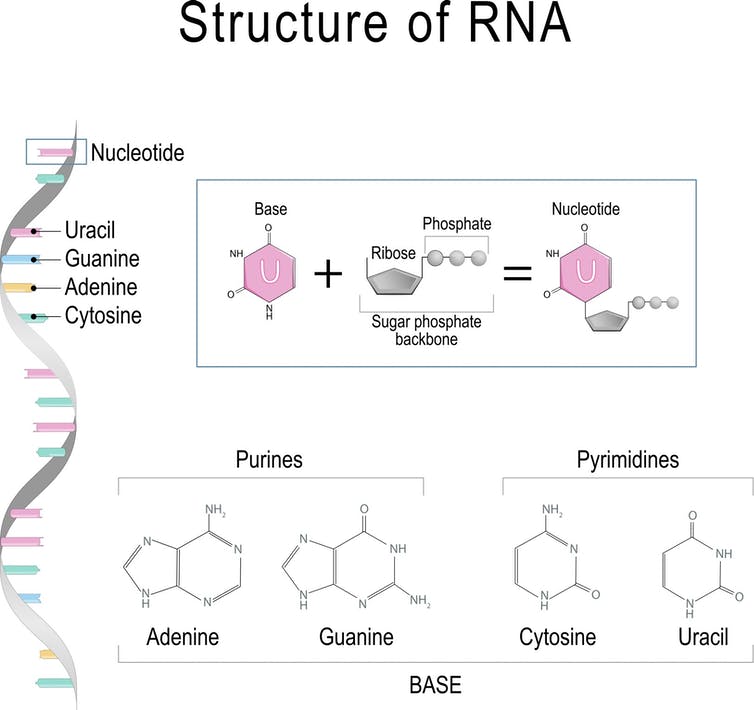
The basic structure of a nucleoside includes a sugar group and a base (A, C, G, T or U), and in the case of a nucleotide, a group containing a phosphate which is a collection of oxygen and phosphorus atoms.

Every building block of DNA is made from three parts: a sugar, a base (A, C, G, or T) and a phosphate group. Every building block of RNA is made from (A, C, G, or U). ttsz / Getty Images

The first nucleoside analogues were approved for medicinal use in the 1950s. The early nucleosides had only simple modifications, typically either to the sugar or the base, while today’s nucleosides, such as Remdesivir, typically have several modifications to their structure. These modifications are essential to their therapeutic activity.

How does Remdesivir work as antiviral therapeutic?

This activity occurs because nucleoside/tide analogues mimic the structure of a natural nucleoside or nucleotide such that they are recognized by, for example, viruses. Due to those structural modifications, however, they stop or interrupt viral replication, which stops the virus from multiplying and infecting more cells in the body.

As a result, they are known as direct-acting antivirals, and this is the case for Remdesivir, which works by blocking the coronavirus’s RNA polymerase – one of the key enzymes that this virus needs to replicate its genetic material (RNA) and proliferate in our bodies. Remdesivir works when the enzyme replicating the genetic material for a new generation of viruses accidentally grabs this nucleoside analogue rather than the natural molecule and incorporates it into the growing RNA strand. Doing this essentially blocks the rest of the RNA from being replicated; this in turn prevents the virus from multiplying.

The drug Remdesivir is basically an altered version of the natural building block adenosine – which is essential for DNA and RNA. Comparing the structure of Remdesivir with adenosine, one can see there are three key modifications that make it effective.

The first is that Remdesivir, as it is administered, is not the actual active drug; it is actually a “prodrug,” meaning it must be modified once in the body before it becomes an active drug. Prodrugs are used for many reasons, including protecting a drug until it reaches its site of action. The active form of Remdesivir contains three phosphate groups; it is this form that is recognized by the virus’s RNA polymerase enzyme.

A naturally occurring nucleotide (left) which is a building block of RNA and DNA and Remdesivir (right) which is a variation on its natural counterpart. Katherine Seley-Radtke, CC BY-SA

The second important modification on Remdesivir is the carbon-nitrogen (CN) group attached to the sugar. Once Remdesivir is incorporated into the RNA growing chain, the presence of this CN group causes the shape of the sugar to pucker, which, in turn, distorts the shape of the RNA strand such that only three more nucleotides can be added. This terminates the production of the RNA strand and is what ultimately sabotages the replication of the virus.

The third important structural feature which makes Remdesivir differ from adenosine is the change of one particular chemical bond on the molecule. Rather than a bond linking a carbon and nitrogen atoms, chemists replaced the nitrogen with another carbon, creating a carbon-carbon bond. This is critical to the success of this drug because coronaviruses have a special enzyme that recognizes unnatural nucleosides and clips them out. But by changing this chemical bond, Remdesivir cannot be removed by the enzyme, allowing it to stay in the growing chain and block replication.

Remdesivir trials

Remdesivir originally was found during a drug discovery program at Gilead to search for inhibitors of the hepatitis C virus, which is another RNA virus. Although Gilead ultimately selected a different nucleoside analogue for treatment of hepatitis the company tested the drug to see if it was effective against other RNA viruses. Remdesivir exhibited potent activity against Ebola and Middle Eastern respiratory virus, among others.

Now the drug is being tested against the SAR-CoV-2 virus in the first clinical trial launched in the United States.

According to the NIH, patients who received Remdesivir had a faster recovery compared to those who received placebo; 11 days compared with 15 days for those who received the placebo. “Results also suggested a survival benefit, with a mortality rate of 8.0% for the group receiving Remdesivir versus 11.6% for the placebo group,” according to the NIH press release.

While these results are preliminary, there are a plethora of clinical trials underway across the world. Regardless, a certain amount of caution is still needed. As noted by Dr. Anthony Fauci on NBC’s “Today” show, “the antiviral drug Remdesivir is the first step in what we project will be better and better drugs coming along” to treat COVID-19, but cautioned, “This is not the total answer.”

I share this view with many other scientists in the field. No matter what those results ultimately show, Remdesivir will mostly certainly be part of a cocktail of drugs, just as is standard for treating other viruses such as HIV and hepatitis C.

A combination, or cocktail, of drugs will provide a more effective and more complete therapy that blocks the virus from replicating. The other benefit of such a drug cocktail is that it lowers the chance the virus will develop resistance to the therapy. In the meantime, these early results for Remdesivir are proving to be an important source of hope for many of us across the world as we wait for this pandemic to subside.

******

[You need to understand the coronavirus pandemic, and we can help. Read The Conversation’s newsletter.]

Header image: Photo by ULRIC PERREY/POOL/AFP via Getty Images.

Katherine Seley-Radtke, Professor of Chemistry and Biochemistry and President-Elect of the International Society for Antiviral Research, University of Maryland, Baltimore County

Disclosure statement: Dr. Katherine Seley-Radtke has previously consulted for Gilead Sciences and owns Gilead Sciences stock. She currently receives funding from the National Institutes of Health (NIH), the National Institute of General Medicine (NIGMS), the National Institute of Allergies and Infectious Diseases (NIAID). She is the President-elect of the International Society for Antiviral Research (ISAR) and is the Secretary and former President of the International Society of Nucleosides, Nucleotides & Nucleic Acids (IS3NA), both non-profit scientific professional societies.

This article is republished from The Conversation under a Creative Commons license. Read the original article.

Retrievers on the Front Lines of the Pandemic

By Susan Thornton Hobby

Every time a coronavirus patient is released from St. Barnabas Hospital in the Bronx, a song plays over the loudspeaker: “St. Barnabas for All of Us.” 

Trent Gabriel ’14, biochemistry and molecular biology, has heard the catchy tune several times, but not enough. Doctors call St. Barnabas a coronavirus “war zone,” with most of its clinics for specialties such as pediatrics and psychiatry now lined with bed after bed of patients with COVID-19. The hiss and click of ventilators fills the halls.  

Gabriel is a dental resident who until mid-March handled routine and emergency dentistry at St. Barnabas. When the pandemic hit, Gabriel was pressed into service, filling in gaps when hospital staff were sick or overburdened. Among other jobs, he has tested doctors for coronavirus, taken vitals of COVID-19 patients, and filled prescriptions. 

The pandemic necessitates fighting on all fronts. UMBC alumni and students are in the thick of that battle—testing hospital staff for the virus, screening patients at a Red Cross, riding in ambulances as an EMT, and many other roles. 

Testing Medical Workers to Save Patients

When the pandemic closed St. Barnabas’ dental clinic, Gabriel was first assigned to test staff for coronavirus. 

“It was really surprising how many had a good chance that they had COVID,” says Gabriel. “It hit the hospital really fast. These are doctors who know how to use PPE [personal protective equipment], and they’re getting sick.” 

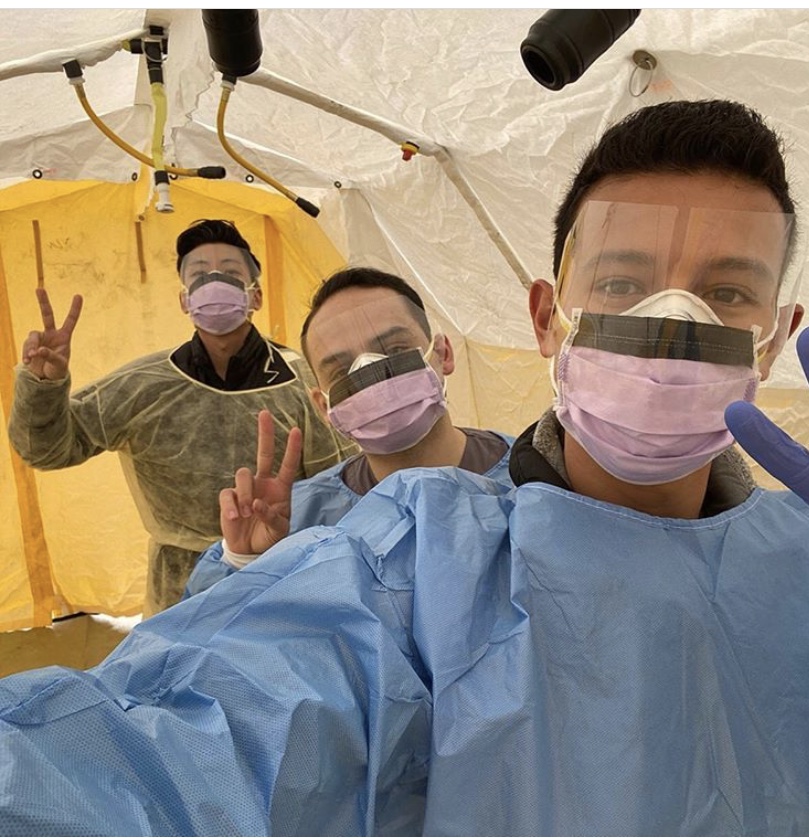
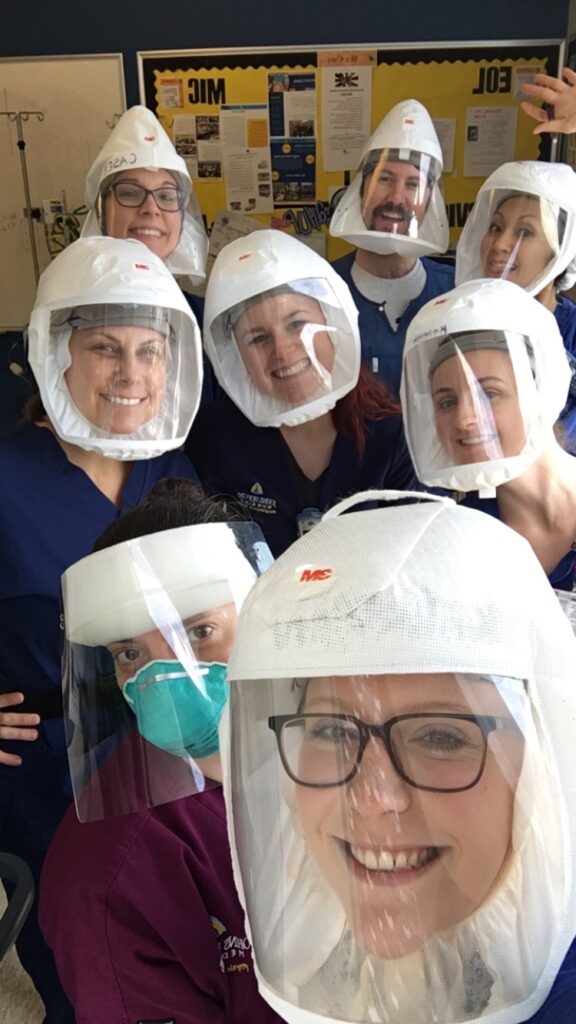
Trent Gabriel, center, works as a dental resident at St. Barnabas Hospital in the Bronx. Since the pandemic, Gabriel has been testing staff for the virus, working in the pharmacy, and taking vital signs of patients. Photo courtesy of Gabriel.

Several staff, including a trauma surgeon and two nurses who both were supposed to have retired but stayed at St. Barnabas to help, have died from the disease. Gabriel’s worry that he’ll become infected is ever-present.

“A lot of us have a fatalistic attitude,” Gabriel says. “We’re getting exposed every day. It’s going to happen. You just hope that it’s later, and we’ve figured out how to treat it.”

How to Train a Hero

“Many of our faculty, students, and staff are participating in an active role in the COVID-19 response, treating patients on the ambulance, in the field, in the emergency department, and providing consultation to direct response,” explains J. Lee Jenkins, chair of the Department of Emergency Health Services at UMBC. 

To prepare for just this kind of health crisis, leaders in medical and traumatic emergency services serve as faculty members and mentors to provide practical experiences for the 80 undergraduate and 35 graduate students in the program, Jenkins says. 

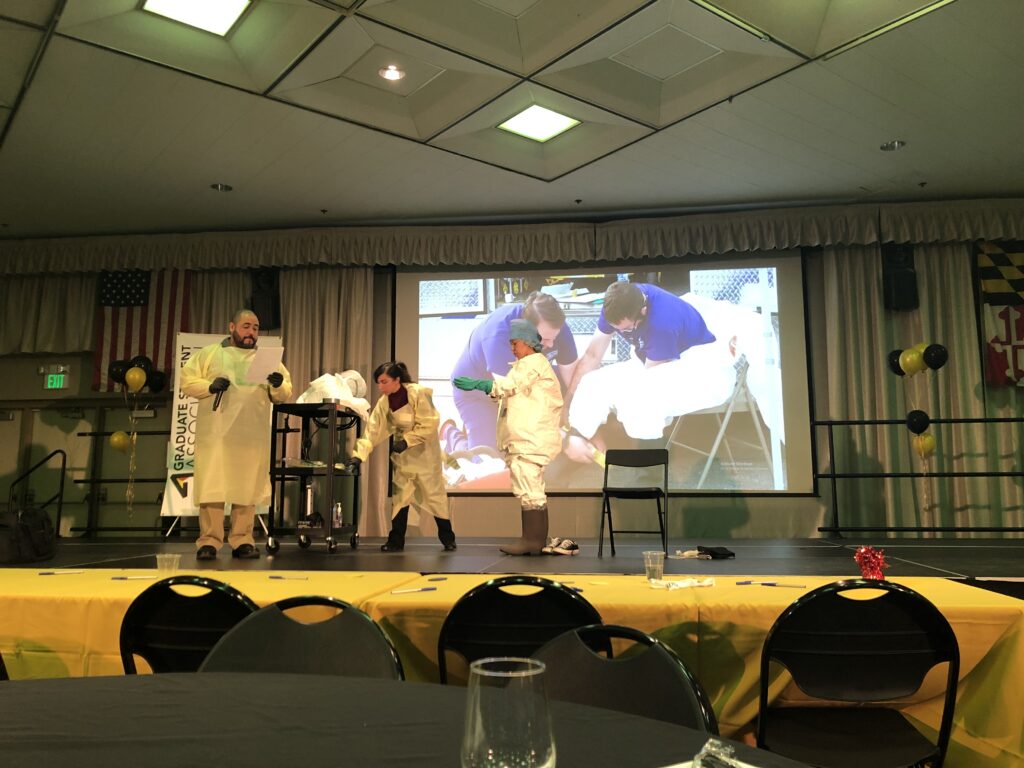
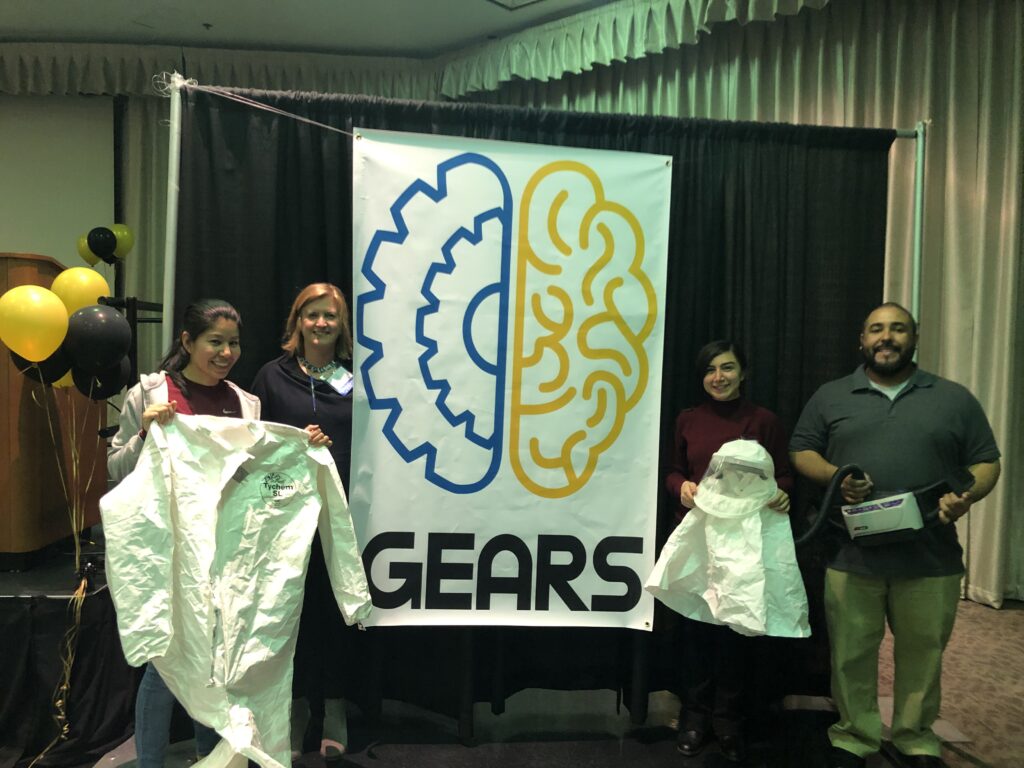
For the Graduate Experience Achievement Research Symposium in 2019, emergency health services graduate student Sanaz Taherzadeh and classmates demonstrate the proper use of personal protective equipment, concentrating on the Ebola crisis that was happening then. Photo courtesy of Taherzadeh.

 “While serving as an emergency physician, I’ve personally seen the toll that this virus has taken on our first responders, our nation’s emergency public health system, our patients, our students and faculty,” says Jenkins, who is an emergency medicine physician at Johns Hopkins Hospital and a faculty member in emergency medicine at JHU’s School of Medicine. 

“Our nation’s emergency departments and EMS systems have been stretched past our limits in both physical and supply capacity as the front-liners bravely handle the physical and emotional needs of both themselves and the patients,” Jenkins shares. “Those in EMS and in the hospital continue to go to work, to take care of patients, then we come home to our families, each time worrying that we may have brought home this disease.” 

Why engage in this risky profession? “We are here to serve, to go where we are needed,” adds Jenkins. “This is why our department, EHS, exists, to educate the next generation of these heroes.” 

The Right Skills for a Crisis

Current EHS student Sanaz Taherzadeh says her life has prepared her for a pandemic. As a teenager, she watched her grandfather battle cancer in her native Iran and decided to become a nurse. After years working as an operating room nurse in Tehran, when a 2017 earthquake devastated the mountainous region of Kermanshah, Taherzadeh traveled there to triage and treat victims.

“I had to be brave, calm, and honest so that people could trust me and rely on me,” Taherzadeh remembers. 

In 2019, Taherzadeh started her master’s in emergency health services concentrating in epidemiology at UMBC. For her graduate research, she has given presentations on personal protection equipment and coronavirus. All the threads of her knowledge—disaster medicine, epidemiology, and protective equipment—culminated when this coronavirus became a pandemic. 

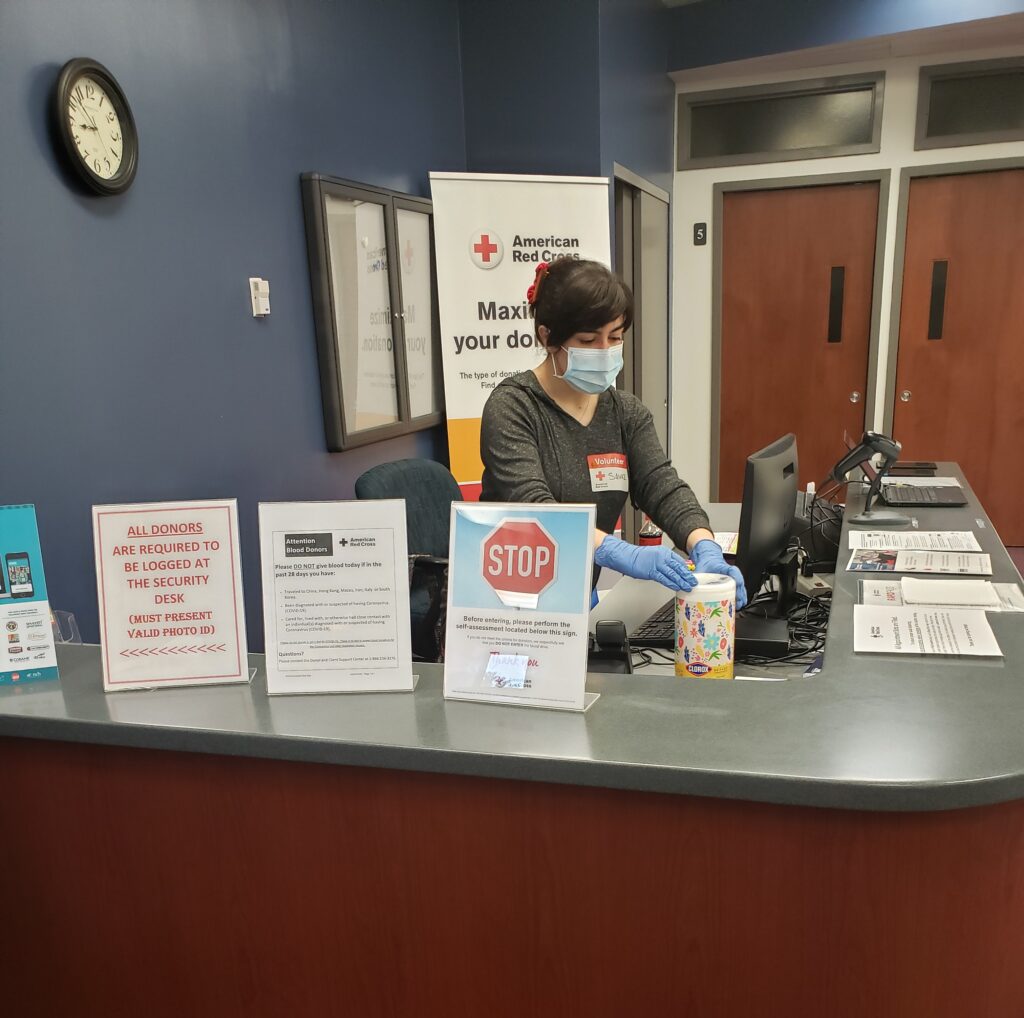
Top: Sanaz Taherzadeh volunteers at a Baltimore Red Cross donation center, assessing donors before their blood is drawn. Photos courtesy of Taherzadeh. Bottom: At the 2019 Graduate Experience Achievement Research Symposium, emergency health services graduate student Sanaz Taherzadeh and classmates presented on the proper use of personal protective equipment.

Taherzadeh, set to graduate in December, volunteers as a surgical support technician for the University of Maryland Shock Trauma Center, as well as for the Red Cross, where she assists victims at sites of disasters, and screens patients at blood donation centers to ensure they are healthy. 

Even though Iran and the United States do not have a good diplomatic relationship, says Taherzadeh, and she worries about being deported, the nurse believes her place is here. 

“Regardless of what our nationality is, what country we live in, or what religion we have, I believe we are human beings and now is the time that everyone in the world should work together to overcome this disease pandemic,” Taherzadeh says.

“Hard not to tear up”

Maggie Kemper ’14, biology, remembers her first patient with COVID-19. He arrived in mid-March, just after she and the rest of the nursing staff at Johns Hopkins Hospital had converted their Intensive Care Unit to an exclusively COVID-19 unit. 

“He was pretty notable,” Kemper remembers, talking on an infrequent day off from her twelve-hour shifts at the hospital. “We had been hearing the patients would be older, immune-suppressed. But this guy was younger, a bodybuilder, no known health issues. It threw all of us for a loop. He was literally the opposite of what we’d been hearing. He was very sick, it was touch and go.”

But finally, the last week in April, the patient had recovered enough for staff to discharge him after weeks on a ventilator. The disease had transformed him. Kemper says, “he came in jacked, and now he’s very skinny.” He will likely need rehabilitative care, his lungs were severely damaged, and he can’t live alone for a while, she says. 

“We gave him a standing ovation,” Kemper says. “It was hard not to tear up.”

Like all of emergency medicine, Kemper and her unit have been learning on the fly about COVID-19—how they must put patients on their bellies to help the blood and oxygen flow to their lungs, how they should try to have patients breathe on their own as long as they can without putting them on ventilators, how it’s hard to guess, now, which patients are going to recover, and which aren’t. 

The disease is taking its toll on the staff as well. Kemper is working her usual shifts, plus overtime because the unit is usually full to its capacity of 24 patients, “the sickest of the sick,” she says. And because she shouldn’t remove her protective gear, which gives her rashes around her ears and neck, she goes long stretches without eating or drinking. And she worries about getting infected herself.

“Initially I was very scared,” Kemper said. “Now I’m too tired to be scared.”

But Kemper is also thinking about her patients, who can’t have visitors, and who are debilitated with the disease. So she started an art campaign. Kemper spread the word in her Hampden neighborhood, and to friends and family, to have people send in drawings and letters. Kemper then laminated the pieces so the art could be sterilized, and hung them all over the unit and in patients’ rooms. 

“It’s so overwhelming,” Kemper said. “Kids are sending in drawings and letters that say ‘I love you,’ and they don’t even know these people.” 

Be Prepared 

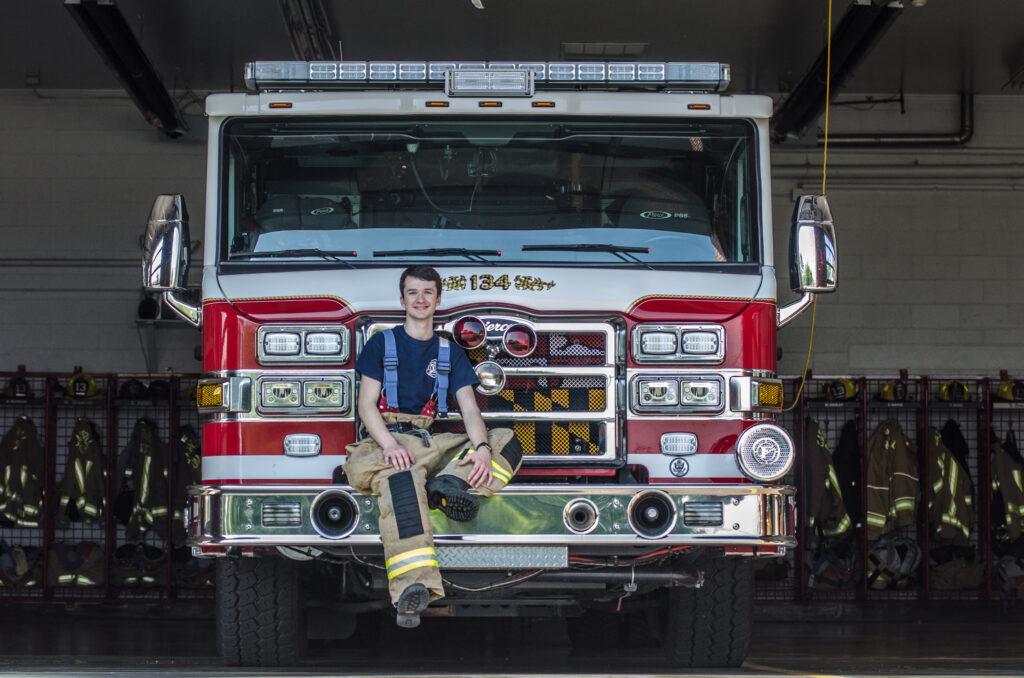
First-year emergency services and theatre dual major Jack Bez is just beginning his studies at UMBC, but is already using his skills. For 18 months, Bez has worked as an EMT with the Gamber & Community Fire Company. When campus closed, the Eagle Scout chose to live at the firehouse instead of moving home, to avoid exposing his parents to the coronavirus. 

Jack Bez at the Gamber & Community Fire Company, where he moved after campus closed. Photo courtesy of Bez.

Between responding to several ambulance calls a day, Bez is keeping up with his studies in theatre. He hung sleeping bags from a top bunk in the firehouse to fashion a sound booth in which he could record his sound production assignments. 

Though Bez hasn’t yet treated a confirmed coronavirus patient, he has trained on prevention techniques and decontamination, and is activated with Maryland Medical Reserve Corps. 

“All I know is that I’m content with being able to help people who need it, whether it’s COVID or not,” Bez says simply. 

Looking Forward to “Normal”

When the pandemic crisis first began flooding hospitals with patients, but New York City hadn’t yet been put on lockdown, Gabriel remembers emerging from the subway after a long day of testing other doctors for coronavirus. Beside his subway stop was a public park, packed with kids and parents on a beautiful spring day. He remembers being afraid.

The pandemic, Gabriel says, “turns everything that makes us human on its head. Is it that bad to go to a park? We take for granted the things that keep us together.”

When Gabriel finishes his rotation at St. Barnabas this year, he’ll head to Boston University to complete specialty training and a program in crowns and dentures. He’ll be learning the aesthetics of making people’s smiles better, the layering of porcelains on implant teeth, full-mouth dentures on complex cases.

“Something calm and safe,” Gabriel says with a laugh. “Compared to now.”

Catherine Borg contributed to this story.

Header image courtesy of Jack Bez.

How to avoid infection after a COVID-19 death – an Ebola response veteran explains

by Lucy Wilson, Professor of Emergency Health Services, UMBC

As the grim reality of COVID-19 unfolds, families and health care workers in the United States are faced with dealing with the horrifying magnitude of deaths from this novel disease. This tragic situation brings forth the question of whether the bodies of patients who have died from COVID-19 provide a risk of infection in others.

I have worked for many years as an infectious disease doctor and public health official, during emerging disease outbreaks, such as Ebola virus disease in 2015. I have witnessed the extra challenges families experience when faced with the death of their loved ones from a highly transmissible infectious disease. For this current pandemic, here are the safety guidelines for dealing with deceased loved ones and the reasons why, from a scientific perspective.

Contagion risk decreases after death

Public health authorities have set out guidance for the management of the deceased based on current knowledge of both susceptibility to and transmissibility of the coronavirus.

The recommendations for handling those deceased from COVID-19 are based on knowledge that this novel coronavirus (SARS-CoV-2) is most commonly transmitted by respiratory droplets that are projected by a living person through coughing and sneezing. Therefore, after death, the risk from this respiratory mechanism is no longer present. However, the novel coronavirus (SARS-CoV-2) can also be transmitted from indirect contact: that is, touching a surface contaminated with the virus and then self-contaminating by touching one’s eyes, nose or mouth.

Preventing transmission when handling the deceased is achieved by “contact precautions,” which includes wearing a gown and gloves and hand-washing after removing these barriers. The deceased is placed in a body bag and the bag is then wiped down with EPA-approved disinfecting wipes prior to transportation.

This guidance holds in the funeral home setting as well, except there are additional instructions for preventing airborne transmission of coronavirus when certain body processing procedures, such as embalming, are performed.

This type of guidance in the health care setting is fairly standard for handling the deceased who is potentially infectious, given the risk of indirect contact of the patient with surrounding medical equipment, bedding and furniture.

During the Ebola pandemic, much stricter guidance was enforced, but this was also related to the tremendous amount of infectious fluids that were produced by a symptomatic patient, including profuse diarrhea. These precautions also took into consideration the extremely high mortality rate from Ebola.

At that time in 2015, I was working as a public health professional, and was involved in the determination of the best procedures to prevent cross-contamination when transferring a deceased patient with Ebola to the hospital morgue or elsewhere. A team of doctors, nurses and public health practitioners developed a protocol in a biocontainment unit with a patient mannequin and special chemical markers that could reveal contamination of surfaces via ultraviolet light.

This team was able to determine that multiple body bags were needed to prevent external contamination of the body bags being used. A careful manipulation of the patient, the bedding, proper personal protective equipment for staff and two stretchers was needed to achieve this level of caution.

Post-mortem safety for families

For families, there are many sad realities that need to be considered in the event of a death from COVID-19. While currently families are not allowed in the hospital to visit their loved ones, deaths in the home of those suspected of COVID-19 infection have been reported.

Again, given that breathing has stopped, the risk of transmission from coughing, sneezing and other mouth secretions is no longer a concern, but contact with surfaces that the patient could have previously contaminated remains. It is known that the virus can stay viable on surfaces for days, so all nearby surfaces should be considered infectious. Family members should thoroughly clean surfaces and bedding, wearing gloves and a washable or disposable cover up, if available.

Regarding funerals, when it is deemed safe to have a small gathering, or if exposed family members have completed their 14 day quarantine period, there is guidance on safety in those situations. There is no known risk of being in the same room at a funeral or visitation service with the body of someone who has died from COVID-19.

The CDC recommends not touching, kissing or hugging the deceased, though acknowledges that touching a hand or clothing after the body has been prepared for viewing is lower risk if hand-washing can then immediately occur.

Those at higher risk of complications of COVID-19 should use extra precaution in this setting. If there are important religious or cultural practices, such as shrouding or washing of the body, funeral home staff and local cultural and religious leaders can be involved to optimize reducing the risk of exposure.

Processing of the deceased can be achieved by cremation or embalming, and burial is allowed. For people who have died outside of the United States or need transportation for funeral services, federal and state guidelines need to be followed. For international transport, bodies can be transported if cremated, if embalmed and placed in a hermetically sealed casket or if the remains are accompanied by a CDC permit. This permit must be issued by the CDC director and allows for the importation of a person known or suspected of death from a quarantinable communicable disease.

How families can prepare

  1. Know your risk of complications from COVID-19.
  2. Know how to care for yourself and someone sick in your home.
  3. Know the warning signs of COVID-19 complications needing emergency medical care.
  4. Understand your hospital policy on visitation of someone sick with COVID-19.
  5. Learn the infection control and visitation policy in your family member’s nursing home or assisted living facility.
  6. Discuss end-of-life decisions with loved ones: living will, advanced directives, funeral and life ceremony wishes.
  7. Know the CDC recommendations for handling the deceased in the home and in funeral homes.
  8. Prepare personal wills and child care plans in the event of death or prolonged hospitalization.

* * * * *
[You need to understand the coronavirus pandemic, and we can help. Read The Conversation’s newsletter.]

Header image: Workers wearing protective gear remove bodies of people who have died from COVID-19 from a New Jersey nursing home morgue. Eduardo Munoz Alvarez/Getty Image

Lucy Wilson, Professor of Emergency Health Services, University of Maryland, Baltimore County

This article is republished from The Conversation under a Creative Commons license. Read the original article.

How the rich reacted to the bubonic plague has eerie similarities to today’s pandemic

by Kathryn McKinley, Professor of English, UMBC

The coronavirus can infect anyone, but recent reporting has shown your socioeconomic status can play a big role, with a combination of job security, access to health care and mobility widening the gap in infection and mortality rates between rich and poor.

The wealthy work remotely and flee to resorts or pastoral second homes, while the urban poor are packed into small apartments and compelled to keep showing up to work.

As a medievalist, I’ve seen a version of this story before.

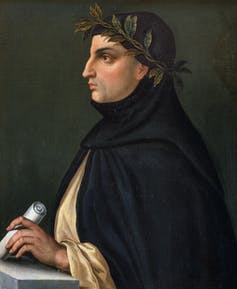
Following the 1348 Black Death in Italy, the Italian writer Giovanni Boccaccio wrote a collection of 100 novellas titled, “The Decameron.” These stories, though fictional, give us a window into medieval life during the Black Death – and how some of the same fissures opened up between the rich and the poor. Cultural historians today see “The Decameron” as an invaluable source of information on everyday life in 14th-century Italy.

Giovanni Boccaccio.
Leemage via Getty Images

Boccaccio was born in 1313 as the illegitimate son of a Florentine banker. A product of the middle class, he wrote, in “The Decameron,” stories about merchants and servants. This was unusual for his time, as medieval literature tended to focus on the lives of the nobility.

“The Decameron” begins with a gripping, graphic description of the Black Death, which was so virulent that a person who contracted it would die within four to seven days. Between 1347 and 1351, it killed between 40% and 50% of Europe’s population. Some of Boccaccio’s own family members died.

In this opening section, Boccaccio describes the rich secluding themselves at home, where they enjoy quality wines and provisions, music and other entertainment. The very wealthiest – whom Boccaccio describes as “ruthless” – deserted their neighborhoods altogether, retreating to comfortable estates in the countryside, “as though the plague was meant to harry only those remaining within their city walls.”

Meanwhile, the middle class or poor, forced to stay at home, “caught the plague by the thousand right there in their own neighborhood, day after day” and swiftly passed away. Servants dutifully attended to the sick in wealthy households, often succumbing to the illness themselves. Many, unable to leave Florence and convinced of their imminent death, decided to simply drink and party away their final days in nihilistic reveries, while in rural areas, laborers died “like brute beasts rather than human beings; night and day, with never a doctor to attend them.”

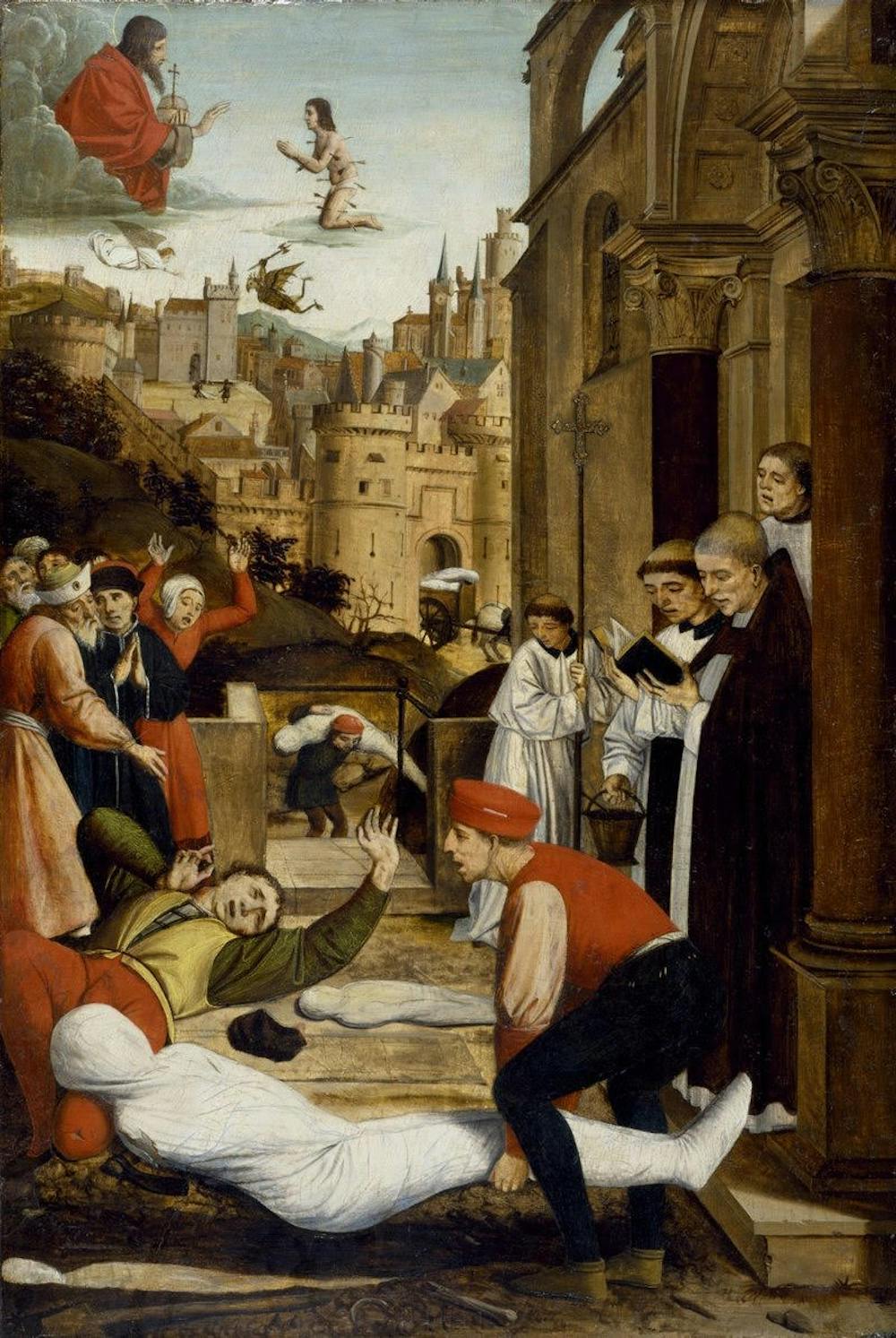
Josse Lieferinxe’s ‘Saint Sebastian Interceding for the Plague Stricken’ (c. 1498).
Wikimedia Commons

After the bleak description of the plague, Boccaccio shifts to the 100 stories. They’re narrated by 10 nobles who have fled the pallor of death hanging over Florence to luxuriate in amply stocked country mansions. From there, they tell their tales.

One key issue in “The Decameron” is how wealth and advantage can impair people’s abilities to empathize with the hardships of others. Boccaccio begins the forward with the proverb, “It is inherently human to show pity to those who are afflicted.” Yet in many of the tales he goes on to present characters who are sharply indifferent to the pain of others, blinded by their own drives and ambition.

In one story, a dead man returns from hell every Friday and ritually slaughters a different woman who had rejected him during his lifetime. In another, a widow fends off a leering priest by tricking him into sleeping with her maid. In a third, the narrator praises a character for his undying loyalty to his friend when, in fact, he has profoundly betrayed him over many years.

Humans, Boccaccio seems to be saying, can think of themselves as upstanding and moral – but unawares, they may show indifference to others. We see this in the 10 storytellers themselves: They make a pact to live virtuously in their well-appointed retreats. Yet while they pamper themselves, they indulge in some stories that illustrate brutality, betrayal and exploitation.

Boccaccio wanted to challenge his readers, and make them think about their responsibilities to others. “The Decameron” raises the questions: How should the rich treat the poor during a time of widespread suffering? What is the value of a life?

In our own pandemic – with some of the most well-off now clamoring for the economy to re-open, despite the ongoing spread of the disease – these issues are strikingly relevant.

* * * * *

[Deep knowledge, daily. Sign up for The Conversation’s newsletter.]The Conversation

Kathryn McKinley, Professor of English, University of Maryland, Baltimore County

Header image: A tale from The Decameron, by John William Waterhouse, Public Domain.

This article is republished from The Conversation under a Creative Commons license. Read the original article.

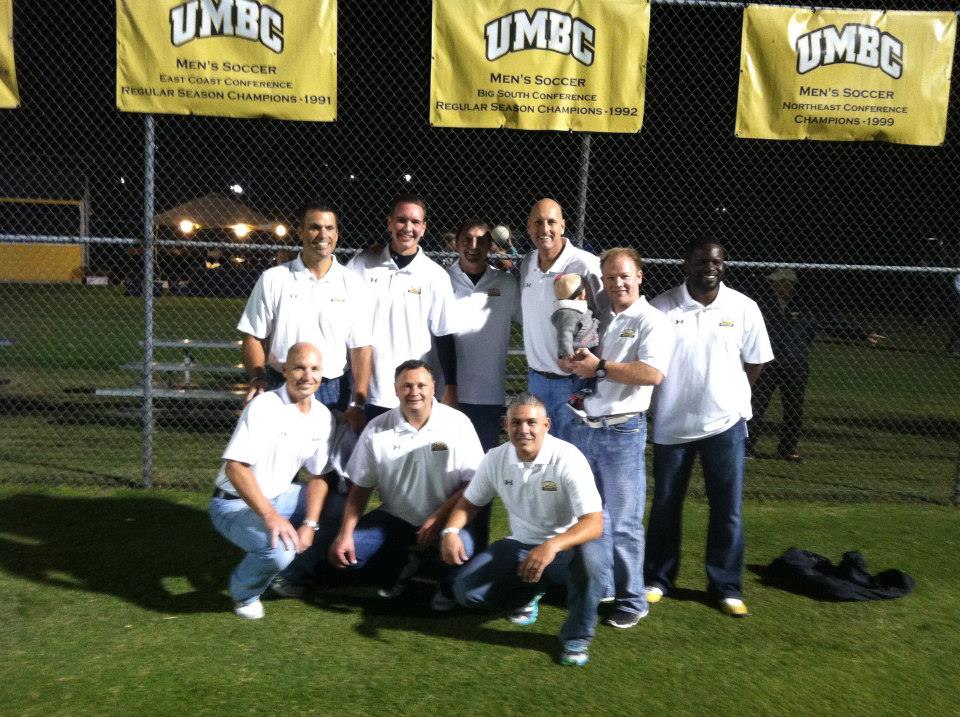
Alum Helps Budding Soccer Players “Get on the Bus”

When Tim Ryerson ’94, INDS, founded Ellicott City Soccer Club (ECSC) back in 2014, he noticed something: there were pockets of Howard County that weren’t signing up. He did a little digging, and realized that in spite of the fact that Howard County is chockfull of mid- and upper-middle class families, there are also Title 1 schools scattered throughout—13 of them to be exact.

Soccer tends to fall into the “pay to play” category. Travel programs run upwards of $3,000 a year, even more when you add in hotels, meals, and travel to and from far-flung games. Even recreation-level programs don’t come cheap, running at least a couple of hundred dollars.

Ryerson knew what an important factor soccer had been in his own life. He played under coach Pete Caringi, serving as captain his senior year and going on to a 15-3-1 season. “Coach Caringi is the number-one influencer on my life other than my family,” says Ryerson. “He allowed me to build the work ethic to create different verticals in soccer.”

Soccer for Everyone

As his wheels turned on the soccer equity issue in Howard County, Ryerson learned that even more than the cost to play, transportation to and from practices is a huge barrier for lower income families. He was inspired to make a change. “There was a local contest awarding grant money for ideas to help the community,” he says. “I submitted a concept, but didn’t win.”

The notion of a way to somehow make soccer affordable and doable for low-income families stuck with Ryerson, and he decided to turn it into reality. In 2018, he launched a pilot “Get on the Bus,” program with the financial support of families already in the ECSC club.

GOTB works like this: Kids in target schools apply and are selected based on needs and merit. If selected, they receive after-school homework help from certified educators and a healthy snack; bus transportation to and from soccer practice; and all soccer apparel, including cleats and a ball.

After its initial year, where it provided these benefits to 41 elementary school students, Ryerson applied for and received the Maryland State Youth Soccer Association’s “Grassroots Futures Award,” providing GOTB with funding to continue and expand.  “U.S. Soccer then got wind, and they have awarded us another grant, so now we’re able to include states beyond Maryland,” Ryerson explains. “We’ve been able to move into four states and now we’ve got people calling from all over to get involved.”

Currently kids in California, Nevada and Connecticut, in addition to Maryland, are involved and benefitting from the program. Nancy Thompson, principal at Talbott Springs Elementary School in Columbia, has been involved since the start. “We offer it to fourth and fifth graders at our school,” she says. “We cap it at 12 students, and ask our recess monitors and para-educators to help us identify potential candidates.”

From there Thompson vets the students on financial need and then encourages them to apply. “We’ve got kids out on our playground who love the sport but can’t afford to play,” she says. “Tim has been very intentional in helping give them an opportunity.”

Pick-Up and Go

Twin 13-year olds Justin and Jordin Lopez have taken full advantage of the program. Originally selected in elementary school, the brothers have since developed enough skill to move onto one of the travel teams. “It makes me so happy to be able to play more,” says Justin. “In the past, I could only play pick-up games at the park or on the playground.”

Ryerson says that part of the U.S. Soccer grant money is for just this purpose—to identify talent and help foster it up the travel program pipeline. “These are kids who would never be identified otherwise,” he says. “From our original 41 kids, we’ve been able to move six onto the travel level.”

If all goes as Ryerson hopes, the GOTB goal is to graduate 10,000 kids by the 2026 World Cup.

Thompson says the kids in her school who participate beam with pride. “They used to see kids wearing their club shirts at school and know they couldn’t be part of that,” she says. “Now they come to school in theirs with big smiles on their faces.”

– Amanda Loudin

* * * * *

Header image: Ryerson and a former soccer teammate’s daughter pose during a rec program.

Alumni Business Q&A: Interrobang Theatre Company

UMBC alumni businesses are doing what they can to stay strong and build community during these troubled times. UMBC Magazine will be publishing occasional interviews with alumni business owners to show their resilience in the face of this global pandemic.

* * * * * *

Founded by a number of UMBC alumni, The Interrobang Theatre Company focuses on fostering theatre artists in Baltimore, and providing new, high-quality work at affordable prices. Co-founder Kiirstn Pagan ’11, theatre, talks about what it takes to manage a theatre company, and how maintaining their connections to UMBC has helped keep them strong.

Q:  What’s your favorite part of the work?

A:  My favorite part about creating theatre is sharing it with audiences. I suppose all art forms require an audience, but theatre is special in that it cannot exist without an audience. Audience reactions help mold a performance and directly affect the performers on stage. An audience’s presence completes a theatrical experience and is necessary for the art form to function. The importance of building and maintaining a strong audience base is imperative not only to maintaining a performing arts organization as a business, but to producing theatre. It is this belief that drew me to marketing for theatre initially—as early as high school—and continues to drive my passionate pursuit of this career. Discovering new ways to educate, entertain, and engage audiences keeps me excited to continue to create and implement campaigns that encourage patrons to experience theatre.

Q:  How do you connect your work back to your experience at UMBC?

A:  All Interrobang founding and current company members are very proud UMBC alumni. It is this shared experience that bonds us as friends. It is the education that we received that bonds us as a company and informs how we operate and produce shows. This is a huge benefit to us as a company because there is a shorthand to our communication. We all speak the same language, as it were, because we were all taught how to produce theatre in the same environment. We all have a similar idea of how we want the process to go, what the final product should look like, and what stories we believe are important to tell now.

We are also incredibly lucky to have a group of very supportive professors from UMBC who we have stayed in touch with and developed friendships with since our graduation who support our vision and work and generally champion and advocate for us in the community and with new and current theatre students. I have been back to UMBC’s campus multiple times since graduation alongside the other Interrobang founders to talk with students, staff, and faculty about Interrobang, how our education at UMBC helped us to get started, and how our relationship with the university continues to be a source of support.

Q:  In these tough times, how do you keep going? What inspires you?

A:  As a small company, we produce on a show-by-show basis and don’t have many overhead costs. Eventually we’d like to be large enough to support full-time staff on a full-time basis with our own theatre space to maintain, like flagship Baltimore theatres Baltimore Center Stage or Everyman Theatre. But, right now, we are grateful that we operate in this flexible way because during this unprecedented lockdown we have the ability to pause without fearing a complete shut down. We are also incredibly grateful that our last show and fundraiser opened and closed in early March, right before the quarantine got underway.

All that being said, we are very much inspired by the theatres who are thinking on their feet and working to determine the best way to tell stories in a digital space. We are working on ways to do this as well.

Q:  Are other alumni working with you at your business or as partners somehow?

A:  Yes! I founded Interrobang alongside UMBC alumni and I continue to work with them now. Current Interrobang company members include Katie Hileman ’12 (Artistic Director/Co-Founder), Sean McComas ’11 (Managing Director), David Brasington ’12 (Producer/Co-Founder), and Brady Whealton ’13 (Producer/Co-Founder).

Q:  Are there specific ways you’re giving back to the community right now?

A:  We are working to create some digital theatrical content to share while everyone is staying safe at home. We are staying home ourselves too, and washing our hands with vigor.

Q:  What advice would you give to others looking to start their own business?

A:  Make sure you know why you’re doing it. Make sure that reason is very important to you. You have to believe in it yourself. Producing theatre is hard and thankless, so this reason, this passion, is what you will need to come back to that when the work gets hard.

* * * * *

Learn more about The Interrobang Theatre Company at www.interrobangbaltimore.org

Header image: The current Interrobang Theatre Company members, from left to right in each photo: David Brasington ’12 (Producer/Co-Founder), Katie Hileman ’12 (Artistic Director/Co-Founder), Brady Whealton ’13 (Producer/Co-Founder), Kiirstn Pagan ’11 (Producer/Co-Founder), and Sean McComas ’11 (Managing Director). Photos by Kiirstn Pagan ’11.

* * * * *

The Office of Alumni Engagement is collecting information about UMBC alumni who own a business or sole proprietorship to display on their website and across their social media channels. Tell them about your work here.


Perspective: An American Artist in Italy

Leah Clare Michaels is a Baltimore native, artist, activist, historian, and surfer. She earned her M.F.A. in Intermedia and Digital Arts from UMBC in 2019 and her B. A. in History from the University of Washington in Seattle.

* * * * *

It was five months after my graduation from UMBC’s M.F.A. program when I decided to fulfill a promise I made to myself years ago. When you finish your M.F.A. you can focus on languages again. 

For months after graduation, I had worked on drafting proposals for every grant and research opportunity I could get my hands on – including a massive, time-consuming Fulbright application. I found myself caught in a limbo of countless freelance contracts, part-time gigs, and waiting tables. At first it was exciting, the idea of not knowing where I could be in the next month. But it soon turned into a series of disappointing holding patterns. I was too afraid to commit to anything long-term just in case I was awarded one of these opportunities. This became a slippery hope slope, and by October I was starting to feel…depressed. 

One day, I was reviewing some old journals and a piece of advice from someone I love popped out at me. It read, “You don’t have to have it all figured out all the time, Leah.” I instantly felt a weight lift off my chest and thought, “That’s it. I’m going to Italy. I’m going to study Italian, and I’m going to start making art again.” With the small savings I had cobbled together from this array of jobs, I bought a one-way ticket to Italy.

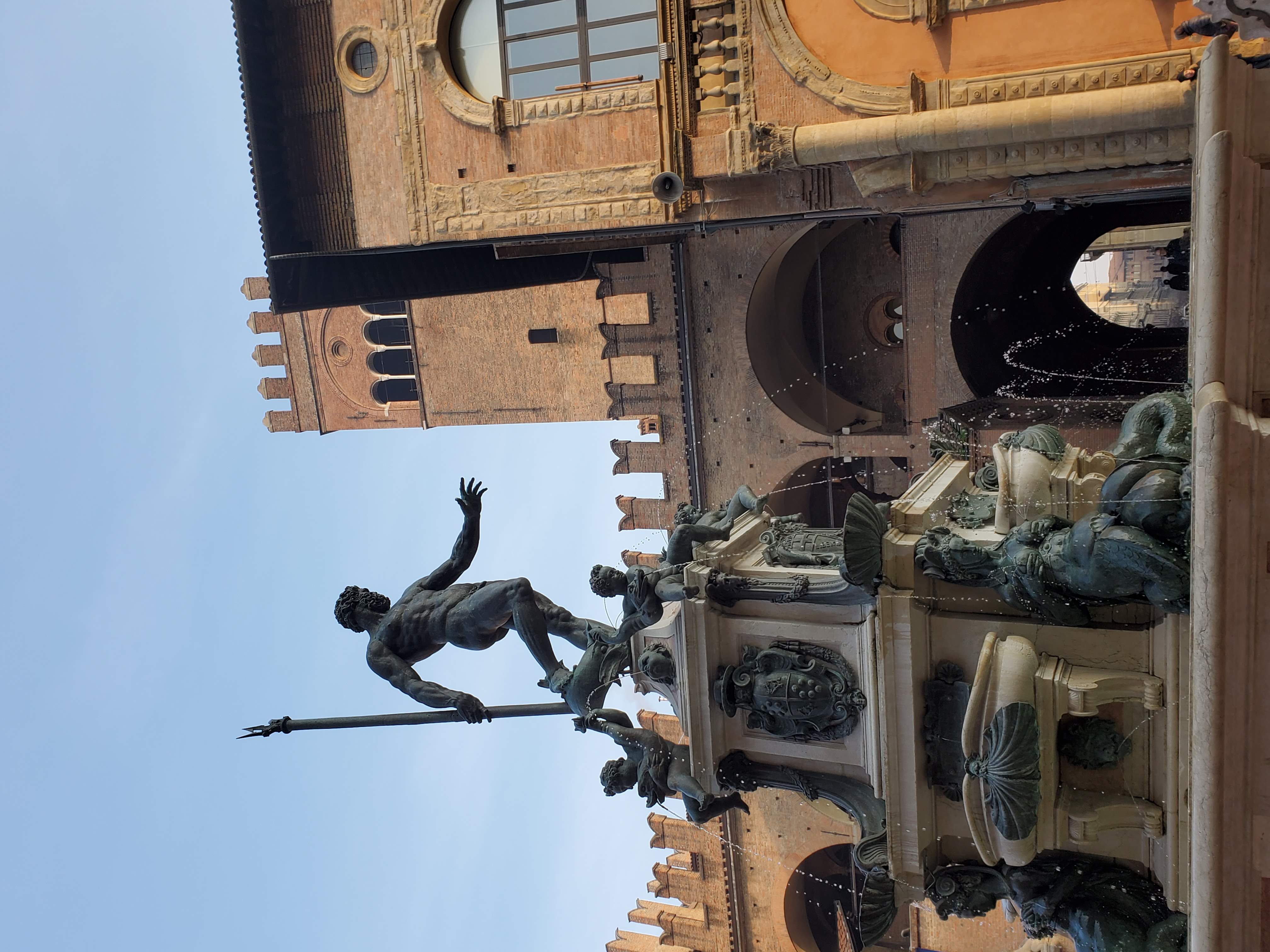
The Fountain of Neptune in Bologna

IL DOLCE FARE NIENTE

By early January, I was lucky enough to be living with family friends – Angela and Antonio and their children Federico and Rebecca – in Bologna, a small Medieval city in the North of Italy. I was finally going to lean into Il Dolce Fare Niente (the art of doing nothing) and attempt to scurry out of the hamster wheel of this life. 

In between taking the bus to my language lessons, wandering around the city, and sharing daily life with my family, the first whispers of the COVID-19 panic began to permeate the airwaves. We were listening to the news as we prepared for dinner one evening. I missed a sentence that the announcer reported. “What did she just say?” I asked Federico, the eldest son, who is twenty years old and currently in medical school. 

“There is a new virus in China,” he replied to me. At that moment I thought, that’s strange. I hope it doesn’t harm a lot of people. We finished dinner and the whole family squeezed onto the couch to watch Angela’s favorite soap opera, Un Posto al Sole.

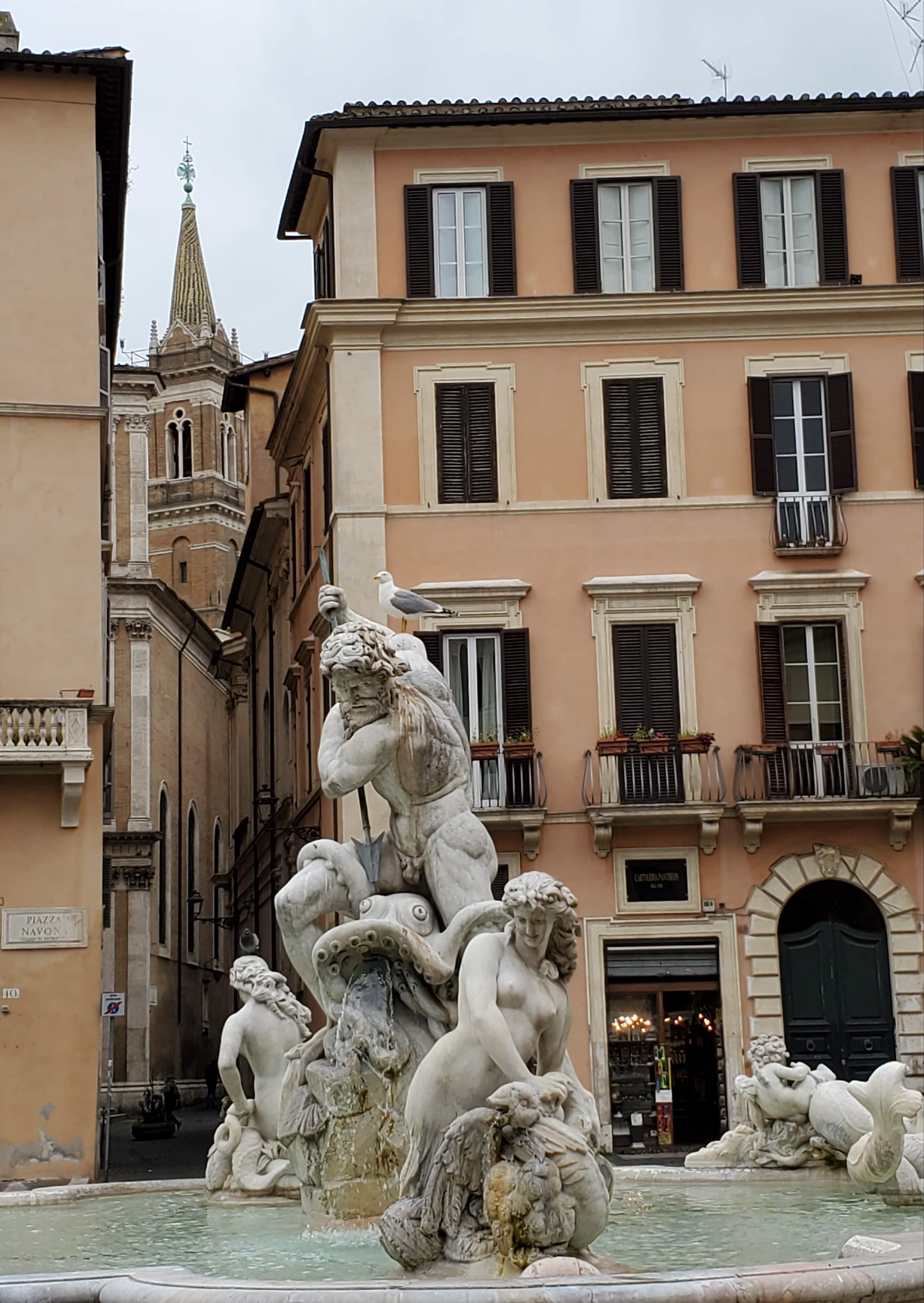
Piazza Navona in Rome, Italy.

WHEN IN ROME

I considered hopping all around Italy after my language lessons were finished: Venice, Milan, Verona, Siena, Florence, Rome, Naples, but a little voice in my head said, Don’t do that, just go to Rome. There had been three cases of coronavirus in Rome by the end of January. However, contract tracing had been done, and the three patients, including two Chinese tourists, were isolated at the hospital; all three had recovered. I believe this was a major news point that led many Italians, and me, to believe that this virus would not have a large effect, and that if you did get sick you would most likely get better. There were no other reports of COVID-19 in Rome, yet, so I traveled to the Eternal City on February 10.

I love Rome, but I guess that would be no surprise knowing I received my undergraduate degree in history. I know this ancient city has its faults and complications, but loving something means loving all of it. Traffic there is horrible, it is difficult to navigate, and large portions of the busy sidewalks are currently overrun with trash. But despite all that, Rome is the most magical city. Time unfolds differently there; the ancient meets the contemporary and pours into the streets, and this coupling of lifetimes is embedded in the energy that floats through the urban landscape.

Colosseum in Rome, Italy.

I let myself wander for ten days, discovering new treasures and previous haunts. On Valentine’s Day, my favorite holiday, I visited the relic of Saint Valentine, climbed the hill to the orange grove of the Aventine, and wandered into the church of Santa Sabina where a group of students surprised fellow tourists by slowly flowing into song. I treated myself to cappuccinos in cafes in the morning and stumbled into bookstores in the evening. Ruins appeared in grand and simple ways, fountains glowed at night and lit my way as I roamed. I overheard conversations in Italian and felt proud of myself when I could understand half of it. 

Crowd at the glowing Trevi Fountain.

I made friends with a woman named Sabrina, who owned a small nail salon next to my apartment. At one point we discussed the virus. “Sei preoccupata? (Are you worried?),” I asked her. She paused for a minute and replied, “Un po’ (a little).”

A NEW WORLD IN BOLOGNA

After my final cappuccino at one of my favorite cafes, I packed my things, took the bus to Termini Station, and headed back to Bologna on Saturday the 22nd. That Sunday morning, I visited the MAMBO and discovered Daniela Comani’s work for the first time. She moved to Berlin in 1989 and kept a diary of her life. Wow, what a time to live in Berlin, I thought. 

Around the dinner table that night, it was announced that all the schools, universities, cinemas, libraries, and museums of Bologna would be closed starting on Monday. Neighboring states were experiencing rapidly spreading outbreaks of COVID-19. In Milan, the police had barricaded the city, and the trains between Italy and Austria had been shut down. Davvero?! (Really?!) 

Within the span of a few days, the energy around the coronavirus has shifted. One of my best friends from high school texted me. She and her husband were supposed to go to Milan the following week and she asked my opinion. “The city is police barricaded, everything is closed, La Scala is closed. You have to cancel,” I told her. It was hard for her to believe at first but after some convincing she conceded. I had already planned on coming home on Tuesday, February 25th, for another small trip planned with friends, and I am still shocked at the timing.

For my last day in Italy, I took a food tour of Bologna; there were only three people. Our tour guide shared with us that she hoped the closures would not affect small businesses, and she hoped they could still do tours. Bologna was not very busy that Monday and I thought about how the city had slowly been making its way into my heart with its painted ceiling porticos, talking walls, hidden canals, and frescos of hell. 

When I came back from the tour, Federico and I watched the news. He told me he was worried. The hospitals in the North of Italy could handle this, he said, but if it spread to the south… We were both glued to the television for what felt like hours. “We have to stop,” I tell him. “This will make us crazy. There is nothing we can do right now.” He agreed with me and we turned it off. 

After my final dinner with the family, I met some friends at a bar to say goodbye. Most of them were not worried. Everyone thought it would pass in a week or two. I called the airline that Monday night and they assured me that the flight would still be taking off in the morning. 

SAYING GOODBYE

Tuesday morning, Angela and I sat together at the kitchen table, holding hands and holding back tears as we said our goodbyes. I hugged everyone and Antonio drove me to the airport. I was nervous for the entire two hours that I sat in the airport in Bologna. 

I was shocked by what happened next: Nothing. At each check-in point in Bologna and Frankfurt, someone asked me if I had been to China in the last two weeks. My check-in point in Houston did not ask me any questions. There were no temperature checks, no hand sanitizers, no discussions of the growing outbreak in Italy. 

I arrived home in Baltimore that Tuesday at midnight, glad to be home safely on one hand, but with an impending sense of worry and concern on the other. I knew what was coming; I could feel it in my body. 

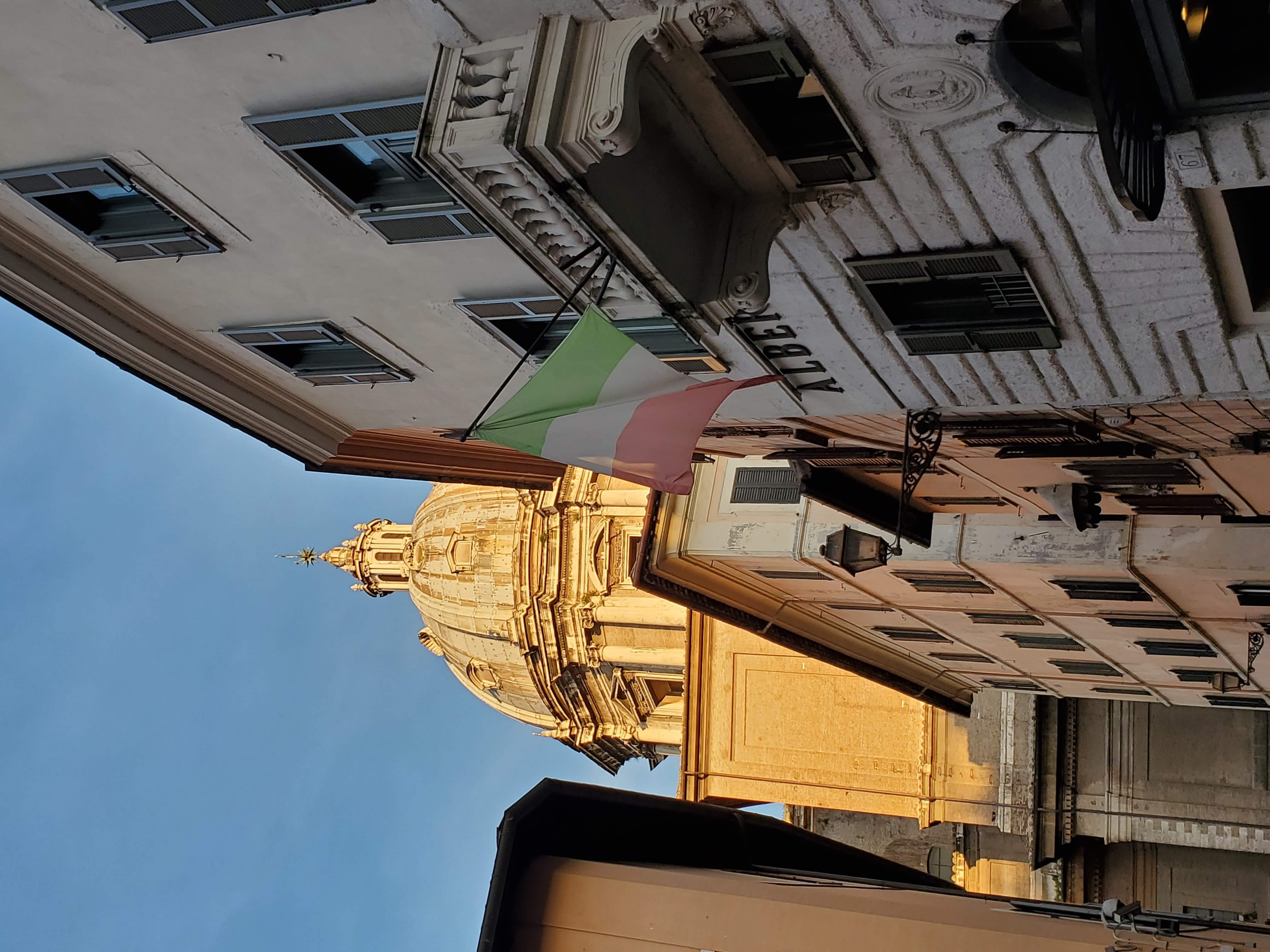
Italian flag in the Campo de’ Fiori in Rome, Italy.

LOCKDOWN

On March 9, the entire country of Italy was put on lockdown. On March 12, I visited the Baltimore Museum of Art with a renewed sense of urgency. I knew that this would be the last time I would have a chance to see the work promised to the Baltimore community. The BMA vowed that 2020 would be a year dedicated to women artists, local and international. 

I viewed Howardena Pindell’s Free White And 21, wandered inside Katharina Grosse’s Is It You?, felt moved by Valerie Maynard’s Lost and Found, and was mesmerized by Ana Mendieta’s Blood Inside Outside all over again. (Mendieta’s work has been an influence for years and I referenced her in my M.F.A. thesis.) I thought about how much she loved Rome, the pieces she created there, and that she also dreamed of building a life in the Eternal City. 

We live our lives in layers, through time and space. I thought about how all these women used art as their medium to express their personal and political experiences. These works create spaces to reflect on pain, trauma, oppression, and offer to guide the viewer into sacred conversations on how to bear witness to these hurts and how to heal. 

A deep sense of sadness filled me as I walked down the marble steps and left the museum. I knew that we would soon be living in a world without direct access to art, without shared spaces, and in a sense, without each other. I thought about how this would hurt the already disenfranchised more than most, and how our government is not prepared to handle this emergency. The BMA closed soon after, and one after another many institutions and businesses followed. 

Street art in Bologna encourages us to “Breathe.”

A TIME FOR REFLECTION

As I look back on my journey, these thoughts remain. May this unprecedented challenge lead us to a period of reflection. This is the time to take note of the national and international systems that have been broken – many have not sufficiently served their communities for centuries. 

Perhaps this will lead to a new way, new leaders, and a new series of systems where the primary focus is the health, safety, and happiness of communities and not volatile markets which make the rich richer and the poor poorer. May we start revolutions from our bedrooms and living rooms, and imagine using the rubble of this time to build a world without poverty where everyone has equitable access for healthcare, knowledge, and art. 

May there be creative work that comes out of this period, which gives ourselves time to mourn and also offers some solace. And may this time bring an awakening to just how connected we all truly are. 

* * * * *

All images courtesy of Leah Clare Michaels. Header image: Piazza Santo Stefano in Bologna, Italy.

A small trial finds that hydroxychloroquine is not effective for treating coronavirus

by Katherine Seley-Radtke, Professor of Chemistry and Biochemistry, UMBC, and President-Elect of the International Society for Antiviral Research

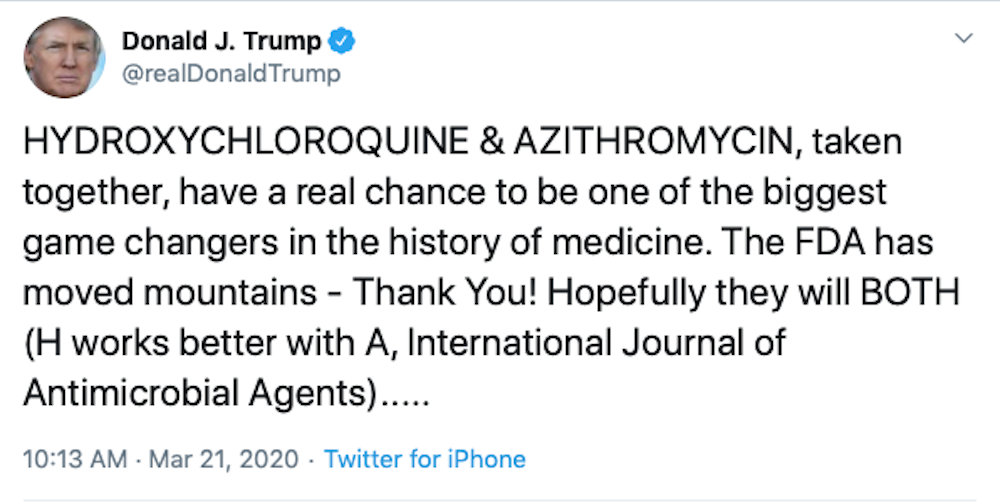
On Saturday the Food and Drug Administration approved the use of two antimalarial drugs, hydroxychloroquine and a related medication, chloroquine, for emergency use to treat COVID-19. The drugs were touted by President Trump as a “game changer” for COVID-19.

However, a study just published in a French medical journal provides new evidence that hydroxychloroquine does not appear to help the immune system clear the coronavirus from the body. The study comes on the heels of two others – one in France and one in China – that reported some benefits in the combination of hydroxychloroquine and azithromycin for COVID-19 patients who didn’t have severe symptoms of the virus.

I am a medicinal chemist who has specialized in discovery and development of antiviral drugs for the past 30 years, and I have been actively working on coronaviruses for the past seven. I am among a number of researchers who are concerned that this drug has been given too much of a high priority before there is enough evidence to show it is indeed effective.

There are already other clinical studies that showed it is not effective against COVID-19 as well as several other viruses. And, more importantly, it can have dangerous side effects, as well as giving people false hope. The latter has led to widespread shortages of hydroxychloroquine for patients who need it to treat malaria, lupus and rheumatoid arthritis, the indications for which it was originally approved.

The idea that the combination of hydroxychloroquine with an antibiotic drug, azithromycin, was effective against COVID-19 gained more attention after a study published on March 17. This study described a trial of 80 patients carried out by Philippe Gautret in Marseille, France. Although some of their results appeared to be encouraging, it should also be noted that most of their patients only had mild symptoms. Furthermore, 85% of the patients didn’t even have a fever – one of the major telltale symptoms of the virus, thus suggesting that these patients likely would have naturally cleared the virus without any intervention.

In another study, posted on medRxiv, which has not yet been peer-reviewed, Chinese scientists from Renmin Hospital of Wuhan University, in Wuhan, China, gave hydroxychloroquine to patients with only mild infections who were free of medical issues, similar to the Gautret study. The results showed that the 31 patients who received the drug showed a lessening of their symptoms 24 hours earlier than patients in the control group. In addition, pneumonia symptoms improved in 25 of the 31 patients versus 17 of 31 in the control group. As noted in several of the comments associated with the manuscript, there are issues related to the translation of the paper, thus clouding interpretations of some of the results. The paper also appears to focus more on pneumonia than COVID-19. However, these issues may cleared up or addressed once the paper finishes the peer-review process.

But two other studies have conflicting results.

A second French group, led by Jean-Michel Molina, has now tested the hydroxychloroquine-azithromycin combination treatment in 11 patients at the Hôpital Saint-Louis in Paris, France, and their results were strikingly different.

Like the Marseille study, the Molina trial was also a small pilot study. Molina and colleagues used the same dosing regimen as Gautret. In contrast, however, to the Gautret study, eight of the 11 patients had underlying health conditions, and 10 of 11 had fevers and were quite ill at the time the dosing began.

These Paris researchers found that after five to six days of treatment with hydroxychloroquine (600 mg per day for 10 days) and azithromycin (500 mg on day 1 and 250 mg on days 2 to 5), eight of the 10 patients still tested positive for COVID-19. Of these 10 patients, one patient died, two were transferred to the ICU and another had to be removed from the treatment due to serious complications.

In addition, a similar study in China also showed no difference in viral clearance after seven days either with or without the hydroxychloroquine with the patients in the trial. This supports Molina’s findings.

Thus, despite the recent approval of this drug for use against COVID-19, questions remain as to the efficacy of this treatment. As Molina and colleagues note: “Ongoing randomized clinical trials with hydroxychloroquine should provide a definitive answer regarding the alleged efficacy of this combination and will assess its safety.”

* * * * *

[You need to understand the coronavirus pandemic, and we can help. Read The Conversation’s newsletter.]The Conversation

Katherine Seley-Radtke, Professor of Chemistry and Biochemistry and President-Elect of the International Society for Antiviral Research, University of Maryland, Baltimore County

Header image: A trial of an anti-malaria drug in France found different results from a similar study last month.
Liliboas / Getty Images

This article is republished from The Conversation under a Creative Commons license. Read the original article.

Could chloroquine treat coronavirus? 5 questions answered about a promising, problematic and unproven use for an antimalarial drug

by Katherine Seley-Radtke, Professor of Chemistry and Biochemistry, UMBC, and President-Elect of the International Society for Antiviral Research

Read Seley-Radtke’s April 3rd update of this story here.

An Arizona man died, and his wife was hospitalized, after taking a form of chloroquine, which President Trump has touted as an effective treatment for COVID-19. The couple decided to self-medicate with chloroquine phosphate, which they had on hand to kill parasites in their fish, after hearing the president describe the drug as a “game changer.”

Dr. Anthony Fauci, head of NIH’s National Institute for Allergies and Infectious Diseases, quickly corrected the statement, explaining that Trump’s comments were based on anecdotes and not a controlled clinical trial.

Donald Trump’s Twitter feed.
@realDonaldTrump

I am a medicinal chemist who specializes in discovery and development of antiviral drugs, and I have been actively working on coronaviruses for seven years.

However, because I am a scientist and I deal in facts and evidence-based medicine, I am concerned about the sweeping statements the president has been making regarding the use of chloroquine or the closely related hydroxychloroquine, both antimalarial drugs, as cures for COVID-19. So let’s examine the facts.

What are chloroquine and hydroxychloroquine?

These are both FDA-approved antimalarial drugs that have been in use for many years. Chloroquine was originally developed in 1934 at the pharmaceutical company Bayer and used in World War II to prevent malaria.

Although the FDA has not approved its use for these conditions, both chloroquine and hydroxychloroquine are also used to treat rheumatoid arthritis and lupus.

What triggered talk that this drug might work?

After the initial outbreak of MERS in 2012, scientists conducted random screens of thousands of approved drugs to identify one that might block MERS infection. Several drugs, including chloroquine, showed the ability to block coronaviruses from infecting cells in vitro. But these drugs were not extensively pursued because ultimately they did not show enough activity to be considered further.

When the new coronavirus appeared, many drugs that had shown some initial promise against the related coronaviruses MERS and SARS were at the top of the list as worthy of further evaluation as possible treatments.

So the science is real, and a number of labs around the world are now investigating these drugs and testing them in clinical trials in the U.S., France and China. But so far, there is no consensus about whether the drugs are safe and effective for treating COVID-19, as it is still very early in the testing process.

Why would antimalarial drugs work on a virus?

It is still unclear how the chloroquines (or any antimalarial drug) would work against COVID-19, which is a virus. Malaria is caused by Plasmodium parasites that are spread by mosquitoes, whereas COVID-19 is caused by the SARS-CoV-2 virus.

Viral infections and parasitic infections are very different, and so scientists wouldn’t expect what works for one to work for the other. It has been suggested that the chloroquines can change the acidity at the surface of the cell, thereby preventing the virus from infecting it.

It’s also possible chloroquines help activate the immune response. One study that was just published tested hydroxychloroquine in combination with an antibacterial drug (azithromycin), which worked better to stop the spread of the infection than hydroxychloroquine alone. However it’s only one preliminary study that was done on a limited test group.

Do other drugs show promise?

To my knowledge, no other antimalarial drugs have shown any meaningful activity against treating coronaviruses. However, another potential drug has risen to the forefront. Remdesivir, developed by Gilead Pharmaceuticals, seems to be highly effective at preventing viruses – including coronaviruses such as SARS and MERS, and filoviruses such as Ebola – from replicating.

In late February the National Institute for Allergy and Infectious Diseases launched a clinical trial for Remdesivir. And this month Gilead launched two phase III trials of the drug in medical centers in Asia.

Should I start taking them to ward off coronavirus?

Absolutely not. Chloroquine and hydroxychloroquine have not been appropriately evaluated in controlled studies, not to mention that they have numerous and, in some cases, very deadly side effects.

No one should take a drug that has not been proven to be safe and effective for a disease or condition for which it is not approved. There are just so many issues that can arise, from side effects to serious toxicity and death due to possible interactions with other medications and other underlying health conditions.

So until these or any drugs have been shown to be effective against SARS-CoV-2 in clinical trials and have been approved by the FDA, no one should be self-medicating.

* * * * *

[You need to understand the coronavirus pandemic, and we can help. Read our newsletter.]The Conversation

Katherine Seley-Radtke, Professor of Chemistry and Biochemistry and President-Elect of the International Society for Antiviral Research, University of Maryland, Baltimore County

Header image: An employee in Nantong, China, checks the production of chloroquine phosphate, an old drug for the treatment of malaria. Feature China/Barcroft Media via Getty Images
This article is republished from The Conversation under a Creative Commons license. Read the original article.

Extraordinary Times and Extraordinary Community

March 20, 2020

Dear Members of the UMBC Community,

Many are calling this period a defining moment for humankind, and history will judge us by how we respond. As the COVID-19 crisis continues to unfold, we want you to know how proud we are of the ways that our community of inquiring minds has already been adapting. Thank you for all that you are doing to support one another, your families, and fellow citizens during these challenging times.

Campus leaders are meeting daily to navigate this rapidly changing reality, and we are working closely with USM Chancellor Jay Perman, other System campuses, and shared governance groups to plan necessary transitions in teaching, learning, research, and the daily life of our campus community. 

We have had difficult decisions to make, and we have made them with the understanding that the health and safety of our community must be our top priority. In partnership with the University System of Maryland, we have determined that this means extending distance learning for the remainder of the spring semester. During this time, UMBC will remain open for student support services and business operations. In accordance with guidance provided by the Governor, employees will continue to work remotely whenever possible.

To our undergraduate and graduate students: We know you have been concerned with what happens next, and we are all feeling for you and with you. There is so much you hoped to do this semester, and it is such a disappointment to have these plans interrupted. Online instruction begins on Monday, March 23, and will continue throughout the semester. Faculty have been working with the Division of Information Technology and each other to ensure the highest quality of instruction. 

To the Class of 2020, in particular, please know we recognize how hard you have worked to achieve your goals. We are very sorry that we will not be holding in-person Commencement ceremonies this spring. We know how difficult this is for you, your families, and your friends. Just know this is not the end. We may not be having the in-person ceremony, but we will find ways of recognizing you and celebrating your achievements.

A special thank you to our faculty and staff who have been doing everything they can to provide emotional, academic, and other types of support to our students.Over the coming weeks, patience and understanding will be essential as all of us adjust to these changes. We know that many students, faculty, and staff have questions, and we are committed to providing information and support. Pressing concerns we have heard include the following.

  • We know that the shift to distance learning may have financial implications for students and families. We are working closely with USM to establish a system for refunds. We will announce more details in the days to come. Students with immediate resource concerns are encouraged to contact covid19@umbc.edu.
  • Students who normally live on campus will soon receive information about the process for safely retrieving their belongings. Until this is established, students who have left campus for spring break will continue to be unable to access their residence halls. Students with an urgent need to retrieve items from their residence halls prior to this announcement may contact Residential Life.

We appreciate your patience and partnership as we move forward together in this new reality. Most important, we hope all of you and your families remain safe and healthy.

We will continue to communicate regularly, and we encourage you to visit UMBC’s COVID-19 website at covid19.umbc.edu for prevention steps, updates, and resources. Urgent questions can be sent to covid19@umbc.edu.

We leave you with these words from Jeanne Rikkers: 

May we who are merely inconvenienced,
Remember those whose lives are at stake.

May we who have no risk factors,
Remember the most vulnerable.

May we who have the luxury of working from home,
Remember those who must choose between preserving their health or making their rent.

May we who have flexibility to care for our children when their schools close,
Remember those who have no options.

May we who have to cancel our trips,
Remember those that have no safe place to go.

May we who are losing our margin money in the tumult of the economic market,
Remember those who have no margin at all.

May we who settle in for a quarantine at home,
Remember those who have no home.

As fear grips our country,
Let us choose LOVE.

She concludes by noting that this is a time when we cannot physically wrap our arms around each other, and yet we certainly can find ways of providing a ‘loving embrace’ to our neighbors.

President Freeman Hrabowski and Provost Philip Rous