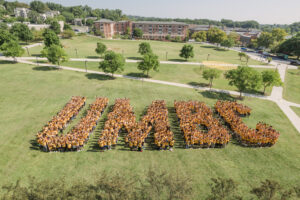


On the last Saturday in September, the basketball courts in the RAC were filled with teams of a different sort than usual. Hundreds of students from UMBC and other universities huddled around computer screens, talking and typing. The occasion was the 12th annual hackUMBC, a 24-hour competition where students collaborate to create technical solutions to problems that matter to them.
For Sarah Tran, a senior computer science major, it was her third time attending hackUMBC. “It’s cool to see how much it has grown and improved,” she says. Tran had formed a team with fellow junior computer science major Rebecca Ko, junior computer science major Javier Ramirez, and first-year master’s student in computer science Andrew Wenstrand. They were working on an app to help trick-or-treaters and homeowners see which houses are participating and what candy is on offer.
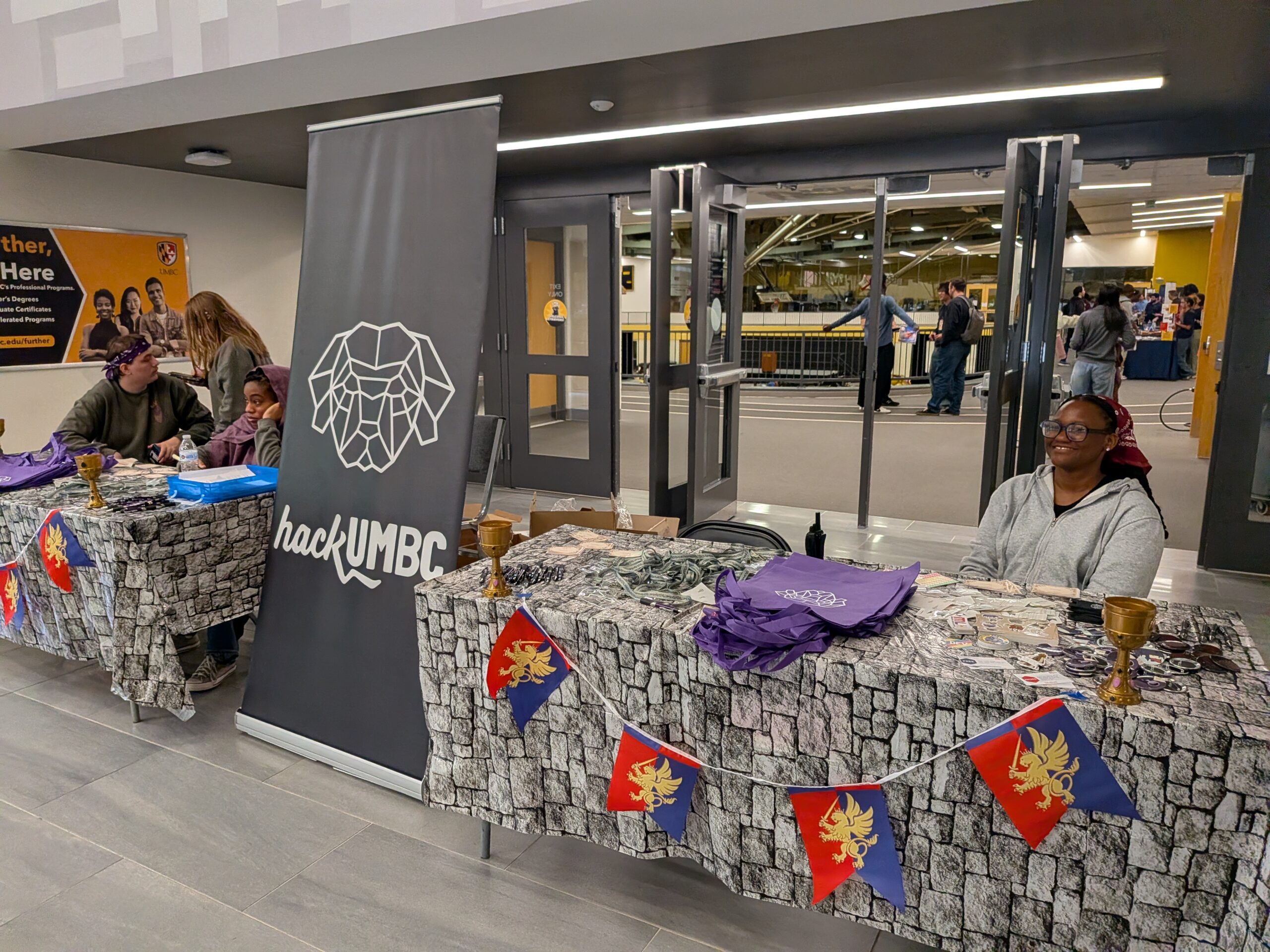
This year marked the first time hackUMBC was held in the RAC. There was plenty of space for students to spread out and for the student organizers and sponsors to host networking events, workshops, stress-busting games, and other activities. Companies such as T. Rowe Price, Nightwing, Johns Hopkins University Applied Physics Laboratory, and Realm One were on-site, giving participants the opportunity to learn about jobs and internships and showcase their skills to representatives.
The hackathon tracks, which offered specific themes, problem areas, or categories that guided participants in focusing their projects, were all run by fellow UMBC student organizations this year, says Bella Goltser, the president of hackUMBC and a senior computer science major. “We really focused on inter-club collaboration,” she says, with clubs such as CyberDawgs, the Game Developers Club, and the Pre-Med Society all pitching in.

In a fast-changing computer science landscape, hackathons may matter more than ever, Goltser says: “They are great for learning new technologies, building skills outside of the classroom, and understanding how to use AI in the tech realm.”
Frank Lopez, a junior computer science major and first-time hackUMBC participant, says his team, including Erin Yuson, a sophomore computer engineering student, her friend Dominic Sizemore, a student in electrical engineering at University of Maryland, College Park, and Hanna Wu, a first year biochemistry and molecular biology major, ultimately turned to Google’s AI framework MediaPipe for their project to “break down” dance videos into small learnable steps.

“As a dancer myself, I’m very excited about our program and can confidently say that there will be more to come with this app in the future,” Lopez says. Overall, he says his whole team was impressed with the hackUMBC experience. “As first time hackers, there was definitely space for some anxiety, but we really felt welcomed. We made use of the opportunity to network and see other cool projects, and for me that was the most memorable and fun part of the event.”