

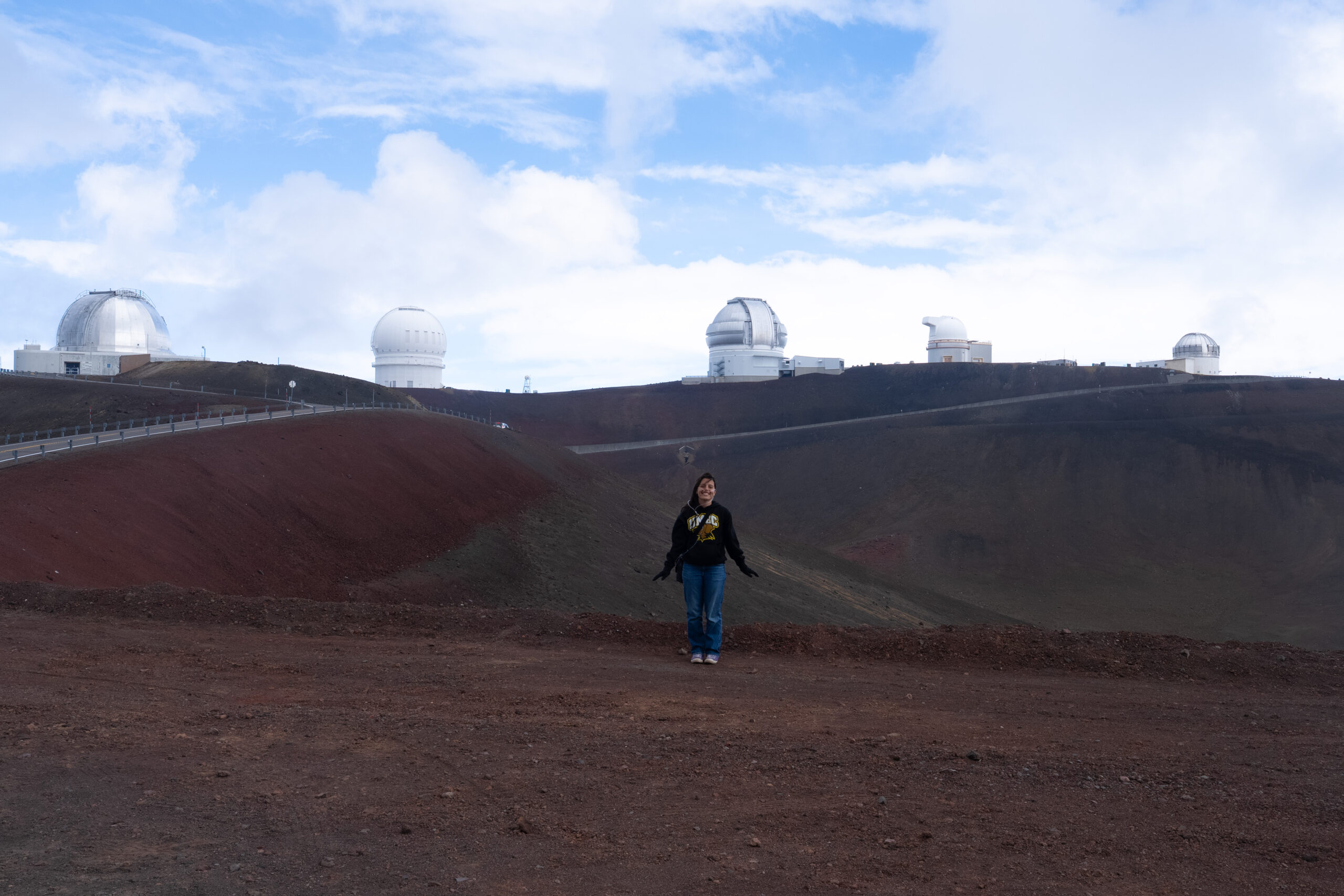
UMBC undergraduate students Noah Reichardt and Morgan Robbins spent this summer in Hawai‘i at one of the world’s top astronomy institutes, studying supermassive black holes and colliding galaxies, hiking volcanos, building their scientific networks, and refining their career goals. Their experiences at the Institute for Astronomy (IfA) at the University of Hawaiʻi at Mānoa was made possible by a National Science Foundation grant led by UMBC physicist Adi Foord and her collaborators, including David Sanders at the IfA.
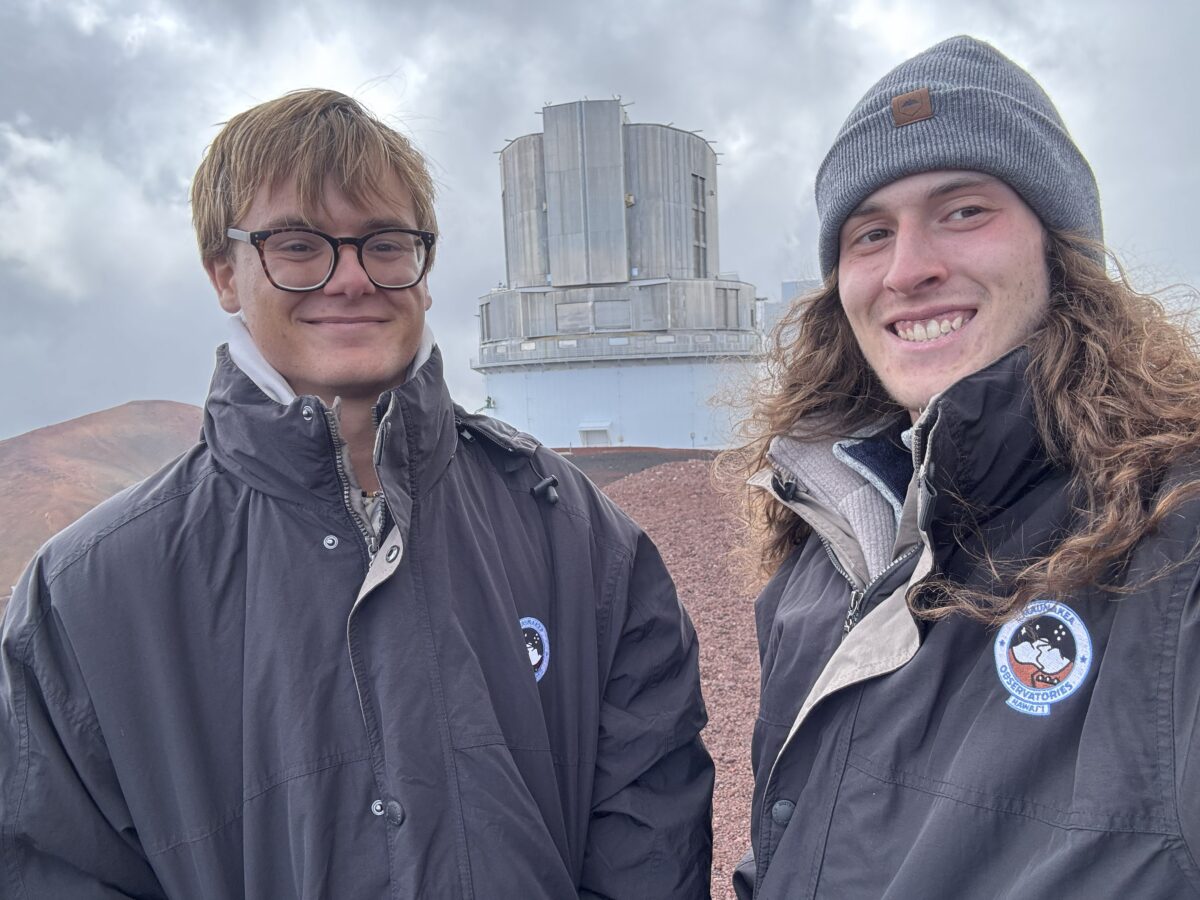
Robbins and Reichardt’s research projects looked at active galactic nuclei (AGN)—a small subset of supermassive black holes that are actively growing by gobbling up matter from their surroundings. To explore these rare cosmic entities, Reichardt and Robbins used fresh data from the James Webb Space Telescope and the Subaru Telescope, located near the summit of Mauna Kea, a dormant volcano in Hawai‘i.
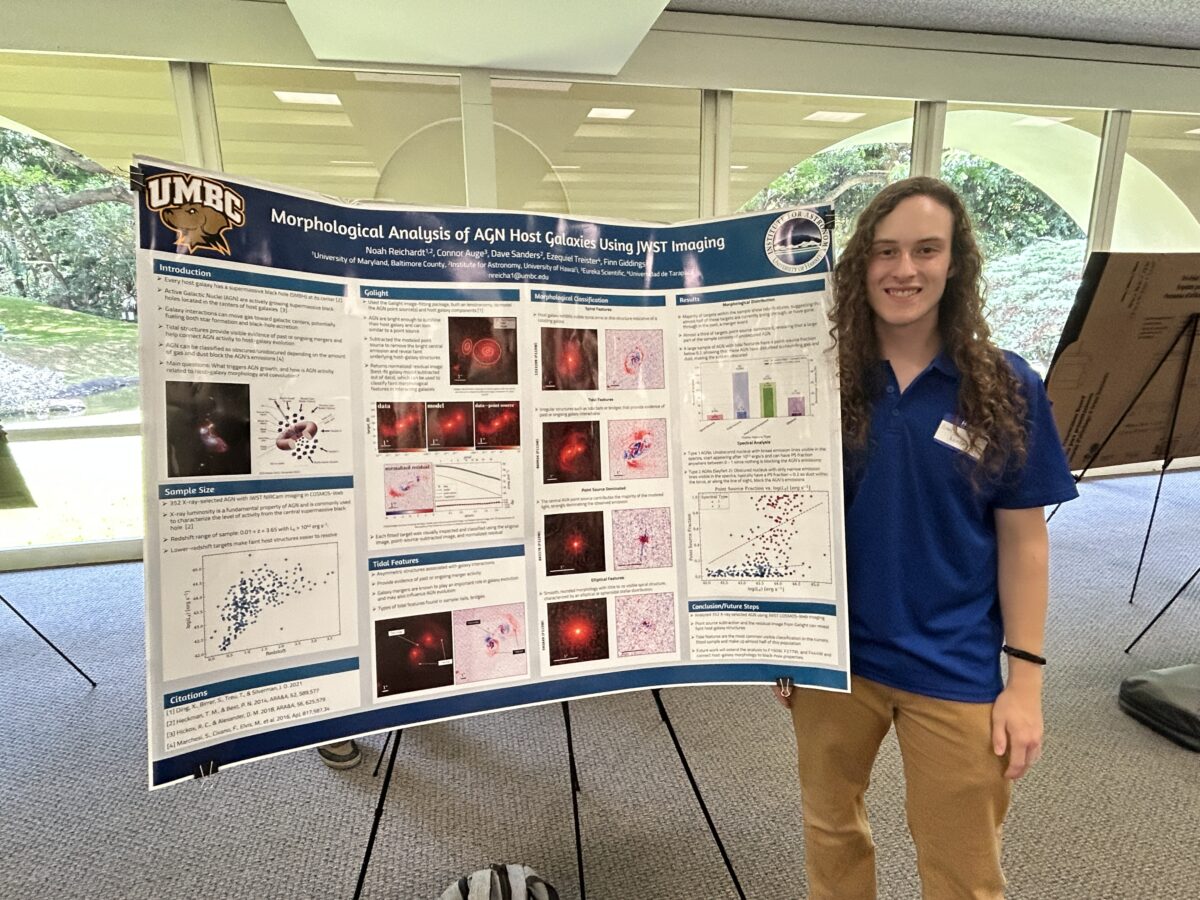
Reichardt, a junior physics major, examined images of 352 active galactic nuclei, hunting for streams of gas and dust that can indicate past or ongoing galaxy collisions. Studying these streams can help explain how black holes and their host galaxies interact. Robbins took a different approach, analyzing 350 spectra—observations of the wavelengths of light coming from supermassive black holes—to measure the masses of 140 AGN. Together, their work paints a richer picture of how these cosmic giants evolve.
Expanding horizons
But the science was only part of the story. Both Reichardt and Robbins stepped into new territory as researchers, growing their skills and becoming more independent. Through writing his first scientific paper, Reichardt is learning how researchers take piles of raw data and turn them into a polished manuscript. Authoring a scientific paper as an undergraduate is already rare, but Reichardt will be listed as first author, indicating his leadership in the work. He also designed his first research poster and presented it to graduate students, faculty, and staff at the IfA. The experience deepened his interest in galaxy structure and affirmed his future plans.
“I always wanted to go to graduate school for physics or astronomy, but this summer experience further cemented the idea,” Reichardt says. “After spending over two months at the IfA and learning more about the graduate program, it’s become one of my top choices.”
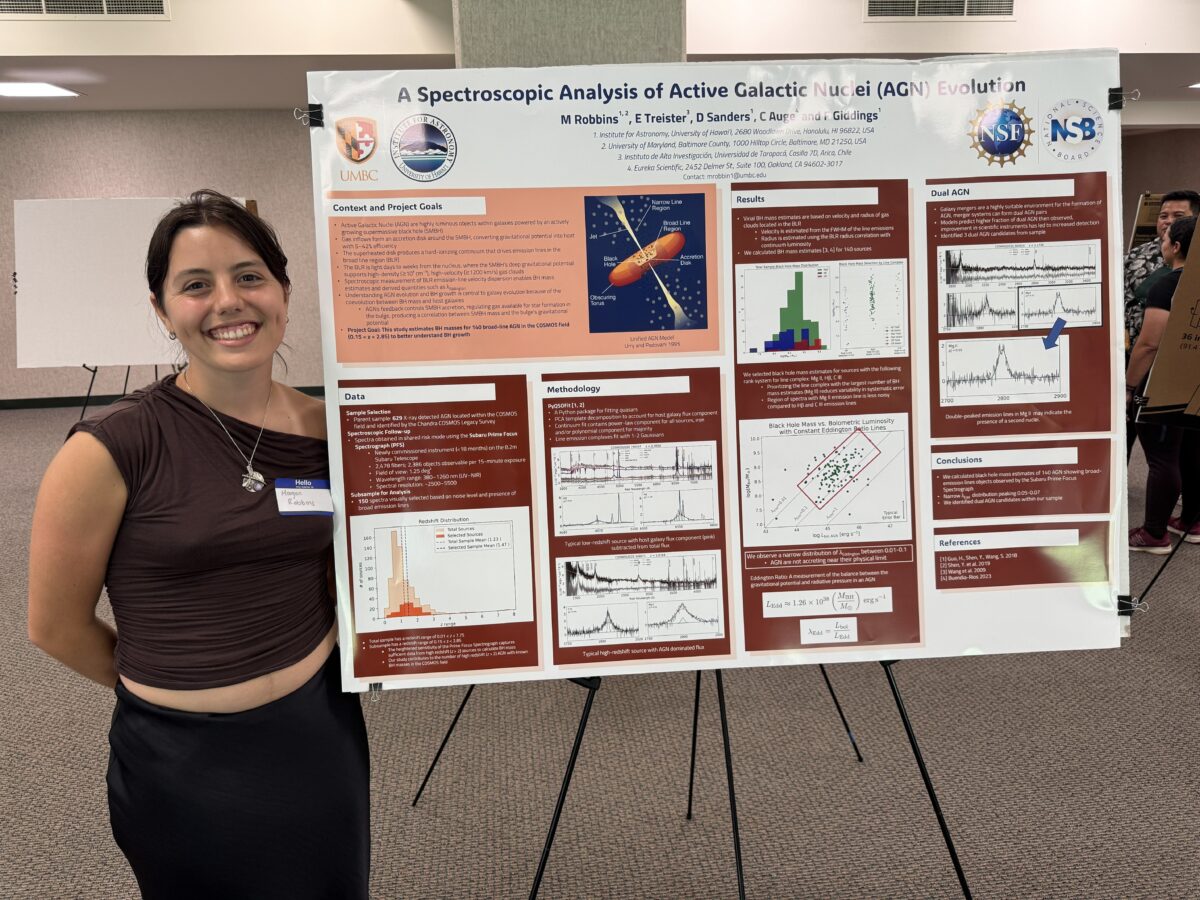
Robbins, a junior computer science major, arrived with strong coding skills but almost no formal astronomy background. By the end of the summer, she had analyzed hundreds of spectra, built tools to organize complex data, created her first science poster, given her first research talk, and started writing her first paper. “Both my scientific and professional experience greatly expanded this summer under the guidance of my mentors, and I am excited to continue working with them,” Robbins says.
“Conducting research at the Institute for Astronomy has opened a potential new career path for me,” Robbins adds. In her remaining time at UMBC, she plans to keep doing astronomy research that capitalizes on her computer science savvy, and she is seriously considering graduate school and a future in academia.

Growth and inspiration in Hawai’i
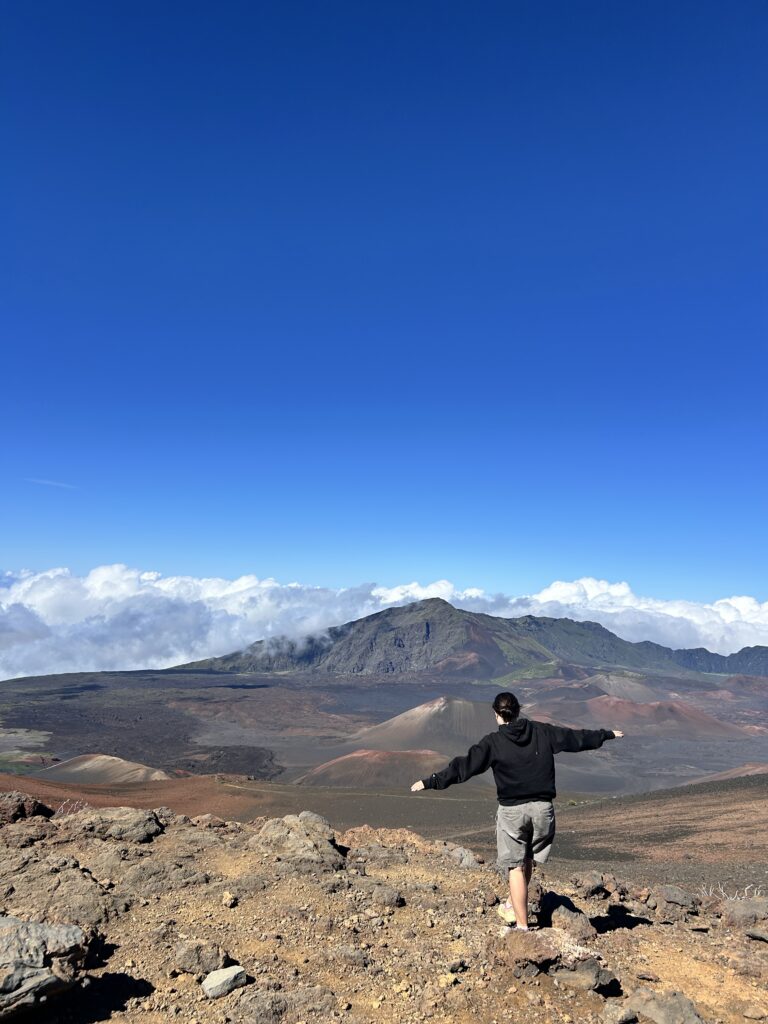
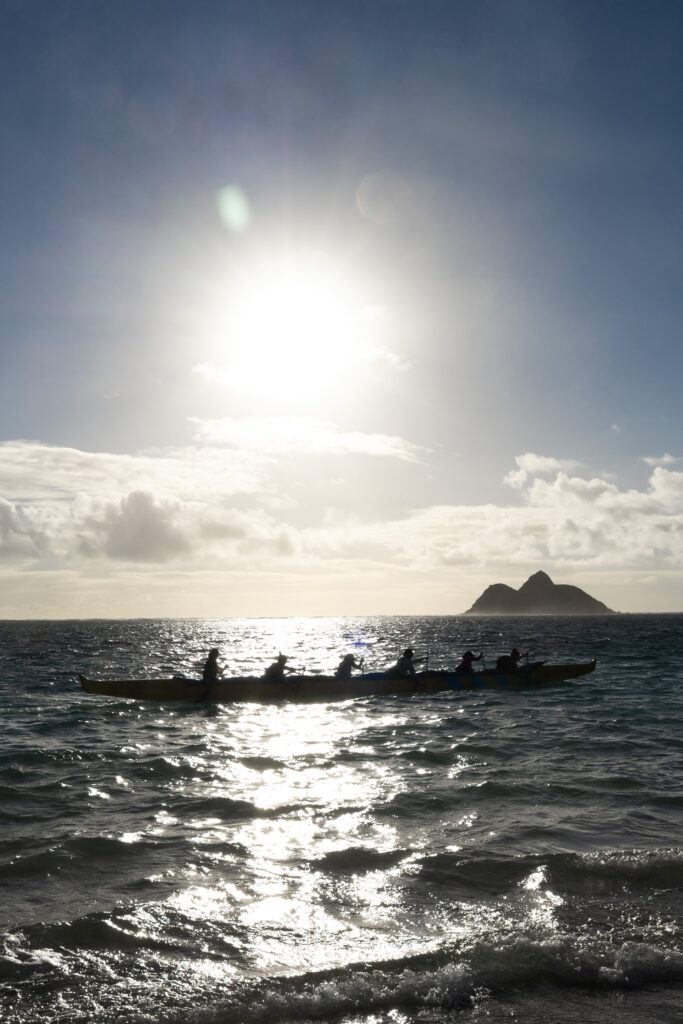
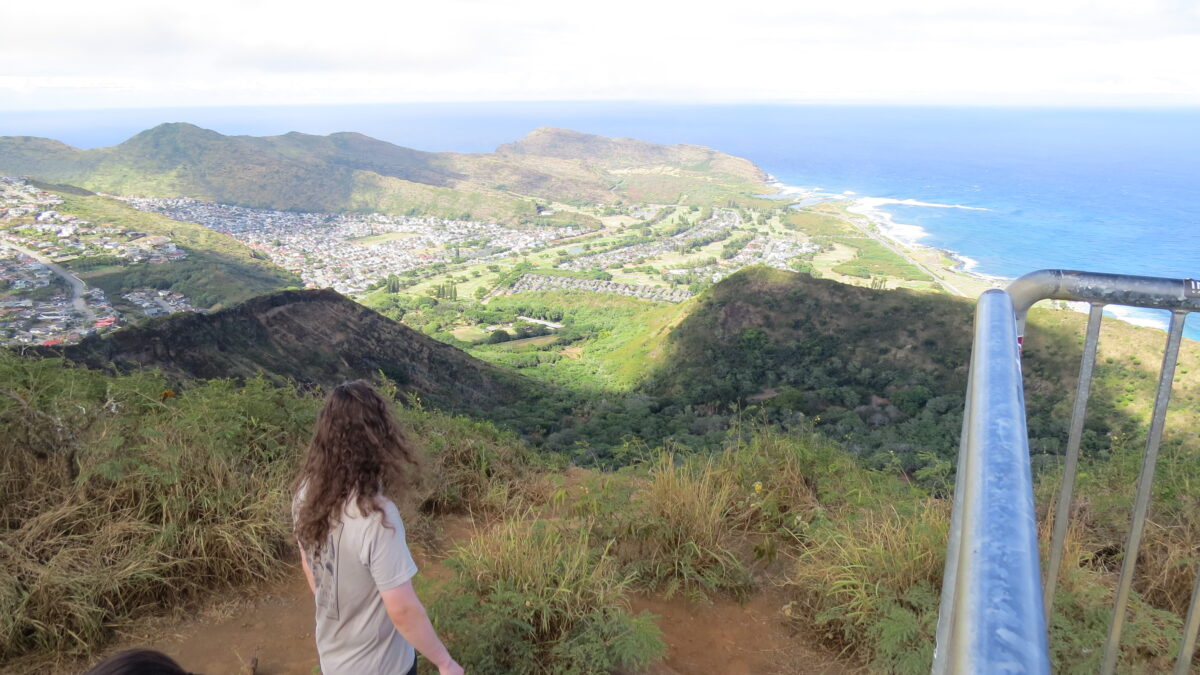
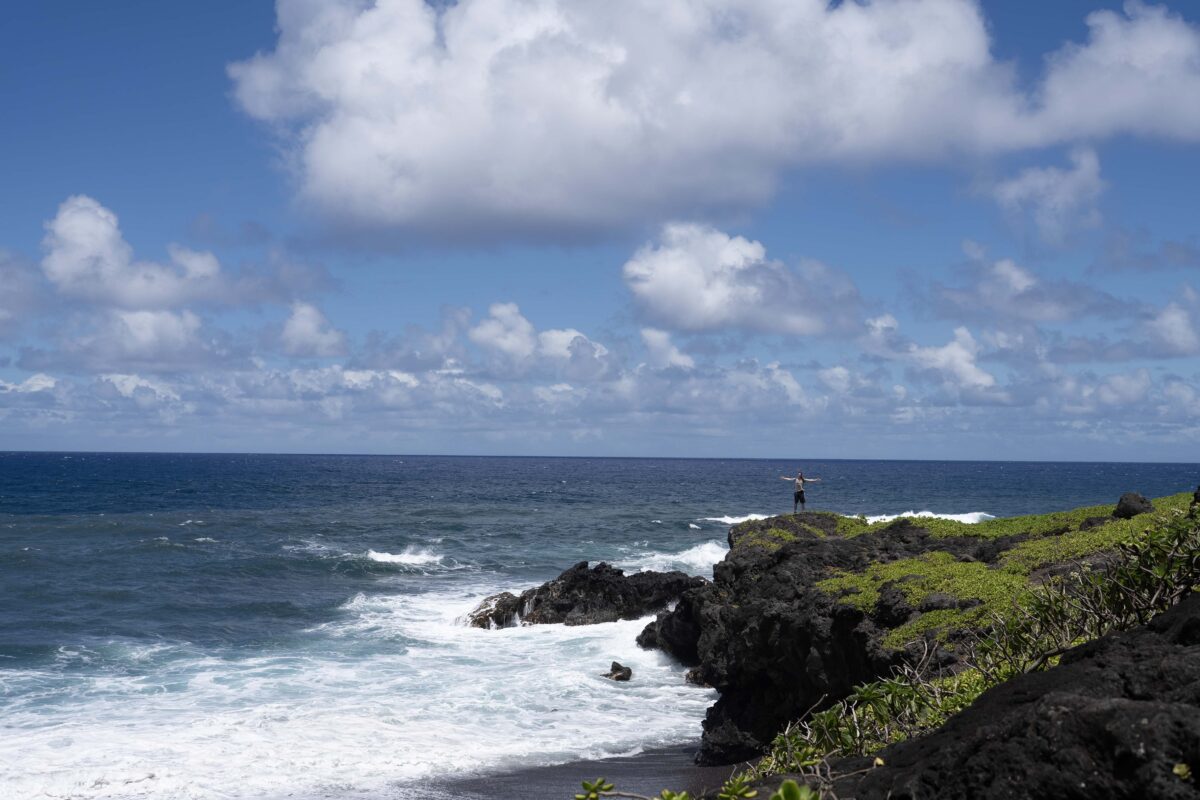
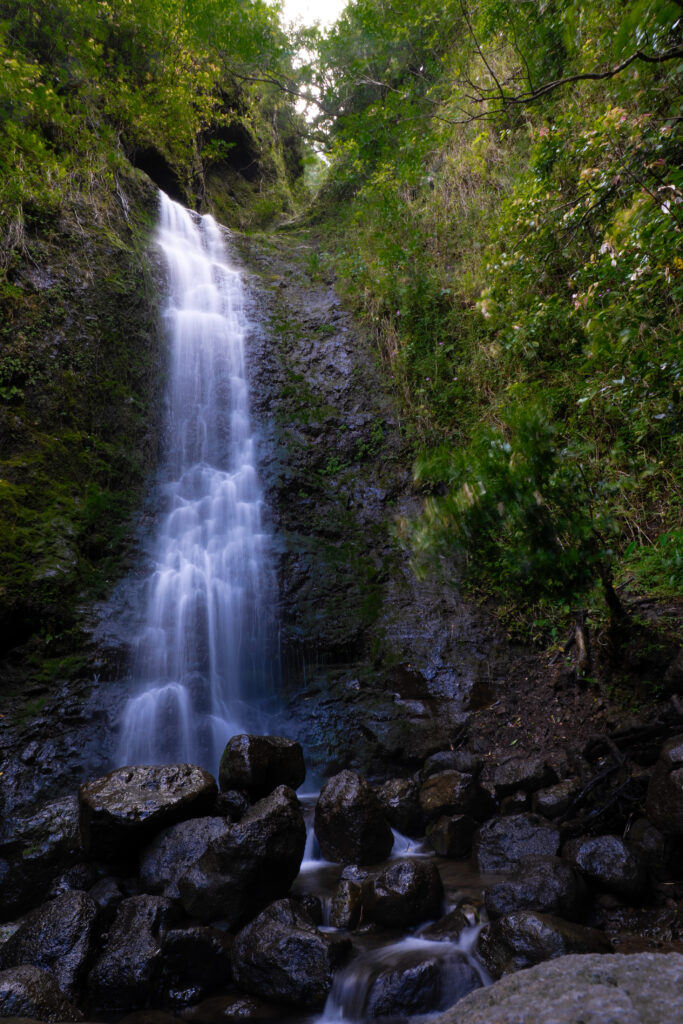
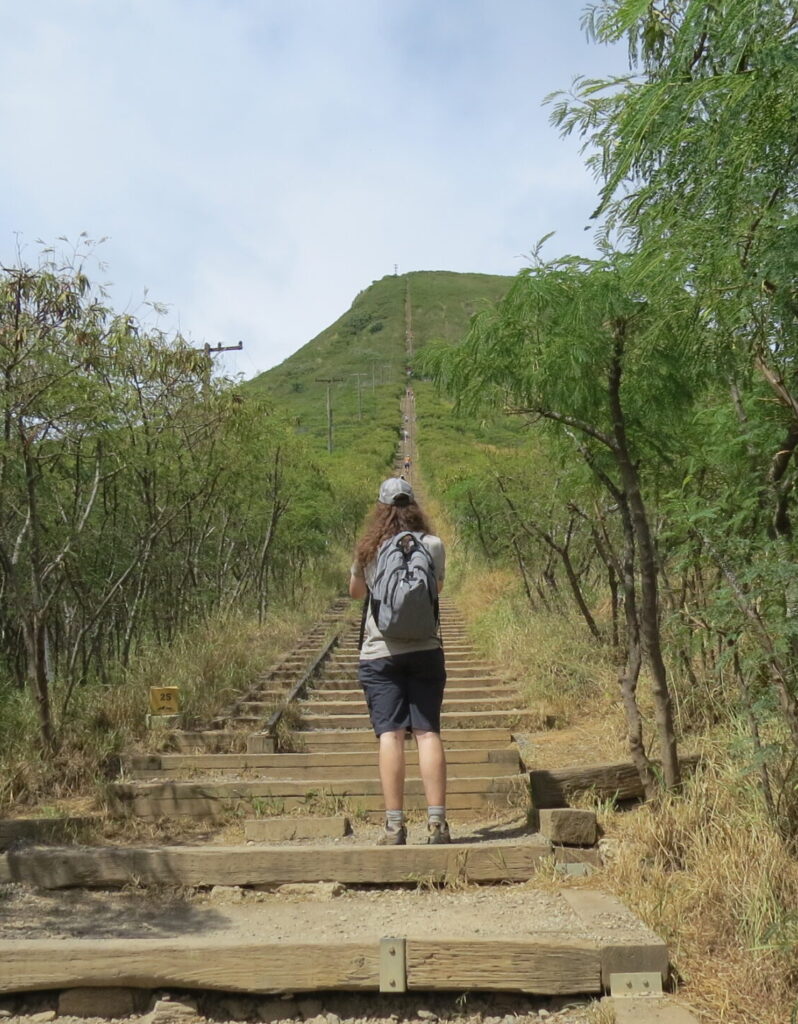
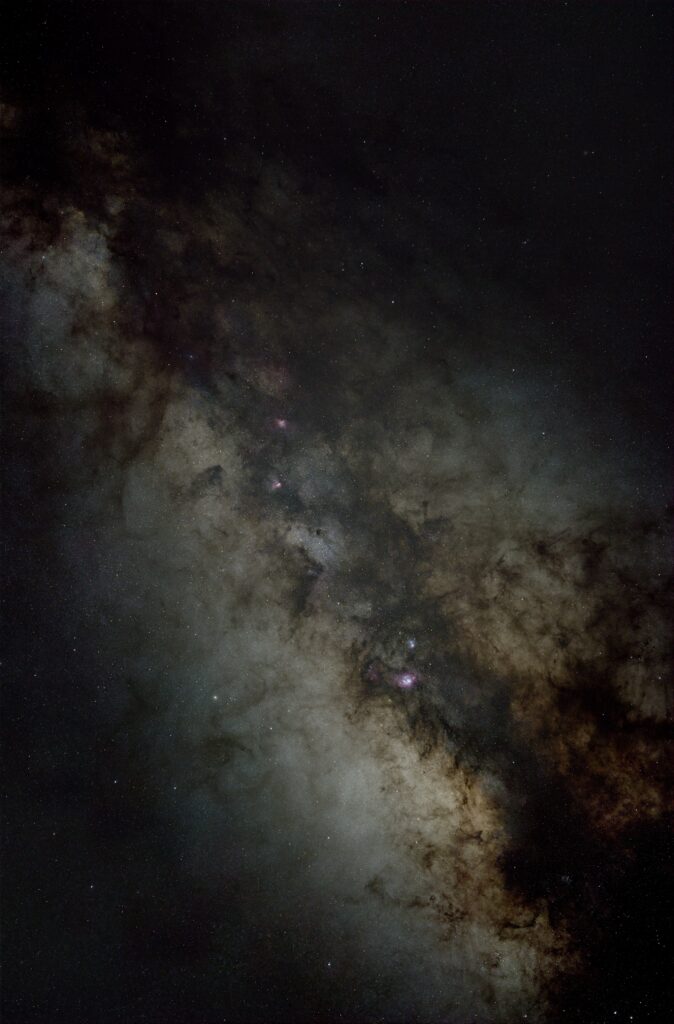
Outside the lab, the summer program immersed students in Hawaiian culture and history. Robbins and Reichardt helped maintain taro patches in a loʻi, a traditional type of terraced agriculture. They learned about native plant conservation and hiked in Hawaiʻi Volcanoes National Park. Reichardt’s favorite activity was a challenging hike along the Koʻolau Ridge, a steep mountain range on O‘ahu. Robbins enjoyed learning about traditional Polynesian wayfinding, which relies on natural signs like the stars, at the ‘Imiloa Astronomy Center. “Wayfinding is an incredibly complex art,” Robbins notes, one that was nearly lost and is now being carefully preserved and shared by groups like the Polynesian Voyaging Society. They also experienced sunset followed by stargazing under the Milky Way at the summit of Haleakalā on the Fourth of July.

Both students also built lasting connections. They worked closely with Sanders at IfA; Connor Auge, a postdoctoral research scientist at Eureka Scientific; and Ezequiel Treister, a principal investigator at the Institute for Astronomy of the Pontifical Catholic University of Chile. Robbins and Reichardt joined group meetings with scientists from institutions across the country, including the Space Telescope Science Institute in Baltimore. They also formed relationship with peers. “I made friends with students all over the U.S. and made a lot of great memories from the activities and trips we took,” Reichardt says. Robbins added that she hopes to keep those personal and professional ties for years to come.
When Reichardt and Robbins returned to campus for the fall semester and shared their experiences with Foord, with whom the two conduct research at UMBC, she was elated: “This is exactly the kind of growth and inspiration that I hoped to support with the grant.”
“I’m very grateful for the opportunity to conduct research at the IfA this summer,” Reichardt reflects. “It was an amazing experience.”