All posts by: Catalina Sofia Dansberger Duque


UMBC’s Nkiru Nnawulezi and D.C. community partners make the case for survivor-centered housing services

In fall 2016 the DC Coalition Against Domestic Violence (DCCADV) approached Nkiru Nnawulezi for her help collecting data on the experiences of domestic violence survivors in Washington D.C. She was eager to lend her expertise. 

“As a community psychologist, it is a dream come true to be able to do a study that community partners initiated, said they wanted, asked for, and would meet a particular need in the community,” says Nnawulezi.

Nnawulezi is an associate professor of psychology at UMBC and affiliate faculty at the Yale School of Public Health. Her research examines the factors that enhance equity in housing for domestic violence survivors, including survivors of color; queer and trans survivors; and those who are low-income, unhoused, experiencing addiction, living with HIV, or experiencing severe mental health conditions. 

She knew her first task for this major project would be to connect with community partners across D.C. to together identify the most pressing needs of local domestic violence survivors. 

Identifying the right question

Nnawulezi was already well-connected with a network of experts in her field, as associate editor of the Journal of Family Violence and on the editorial board of Community Psychology in the Global Perspective. She also serves as a research and evaluation advisor to the National Resource Center on Domestic Violence and Ujima: The National Center on Violence Against Women in the Black Community.

To begin this project she convened four round table discussions with scholars, service providers, and legal experts. This included participants from American University’s Washington College of Law Domestic Violence Clinic; Catholic University’s Columbus Community Legal Services and Families and the Law Clinic; George Mason University; Georgetown Law’s Domestic Violence Clinic; GW Law’s Family Justice Litigation Clinic; and Howard University’s Interpersonal Violence Prevention Program.

The meetings revealed housing as the most pressing issue facing survivors of domestic violence in Washington, D.C. The Virginia Williams Family Resource Center (VWFRC) serves as the central point of intake for families experiencing housing instability in the District. But many survivors seeking housing assistance through the center were not being housed. Understanding why and how this was happening became the purpose of the study.

Designing a community-based study

With a research question in mind and a research community established, Nnawulezi and Liz Odongo, DCCADV director of grants and programs, co-founded the Domestic Violence Action Research Collective (DVARC). To support this work, the collective received funding from the Center for Victim Research, through the Office for Victims of Crime within the U.S. Department of Justice. 

“DVARC gathers victimization researchers, advocates, and practitioners to design and conduct community-based research and evaluation studies to enhance survivors’ safety, build their power, and support policy and practice within multiple systems across the city,” says Nnawulezi.

The collective’s first task would be to better understand the VWFRC’s screening process, including the questions the center used to assess whether violence was the primary cause of current homelessness and survivors’ perceptions of the screening process. Next, they would determine how the screening process influenced survivors’ future decision making and experiences with housing support.

Over a period of a year, the research team connected with 779 clients seeking housing assistance and identified 291 of that group as having experienced domestic violence. Of that group, 101 agreed to participate in the research study. The final sample that participated in an in-depth confidential interview included 41 survivors. All were survivors between the ages of 24 and 52, and they were primarily Black, heterosexual, cisgender women. 

Survivor experiences

The team’s data show that domestic violence survivors reported numerous systemic and cultural barriers to access safe, affordable, and equitable housing in Washington, D.C. Of the 41 women, only 4 received immediate crisis housing assistance from the VWFRC, despite significant need. 

Survivors desired to be treated with more respect by staff, and get housing resource support that aligned with their individual needs. Instead, many women described treatment by staff as unfair or dismissive. A few reported bias incidents based on their race and class that made it increasingly challenging to ask for and receive services. Others reported not receiving services regardless of need, or having to return to the VWFRC an average of 2-5 times to attempt to become eligible for services. 

Staff were also not consistent in asking about or responding to safety concerns that survivors disclosed, participants reported. Some shared that they had experienced economic, verbal, and mental abuse, but because they had not experienced physical abuse they were not considered survivors. And some respondents who received assistance reported not having access to the additional financial resources needed to move. 

Making lasting change

The DVARC recommends that the District continue to fund sustainable community-based systems of support that are survivor-centered and trauma-informed, and that address the challenges already identified. To determine next steps, the DCCADV also convened an advisory group with survivors from the study to further review the preliminary data and provide recommendations for future advocacy and research studies.

“I believe that it is possible for us to have a city where survivors are treated justly and fairly,” says Nnawulezi. “I love being able to think at the systems level about what needs to shift to improve people’s lives. It’s an incredible opportunity to be a part of this group, in the city that I love, working with people that I love, and working to improve the lives of people that I am deeply committed to.”

Turning the Tides

For Christopher Tong, discovering clues hidden in texts documenting history’s most devastating floods isn’t just about the promise of making social, cultural, and political change. It’s also a personal journey inspired by generations of his own family.

In July of 2021, the city of Zhengzhou, China, had more than seven inches of rain in one hour, flooding subway train cars filled with commuters and forcing hundreds of thousands to evacuate.

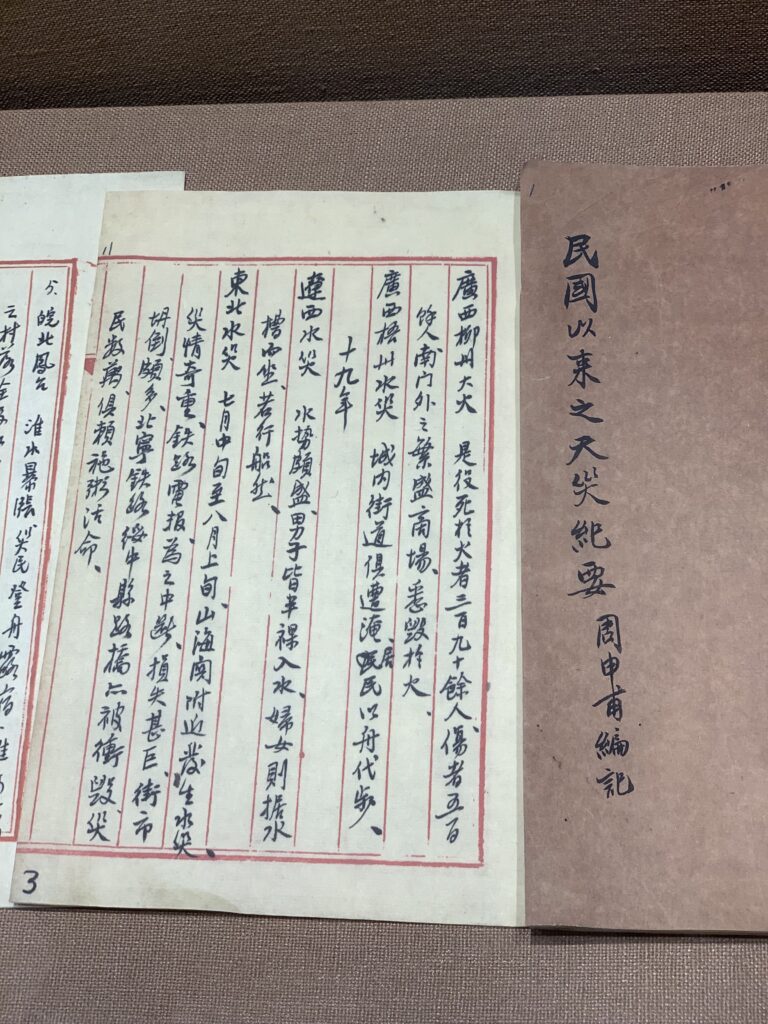
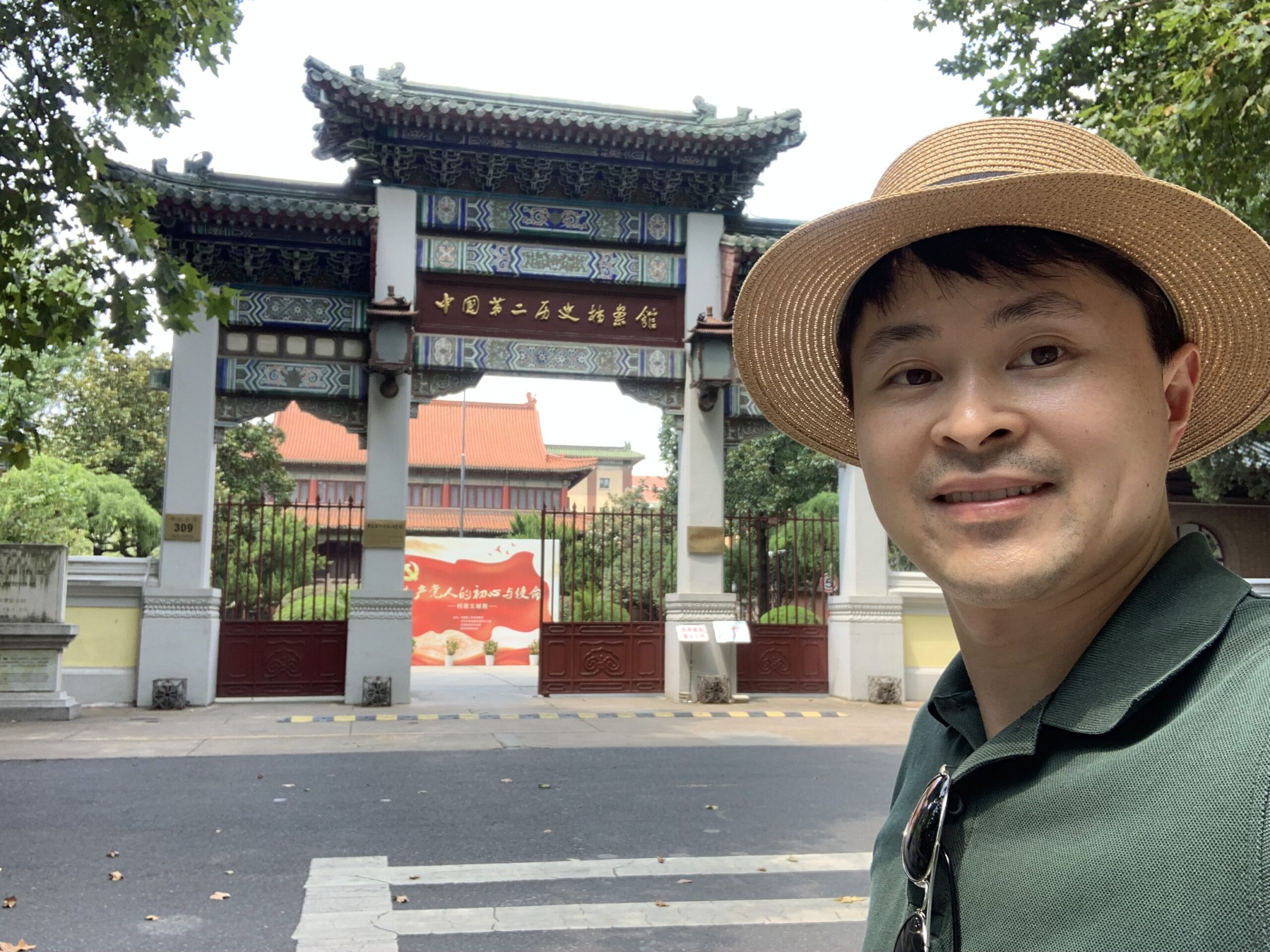
Around this time Christopher K. Tong, an assistant professor of modern languages, linguistics, and intercultural communication, was surrounded by materials he had collected during his trip to the People’s Republic of China at the Hubei Provincial Archive in Wuhan and from the No. 2 Historical Archive in Nanjing, the national repository for Republican-era government documents. He was translating and analyzing historical, government, and personal documents regarding two major environmental disasters in China during the 1930s: the Yangzi River and Yellow River floods.

Nearly a century ago, the communities surrounding the third- and sixth-longest river systems in the world experienced the most severe flooding in modern China’s history, inundating thousands of miles of land, killing millions of people, and leading to extensive disease and famine.

Witnessing the coverage of the Zhengzhou flood, and watching the past and present intersect, was an extraordinary moment for Tong. Live, minute-by-minute social media posts gave insight into the catastrophic experience. By contrast, the floods from the 1930s did not have such personal coverage. First-person accounts tended to be handwritten letters and only some reached audiences beyond their villages, allowing for a select few, in cities far away from the areas most impacted, to understand what was happening on the ground.

“The Zhengzhou floods confirmed for me how important environmental humanities research is and how this scholarship sheds light on society and politics,” says Tong, who compares the impact of the floods to the impact the Dust Bowl of America’s Great Depression had on American society and politics. This deep research into the political—and personal—nature of environmental disasters like these has won Tong recognition among humanities scholars, social scientists, and policy analysts alike.

The Henry Luce Foundation and the American Council of Learned Societies recently awarded Tong one of 11 prestigious Early Career Fellowships in China Studies, providing funding for an academic year of research, writing, and curriculum development to help meet the needs of China studies in the 21st century. Tong will use this time and rich material to write his book on ecological consciousness and political representation in modern China.

“One of the goals of my book is to offer readers resources to ‘think with China’ on shared concerns such as ecological crises, human rights, and animal advocacy,” says Tong. “I see my work as contributing to cultural diplomacy and what people in the policy world call ‘China literacy.’”

Silent all these years

Historical and literary narratives of the Yangzi River and Yellow River floods tend to shift between focusing on facts and offering a political party’s explanation. The events are inevitably understood within the larger framework of building a national identity, especially the revolutionary history of the People’s Republic of China.

“Official narratives generally serve to build national unity, but there are always gaps and discrepancies in these narratives. It’s about whose voices are missing in the official narratives and why,” says Tong. “Unfortunately, people forget these voices over time, and my project is to recover them.

Wanting to delve into the archives on the floods to see what histories emerged, Tong first had to secure access to the archives. With access granted and the assistance of a Fulbright grant and Nanjing University, between 2018 and 2019 Tong spent 10 months in China analyzing thousands of documents written in classical and modern Chinese. In the archives, amongst letters written by survivors, correspondence between county officials and provincial and central governments lists of survivors at refugee camps, maps, logistical documents, and photos never before studied, was one of many untold stories:

“There are those who try to rescue their parents, but die in the water…There are those who hold their wives and children by the hand, but end up drowning together…[and] families that manage to escape on a single raft, but sink in the middle of the current.”

This excerpt of a rare petition letter written by a village representative was in the archives and mirrored accounts throughout the archives that spoke of death and survival. These voices, silent for decades, were not a story of revolutionary action as many histories of modern China would imply. What Tong unearthed bears witness to the lived experience of rural communities focused on repairing and managing loss. They sought help from government officials, relief workers, each other, and were more civically engaged than previously thought.

A paper with black character lined up into vertical columns separated by red lines.
An archival document listing major environmental disasters in Republican China. Image courtesy of Tong.

“Sometimes these efforts are not given enough consideration in disaster narratives and national histories,” says Tong. “But I believe them to be important as building blocks of proto-democratic practices.” He hopes it will inspire the reconceptualization of Chinese literature and history in the early 20th century.

Kirk Denton, professor emeritus of Chinese literature at the Ohio State University and a mentor to Tong through UMBC’s Eminent Scholar Mentoring Program, gave Tong important feedback based on his own research on the representation of historical memory in Chinese and Taiwanese museums. Over the years, Denton has witnessed the evolution of Tong’s work.

“I was heartened to see a young man mature into such an accomplished scholar,” says Denton, who notes that Tong’s work “is at the forefront of the environmental humanities.”

Jessica Berman, professor of English and director of UMBC’s Dresher Center for the Humanities, says that as a scholar of comparative literature, “Christopher uses the core methods of textual analysis, critical theory, and intellectual history to bring out the ramifications of cross-cultural environmental thinking between China and the U.S. in the early 20th century.”

“The climate crisis is often portrayed as something serious that happens over time, like global warming,” says Tong. “However, with the Dust Bowl in the U. S. and floods in China, these disasters were fast and extreme and often contributed to immediate shifts in public sentiment and the government’s capacity to govern.”

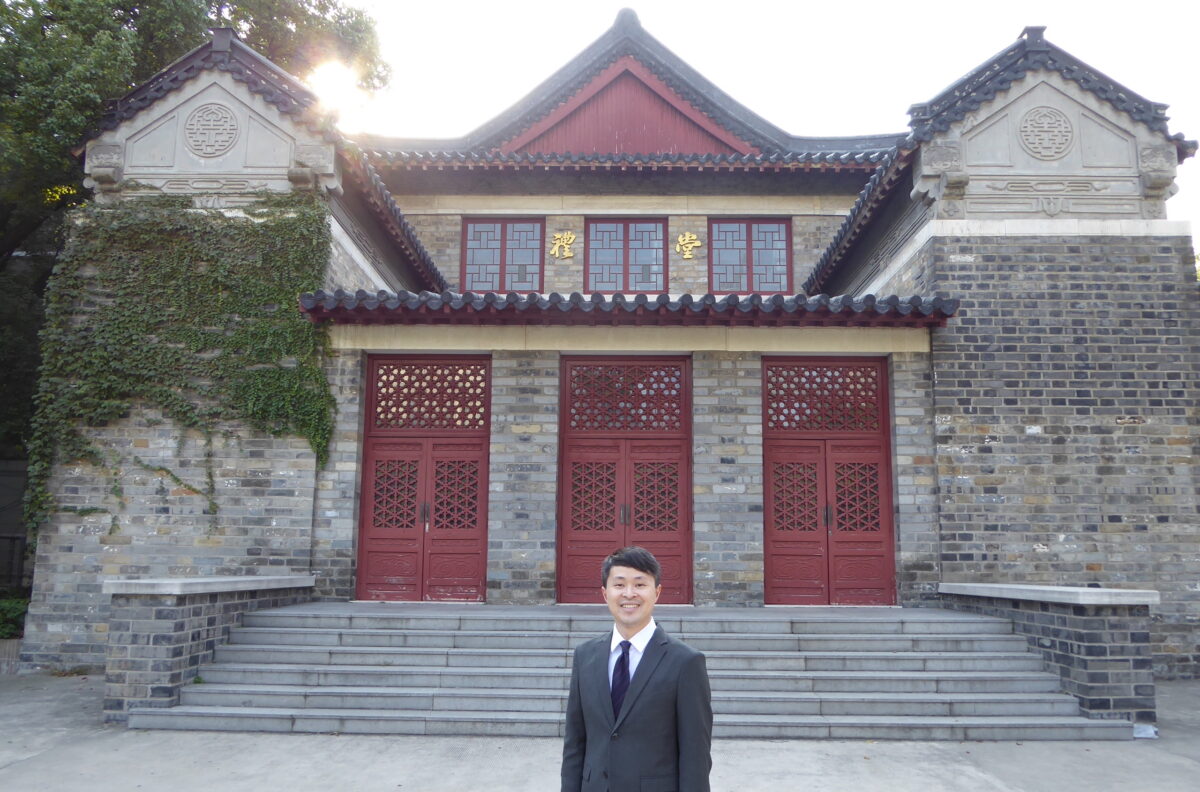
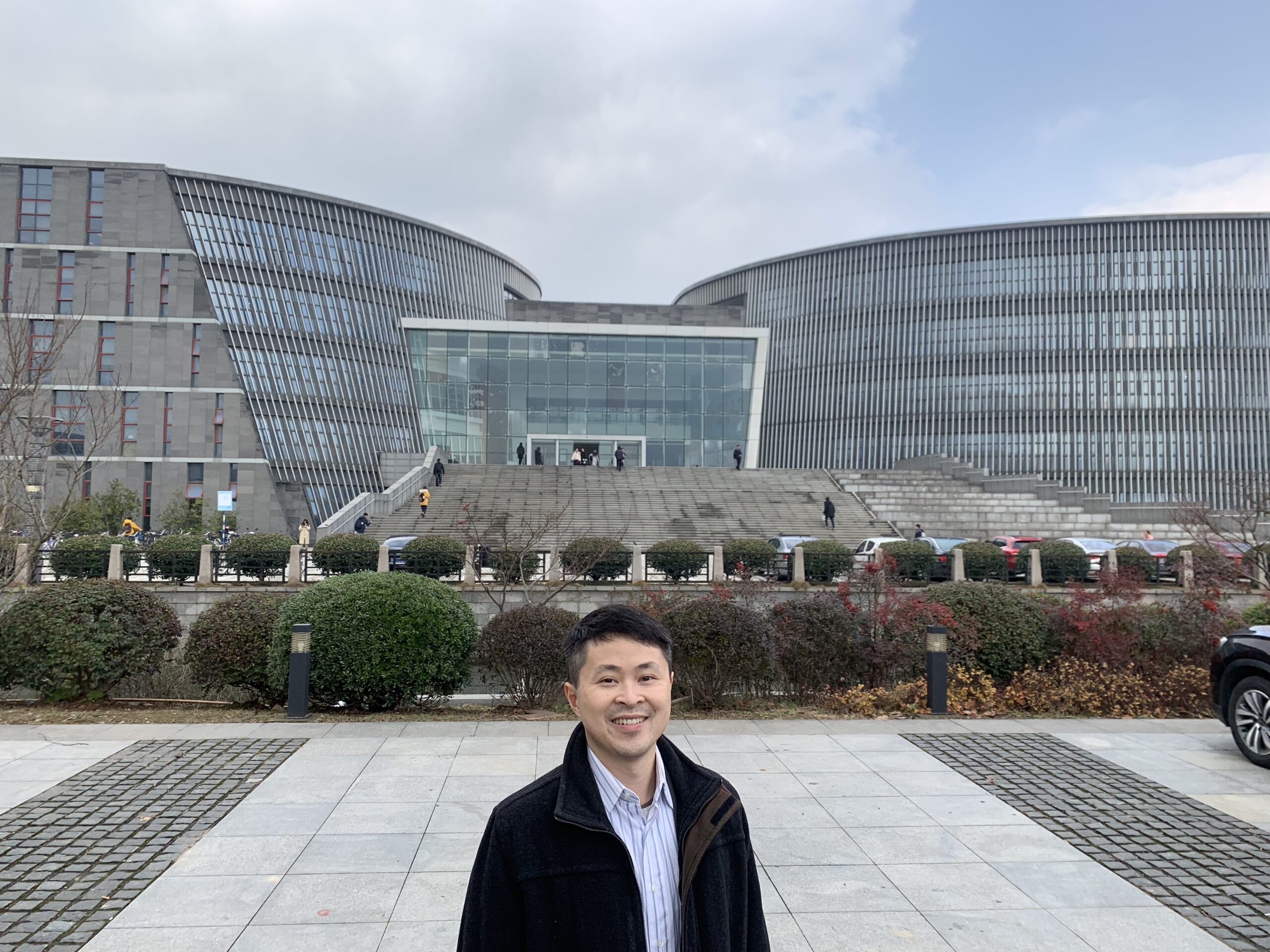
A person standing in front of a Nanjing University’s auditorium, a grey brick building with grey stone steps leading to three red wooden doors.
Tong stands in front of Nanjing University’s auditorium at the downtown campus, which features the fusion of traditional Chinese architectural elements and modern Western construction methods. Image courtesy of Tong.

Windows to the past

For Tong, the interconnectedness of his work is both personal and professional. His interest in 20th‑century China and Hong Kong stems from his maternal grandmother’s stories about her life in mainland China in the early 20th century.

“My maternal grandmother and her sibling were artists. She went to an art academy in China briefly during W WII and was the director of a clothing company in Hong Kong after the war. One of her sisters was a film star in Hong Kong who acted opposite a young Bruce Lee in the film Thunderstorm in 1957,” he says.

He remembers learning about his great‑great‑grandfather, Jiang Kong yin, a government official and well‑respected member of the gentry during the Qing dynasty, the last imperial dynasty in China. Jiang helped with the transition from the Qing dynasty to the Republic of China (ROC). Tong’s maternal grandfather learned English early because he was from one of the founding families whose fortune was tied to British Hong Kong. This was especially useful during WWII when he worked for Allied forces in southwestern China with Chinese aviators and the Flying Tigers, U. S. volunteer aviators who fought against Japan.

Tong also listened to the stories of his paternal grandfather who worked for an American company in Hong Kong after WWII. His paternal grandmother came from a peasant family and joined her siblings in the U.S. Her siblings ran a Chinese restaurant in Bakersfield, California. This side of Tong’s family eventually moved to the San Francisco Bay Area where his uncles would later work for the U. S. military. California has been home to most of Tong’s family since the late 1960s.

“I’m proud that my research not only broadens scholarship in the humanities,” shares Tong, “but it is also a way to maintain my connection to my family history and imagine what it was like for them to live through those periods.”

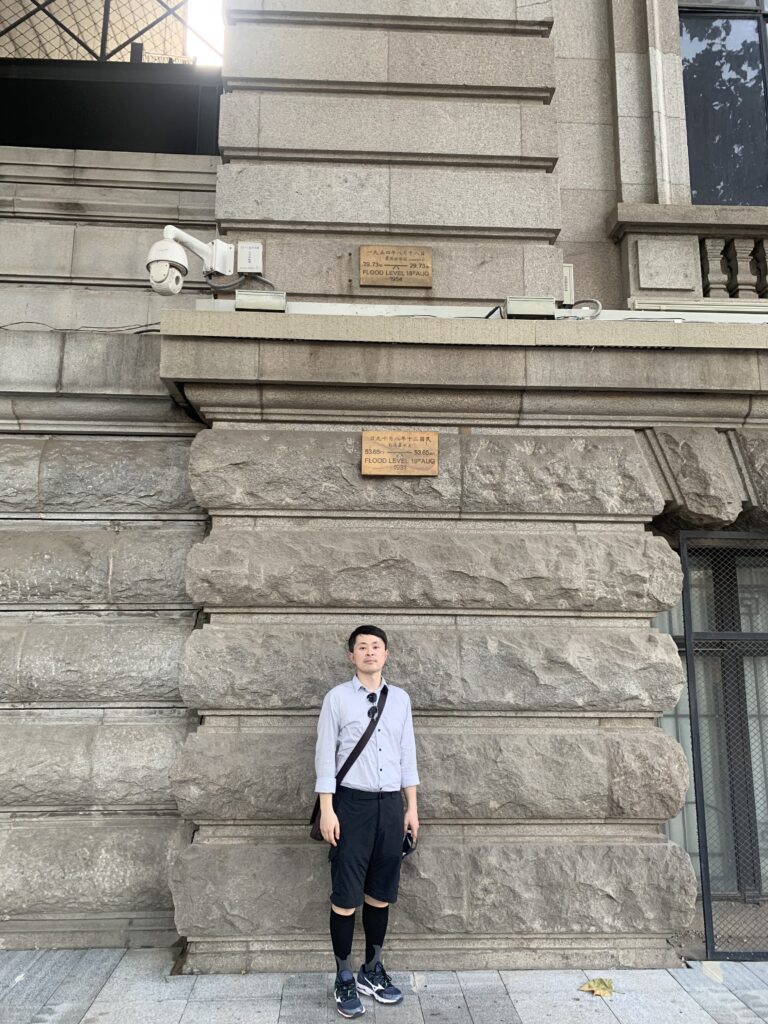
A person wearing a grey collar shirt and black shorts, socks, and sneakers stand in front of a large stone building underneath a plaque.
Tong stands below two plaques on the side of the former Hankow Customs House in Wuhan, China. The plaques are placed at the high-water marks of the 1931 floods (lower) and 1954 floods (higher). Image courtesy of Tong.

Mirrors

Tong’s work also holds space for voices missing in the humanities and the environmental movement. “Ecological thought draws heavily on European and North American traditions. Non-Western cultures are often viewed as derivative or marginal,” explains Tong. “Women, people of color, and disabled people are also underrepresented as contributors to environmentalism and animal advocacy.”

He remembers how his family often didn’t feel comfortable using green space, and when they did, people often assumed they were tourists. “Before COVID, I was visiting my grandmother and went for a hike in Muir Woods,” north of San Francisco, says Tong. “People asked me where I was from and were surprised to hear I grew up in the Bay Area.” The times when they did feel comfortable, when they enjoyed spending time outdoors, those experiences were memorable and inspired his career path.

Tong hopes to spur more inclusion and representation in the humanities. The STEM fields (science, technology, engineering, and math) have benefited from the talents and scholarship of Asian Americans and Pacific Islanders, he says, but the humanities have not had equal representation. As an Asian American with Hong Kong roots, Tong has often been the sole person of color or Asian American in classes and conferences. Often, he is mistaken as the “tech-person” or assumed to be in a STEM field, he explains.

Tamara Bhalla, an associate professor of American studies and affiliate faculty in the Asian Studies program, works with Tong on the board of the UMBC Asian and Asian American Faculty and Staff Council (AAAFSC). She says, “Chris has been a tremendous leader…He has brought his expansive intellect and global knowledge to bear in his approach to leadership in AAAFSC.”

Part of this work means going beyond the classroom. Tong participated in a series of talks at the Asian Art Museum of San Francisco on the theme of “After Hope.” His project helped raise awareness of Chinese-language literature in the context of Asian American history and addressed the pandemic, immigration policies, and what wellbeing means. He includes poetry found on Angel Island in the San Francisco Bay where Chinese immigrants were detained in the early 20th century because of the Chinese Exclusion Act.

“We’re an important part of the conversation on culture, politics, and history in American society,” he says. He wants to be one of the people that students can look to and think, “I can also pursue this path and have a career in academia in a humanistic field.”

Last year’s flood in Zhengzhou was one of many extreme weather events in China that summer. Many cities and villages in various provinces were bombarded by the floods, killing hundreds and displacing millions.

The New York Times reported on the different accounts given by government officials, meteorologists, and on social media, including those trapped in the flooded subway, wading in the water, leaving their homes, and taking care of the dead while also dealing with COVID-19.

In the meantime, Tong has documents that remain to be analyzed in hopes they will unveil more voices and bring further clarity to China’s environmental history and its future.

“The climate crisis affects everyone every where in some way. It’s the most important issue of our generation,” says Tong. “It affects every domain of knowledge production.”

* * * * *

Header Image: A scene from the Yangzi River in China. Photo by Dong Zhang on Unsplash (2017). All other photos shared by Tong.

Peaceworkers in Action

Michael Hassett and Chiara Collette first met each other in 2014 at the Los Angeles International Airport before boarding a 17-hour flight to the Kingdom of Tonga in the middle of the southwestern Pacific Ocean. Hassett applied to the Peace Corps hoping to be placed in Eastern Europe focusing on rural development. As a certified teacher, Collette didn’t have a specific country in mind. She was more interested in being able to teach. 

Both were placed in Tonga in teaching positions. Little did they know that this shared placement would permanently intertwine their personal and professional lives. In 2018, the couple got married and co-founded an internationally recognized nonprofit, Friends of Tonga—which earned a 2021 Literacy Award from the Library of Congress. Since then, Hassett and Collette have used their literacy educational tools and public policy skills gained at UMBC, and connections in Tonga to support the island nation they have come to love. 

Community building

Hassett, M.P.P. ’17, Ph.D. ’19, public policy, lived in the village of Fahefa on the main island of Tongatapu. Collette, M.A. ’21, TESOL, lived in the village of Ta’anga, on the outer island of ‘Eua part of an archipelago made of 170 islands. 

Working and living alongside their community members and fellow teachers, they helped design and implement programs to further develop students’ English speaking, writing, and reading skills. As the second official language of Tonga, students are expected to master English and complete their high school entrance exams in English. 

Hassett remembers within the first two months a parent asked if he could tutor her high school-aged son. He agreed to begin that very night.  “As I waited, I heard the pigs and chickens run across the yard and smelled the wafting smoke of cooking fires in the air,” he remembers. Then he heard people yelling in Tongan. ”Before my eyes, my one student expanded into a crowd of high school kids from around the village, all bearing plates of food, fresh fruits, vegetables, and bread,” he says. Their parents began running out of their houses to ask if he could tutor their children, too? His one-on-one tutoring session evolved into a weekly night class.

One of Collette’s favorite teaching memories was working with 3rd and 4th-grade students on a career interest project. “Students created life-size cardboard cutouts of their heads and hands and decorated them according to the profession of their choice. “They wrote and memorized speeches explaining their career choice,” says Collette. “Students then presented their speeches to their parents while wearing their ‘professional outfits.’” 

And similar to Hassett’s unexpected evening tutoring class, Collette developed a friendship with the principal at the primary school where she worked, offering help as he worked towards his bachelor’s degree in education from the University of the South Pacific remotely. 

Through these experiences, Collette and Hassett forged strong friendships and partnerships giving them a great sense of connection across all sectors of the Tongan community beyond their Peace Corps experience.

At the same time, their friendship evolved into a relationship. They started dating and continued long-distance while Hassett traveled after he completed his service and when they returned back to the United States until they relocated to Baltimore together so Hassett could matriculate into UMBC’s Public Policy program as a Shriver Peaceworker. Collette became a teacher in Baltimore City Public Schools and Anne Arundel County Public Schools eventually enrolling in UMBC’s M.A. TESOL program. 

Tongan allies

Focusing on their graduate degrees did not replace the bond that had grown between themselves and the people of Tonga. In 2018, cyclone Gita hit Tonga with over a hundred mile per hour winds causing the most damage in 60 years. They were not aware of any other U.S. non-profits directly working in Tonga that were not religiously affiliated. Equipped with their skills from the Peace Corps and UMBC, along with their community-engaged connections, the pair co-founded Friends of Tonga with Peace Corps colleagues, friends in the nonprofit and development community, and members of the Tongan community.

One such member is Tu’amelie Mahe, the principal Collette used to work with. He now serves as education officer for school grant and asset management at the Ministry of Education and is the current program manager for Friends of Tonga. There are also Tongan’s in New Zealand participating. “From the perspective of a New Zealand born Tongan, being a part of Friends of Tonga allows those Tongans, who are a part of the diaspora, to actively participate in charity work that directly benefits Tonga,” says Neomai Maka, a high school teacher in Auckland, New Zealand. Her parents originate from the villages of Fua’amotu and Tatakamotonga in Tonga.

What began as reactive disaster relief support work, grew to become a proactive Peace Corps model community supporting Tongan-identified initiatives like education resources, English language skill development, and building cyclone safe schools. 

“I am a friend of Tonga. I’m not Tongan. I can’t speak on their behalf,” shares Hassett. “I am not interested as a white man in telling Tongans what to do or what they need. I can be an ally and I can support them and champion the causes that they tell us they need help with.”

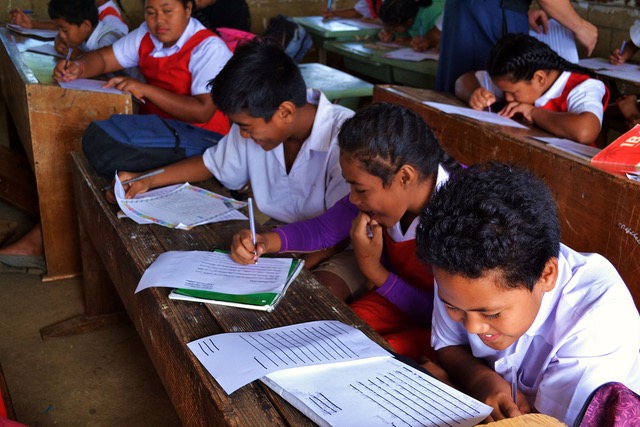
Children sitting on long wooden desks working on some pieces of paper.
Tongan children at school. Image courtesy of Hassett and Collette.

Weathering the storm

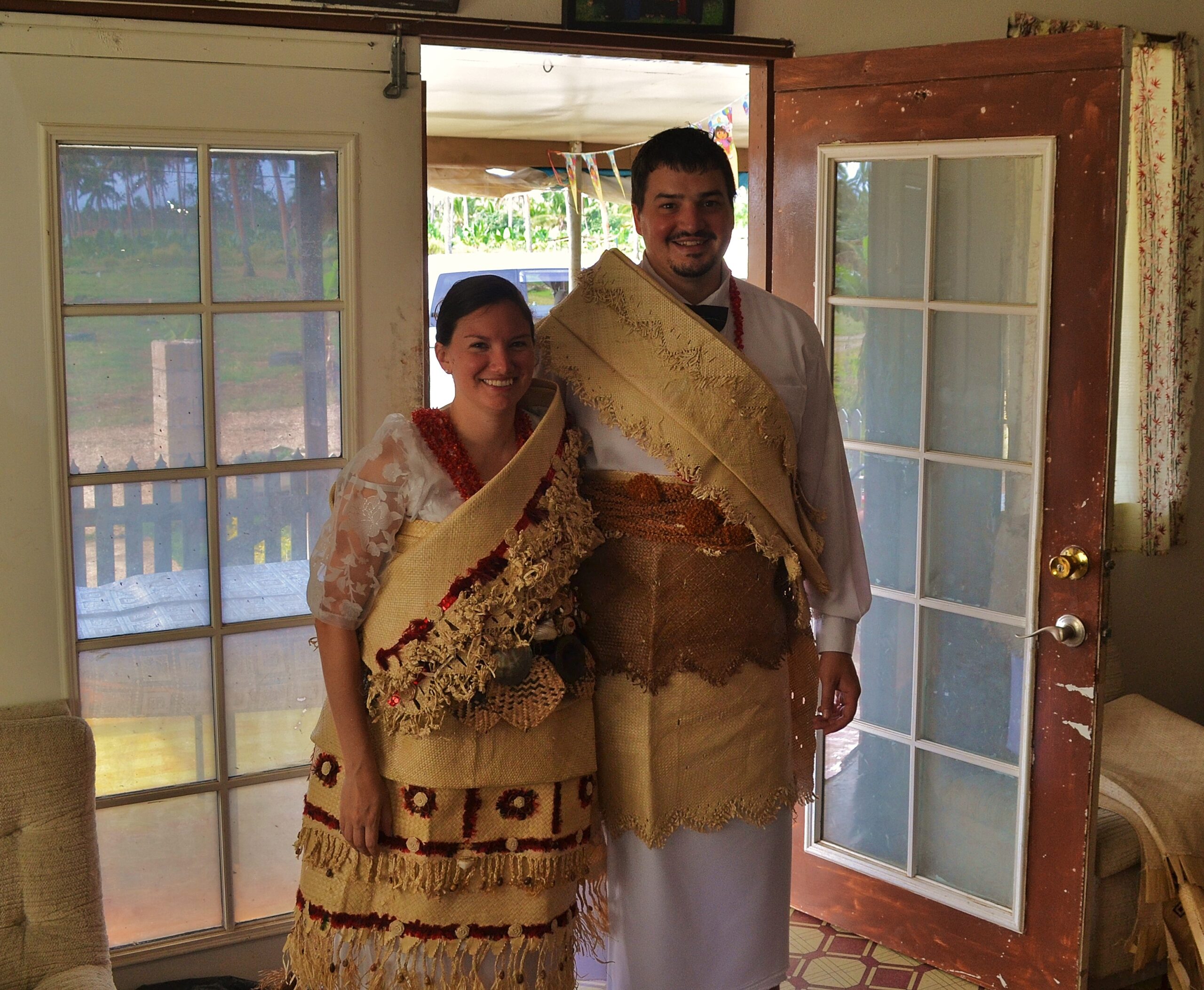
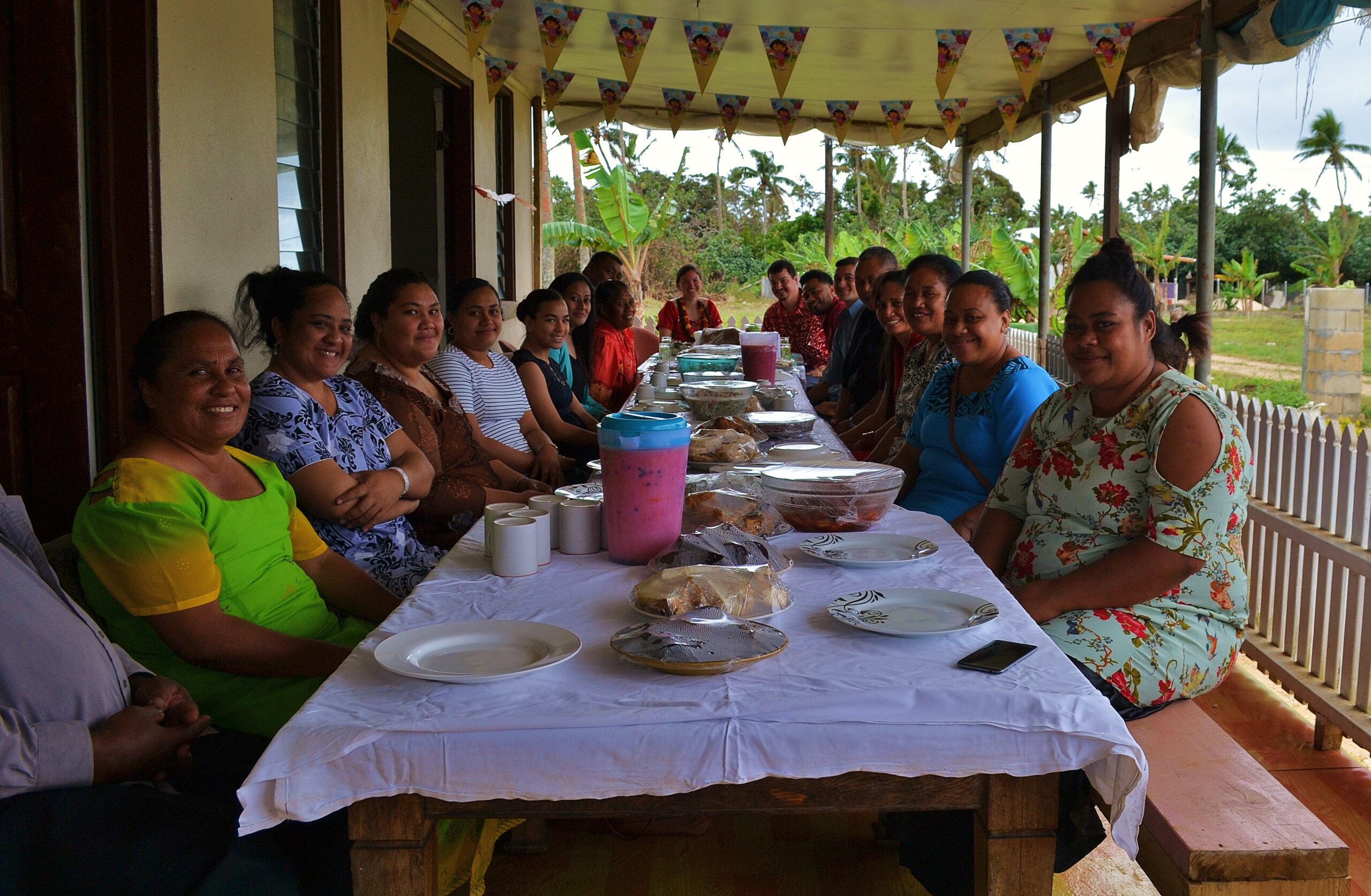
Later that year, they returned to Tonga for both their honeymoon and their Sapate Uluaki, a wedding celebration. Hassett’s host family, the Fainga’a family, planned this celebration weaving Hassett and Collette deeper into their Tongan community. 

During this visit, Friends of Tonga was asked to help rebuild the kindergarten that had been destroyed by a category four cyclone earlier in the year and had been operating out of a tent ever since. Collette and Hassett had lived through Cyclone Ian and Kofi in January and March 2014 respectively and witnessed the damage caused by bands of heavy rain, strong winds, and flash flooding.  

“We jumped in,” says Collette. The logistical challenges of building a school were great. They reached out to their friend who is the CEO of Schools for Children of the World. “It was a true collaborative effort between architects and engineers familiar with building schools in countries prone to hurricanes, the Tongan Ministry of Education, and community members,” says Hassett. Via a string of Facebook calls with engineers and architects, Tongan’s first cyclone and hurricane-resistant building was created. This one structure now functions as a school, community center, a shelter, and a place to house emergency supplies. The need for these types of structures was evident and a key factor in continuity of education and services.

Sustainable English language learning

Collette began working on assisting teachers find resources to improve English reading, writing, and speaking skills to increase student’s access to high school and further education opportunities. The obvious answer might have been increasing access to English language books but, with students spread over 170 islands, a central library would only give access to students living near the library. Books that are donated are often not aligned developmentally or content-wise. Buying books, transporting them, and managing the wear and tear caused by tropical and extreme weather makes a physical library costly and unsustainable.

The answer was not in the past but in the future. Wi-fi reaches most of the islands allowing at least one family member the use of a smartphone. A resource that is bound to grow makes digital resources sustainable. With permission from authors and volunteer readers, Collette developed a digital video library of English language beginner, intermediate, and advanced books. 

Today, the library has 85 books that teachers, parents, and students can download using very little data. The theories and best practices gained during her TESOL master’s program, guided Collette in developing an English language learning curriculum for teachers and parents to use in tandem. “A video library meant rural students who didn’t have access to English language materials could download a file and share it with friends and family,” says Collette. 

Collette and Hassett note that UMBC “is baked into all of our programming.” Joby Taylor, Ph.D. ’05, language, literacy, and culture, director of the Shriver Peaceworker Program, along with fellow Peaceworkers read many of the stories in the read-aloud program. Lauren Hamilton Edwards, assistant professor of public policy, is also guiding them in their strategic planning process. 

Dear Tonga

Reading was only part of the puzzle needed to improve English language skills. Students needed more practice writing in English for their high school entrance exam. Collette designed a penpal program between Tongan students and students in the U.S. The written conversation became a way to learn about other cultures, practice sentence structure, and purposeful communication needed in school and in jobs. 

“The results of a curriculum specifically for Tongan English language learners is exactly what the teachers, the Ministry of Education, and Friends of Tonga hoped it would be,” says Hassett. “Based on an analysis I did, the high school entrance exam scores increased by 10%.” 

The Library of Congress took note and awarded Friends of Tonga, one of only 14 recipients globally, with a 2021 Literacy Award for “their implementation of highly successful practices in literacy promotion… and in recognition of the need for the international community to unite in achieving universal literacy.”

This was only the beginning. As an early childhood educator, Collette began searching for opportunities to assist the Ministry of Education and teachers to create a PreK-K program. 

Then the Hunga Tonga–Hunga Ha‘apai volcano erupted on January 15, 2022, followed by a tsunami. The eruption lasted for 11 hours and devastated homes across the archipelago.

A Strong Network

The volcano completely disconnected wi-fi service, blanketed Tonga with ash, toppled homes, and contaminated rain water collection points. Hassett and Collette did not hear from their Tongan community for weeks. Thankfully, Friends of Tonga is made up of community members in Tonga as well as in New Zealand allowing a close point of contact to provide information, identify needs, and provide direct support. Through their networks, they were able to hear that the cyclone proof school was not affected by the volcano or the tsunami.

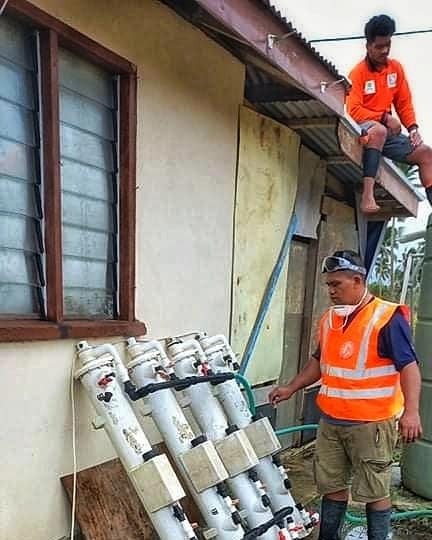
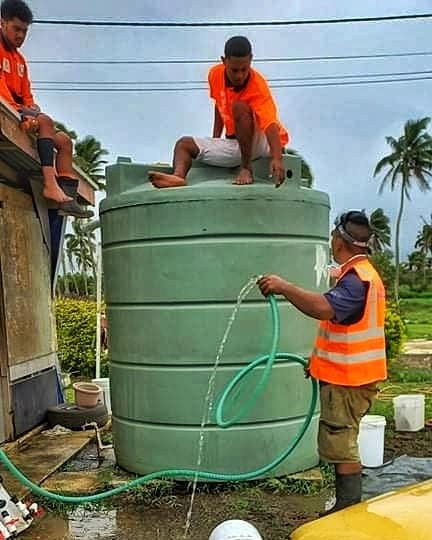
Friends of Tonga funded $15,000 to The Civil Society Forum of Tonga, a Tongan-led and Tongan driven NGO, and fundraised $9,000 for the Mainstreaming of Rural Development Innovation Tonga Trust. The funding is helping to provide water, sanitation, hygiene services, and assist farmers with harvesting crops damaged by the tsunami before they spoil. The food is being given to the communities that were evacuated from outer islands.

“The work that began a decade ago as Peace Corps volunteers was intentionally driven to build strong, long lasting, community, and personal relationships,” shares Hassett, the 2021 recipient of UMBC’s Distinguished Service Alumni Award. “We created a strong infrastructure of people and resources that has made it possible for us to support Tongans right now more than ever before.”

UMBC’s María Célleri and Yolanda Valencia receive Mellon Fellowships for research on an immigrant community in Washington and postcolonial transformation of Quito, Ecuador

Yolanda Valencia, assistant professor of geography and environmental studies, and María Célleri, assistant professor of gender, women’s, and sexuality studies, have received 12-month Career Enhancement Fellowships, funded by the Mellon Foundation and administered by the Institute for Citizens and Scholars. They represent two of nine junior faculty recipients across the country from hundreds of applicants in the 2022 award cycle. Their achievement marks the first time two UMBC junior faculty have received this award simultaneously. 

The Career Enhancement Fellowship seeks to increase the presence of underrepresented junior and other faculty members in the humanities, social sciences, and arts by creating career development opportunities for selected Fellows with promising research projects. Valencia and Célleri will dedicate their fellowship to advancing their book projects.

“Both Drs. Célleri and Valencia conduct research that aligns well with the mission of the Institute to support scholars ‘committed to eradicating racial disparities.’ Their work further reifies UMBC’s commitment to community-engaged scholarship, in particular in often overlooked or ignored communities.”

Portrait of smiling woman in professional attire

Kimberly R. Moffitt

Dean of the College of Arts, Humanities, and Social Sciences

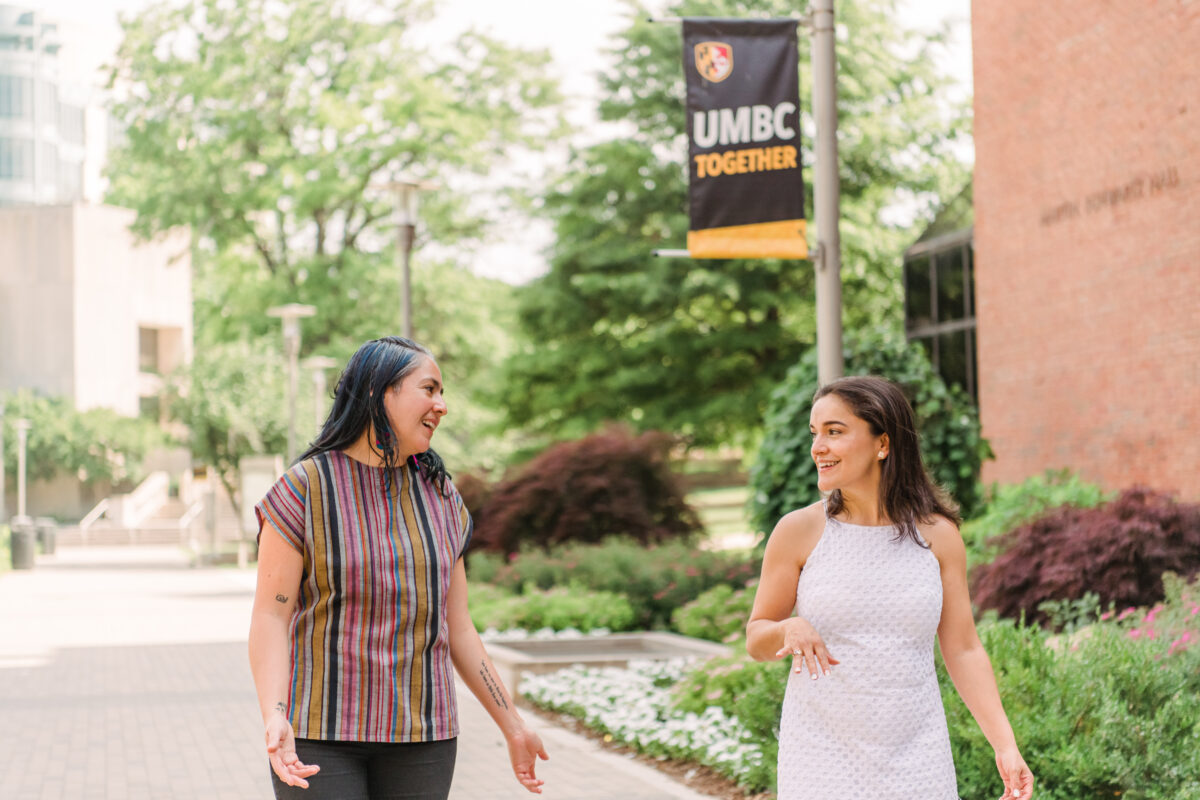
Two people walk side by side down a brick pathway with landscaped shrubbery behind them, one is wearing a multicolored striped shirt and the other a white dress. UMBC Mellon
(l-r) María Célleri and Yolanda Valencia. (Marlayna Demond ’11/UMBC)

Thriving and oppressive geographies

In the forthcoming book Relational Life: Legal Death, Valencia will explore the Mexican immigrant community of Pasco, Washington, and how this community creates places of peace, tranquility, and family—places of belonging and meaning— under disadvantaged conditions. Her writing draws on years of fieldwork in Pasco, transnational ethnography, archival research, interviews with city leaders, and testimonies from undocumented Mexican immigrants. 

“My research reveals that the city of Pasco maintains conditions that exploit immigrant labor by enforcing police violence, criminalization, and intimidation,” says Valencia. “I aim to provide a historical political economy analysis of geographies of oppression overlaid with an analysis of spaces where this community thrives, as they both happen simultaneously across scale, time, and border.” 

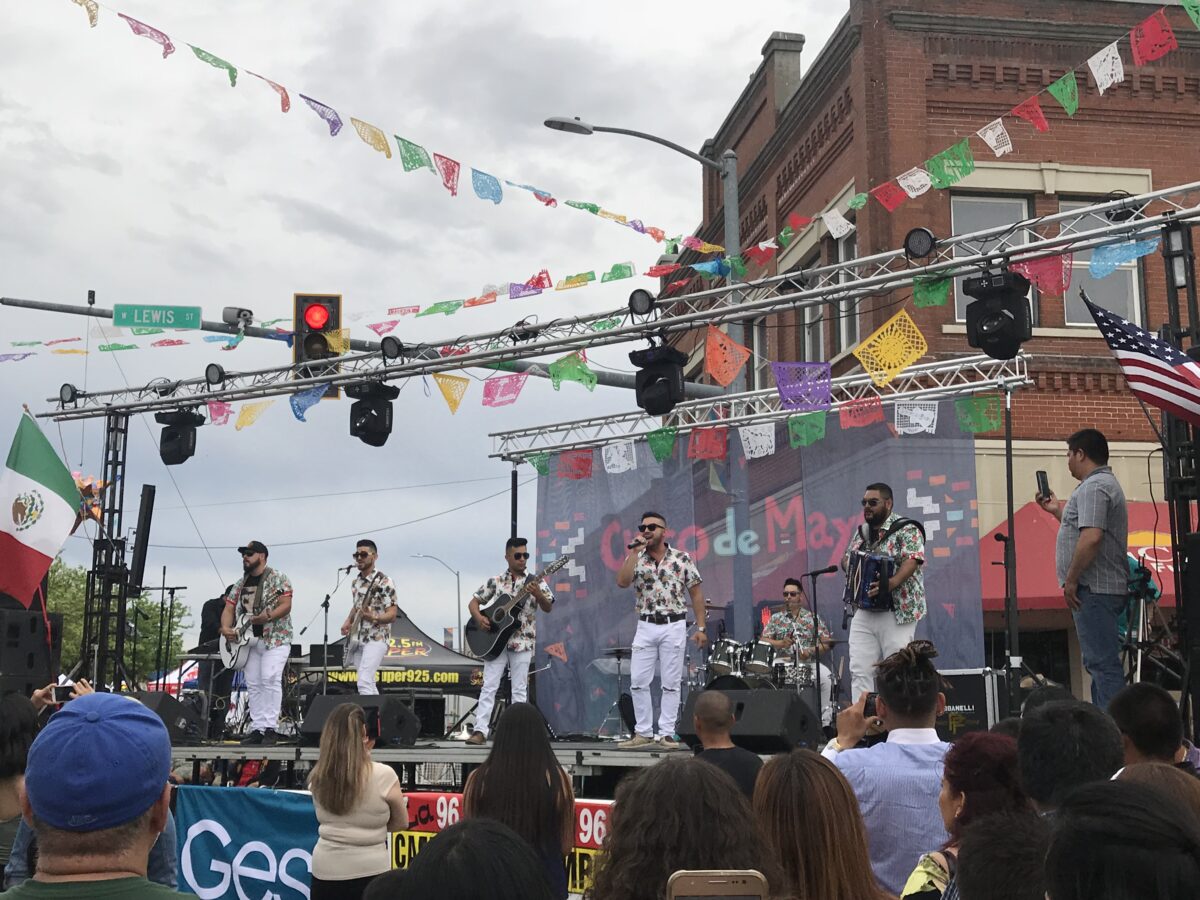
A musical band of six people stand by mics and hold three guitars and an accordion while on a stage singing to a crowd of people on a street corner. A Mexican flag, A U.S. flag, and small colorful flags hang from stage scaffolding. Immigrant.
Valencia notes how music (familiar sounds and lyrics) plays an important role in making and experiencing spaces of belonging. This Cinco de Mayo event in Pasco features second-generation Mexican immigrant musicians who have learned how to play, sing, and love traditional Mexican (and Latinx) music. It is one way in which cultural knowledge is readapted and passed on across generations. (Image courtesy of Valencia)

While at UMBC, Valencia has designed three upper-level human geography courses: Geographies of Migration, Latin American Geographies, and Qualitative Methods. She is also developing graduate seminars focused on Geographies of Conquest and Liberation.

Community of support

In addition to the Career Enhancement Fellowship, Valencia has been selected as a 2020 – 2022 Summer Institute on Tenure and Professional Advancement (SITPA) Scholar. SITPA is a mentoring and professional initiative designed to facilitate junior faculty members’ successful transition to tenured associate professor status. 

The goal of SITPA is to address the persistent underrepresentation of racial and ethnic minority faculty in academia. The program is funded by a grant from the Andrew W. Mellon Foundation and is administered and hosted by the Center for the Study of Race Ethnicity, and Gender in the Social Sciences (REGSS) at Duke University

“SITPA for me means an opportunity to be part of a diverse community of support in academia, which is helping me carve spaces of belonging as a scholar in higher education,” says Valencia. Mérida Rúa, professor of Latino/a studies at Northwestern University and editor of Latino Urban Ethnography and the Work of Elena Padilla, is her mentor for both awards.

Politics and symbolism of monuments

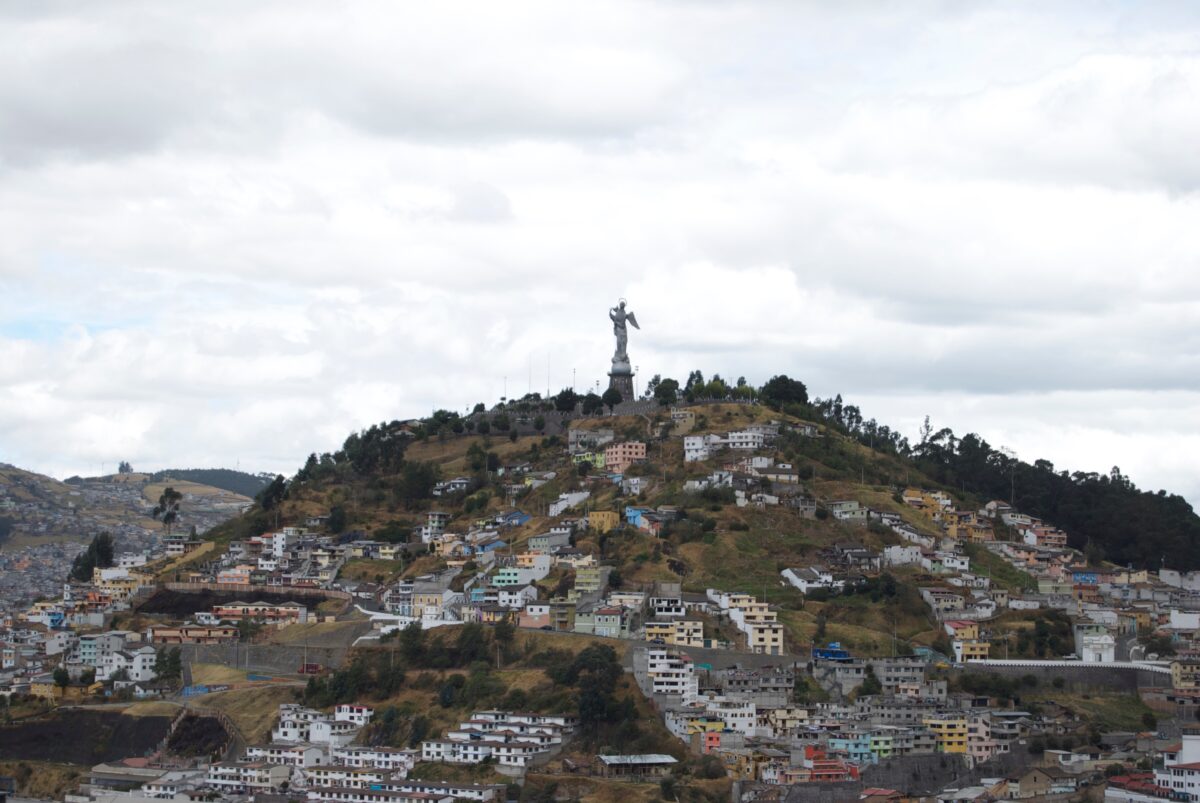
Uncovering the Virgen del Panecillo: Quito’s Postcolonial Urban Transformation and Decolonial Future is the tentative title of Célleri’s upcoming book. She uses print media, film, photography, and decolonial feminist social, cultural, and political analysis to bring greater understanding to the political and symbolic importance of the Virgen del Panecillo. This well-known monument is a 41-meter-tall aluminum statue of the Virgin of Immaculate Conception placed in Quito, Ecuador’s colonial city center in 1976. 

A large aluminum statue of the Virgen del Panecillo stands on top of a hill overlooking multicolored homes in Quito, Ecuador.
The Virgen del Panecillo statue standing over Quito’s colonial center. (Image from Wikimedia Commons)

“I demonstrate that uncovering the contentious history of monuments opens the possibilities for reimagining them as sites of decolonial feminist futures,” says Célleri. 

“I frame the book around what I term Andean decolonial feminist imaginaries,” she explains. “This is a framework that centers Andean Indigenous cosmology as a tool for comprehensively confronting long-standing colonial logics of social control that haunt Quito’s urban landscape, and which materially affect racialized and gendered populations.”

Connecting with fellow researchers

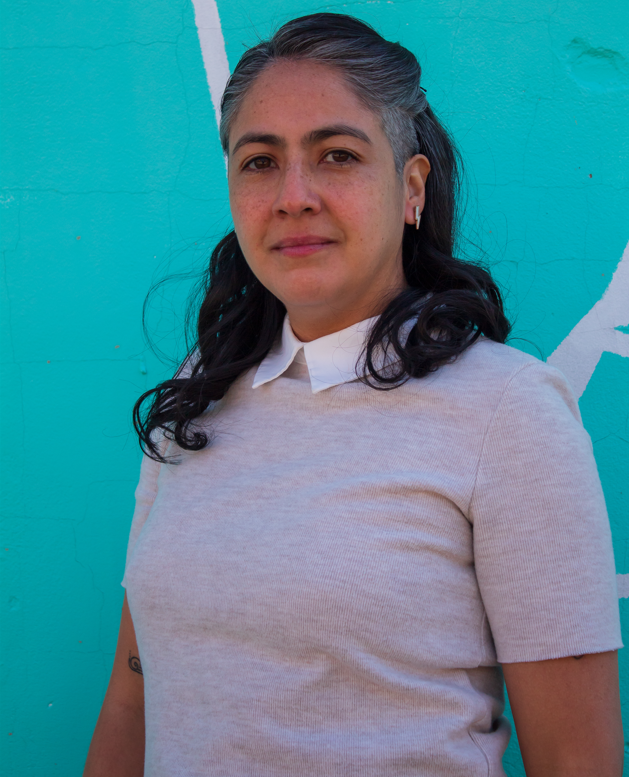
A person with long dark hair wearing a grey short-sleeve sweater and a white collar shirt stands in front of an aqua colored wall that has crisscrossing white diagonal lines.
Célleri. (Image by Mariana Orellana)

In 2019, Célleri served as a panelist at the National Women’s Studies Association annual conference (on the theme “Protest, Justice, and Transnational Organizing”) and at the Sexuality and Borders Symposium at New York University. There she presented her research on transnational feminist struggles for reproductive rights in the Andes in relation to appropriations of the monument of the Virgen del Panecillo.

“The Career Enhancement Fellowship is a recognition of my hard work and offers the opportunity to work collaboratively on my book project with colleagues and mentors that I admire,” says Célleri. Maria Amelia Viteri, an associate professor of anthropology at the University of Maryland, College Park, and senior social and gender specialist at the Inter-American Development Bank, will mentor Célleri during her fellowship. Viteri is a recognized transnational sociocultural anthropologist of globalization, gender, queer, and migration studies.

Over the past two years at UMBC, Célleri has organized the Latin American Feminisms Working Group through UMBC’s Dresher Center for the Humanities. She teaches Transnational Feminist Film and the course on Gender, Humans Rights, and Political Violence in Latin America. She will teach Indigenous and Decolonial Feminisms, a course she developed, after her fellowship.

Continuing excellence 

Valencia and Célleri came to UMBC in 2019. Their work continues a strong history of UMBC scholarship earning recognition and support from the Mellon Foundation and Institute for Citizens and Scholars. 

Last year, Sharon Tran, assistant professor of English, became the fifth UMBC faculty member in the humanities to receive the prestigious award. The fellowship supported her book project, Minor Forms: The Affective and Aesthetic Economies of Asian Girlhood. The book examines how the minor figure of the “Asian girl” can provide a new way of understanding U.S. racism and imperialism.

“What an honor for two of our colleagues to be acknowledged by the Institute for Citizens and Scholars amongst this stellar group of junior faculty,” says Moffitt. “Kudos to them both for their efforts to shed light on important lived experiences.”

Both of this year’s recipients will return to teach and share their work at UMBC after their one-year fellowship. 

Rethinking collaborative public humanities research in New Orleans and Baltimore

If you were looking for Sarah Fouts in New Orleans, chances are you would find her at one of the many taco trucks or pop-up food vendors across the city, chatting with locals. Relationship-building is at the core of her work, which focuses on the experiences of Black, Central American, and Mexican food industry workers in post-Katrina New Orleans. 

Fouts is an assistant professor of American studies at UMBC who earned her Ph.D. in Latin American studies at Tulane University. For more than a decade, she has volunteered for, collaborated with, and supported the work of grassroots organizations in New Orleans. Now, she is working with long-time partners there on an exciting new project.
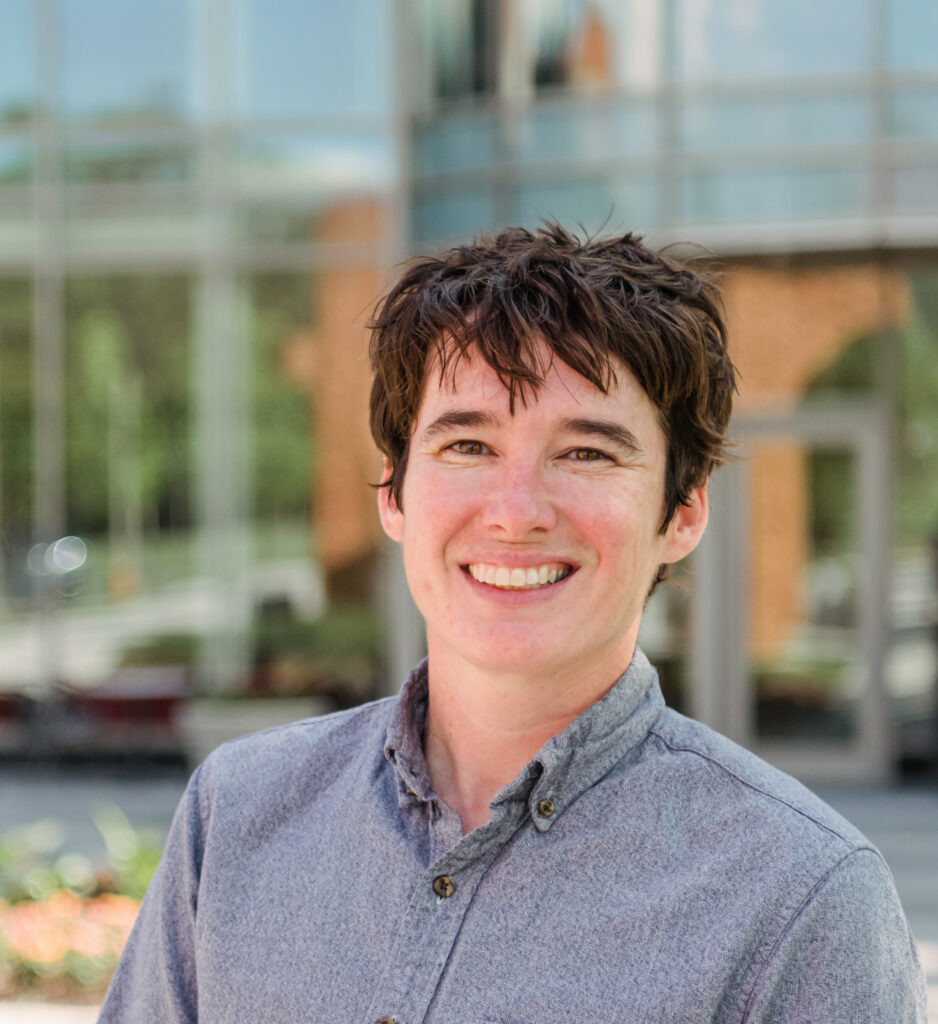
A person with short brown hair wearing a grey long sleeve dress shirt stands in front of large orange cement arches.
Sarah Fouts. (Marlayna Demond ’11/UMBC)

The Whiting Foundation has awarded a $50,000 Public Engagement Fellowship to Fouts along with local organizers Toya Ex Lewis and Fernando López to implement Project Neutral Grounds: At the Intersection of People, Street Food, and the Hustle. Lewis is the organizer of Project Hustle, born in New Orleans, and López is a Mexican-born documentarian. The three partners have worked together since 2013. Their latest collaboration will bring together Black, Brown, LGBTQ+, and immigrant food vendors in New Orleans to celebrate, share, and document their experiences and histories.

“In collaboration with Black and Brown food vendors, Project Neutral Ground will showcase the culture, complexities, and potential futures of post-disaster economies,” says Fouts. “We seek to dismantle barriers and foster dialogue to build networks across factors like race, gender, and class in order to foment an understanding of these vendors as they occupy and vie for city spaces.”

Sharing community history

New Orleans has a rich history and culture of street food vendors, particularly led by the city’s Black community. In 2005, Hurricane Katrina devastated New Orleans with wind speeds of over 100 miles per hour and a monumental storm surge that flooded 80% of the city. Many Black and Brown vendors were forced to leave their homes and businesses or find new ways to continue to live and work. Central American food vendors migrated to the city to help fill the void. 

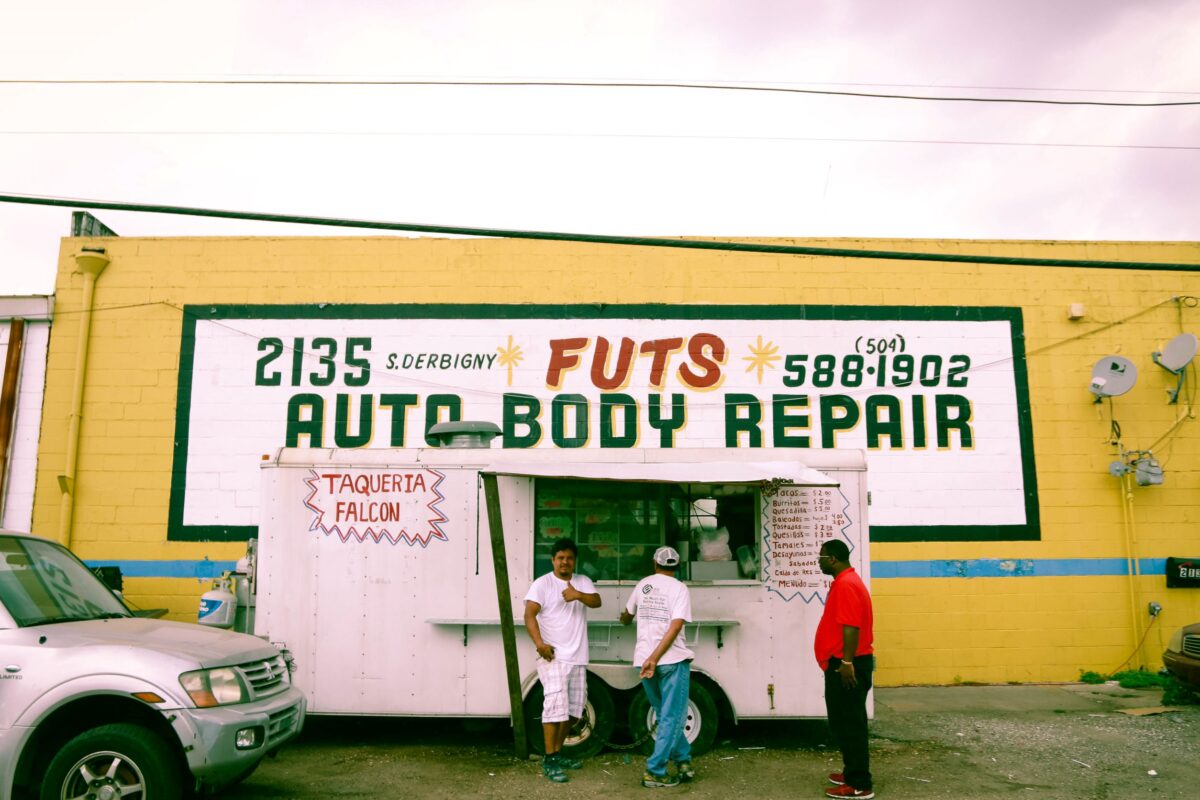
Three people are standing by a food truck with a large yellow cement wall. Photo by Fernando López. New Orleans.
New Orleans taco truck. (Photo by Fernando López)

Now, almost 20 years after Katrina, New Orleans street vendor culture is a mixture of traditional and modern takes on Soul Food and Latin food representative of its burgeoning Black and Brown communities. The success of taco trucks and Soul Food pop-ups has raised complex questions about food truck regulation, worker rights, immigration issues, and local vs. tourist experiences that often pit these communities against each other. 

The Whiting Foundation funding will help Fouts, the project director; Lewis, the organizing director; and López, the creative director, work in collaboration with the Southern Food and Beverage Museum to document and share the history, culture, cuisine, and personal journeys of ten food vendors in post-Katrina New Orleans food culture.

Collaborative storytelling

The team will first film and photograph the vendors cooking a dish of their choice at the Southern Food and Beverage Museum. A follow-up filming will document a “day in the life” of each food vendor. Finally, an audio recording will capture personal oral history interviews. Over the course of the year, López and Lewis will use the footage to develop ten mini-documentaries showcasing each vendor’s story. 

One person with a camera stands on top of a table filming a person cooking while another person holds a microphone. Photo by López. New Orleans.
(l-r): López with food vendor and Fouts filming at the Southern Food and Beverage Museum. (Photo by Fernando López)

Fouts, Lewis, and local artist SheRa Phillips will work with students in Fouts’s UMBC Public Humanities course in fall 2022 to convert these stories into a zine that highlights historic and contemporary vendor stories, maps of where street food vendors are, a historical timeline of street vending in New Orleans, and recipes. Vendors will also be able to give the zine to their customers, helping to share this important part of New Orleans history with new audiences.

“This is a way for native New Orleanians to have opportunities to tell our own stories,” says Lewis, “instead of the usual extractive way our stories get taken and told for us.”

The Project Neutral Grounds digital and physical collection of stories will be on exhibit and archived at the Southern Food and Beverage Museum to share with future generations of locals, vendors, visitors, and public humanities scholars. 

Public humanities in Baltimore

Since joining the faculty of UMBC, Fouts has also connected with Baltimore communities. The American Council of Learned Societies has awarded Fouts; Nicole King, professor and chair of American studies; and Tahira Mahdi, adjunct professor of psychology, a public engagement grant of over $150,000 to support their innovative public humanities work. The award, supported by the National Endowment for the Humanities, will fund the development and implementation of the project Baltimore Field School (BFS) 2.0: Undoing & Doing Anew in Public Humanities at UMBC 2022 – 2023.

Fouts, King, and Mahdi will work with community members, UMBC graduate students, and faculty to continue developing frameworks for community engagement between local communities and academia that have long-term benefits for local communities in particular. 

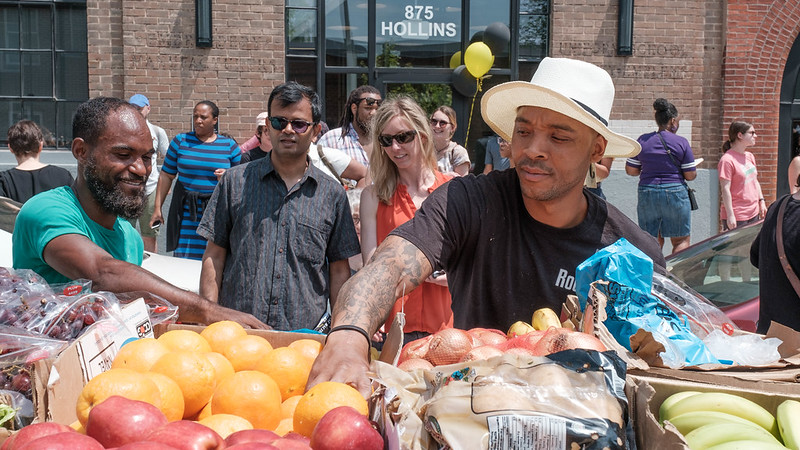
A person wearing a white hat reaches for oranges in a food cart with people in the background.
An arabber sells produce form a horse-drawn cart in Baltimore. (Bill Shewbridge/UMBC, Baltimore Traces project)

“This collaborative process takes a great deal of time, listening, and building trust,” King explains. “The people living and working in city neighborhoods and building grassroots organizations should be centered in the process of defining challenges and ways to address them in Baltimore and cities like it.”

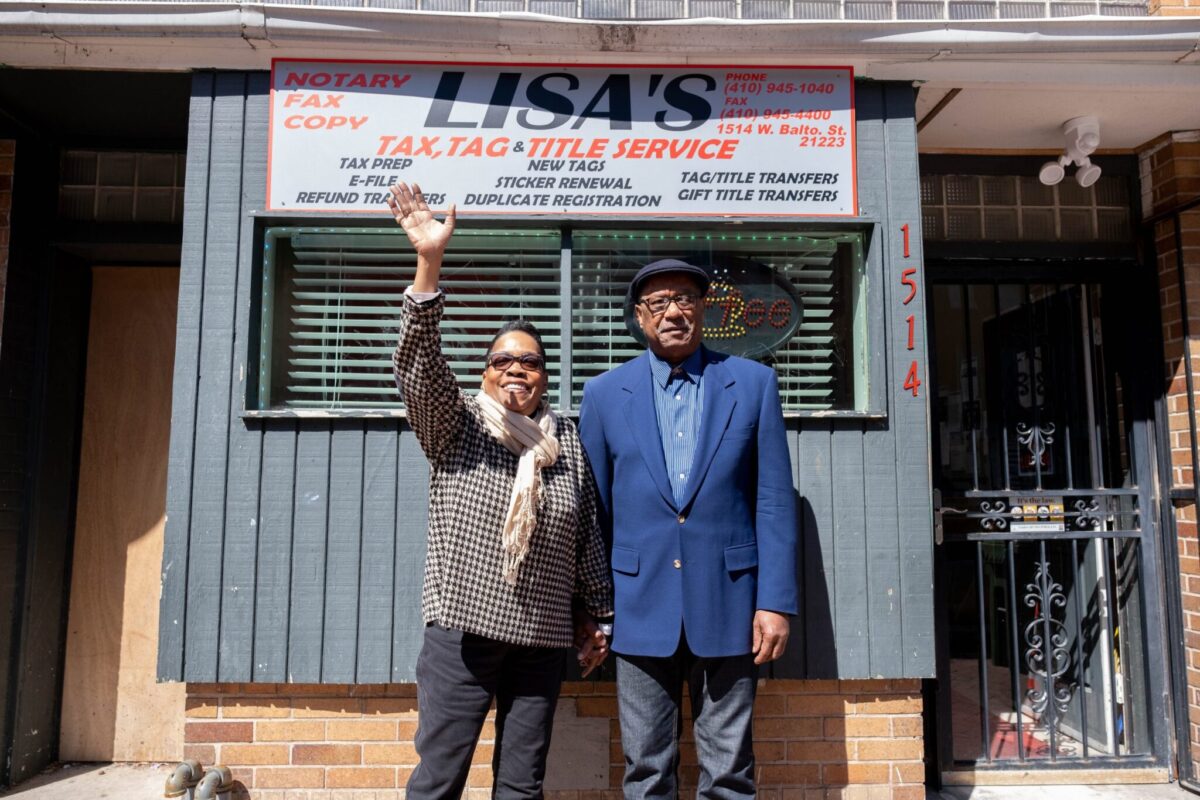
Two people stand side by side in front of a gray wall with a large sing above them, one is wearing a checkered blouse and black pants the other a cobalt blue dress jacket and grey pants.
West Baltimore street walking tour with Curtis Eaddy. (Bill Shewbridge/UMBC, Baltimore Traces project)

The award will broaden the reach of the Baltimore Field School (BFS), launched through a $125,000 grant from the Andrew W. Mellon Foundation in 2020. BFS creates a framework for faculty to collaborate with community organizations in building ethical and sustainable research and teaching projects focused on public humanities.

“ACLS is proud to support these outstanding examples of publicly engaged, community-centered scholarship,” says ACLS President Joy Connolly. “Direct engagement with communities beyond the walls of academia is essential to the continued creation of knowledge for the public good. At the same time, these programs will help in expanding our definitions of humanistic scholarship and in contributing to solutions for a brighter future for all.”

UMBC’s 2022 Fulbright student scholars will travel the world to explore difficult questions

Eight recent UMBC graduates and alumni will soon travel to countries across three continents as 2022 Fulbright U.S. Student scholars. They include emerging leaders in education, astrophysics, cybersecurity, human rights, and more, and they are excited to explore difficult questions through fresh perspectives.

The Fulbright Program is the U.S. government’s flagship international exchange program. UMBC was named a Fulbright Top Producing Institution in 2019 – 2020. In the last decade, UMBC has received over 60 Fulbright U.S. Student Program awards for research and teaching placements in Africa, Asia and the Pacific, the Middle East, South America, and Europe. 

Creating new paths

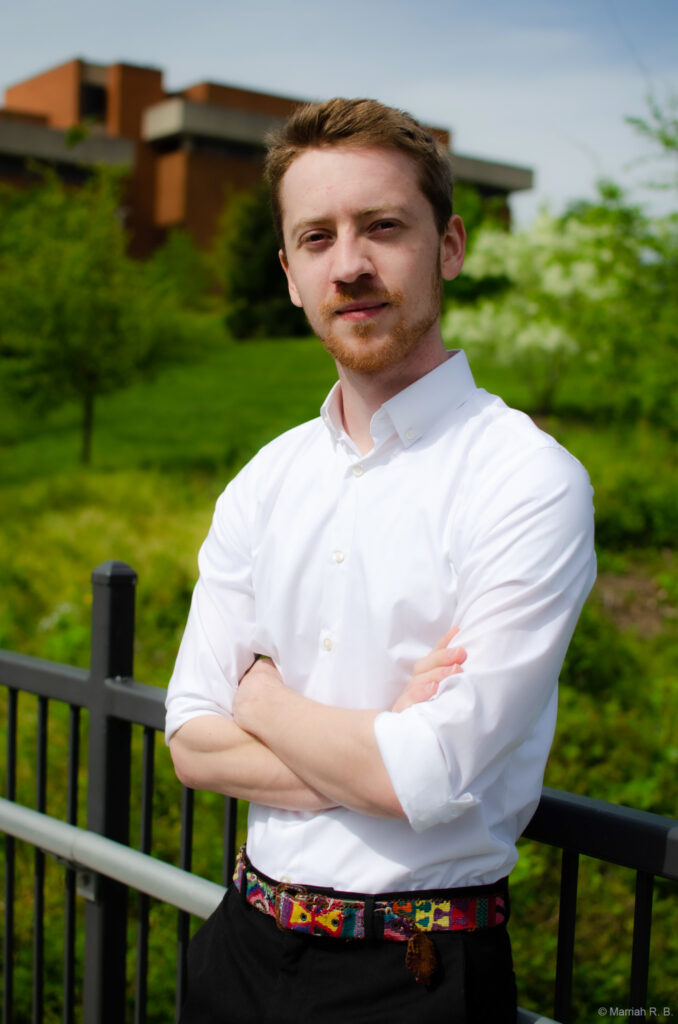
A person wearing a white long sleeve dress shirt, black pants, and a multicolored belt stands outside on a bridge with black rails.
Caleb Jacobson.
(Image courtesy of Jacobson)

This year marks UMBC’s first Fulbright awards to El Salvador and to the UK. Caleb Jacobson ’21, global studies, and M.A. ’23, sociology, will research human rights and the transition to peace in post-conflict El Salvador. Kaitlyn Keaton ’22, computer engineering, a Cyber Scholar in the Center for Women In Technology, will head to Newcastle University (NU) in North East England to complete a master’s in cybersecurity. NU is recognized jointly by the UK’s National Cyber Security Center and the Engineering and Physical Sciences Research Council as an Academic Centre of Excellence in cyber security research.

Keaton has focused on making the most of her college education by pursuing a wide range of learning experiences. She has held competitive software engineering internships at General Dynamics Mission and Systems and Northrop Grumman Mission Systems, and has participated in Capture the Flags cybersecurity competitions, but this will be her first learning experience abroad.

As a Cyber Scholar and Tau Beta Pi Engineering Honors Society member, Keaton is determined to further develop the skills necessary to be on the cutting edge of cybersecurity research. She is also committed to creating new pathways for more women and girls to be leaders in engineering. 

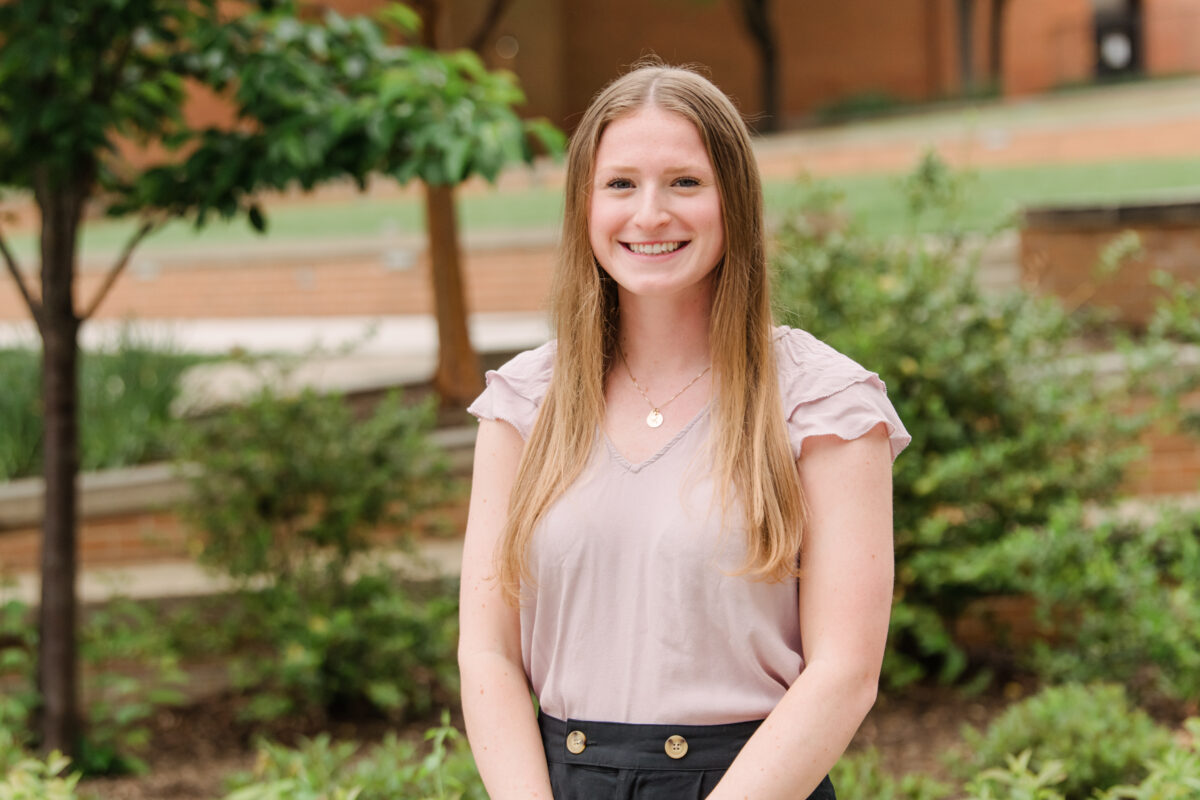
A person with long blond hair wears a light pink short sleeve shirt and black pants stands outside in front of some trees. Fulbright.
Kaitlyn Keaton. (Marlayna Demond ’11/UMBC)

“I want to inspire and encourage even more girls and young women to join the cybersecurity world,” says Keaton. “There is a critical need to get girls interested at younger ages to show them they can do it too.”

Intercultural understanding in medicine

Maryam Elhabashy ’21, anthropology, developed an interest in the process of healing early in her life while surrounded by a family of physicians. In high school, she shadowed a physician at a hospital and saw instances where patients’ cultural backgrounds sometimes conflicted with the physician’s concerns. She wondered if a lack of intercultural understanding in medicine can get in the way of good medical care, leading to health disparities.

A woman wearing a black hijab and white long sleeve blouse stands outside with trees in the background.
Maryam Elhabashy. (Marlayna Demond ’11/UMBC)

Elhabashy found an answer in listening to culturally diverse perspectives. As a student of anthropology with a focus on medical anthropology, she found that listening to people’s stories can help physicians develop empathy. This is one way to ensure patients feel heard, understood, and are able to navigate medical processes that can give them access to the best care possible.

While at UMBC, Elhabashy received an Undergraduate Research Award to research “Cupping and Wellness Among Muslims In the Baltimore-Washington Area.” She also served as a research assistant in sociology, anthropology, and public health (SAPH), studying physical activity among older African Americans in Baltimore. 

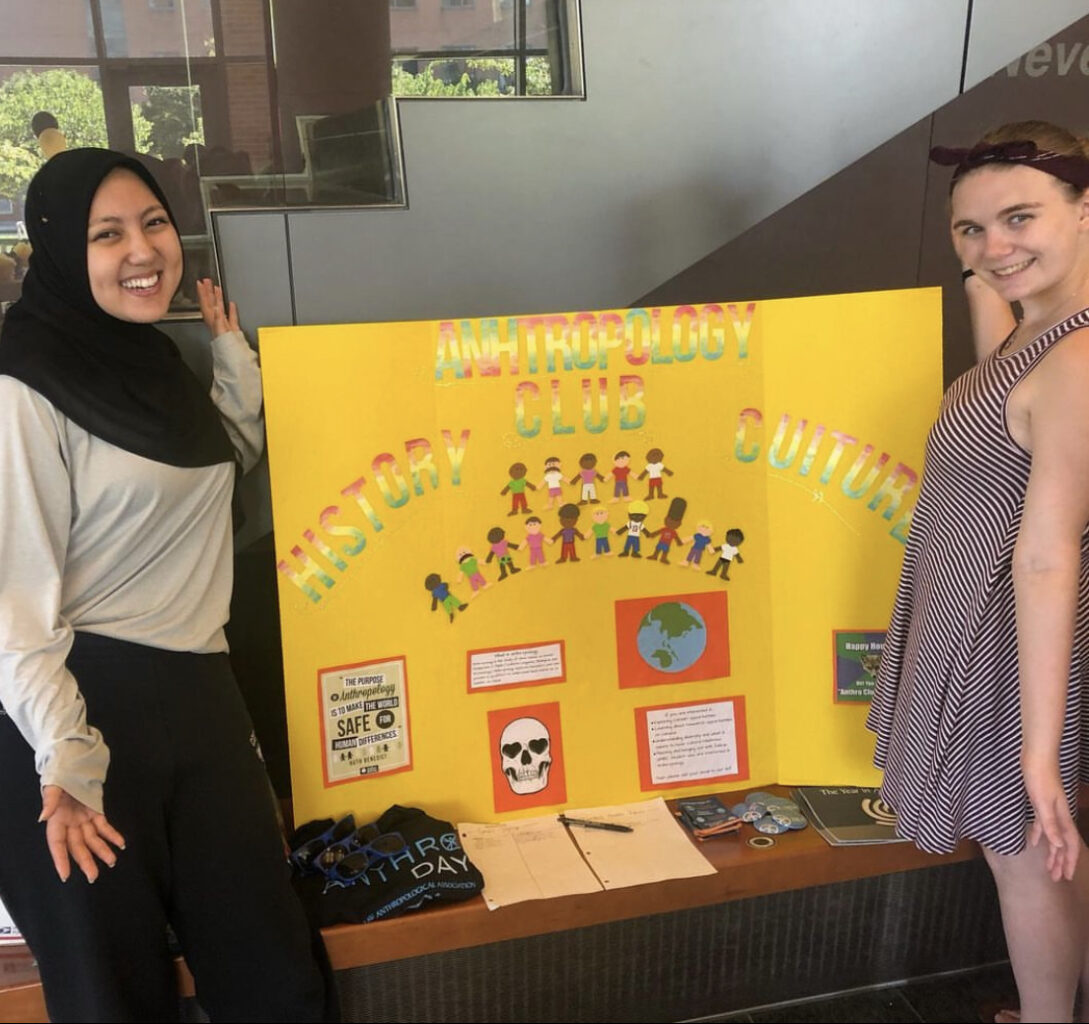
Two adults, one wearing a black hijab and a beige long sleeve shirt and the other wearing a headband with a maroon and white striped tank top stand on each side of a yellow poster with rainbow lettering.
Elhabashy presenting with the Anthropology Club at SAPH’s Welcome Week Open House. (Image courtesy of Elhabashy)

After graduating, Elhabashy worked at Rutgers University as a research assistant studying tobacco and e-cigarette use among minority populations. In the past year, she interned at the Amgen Scholar Program at the National Institute of Health, working with leading biomedical scientists to identify and address health disparities as a potential result of societal, cultural, and environmental influences.

During her Fulbright year, Elhabashy will live in Kuwait City to work on her research project at Kuwait University titled, “Faith, Family, Food, and Fitness: Exploring Trends of Obesity Amongst Kuwaiti Women.”

“I hope to one day be at the forefront of a movement towards truly personalized medicine that embraces individuality and intercultural communication as a foundational tenet of the field,” she notes. “I hope my experience in Kuwait will serve as a strong foundation for this work.”

Latine teachers needed

Adrianna-Marie Urbina-Ruiz ’21, mathematics, and M.A.T., secondary education, was raised in Montgomery County, Maryland, but her roots are in Venezuela. She remembers only having four Hispanic teachers growing up. All were Spanish language teachers and supported her academic and personal growth. However, Urbina-Ruiz felt some of her other teachers had lower expectations of her, limiting her opportunities, and she saw other Hispanic students struggle with this same experience.

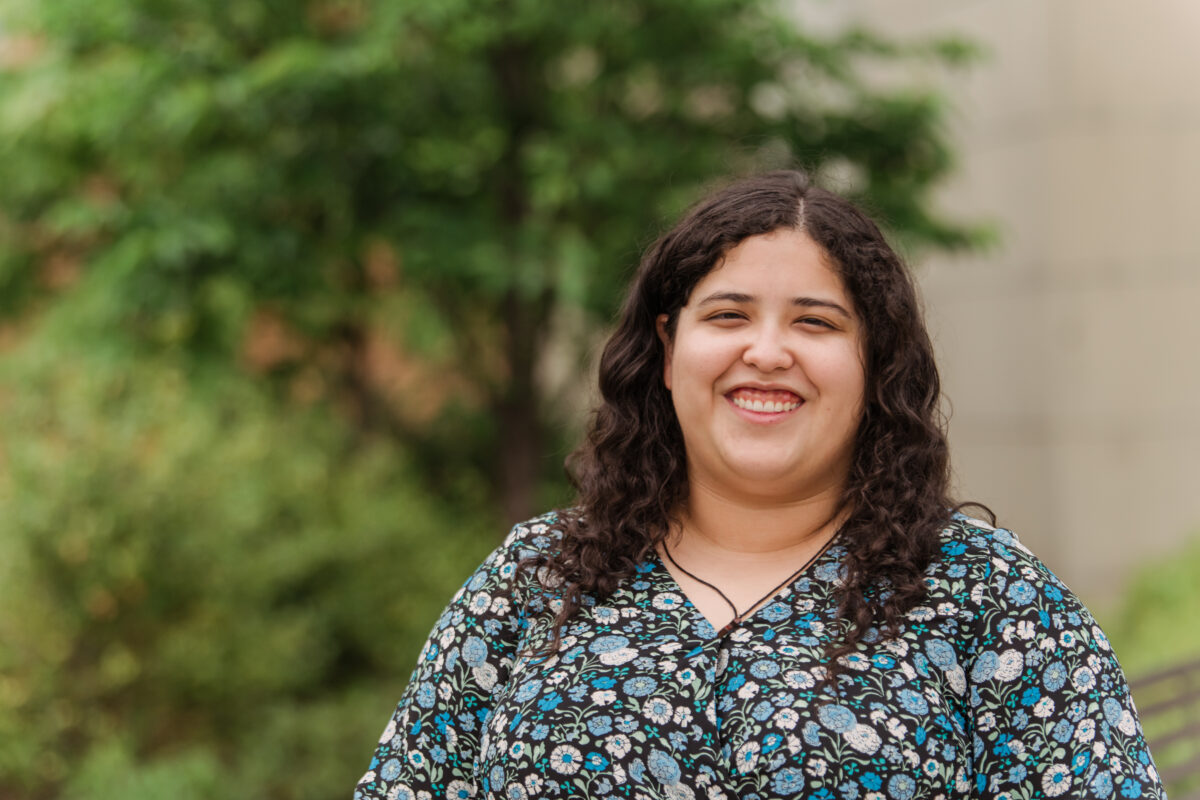
An adult with long wavy dark brown hair wearing a blouse with blue and white flowers stands outside in front of a tree.
Adrianna-Marie Urbina-Ruiz. (Marlayna Demond ’11/UMBC)

“Many Hispanic students learning English and those who are bilingual have been seen as having limited academic knowledge, limited potential,” says Urbina-Ruiz. “I want to stop that narrative.”

At UMBC, Urbina-Ruiz met Bonny Tighe, a senior lecturer of mathematics, who encouraged her to become a math major and a math teacher through the Sherman STEM Teacher Scholars Program. 

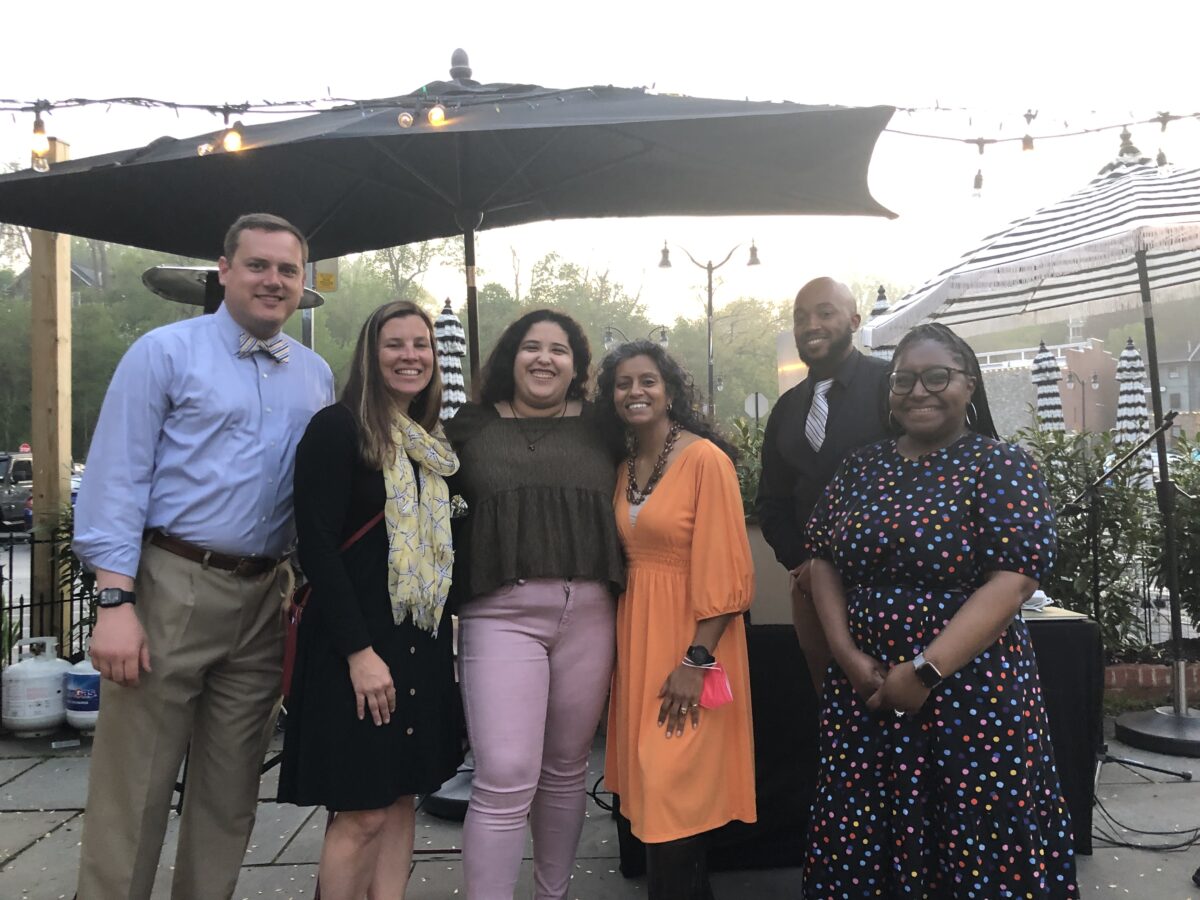
Six adults wearing dressy clothing stand close together under a large black umbrella at a restaurant.
Urbina-Ruiz (in pink) with the Sherman STEM Teacher Scholar Program staff. (Image courtesy of Urbina-Ruiz)

“I will never forget walking into her office hours for the first time. She recognized me as having one of the highest grades in her Calculus I class,” says Urbina-Ruiz. “She and the Sherman staff had confidence that I would rise to any challenge. They built a strong foundation for my success.”

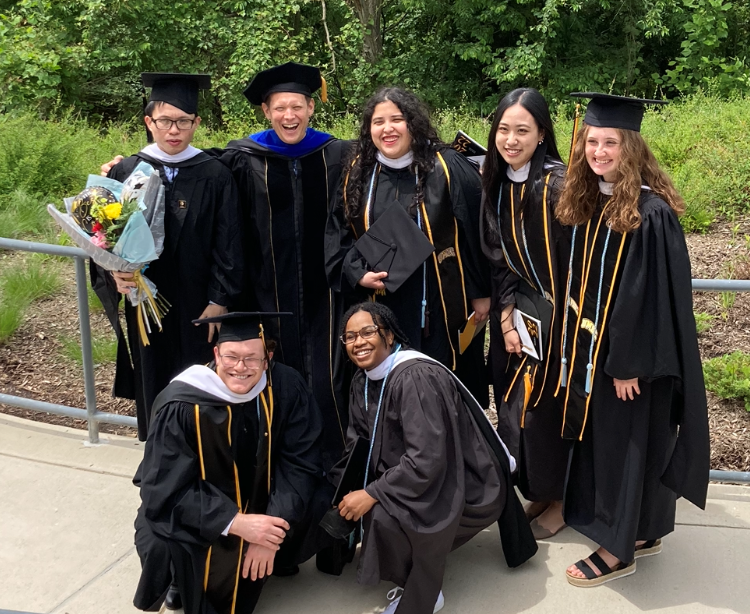
Seven adults wearing black graduation caps and gowns huddle while standing on a path with trees in the background.
Urbina-Ruiz (standing row, center).
(Image courtesy of Urbina-Ruiz)

Urbina-Ruiz also completed a master’s in teaching and earned a certificate in teaching English to Speakers of Other Languages while student-teaching at Lakeland Elementary/Middle School in Baltimore City, which serves many Hispanic families. “I want to have as many tools at my disposal to make my classroom as accessible as possible,” says Urbina-Ruiz. “I want to be the Latine STEM teacher I never had.”

Urbina-Ruiz will work towards creating her first Collaborative Online International Learning program during her Fulbright year. She will connect college students at the Universidad Industrial de Santander in Colombia with students in Maryland while teaching English. “Latine teachers are needed around the world,” says Urbina-Ruiz.

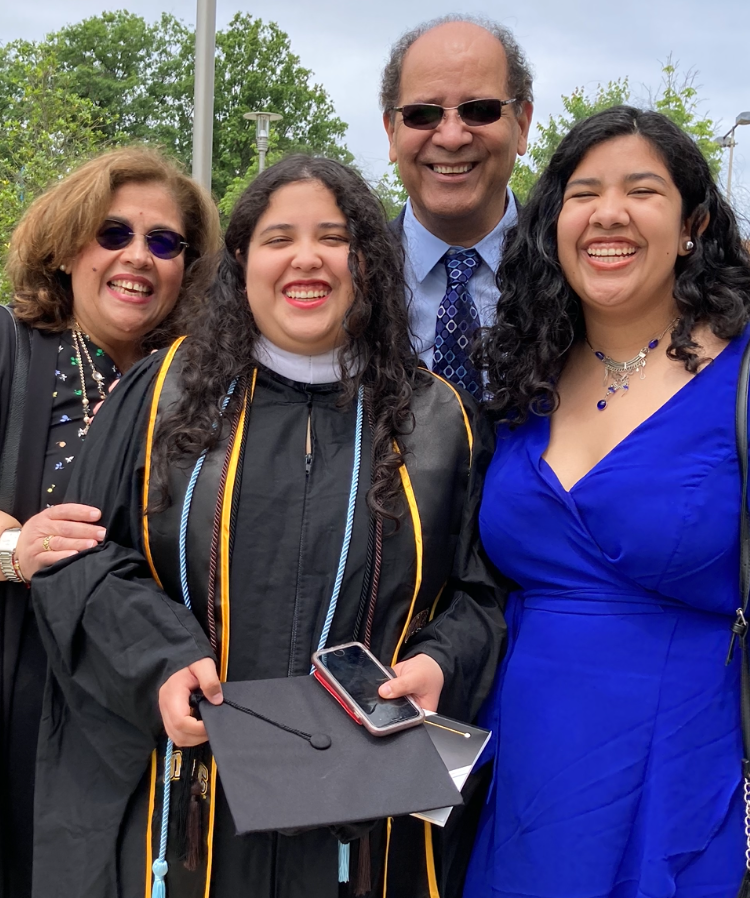
One adult wearing a black graduation cap and gown stands next to a person with a cobalt blue dress with two other adults behind them.
Urbina-Ruiz (wearing cap and gown) with her family at her master’s graduation. (Image courtesy of Urbina-Ruiz)

Urbina-Ruiz plans to return to teach in Baltimore City Public Schools where there is a high demand for bilingual Hispanic teachers.

Representation in science

Similar to Elhabashy, Maithily Diana Díaz ’21, biology and modern languages, linguistics, and intercultural communication, is pursuing a career focused on health equity. As a first-generation student, Díaz encourages other Latinos to go to college and to be ambitious even if it means they are in spaces where they are the only Latino, something she has experienced as a Latina in STEM. 

“I’m usually the only Latina, but now it means something more,” says Díaz. “Now, it’s just the jump of saying Latinos can be scientists, researchers, physicians. If we believe in ourselves then someone else will too. And once that door is opened, then who knows how far we can go.”

Díaz recently moved to Tijuana, Mexico to work at a non-profit health clinic serving a largely refugee and migrant population. For the past school year she has been teaching science and medicine to predominantly Hispanic and African American K-12 students for Refugee Health Alliance in Harlem, while completing remote research in mental health at the Johns Hopkins School of Public Health.

During her Fulbright year, Díaz will complete a master’s in immunology and work on cancer research at the French National Institute of Health while mentoring undergraduate students at Sorbonne University. .
“It’s a dream come true that someone like me received a Fulbright at such prestigious institutions. My students were shocked,” says Díaz. “I want more and I intend to achieve it. But at the end of the day, this is for my community.” 

While in France, Díaz will work with researchers seeking to identify more effective means of treating soft tissue sarcomas. The findings may reveal potentially novel immunotherapy targets for a variety of cancers. 

As a linguist with proficiency in English, Spanish, French, Portuguese, and Russian, Díaz knows her ability to successfully communicate across multiple cultures and languages can lead to greater opportunities. She wants to show Latinos what can happen when they value their multicultural and multilingual lives as assets.

Following her Fulbright, Díaz plans to pursue an M.D., promoting equity in both research and healthcare.

Global education and disability

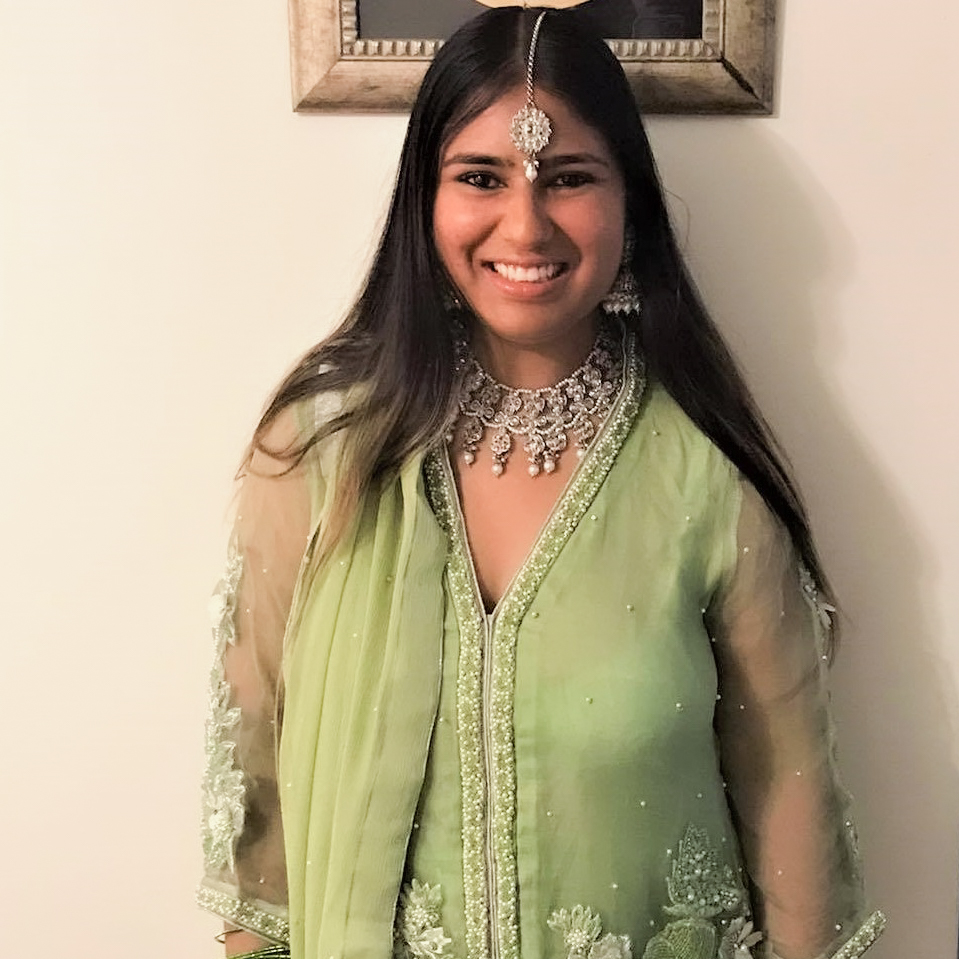
A person with long black hair wears a light green embroidered dress with a beaded necklace and a beaded pendant hanging on their forehead.
Mimi Yaldram in traditional Pakistani dress. (Image courtesy of Yaldram)

Mimi Yaldram ’20, history, is very familiar with the process of acclimating to a new culture and country. When she was seven years old, her family left their home in Karachi, Pakistan for the United States to seek better mental health services. 

“We came  in 1999 right before 9/11,” says Yaldram. “It was a lot to manage the racism towards my Muslim family while learning how to live, study, access services, and work in the U.S.” 

This experience inspired Yaldram’s passion for living and learning within multiple cultures, religions, and languages, which she began to explore at Montgomery College. There she held numerous executive student leadership roles and traveled abroad to Ethiopia, where she researched the influence of India on ancient trade routes and currency. 

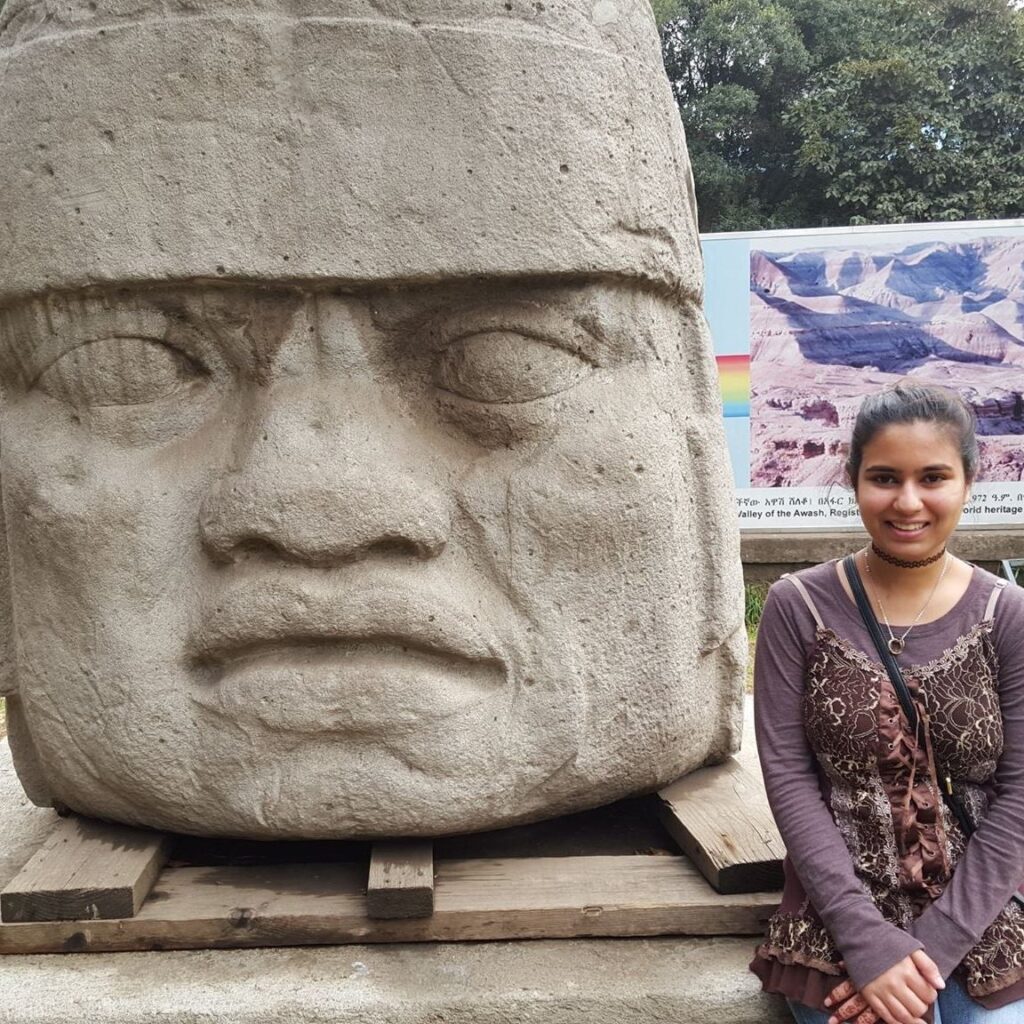
An adult wearing a purple long sleeve shirt and a black purse sits next to a sculpture of an immense stone head.
Yaldram in Ethiopia next to an ancient stone head sculpture of the Olmec civilization of Mexico. (Image courtesy of Yaldram)

In 2017, Yaldram joined UMBC’s Shady Grove campus, embarking on new student leadership opportunities, including serving as president of the Student History Association and studying abroad in Denmark. She learned about Viking history and participated in a dance project focusing on Danish pop dances and Pakistani Bollywood dances.

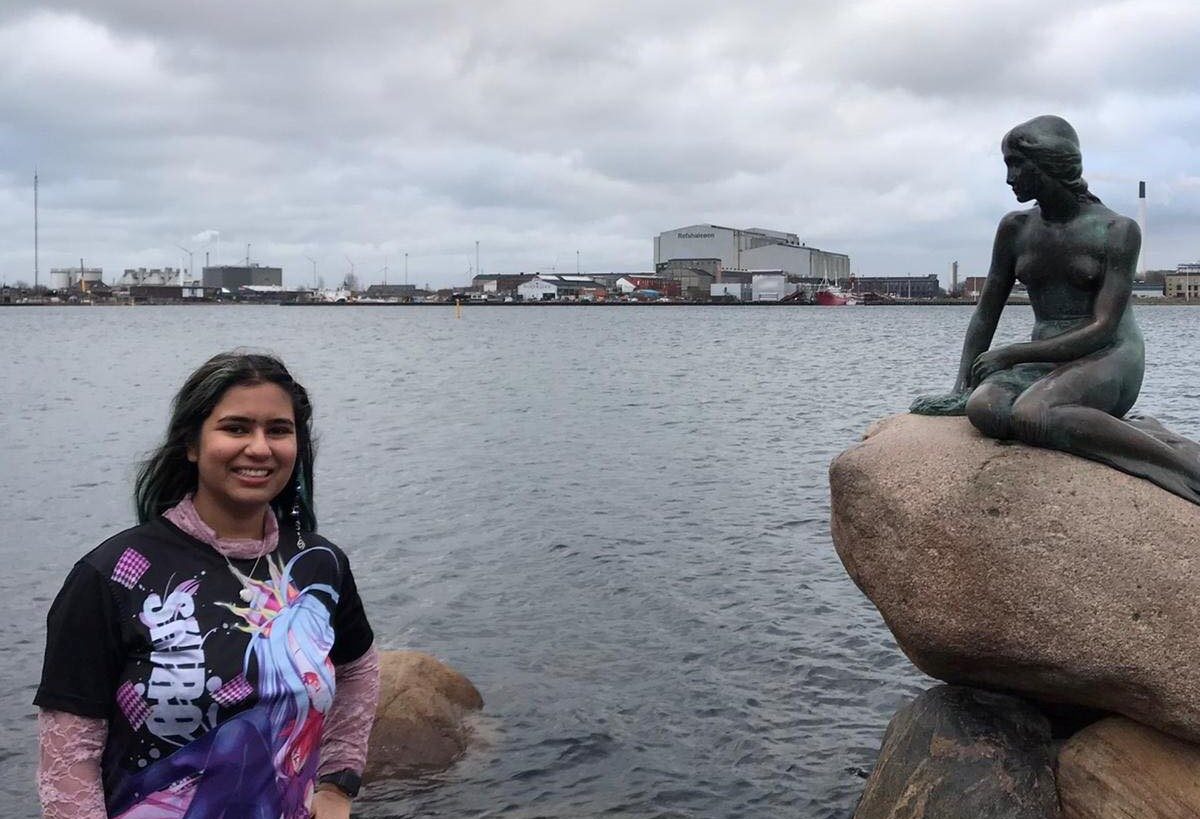
A person stands by a body of water next to a bronze statue of a mermaid.
Yaldram next to a sculpture of the Little Mermaid in Copenhagen, Denmark. (Image courtesy of Yaldram)

Yaldram identifies as a student with a mental health disability, and she is passionate about advocating for and teaching other students with disabilities and neurological differences. For the past two years, she has tutored students with autism spectrum disorder on strengthening their writing, communication, and social skills.

Now that she has earned her both her Teaching English as a Second Language and mental health first-aid certifications, she is ready to spend her Fulbright year teaching English in Taiwan. She is excited to be part of Taiwan’s goal to become a bilingual nation by 2030 by raising English proficiency. She also looks forward to sharing her skills in disability education and services while teaching. 

“My dream is to make a positive impact on immigrant communities by utilizing my own experiences and education,” says Yaldram. “I hope to make a difference and bring that to the Fulbright program in Taiwan.”

Yaldram plans on a career at the intersection of global education, social justice, and disability beginning with humanitarian work in Pakistan after her Fulbright experience.

Korean world influence

Chemutai Wangui Nganga ’21, global studies, comes from a Kenyan family in the United States. During elementary school, she lived in Kenya for four years where she improved her Swahili skills and learned more about her Kenyan culture. When she moved back to the U.S., her family settled in Howard County, Maryland, home to numerous international communities, especially a thriving Korean community. Nganga learned about the influence the Korean economy, cuisine, music, art, and technology have had on the world. 
A person with long braided hair wears a green blouse, long golden earrings and necklace, stands in front of trees.
Chemutai Wangui Nganga. (Marlayna Demond ’11/UMBC)

Living in a diverse community, led Nganga to major in global studies at UMBC. She gained a greater understanding of the opportunities and conflicts of globalization and decided to focus on international politics and French. Her Asian studies courses increased her interest in Korean culture, which led her to pursue a Fulbright year in South Korea. 

“For me, Korea is a full step into a new world,” says Nganga, who will be teaching English. “It is another chance to push the boundaries of my worldview as well as serve others.” She plans to explore a career path in foreign service on her return to the U.S.

Stellar research

As a burgeoning astrophysicist, Kaitlyn Szekerczes ’22, physics, lives and breathes for exploring the infinite universe. She didn’t know that all those nights stargazing on her deck with her dad and discussing the plausibility of science fiction shows would lead her to pursue a career in space science research. 

A person with long brown hair wearing a black t-shirt stands in front of some trees and bushes.
 Kaitlyn Szekerczes. (Marlayna Demond ’11/UMBC)

“I was always fascinated by the questions we were not able to answer. We are not even close to knowing nearly everything when it comes to astronomy,” says Szekerczes. “My goal is to contribute to answering lesser-known big and challenging research questions.”

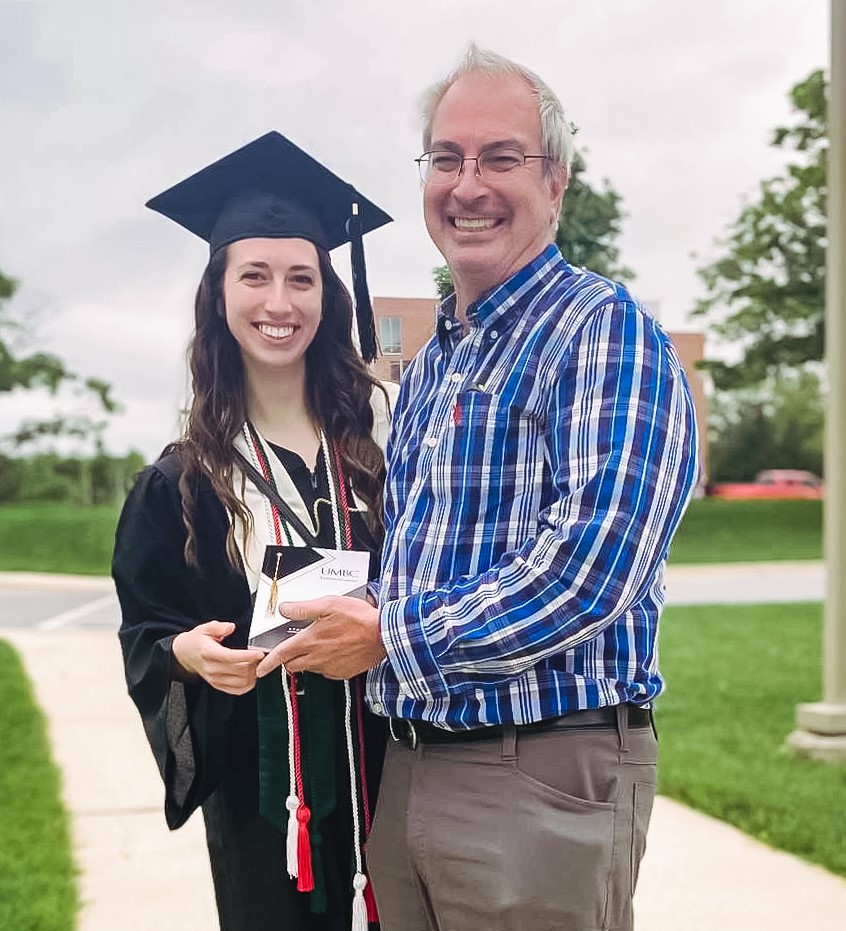
A person wearing a black graduation cap and gown stands outside next to a person wearing a blue plaid dress shirt and grey pants. Both are holding a plaque.
Szekerczes (l) with her dad.
(Image courtesy of Szekerczes)

Szekerczes will lead a project on gravitational lensing of tidal disruption events at the Max-Planck Institute for Astrophysics in Garching, Germany. It will be the first study to apply the technique of gravitational lensing—the bending of light by gravity—to researching tidal disruption events, which are events that happen when a supermassive black hole tidally disrupts a star.

“My dream job is to work as an astrophysicist for NASA,” says Szekerczes. “UMBC was the perfect fit for me because I was encouraged to pursue my passion for tackling challenging unanswered questions. I was also given the resources and support to piece together the puzzle of how to work towards my goals.”

After returning from Germany, Szekerczes will begin a Ph.D. program in astrophysics at Penn State University in fall 2023.

Community leader renews his Baltimore roots

Keenan Hickman

Degree: M.P.S., Community Leadership
Hometown: Baltimore, MD
Plans: Work in social justice organizations

“Service is a pathway to opportunities for everyone if we allow it to be accessible to all. It is about leading through example and perseverance, and finding joy in completing innovative complex projects with a myriad of community members and organizations.”

Keenan Hickman, M.P.S. ’22, community leadership, has called many different places “home” at some point in his life. Born in Baltimore, he spent part of his childhood in Korea, served in Indonesia as a Peace Corps volunteer, and lived and worked in San Francisco. 

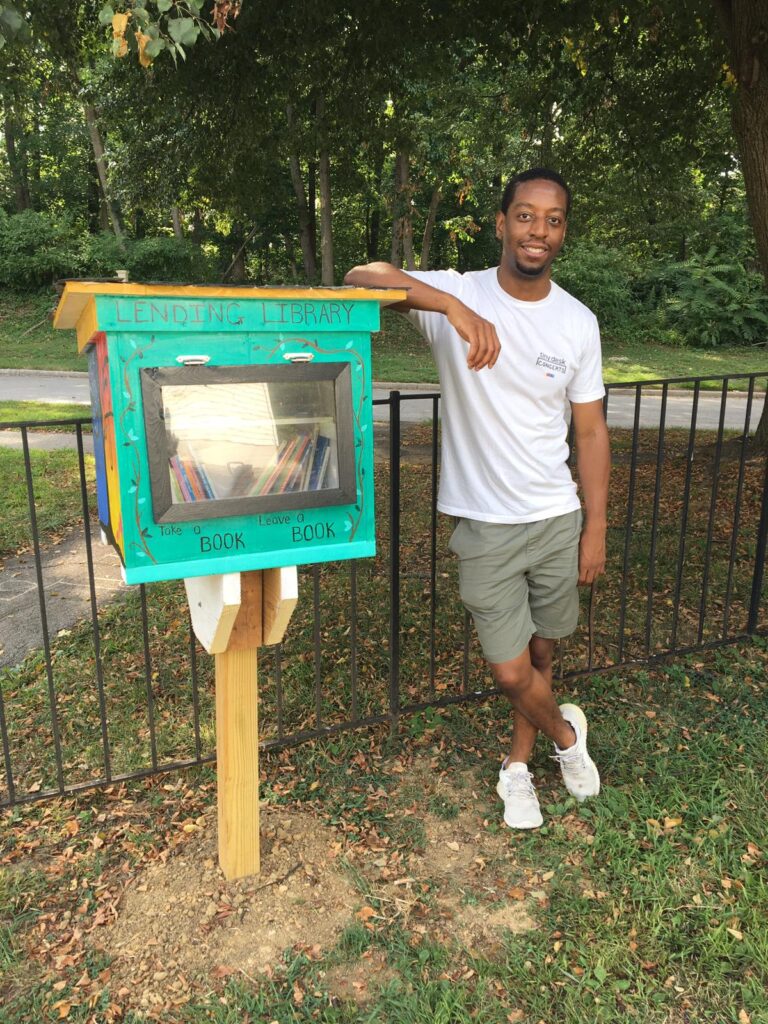
A person wearing shorts and a t-shirt leans on a green wooden box held up by a post. Baltimore.
Hickman in Woodlawn, Baltimore next to the Free Lending Library he built during COVID restrictions as lead coordinator at the Walden Circle Community Center. (Image courtesy of Hickman)

Each place presented opportunities to support local communities. In Indonesia, he served as an English instructor while also facilitating trainings on diversity, inclusion, and belonging for local residents. In California, he served as a literacy tutor and a mentor in Big Brothers Big Sisters of the Bay Area Now, after having worked for three years at the U.S. Department of Homeland Security, Hickman is ready to focus on Baltimore. 

During his master’s in community leadership at UMBC, he was a lead coordinator at the Walden Circle Community Center. Hickman designed and implemented youth programs, created a lending library, organized community events, and worked on fundraising campaigns. 

Hickman sees the future of empowerment for disenfranchised communities at the intersection of leadership, technology, and innovation. He has a vision for moving forward a new model of social justice work focused on growing equitable, anti-racist communities, starting in Baltimore. 

A person facing a group stands in front of a large grey and black mural of a headshot of an adult
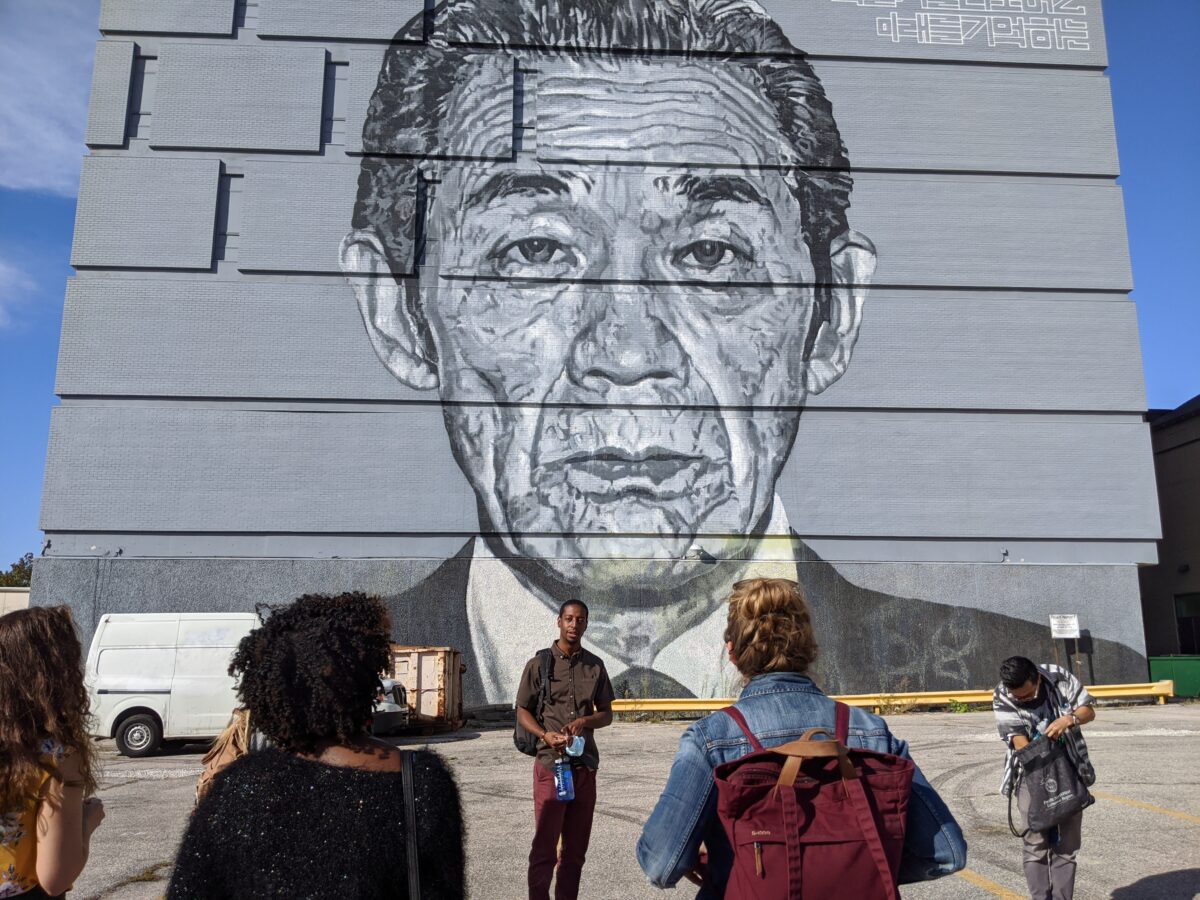
Hickman facilitating a community learning practicum on identity and placemaking in Baltimore’s historic Koreatown as a UMBC Peaceworker Program fellow. (Image courtesy of Hickman)

Giving voice to immigrant experiences

Melisa Argañaraz Gomez 

Degree: Ph.D., Geography and Environmental Systems
Hometown: Longchamps, Buenos Aires
Plans: Assistant professor in residence, Urban and Community Studies program, UConn Waterbury

“When I arrived in Spain as a teenager, my teachers did not expect me to go to college because I didn’t have the resources to access certain learning opportunities. Now, as a graduate student in the U.S., remembering my experience as a teenager helps me connect with the students I support and empathize with their lives.”

Melisa Argañaraz Gomez has lived and learned around the world. She was born in Argentina and moved to Granada, Spain, at the age of thirteen. There she earned a B.A. in sociology from the Universidad de Granada, before earning a master’s in sociology at the University of Amsterdam. From there she moved to the U.S. to pursue a Ph.D. in geography and environmental systems (GES) with Dena Aufseeser, assistant professor of GES, researching the experiences of Baltimore’s immigrant adolescents.

A group of students sit around a red table with books and papers face a person in front of the table with a white board behind them. Immigrant, UMBC, teenager.
Melisa Argañaraz Gomez, leading a class at Centro Sol Summer Scholars Program.
(Image courtesy of Argañaraz Gomez)

Argañaraz Gomez’s areas of research include urban and feminist geographies and migration studies, as well as race and ethnicity. She studies migrant children and youth narratives of inclusion and (un)belonging in Baltimore. One of her projects, “PARqueología Migrante,” in collaboration with Latinas al Rescate and CASA de Maryland, received the 1st annual Spirit of Community Geography Award from the Community Geography Collective. 
The youth engagement project seeks to counter stereotypes of Latin American immigrant teens by amplifying their voices through public presentations to media, neighborhood organizations, and elected officials. It also connects students to city resources and builds communities of solidarity and care. 

Argañaraz Gomez also collaborated in UMBC’s Baltimore Field school to help build public humanities projects. The Mellon Foundation-funded project connects researchers with community organizations in developing methods for ethical research and teaching projects focused in Baltimore. 

A dancer’s discipline and dedication

Joshua Gray 

Degree: B.A., Dance and Media and Communication Studies
Minor: Political Science
Hometown: Hyattsville, MD
Plans: Public affairs mass communications specialist in the U.S. Army

“I am driven by knowing that I can help future generations of my family explore what the world has to offer. My work can open up opportunities for them and help them look at the world and their experiences in a different way.”

A black and white photo of a dancer in mid air with legs outstretched at UMBC.
Joshua Gray dancing for the Association of Black Artists, (Image courtesy of Gray)

Dance is at the core of Joshua Gray’s life. Trained in different techniques of tap, ballet, modern, African diaspora styles, and jazz, Gray ’22, a Linehan Artist Scholar, finds that the discipline and dedication a dancer’s life demands have given him energy and purpose.

Gray is currently president of UMBC’s Student Government Association (SGA) and has served as a leader in other SGA roles including as vice president for student organizations, chief of staff, and executive vice president. 

He has also led UMBC’s Dance Council of Majors and created a new student organization, UMBC’s Association of Black Artists.

Gray is interested in expanding access to the arts and high-quality communications to marginalized communities. He will graduate with majors in both dance and media and communication studies, and a minor in political science. While this is an uncommon combination, he thrives on pushing the boundaries of his passions. 

Two adults wearing black t-shirts, stand with a bronze sculpture of a dog.
Gray (l) with prior SGA President, Mehrshad Devin ’21, biology, and M.P.S ’22, entrepreneurship, innovation, and leadership. (Image courtesy of Gray)

This is one of the reasons he enlisted in the U.S. Army as a crisis communications specialist. He wants to travel to places and do work that connects him to the world stage through service. 

New Carnegie Fellow Derek Musgrove examines Black political movements in the U.S., 1980 – 1997

Readers of The New York Times opened their papers today to see a full-page announcement of the 2022 Andrew Carnegie Fellows, including UMBC’s George Derek Musgrove ‘97, history. Musgrove, an associate professor of history, is one of 28 scholars across the U.S. to receive the prestigious award this year, from nearly 300 nominations. 
“Dr. Musgrove’s selection for the Carnegie Fellowship is further confirmation of the great work happening in the humanities at UMBC,” says Kimberly Moffitt, dean of the College of Arts, Humanities, and Social Sciences. “We are appreciative of Carnegie’s recognition of his work and of the human experience during such a moment in history.”

The fellowship, from the Carnegie Corporation of New York, provides recipients with $200,000 to further their research in the humanities and the social sciences. The goal: to support the publication of a book or a study that tackles today’s most challenging problems. Musgrove’s forthcoming book will focus on the Black political mobilizations that rose in opposition to the economic recession of the early 1980s and the resulting rise in conservative politics—what he calls the “Black Power resurgence.”

Public impact research

“Receiving the Carnegie Fellowship is a real honor. It is also a powerful endorsement of the importance of exploring the Black political and cultural mobilizations of the 1980s and ‘90s,” says Musgrove. “We continue to live in the world those activists helped make and to fight the battles that those activists fought,” says Musgrove. 

He shares that he is excited to continue his work on this important period of U.S. political and cultural history. “I am humbled that I will have the opportunity to do so in the company of the brilliant class of 2022 Carnegie Fellows,” he says.

The Carnegie Corporation of New York sought recommendations of fellows from more than 600 universities, nonprofits, think tanks, and other leaders nationwide. A distinguished panel of 13 jurors made the final fellow selections. This group included heads of some of the world’s preeminent institutions dedicated to the advancement of knowledge. 

“This award speaks volumes about Derek Musgrove and the impact his work is having on our society,” says UMBC President Freeman Hrabowski. “He is both a UMBC alumnus and an esteemed faculty member here, and he represents the best of UMBC.”

Black power resurgence

Musgrove’s book project, “We must take to the streets again:” The Black Power Resurgence in Conservative America, 1980 – 1997, aims to provide an in-depth history of the years between the Civil Rights movement and today’s Black Lives Matter movement. 

Musgrove has already devoted years of archival study to the project. He has spent hours examining documents from the National Black Leadership Roundtable, Southern Christian Leadership Conference, NAACP, and National Council of Negro Women. The fellowship will allow him to travel to additional archives and interview activists, community members, and political leaders.

Musgrove plans to engage fellow scholars and the community at large to explore these histories through several points of connection. These include speaking engagements, writing op-eds, building a project website with archival materials, and organizing a conference on the “Black 1980s.” 

Musgrove speaking about his book Chocolate City at
UMBC’s Alumni Bar Talk series.

This commitment to sharing historical knowledge with the public has long been part of Musgrove’s approach to historical research and teaching. “Dr. Musgrove is a generous mentor and teacher, and active in service to the history department, UMBC, and the greater community,” says Amy Froide, professor and chair of history. “He does all this while teaching large undergraduate courses in African American and Civil Rights history and mentoring both graduate and undergraduate students. His scholarship, pedagogical ideas, and collegial service contribute so much to the history department and UMBC.”

D.C.’s place in history

This new work will also further Musgrove’s highly acclaimed research on African American history in the nation’s capital, completed over the past decade. 

Last year, Musgrove created Black Power in Washington, D.C., 1961 – 1998, an interactive website that maps 185 major events and organizations of the Black Power movement and its resurgence in Washington D.C. 

In 2017, Musgrove published Chocolate City: A History of Race and Democracy in D.C. (University of North Carolina Press) with coauthor Chris Myers Asch. They launched the book at a special event at the National Museum of African American History and Culture, which opened just one year earlier. The book covers 400 years of race and democracy in Washington D.C. 

Derek Musgrove (l) and Chris Myers Asch (c) at the National Museum of African American History and Culture.
A book cover with an image of people holding a dome with thick brown and beige lines in the background and underneath the words Chocolate City in white
Cover of Chocolate City from UNC Press.

Chocolate City garnered coverage in The Washington Post, NPR, C-SPAN, and other outlets. Black Power in Washington, D.C., 1961 – 1998 also received significant media coverage and inspired conversations about Black political communities in D.C.

Chocolate City established Dr. Musgrove as one of the leading scholars of Black and urban politics in the post-Civil Rights era,” says Froide. She notes the book has appealed to a wide audience, is being read in public schools, and has attracted the attention of political and policy leaders alike. “He is a consummate historian who is also a trusted voice for political and policy action.”

Musgrove is UMBC’s second Carnegie Fellow, following historian Kate Brown, now a professor at MIT. She received a 2016 Carnegie Fellowship for nuclear disaster research.

Feature image: Derek Musgrove. All photos by Marlayna Demond ‘11 unless otherwise noted.

“Parenting in Privilege or Peril,” a new book by UMBC’s Pamela R. Bennett, explores barriers to the “American dream”

The notion of the “American dream”—that hard work can lead to social and economic mobility—has existed in the United States for centuries, and it has been disputed for almost as long. Pamela Bennett’s new book, Parenting in Privilege or Peril: How Social Inequality Enables or Derails the American Dream (Teachers College Press, 2021), takes on this idea. Bennett, associate professor of public policy, explores some of the social, educational, and economic factors that impact the decisions that middle- and working-class parents make in hopes that their children can attain the “American dream.” 

Bennett co-authored the book with Amy Lutz, associate professor of sociology at Syracuse University, and Lakshmi Jayaram, founder of the Inquiry Research Group LLC and research associate with the University of Central Florida. 

“We designed a research project to investigate the role that culture and social inequality play in the educationally relevant parenting strategies of working- and middle-class parents,” explains Bennett.

L-R: Amy Lutz, Lakshmi Jayaram, and Bennett at an American Sociological Association meeting. Photo courtesy of Bennett.

After interviewing 50 parents from two public schools in a northern U.S. city, they found that middle- and working-class parents generally engaged in two types of parenting: defensive and strategic parenting. 

Beyond the parent interviews, family survey data, census data, local police data, school climate data, and social network data provided further details about the economic resources parents had access to and the social conditions that impacted their wellbeing.

Defensive and strategic parenting

These two parenting approaches emerged when the researchers explored parents’ “values, orientations, and expectations” for their children’s educational journey as a pathway to achieve the “American dream.” Parents shared their lived experiences within their neighborhoods and schools, as well as work, social, and educational networks. 

The data show both middle- and working-class parents share a goal of having college-educated children. However, the resources accessible to each group vary widely, as do the social conditions in which they live, which ultimately influence how the parents approach this goal. 

Middle-class families with large social networks and economic resources were more likely to practice “strategic parenting” by making key decisions leading to their child’s academic improvement, new skill development, and variety of extracurricular activities. Their decisions were influenced by access to many choices and to safe neighborhoods and schools that helped parents nurture their children. This social context encourages adolescent independence and the personal growth needed to attend college.

Pamela Bennett.

On the other hand, working-class parents in the study had more limited access to financial, social, and enrichment resources. They also had to consider how their child would engage in a world where neighborhoods and schools contain serious safety concerns. These safety concerns lead some parents to heavily monitor their teenagers’ interactions with peers and other adults and to shield them against actions that might limit their opportunities. 

In this way, working-class parents generally practiced “defensive parenting,” making decisions that protected their children from harm while also working toward their social mobility.

Public impacts

The researchers hope this study can inform education policy designed to close the gap between working- and middle-class families’ access to the “American dream.” One key way to achieve this, Bennett suggests, is increasing neighborhood safety and access to academic enrichment activities. 

Bennett’s work on social inequality in higher education and racial residential segregation spans two decades. This new book comes on the heels of several recent articles she has co-authored on topics related to affirmative action and collegiate outcomes, college entrance exams and academic performance, and talent loss among Blacks and Latinos following affirmative action bans. She and Amy Lutz will soon publish a new article, in Harvard Educational Review, on whether state bans differently affect the willingness of Black, White, Latinx, and Asian Americans to apply to selective colleges. 

Recently, Bennett spoke about college access and affordability on Marketplace, a public radio show heard by more than 14 million listeners each week. She recommended hotlines for students and their families to ask questions about financial aid and direct support with completing FAFSA applications, particularly for first-generation college students. “The stakes are talent loss, frankly, for the country,” Bennett said. 

Feature image: Pamela Bennett. All photos by Marlayna Demond ’11 unless otherwise indicated.

UMBC’s Haleemat Adekoya receives prestigious Truman Scholarship for education advocacy

Haleemat Adekoya ‘23, political science, received a surprise phone call last Tuesday morning. On the line were both UMBC President Freeman Hrabowski and Valerie Sheares Ashby, who just one day earlier was announced as UMBC’s next president. They were calling together to share, with heartfelt congratulations, her selection as a 2022 Truman Scholar. 

Adekoya has spent the last year preparing to apply for the renowned national scholarship focused on public service. After a series of rigorous interviews, the Harry S. Truman Scholarship Foundation announced Adekoya as one of just 58 students nationwide to receive the award. Adekoya is UMBC’s fifth Truman Scholar.


“I am incredibly proud of Haleemat. Her authenticity, sincerity and humility permeate everything she does,” says Carolyn Forestiere, professor of political science. “I feel very fortunate to have worked with this extraordinary young person as her professor at UMBC, and I know she will excel at whatever she decides to do with her future.”

The Foundation selected recipients from a pool of over 700 applicants who showed a strong record of public service and also submitted a policy proposal addressing a concerning issue in society. Scholars receive $30,000 to attend the graduate school of their choice, as well as access to public service programs, mentorship, and job opportunities within the federal government.

“It is an honor and a pleasure to know that I have been named a 2022 Truman Scholar. All I can say is Glory be to God and to my village, thank you forever,” says Adekoya. “I look forward to continuing to engage in my commitment to cultivate transformative learning spaces and elevating the voices of Black children and celebrating their brilliance.” 

Two finalists

This year also marked the second time two UMBC students reached the final round of Truman Scholar selection.

“Having two finalists is a huge honor for UMBC,” says April Householder, director of undergraduate research and prestigious scholarships. “With only 58 winners selected, that means that our students are highly competitive for this award.” Other institutions with multiple finalists include Duke, Harvard, MIT, and Stanford.

Their steadfast commitment to personal growth in service to numerous communities made them strong candidates for the 2022 Truman Scholarship.

“This journey has only solidified what UMBC is all about: a community of care and ‘true grit’ towards transformative excellence,” he reflects.

“To have been nominated as one of the two Truman Scholarship finalists is an experience that still has me on cloud nine. Words cannot describe how grateful I am to have been able to experience the scholarship process with someone as incredible as Rehman,” says Adekoya. “I am confident that the better world we reimagine is more than possible because of revolutionary, compassionate, and devoted dreamers like him.”

Collective vision

When Adekoya reflects on her path leading to the Truman Scholarship she sees the combined hard work of Baltimore City and County Public School teachers and students, her UMBC family, and the Sherman STEM Teacher Scholars Program. Their collective vision for sustainable and intentional full-service community schools propels her to think of education reform as an everyday practice. 

“Education is said to be the most powerful tool one can use to change the world. However, our current education system excludes many Black students from experiencing such a transformative tool,” reflects Adekoya. “As an education advocate for Black students, I hope to one day develop multi-faceted strategies that address the flaws within our education system.”

Driving change

With this goal in mind, Adekoya participated in the launch of UMBC’s Sherman STEM Teacher Scholars Program intensive virtual math incubator for 150 students at Lakeland Elementary/Middle School in Baltimore City during the first COVID summer. Concurrently, she served as an intern at the Maryland State Department of Education, with the Student, Family, and School Support Committee, in 2020 – 2021. The Maryland Higher Education Commission (MHEC) then chose Adekoya as student representative, serving on its Education Policy Committee and Outreach, Grants, and Financial Assistance Committee for 2021 – 2022.

Adekoya (r) with Josh Michael ’10, political science and education, director of Baltimore school partnerships for UMBC’s Sherman STEM Teacher Scholars Program.

In 2019, prior to joining UMBC, Baltimore County Government awarded Adekoya with the “Young Woman of the Year” award for her community-engaged work as a member of the Superintendent’s Student Advisory Council; a mentor in a STEM program for girls; a local coordinator for the From Prison Cells to PhD program; and as founder of Dare2Bee, an empowerment organization for girls ages 9 – 18.

“Haleemat is such a strong and compassionate leader. One of the things that inspires me most about her is her commitment to others,” says her mentor Jasmine Lee, director of inclusive excellence in UMBC’s Division of Student Affairs. 

Adekoya (r) with Jasmine Lee.

“She’s not a leader because she’s ‘ahead of the pack’…but instead because she is concerned about everyone making it,” Lee shared when Adekoya was named MHEC student commissioner. “She seems to move from the front to the back, and throughout the middle, empowering everyone to move at their own pace.”

“This is a community that provides rich experiences for our students,” says Householder. “Those experiences spark their passions for becoming public servants and using their well-honed talents to help others.”

Featured image: Haleemat Adekoya. All photos by Marlayna Demond ’11 for UMBC.