All posts by: Catalina Sofia Dansberger Duque


Nardos Amanuel Kebede, second Retriever to receive the Charles B. Rangel International Affairs Graduate Fellowship

Nardos Amanuel Kebede has dreamed of receiving the Charles B. Rangel International Affairs Graduate Fellowship since high school. The competitive fellowship provides up to $42,000 annually over two years to complete a two-year master’s degree in international affairs. Upon completion, fellows have a five-year appointment as a Foreign Service Officer in the Foreign Service of the U.S. Department of State. While managing her senior-year fall midterms, Kebede received the exciting news that she is one of 45 recipients nationwide of this prestigious fellowship. 

“This is a dream come true. I’ve always been a lifelong public servant. I started serving at a non-governmental organization when I was 11,” says Kebede, who follows in the footsteps of Vivian Ekey ’11, political science and modern languages and linguistics, the first Retriever to receive this fellowship in 2011. Kebede spent the last two summers in the U.S. Foreign Service Intern program.

This unique experience gave her academic and professional training in Washington, D.C., an opportunity to work in a policy office at the U.S. Department of State, and a 10-week assignment at the U.S. Embassy in Addis Ababa, the capital of Ethiopia, where she was born. 

Understanding public service

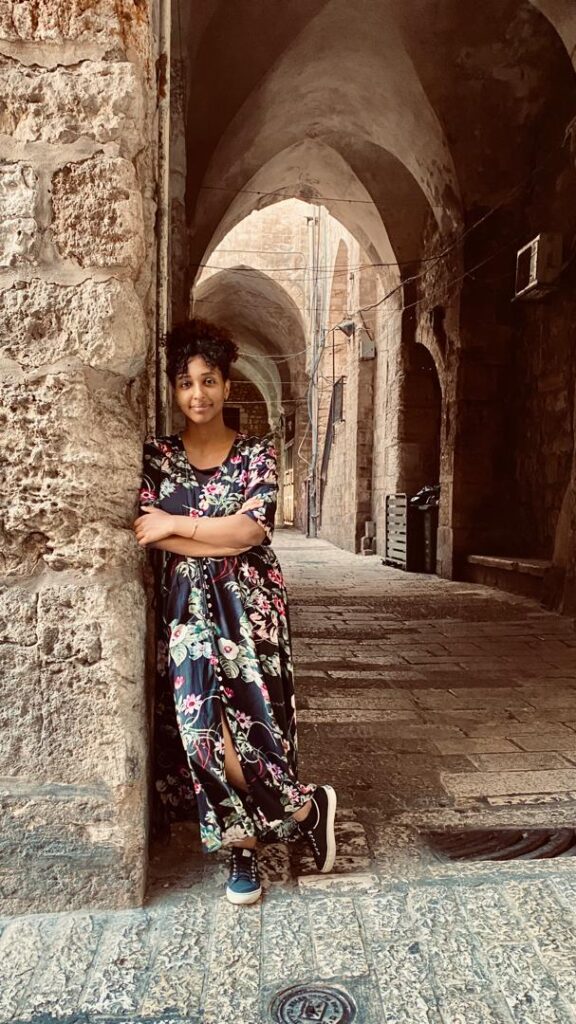
Nardos Amanuel Kebede with a floral dress stands in a stone breezeway with large stone arches in Jerusalem
Kebede in the Old City of Jerusalem in September 2024. (Image courtesy of Kebede.)

Kebede’s interest in international diplomacy began during a high school project, where she researched mental health policies and outcomes for young people in Ethiopia and across Africa. This foundation led her to UMBC’s Sondheim Public Affairs Scholars Program, where she further developed her understanding of public service, civic engagement, and research-based policy and diplomacy. During her first year, Kebede joined UMBC’s McNair Scholars Program, a graduate school mentorship and preparation program, to explore earning a Ph.D. that would lead to becoming a diplomat. Her plans changed during the U.S. Foreign Service Internship Program when she met current Rangel Fellows.  

“I wasn’t sure I wanted to go to graduate school. I thought I’d be a diplomat the conventional way where I take the Foreign Service Officer Test after undergrad—even though at one point, I considered going straight into a Ph.D. program for comparative politics,” says Kebede. “What changed is that I wanted to become a diplomat first. I would love to work for a number of years as a generalist and then consider transitioning to become a regional specialist. I have always been interested in the East African region.” The Rangel Fellowship gives her the chance to start her foreign service training following a Congressional and U.S. embassy internship and graduation. 

“I am thrilled for Nardos and thrilled for our country to have such an exceptional scholar and citizen as Nardos on track to represent us in the foreign service,” says Laura Antkowiak, director of the Sondheim Public Affairs Scholars Program. “Nardos stands out for so many wonderful qualities, such as her intellectual maturity, her poise and communication skills, her care about what’s happening in the world, her enthusiasm for research that makes an impact, her extensive volunteer and mentorship work on and off campus, and her empathy, integrity, and kindness.”

Strength in numbers

Receiving this award is the culmination of years of hard work, determination, dedication, and being willing to accept help. With funding from the McNair Scholar Research Institute, Kebede had the opportunity to visit Jerusalem to meet prominent Ethio-Israeli leaders and conduct interviews for her independent and ongoing research project titled, “The Generational Evolution of Cultural Identity Amongst Ethiopian Israelis and Its Impact on Integration,” under the mentorship of Brigid Starkey, teaching professor of political science.

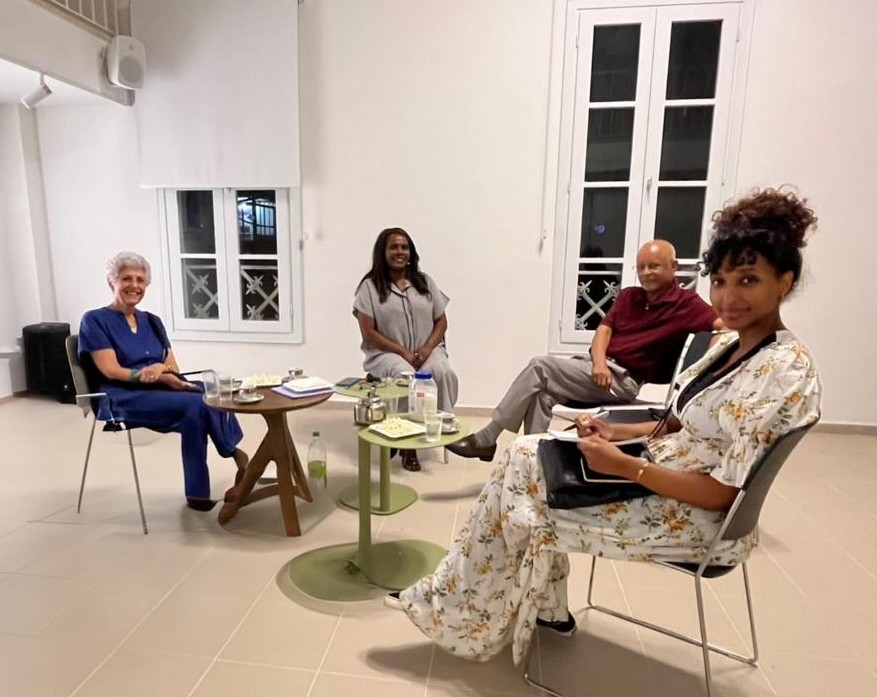
people sit in chairs in a white room
Kebede, right, interviewing prominent Ethiopian-Israeli journalists and activists for research at the Ta Tarbut Faitlovitch, a cultural center in Tel Aviv, Israel, in October 2024. (Image courtesy of Kebede)

Kebede is paying it forward as a McNair Scholars Teaching Fellow, teaching a research methods course, and supporting new scholars. She notes that each step along the way has been shaped by the guidance, encouragement, and collaboration of faculty and peers across the social sciences and the Honors College including UMBC’s Rangel Fellowship advisor, April Householder, director of undergraduate research and prestigious scholarships, who advised Kebede through the application process.

“To end up at this point where I have a direct way to my dream job as a public servant, as a diplomat traveling the world, and representing the United States and the ideals of democracy, free and fair elections, and human rights, it’s a dream come true,” says Kebede. “I have to pinch myself sometimes because I can’t believe I made it to this point.”


Learn more about UMBC’s prestigious scholarships.

UMBC’s Ethics Bowl team earns spot in national championship two years in a row

UMBC’s Ethics Bowl team won third place at the 2024 Chesapeake Regional Ethics Bowl competition in December. The team competed at UMBC against 15 teams from the Mid-Atlantic region, all vying for one of three qualifying spots in the 2025 Association for Practical and Professional Ethics Intercollegiate Ethics Bowl National Competition. UMBC will join Virginia Tech, first-place winner, Salisbury University, second-place winner, and 33 qualifying teams across the country at the national competition in February 2025.

“Activities like the Ethics Bowl engage students to think more critically about their own values and decisions, and thereby be better able to engage with those whose views differ,” says Jessica Pfeifer, associate professor of philosophy and department chair. “This will make them better scientists, doctors, programmers, entrepreneurs, lawyers, parents, and citizens.”

Six weeks before the competition, teams receive detailed information about the topics they will discuss, allowing them to prepare and strategize their arguments. Students must be ready to answer judges’ questions and defend their responses to the opposing team in just a few minutes. Each team competes in four preliminary rounds to advance to the semifinals and finals.

Greg Ealick, a philosophy lecturer, has coached the undergraduate team 15 years. He meets with the team year-round to hone their critical thinking skills, debate challenging ethical issues across all disciplines, and develop strategies for conveying their research respectfully and succinctly. Ealick knows what it takes to make it to the top. In 1988, Ealick ’89, philosophy, helped lead UMBC’s debate team to number one in the United States and to the Parliamentary Debate Association world finals in Australia, where he was ranked as the number one American speaker. Over the 15 years Ealick has coached the Ethics Bowl team, UMBC has qualified for nationals seven times, most recently in 2023 and 2020.

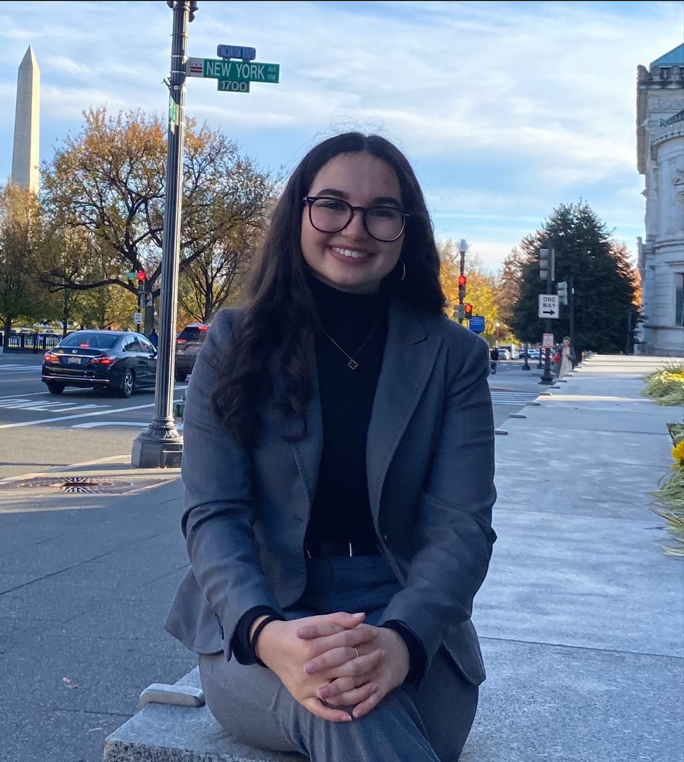
A business professional wearing a grey suit sits outside a building with the Washington Monument in DC in the background. Ethics Bowl.
Tafat Boudif. (Image courtesy of Greg Ealick.)

“Qualifying means a lot since it is a testament to all our hard work throughout the semester. We spent several hours each week preparing for these cases, which were sometimes incredibly difficult to hash out,” says Tafat Boudif, a political science junior. Boudif helps Retrievers engage with government, politics, and policy-making as a political engagement intern at UMBC’s Center for Democracy and Civic Life. She also serves on the Student Government Association’s Appeals Board. “There are also so many additional things that we have to take into account, such as tone, confidence, etc. So I’m super proud of our team for being able to juggle all these things against some pretty tough teams!”

This year’s achievement comes shortly after UMBC’s new Center for Ethics and Values, home to the UMBC Ethics Bowl team, announced it would be a new host in the national line-up for the Association for Practical and Professional Ethics regional competitions. The event was co-hosted by UMBC’s Department of Philosophy and made possible with over 50 former Ethics Bowl team members and community members who helped to run, moderate, and judge the tournament, which took place on December 7, 2024, in the Performing Arts and Humanities Building. 

This is what keeps former Ethics Bowl team member Stephanie Ferrone ’09, physics, returning to UMBC—her role as a coach. She notes that the skills she developed in Ethics Bowl continue to guide her thinking and communication as a physicist at the Underwater Electromagnetics Sensors branch of the Naval Surface Warfare Center.

“Coaching Ethics Bowl has been a joy; past the highs and lows of competition, there is a true delight in sitting in a room in the PAHB every week to help students talk through all aspects of Ethics Bowl, from Beauchamp’s principles of biomedical ethics to the importance of signposting in public speaking,” says Ferrone. “It’s even more meaningful of an experience to know how deeply this is likely to affect these students—this type of experience is one that shapes a college career and crafts friendships and connections that truly last.”


Learn more about UMBC’s philosophy department.

Political science students conduct 2024 UMBC Battleground Exit Poll, gauging attitudes of 1,119 Baltimore County voters

Elections can tell us the number of people who voted for a candidate or ballot initiative, but not how those voters made up their minds. To understand voting behavior, experts turn to exit polling, a careful and methodical process of surveying voters as they leave polling places. For the 2024 election, many Baltimore County voters were greeted outside their polling place by UMBC students conducting the UMBC Battleground Exit Poll, a hands-on educational experience created by Ian Anson, an associate professor in political science. 

For students, this was an opportunity to participate in the high-stakes world of Maryland politics. For their professor, it was an opportunity to see his students successfully draw on classroom skills as they engaged with the community.

“Students really found their voices,” says Anson. “Students who I felt were pretty reserved and quiet in class were reaching out to voters in very bold ways and finding that perfect pitch to get them to take the poll. “ 

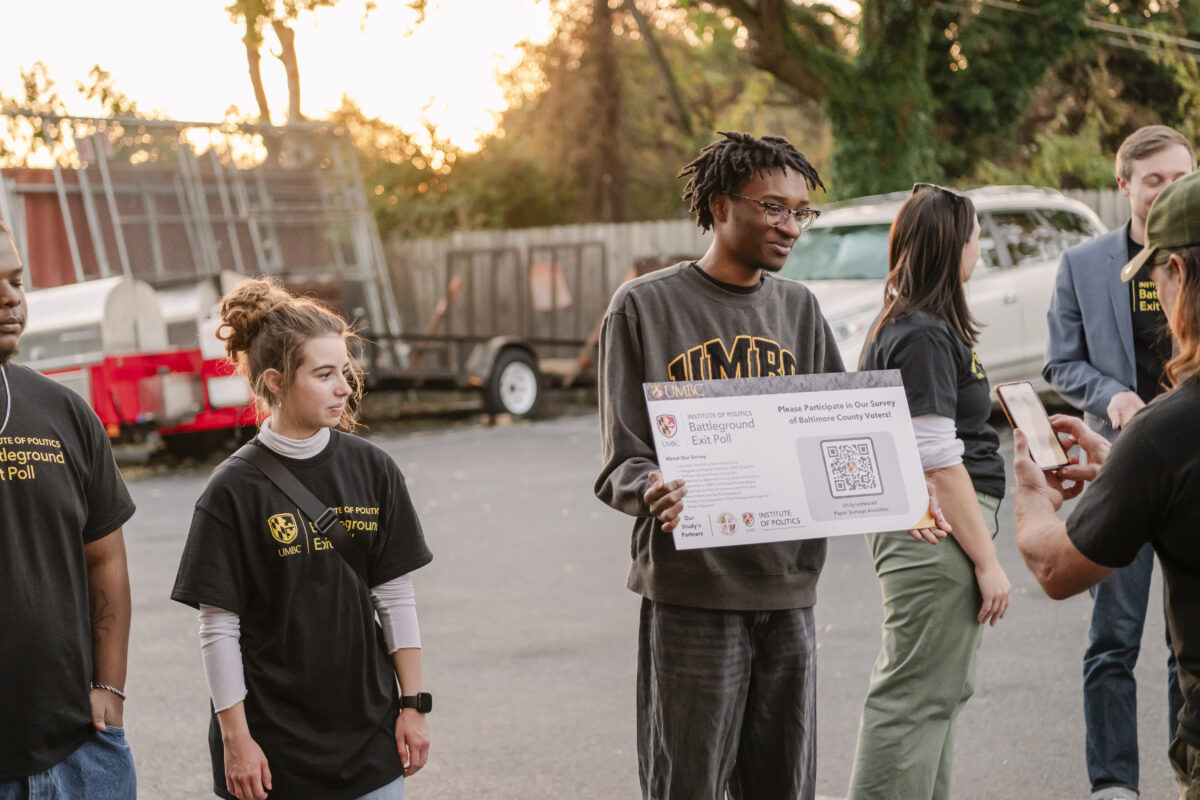
A college student wearing a grey UMBC sweatshirt stands outside a voting station holding a sign with a QR code for the Battleground Exit Poll
(l-r): Trevon Chambliss, Allison Smock, and Connor Morris. (Marlayna Demond ’11/UMBC)

Going beyond the classroom context

Anson, who also serves as associate director of the new UMBC Institute of Politics (IoP), collaborated with students to design and implement the Battleground Exit Poll. He worked with over 50 undergraduate students enrolled in his upper-level American voting behavior class to develop bias-free questions for the survey. The Battleground Exit Poll is the second exit poll Anson has developed with undergraduate students. During the 2018 midterm primaries, Anson’s voting and polling class students designed the UMBC Retriever Exit Poll.

“My guiding philosophy is to create applied-learning projects that have legs—that go beyond the classroom context,” said Anson. “I want students to experience how political science theories and applications impact communities.”

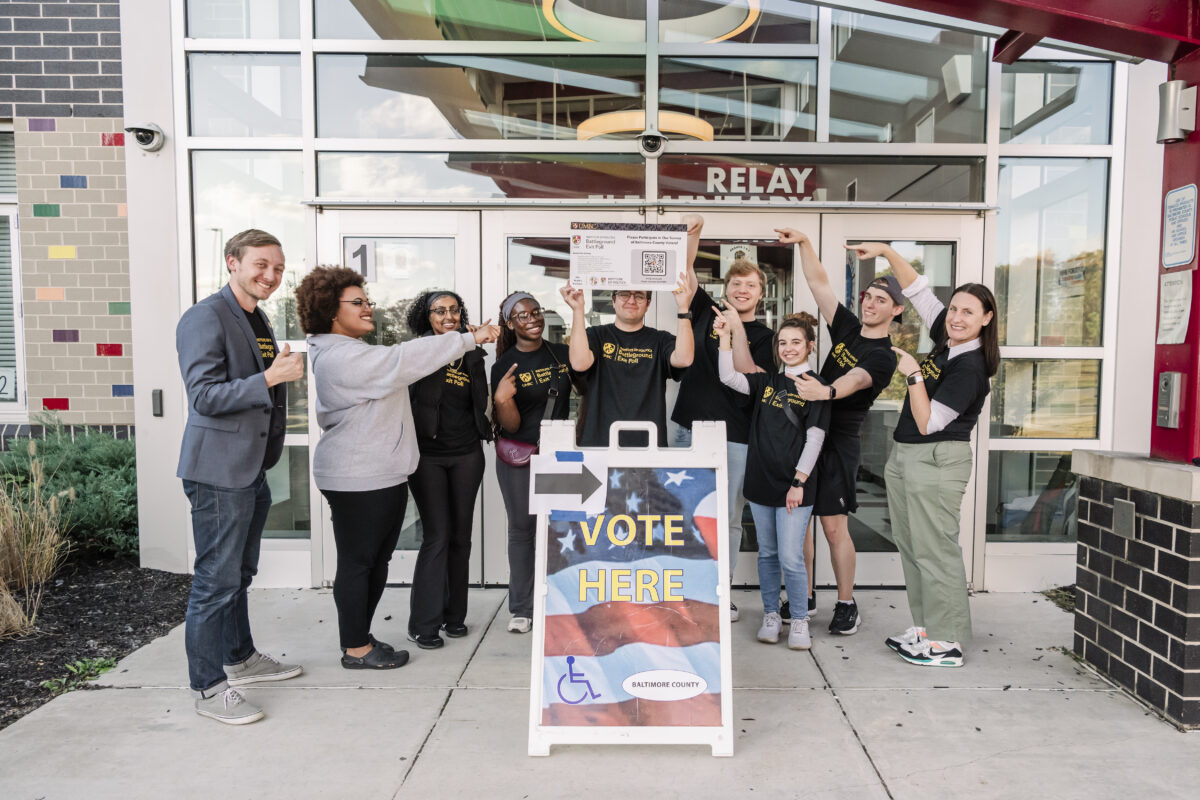
A group of seven college students wearing black and gold shirts stand with two faculty members in front of a public voting location behind a vote here sign. Battleground Exit Poll
(l-r): Anson with students from his American voting behavior class. Emnet SamuelPrecious NwannaAndrew ElbonRyan HolmAllison SmockJack Henschen,
and Mileah K. Kromer, director of the Institute of Politics. (Marlayna Demond ’11/UMBC)

Understanding the data

The poll gauged the attitudes of 1,119 Baltimore County voters who cast their ballots in person during early voting and on Election Day. Voters answered questions about various topics, including the presidential, U.S. Senate, and congressional elections; adding “The Right to Reproductive Freedom” amendment to the Maryland Constitution; and the economy. 

Among the findings, the data showed that the top five issues Baltimore County voters said they considered when making their voting decisions were abortion, inflation, the trustworthiness of politicians, civil rights, and immigration. 

There were some surprising results hidden beneath the surface of these toplines—Anson’s students discovered in their conversations with voters a shared sense of values—regardless of party preference or votes cast (60 percent of Baltimore County voters voted for Kamala Harris and Tim Walz and 36 percent for Donald Trump and J.D. Vance).

“Everybody I talked to—both for Harris and for Trump—were saying similar things for what they wanted for the country,” says Ayaan Rizvi, a first-year student in UMBC’s Sondheim Public Affairs Scholars program, who plans to major in political science. “It’s really interesting to see the mental calculus that goes on in people’s brains when they make a choice of how they will vote.”

Rizvi says most voters said they wanted themselves and others to live comfortably and to be able to live peacefully in their communities.

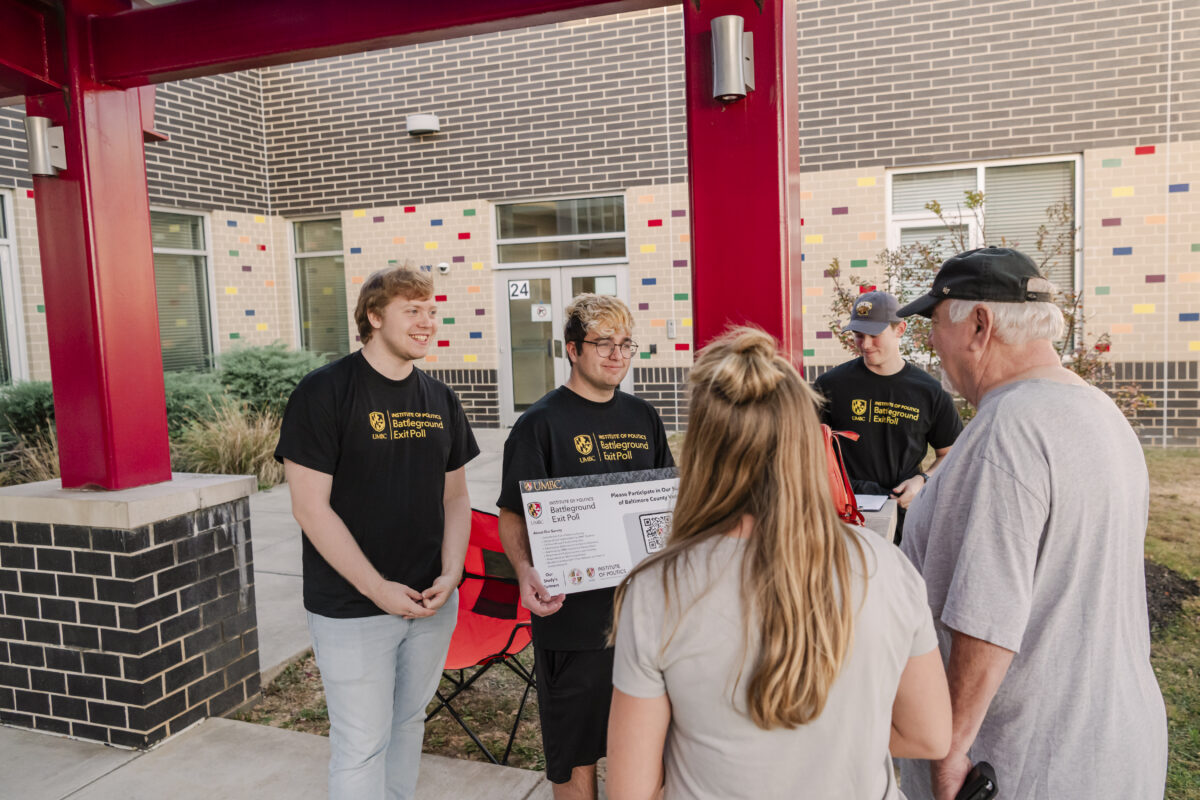
Three college students stand outside a voting station sharing a sign about a survey with voters.
(l-r): Ryan Holm, Andrew Elbon, and Jack Henschen. (Marlayna Demond ’11/UMBC)

A highlight for Anson is watching his polling students gain a perspective into elections that goes deeper than what they can get in the classroom or from watching the news.

“We often see ourselves as this very divided country,” says Anson. “But when you go to the polling place and stand there for four hours, you get a much different glimpse. I think students really left the experience feeling the warmth of that.”

The UMBC Battleground Exit Poll was covered widely by state and local news outlets, including CBS, ABC DC News Now, Fox 45 News, and WBAL-TV.

Learn more about UMBC’s Department of Political Science.

UMBC’s 2024 International Education Week celebrates globally-minded Retrievers

Now in its fifth year, UMBC’s 2024 International Education Week (IEW) hosted by the Center for Global Engagement (CGE), celebrated UMBC’s commitment to international education. Events throughout the week highlighted international opportunities such as education abroad experiences, prestigious fellowships like the Fulbright U.S. Student Program, as well as international career prospects and intercultural initiatives on campus. 

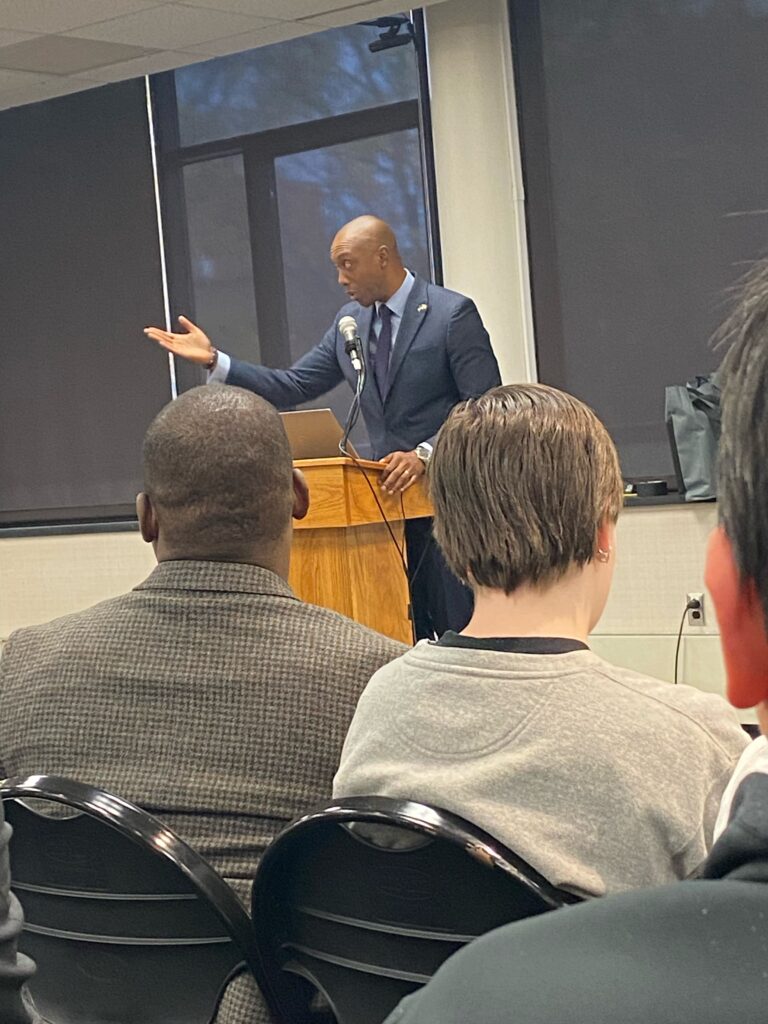
IEW is a nationwide event that’s a joint initiative of the U.S. Department of State and the U.S. Department of Education. This year’s first UMBC International Education Expo featured keynote speakers from the Maryland Higher Education Commission leadership—Secretary Sanjay K. Rai and vice chair Chike Aguh—who shared some of their personal international education experiences with a packed room of international students, faculty, staff, and community members.

International Education Week A government official stands at a podium speaking into a microphone to a group of people at UMBC's International Education Week (IEW)
Chike Aguh. (Jenny O’Grady/UMBC)

“I’m from a very small town in Nigeria. My parents received scholarships to study in the United States of America at public universities like UMBC. Without international education I would not be here,” said Aguh, who was appointed by President Joseph Biden to serve as chief innovation officer at the U.S. Department of Labor. 

“I ask you to recognize that this is a shared world and that your people have a right to live on it just like mine do,” said Aguh. That’s a very basic understanding, but it’s one that we don’t have enough of today. And many of you who are here right now are going to be the ones who hopefully help remind the rest of us of that. Maryland, America, and the world has need of you.”

According to David Di Maria, associate vice provost for international education, UMBC currently hosts 2,127 international students from nearly 100 countries. These students contribute valuable knowledge in research, performing arts, athletics, and community engagement.

One example is Ridwan Islam Sifat, an M.P.P. graduate student pursuing a doctoral degree at UMBC’s School of Public Policy who is researching healthcare disparities among intersex individuals in the United States. Sifat joined UMBC as an international student after earning both a B.S. and M.S. from the Bangladesh University of Professionals. 

UMBC also has many international partnerships, including this year’s collaboration with the American Statistical Association to organize its annual African International Conference on Statistics. Additionally, UMBC’s Academic Success Center holds one of six Learning Center of Excellence designations from the International College Learning Center Association. The impact of a globally-minded campus is vast.

President Valerie Sheares Ashby also shared a personal story of her first time studying abroad and the lifelong impact that made on her.

“I spent one year doing a postdoc in Germany and it changed my life,” said Sheares Ashby at the IEW event.  

“I think it made me a better teacher and it certainly made me a better researcher. And it definitely made me a better human. I think about the world globally in a way that I did not before I had that experience. So when I say we are better because you [international students] are here, it is 100 percent the truth.”


Learn more about the Center for Global Engagement.

Intercultural conversations: Exploring politics in a global context, even at home

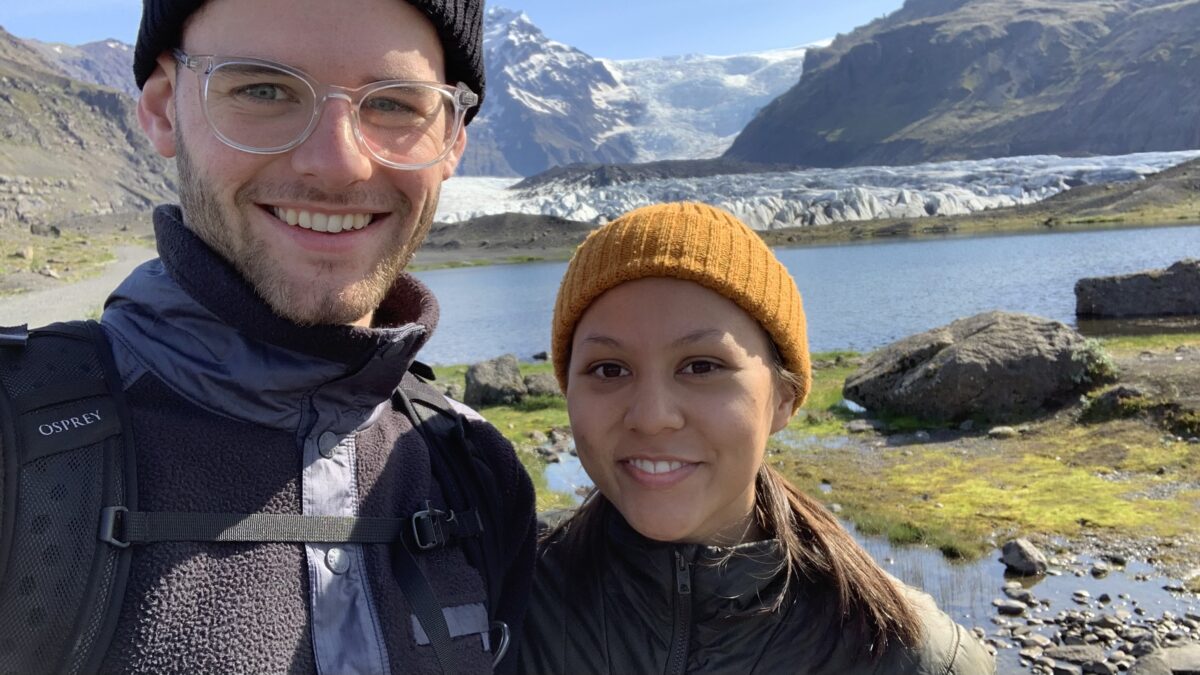
Middle school sweethearts, Ellyn Fennema and Joseph Patarini came to UMBC to pursue global studies (her) and geography and environmental studies (him). Despite their busy schedules, they were able to squeeze in a wedding between their sophomore and junior years, followed by a two-week van camping trip around Iceland. While it wasn’t their main goal for the trip, their majors seemed to align perfectly with learning about a new country and its geography. It wasn’t until Joseph found himself sitting outside Ellyn’s Research Methods in Global Studies and Approaches to Globalization classes with Felipe Filomeno, associate professor of political science and director of UMBC’s global studies program, that his interest was piqued by how to connect both their fields in a real-world setting.

“We used to carpool, so while I waited for her, I could hear Filomeno’s lecture,” says Joseph. “I was like, ‘Oh, he’s really cool and the discussions they have are really interesting.” Ellyn felt this was an excellent way to deepen his knowledge of the world. “Professor Filomeno makes learning these topics interactive and fun.” 

A couple traveling in the mountains of Iceland during the spring
(l-r): Joseph Patarini and Ellyn Fennema. (Image courtesy of Joseph Patarini)

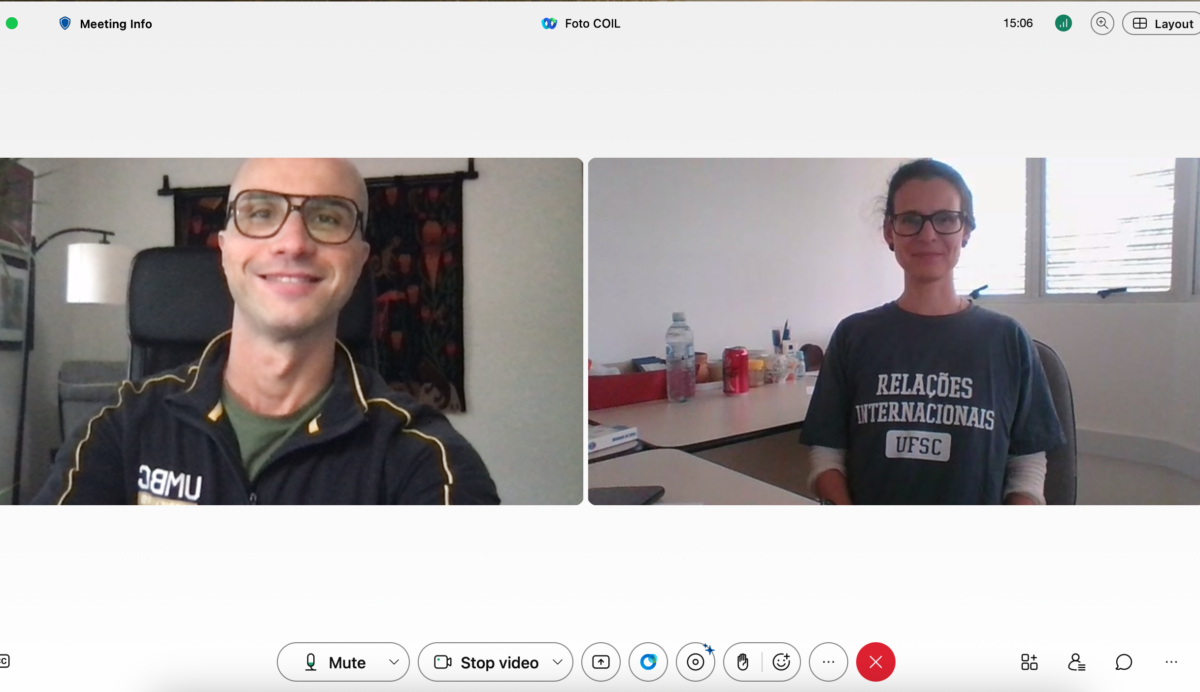
When Joseph learned about Filomeno’s 2024 Collaborative Online International Learning (COIL) Brazil project on climate change, he quickly enrolled. It equips students with the technical and interpersonal skills to thrive in professional online international and intercultural environments. COIL makes international scholarship and intercultural learning accessible by removing barriers of cost and travel while preparing students with essential skills for future in-person exchanges. COIL Brazil was part of Filomeno’s spring Global Citizenship class in collaboration with former colleague Clarissa Dri, a professor of international relations at his alma mater, Universidade Federal de Santa Catarina (UFSC, the Federal University of Santa Catarina), in southern Brazil. 

Dri’s expertise includes Brazilian foreign policy, international cooperation, and human rights. “Clarissa and I teamed up because we value intercultural exchanges. We were both international students,” says Filomeno. “Clarissa earned a Ph.D. from the University of Bordeaux in France. I earned mine at Johns Hopkins Hopkins as a Fulbright Scholar.”

A screen shot of a global studies professor in Maryland and a professor in Brazil talking to each other about an intercultural class
(l-r): Felipe Filomeno and Clarissa Dri. (Image courtesy of Filomeno)

The program enrolls Retrievers and Brazilian students to enhance their intercultural competence and knowledge of human rights, democracy, and climate change policy advocacy. Spring 2024 was its third iteration with plans of future offerings 

“COIL has become another major pedagogical tool I use for active global learning,” says Filomeno, noting along with Dri the growing interest in COIL from one day in the first year to four weeks in spring 2025 “The students are very interested and happy with the intercultural interactions, exploring cultural differences, and the possibility to interact in English,” says Dri. “They are amazed by the concrete possibility of talking to someone who is in the U.S. right now and to listen to what they think of our country.” 

Politics without borders

Ellyn saw COIL as a way for Joseph to combine his ongoing GES research with a global studies perspective. “Since Brazil holds the lungs of the earth—the Amazon rainforest—getting the ideas and perspectives of Brazilian students would be valuable for his future career.” Before participating in COIL, Joseph’s understanding of Brazil was at a more physical level. At the GES research lab, he tracked forest plantations, deforestation, and land use change using global satellite imagery. COIL was an extra opportunity to develop a personal, qualitative understanding of land-use change, deforestation, and Brazilian environmental policies.

Filomeno and Dri coordinated the classes on Webex to align with the one-hour time difference. Students implement online social science research methods to gather and analyze data in 10 to 30-minute increments before sharing their findings. Each group schedules time outside of class to further their research and final presentations.

In Joseph’s class, students took on roles from various U.S. and Brazilian constituents including political parties, worker’s unions, philanthropic organizations, and Brazilian indigenous rights groups. Teams researched their constituents’ climate stance and proposed two goals for the their country to pursue at the 2025 United Nations Climate Change Conference. Joseph’s group proposed that the Bill and Melinda Gates Foundation focus on developing and deploying green technologies in agriculture and biodiversity preservation in Brazil.

Courage in politics

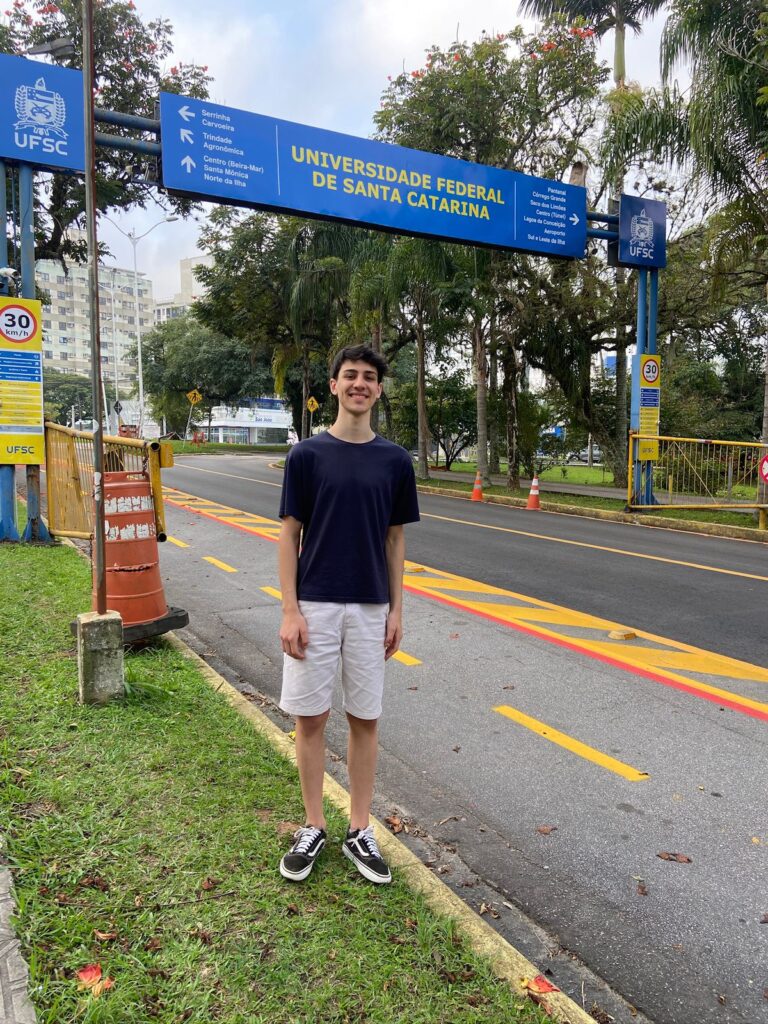
Gustavo Peres, a first-year international relations student at UFSC, believes it takes courage to actively engage in international political discourse. Initially, Peres was hesitant to apply to COIL Brazil 2023 because of the English language requirement but he was intrigued by the subject material which focused on democracy in the context of the presidential elections in the U.S. in 2020 and in Brazil in 2022.  

A Brazilian college student standing in front of a blue and gold directional sign with the name of a university global
Gustavo Peres. (Image courtesy of Peres)

“I could have just seen the email and said, ‘No, it’s not for me because I felt a little bit intimidated to be judged about how I speak,” says Peres, a native Portuguese speaker and English language learner. He followed his COIL experience with an internship in international trade. “I can lose a big opportunity to practice English and also know more about other people, their culture, and other things that are very valuable to our life. The West can provide a lot of things to other countries, but I think the other countries can also give a lot to the West.”

UMBC students were surprised by Brazil’s universal public healthcare and free public education without student loans or copays to receive medical care. UFSC students were intrigued that the U.S. lacks compulsory voting. “In Brazil, if you are 18, you have to vote or pay a small tax,” says Peres. “But it’s good that in both Brazil and the U.S. you can vote. I think the voting process is something very important and valuable for democracies.”

Paths to global understanding

Filomeno says students in the U.S. often think about democracy in procedural terms—free and fair elections, the rule of law, etc. “Brazilian students tend to emphasize substantive aspects of democracy—people’s right to education and health care, equality of economic opportunity, etc.,” says Filomeno. “Through dialogue, they realize their understanding of democracy is culturally specific.” 

Filomeno is all too familiar with these cultural differences. When he left Brazil for graduate school in the U.S., he became aware of his way of being. “My ancestors came from Portugal, Lebanon, Italy, and other countries. These cultures appeared in my family’s cuisine, language, and traditions,” says Filomeno. “I realized that the food I was used to eating was not just food but Brazilian food, that the way I greeted people in hallways was not just how people greet each other but how Brazilians greet each other.”

A couple in Rabat, Morocco stand on a balcony with a village behind them
The Patarinis celebrating their wedding anniversary in Rabat, Morocco. (Image courtesy of Joseph Patarini)

The Patarinis were inspired to fulfill Ellyn’s global studies education abroad requirement together—spending their senior summer in Morocco and Spain. “I felt very excited and fortunate,” says Ellyn. “Many things had to line up to make it happen; however, we put a lot of effort into the application for the CAHSS Dean’s Education Abroad Scholarship process, which made it all possible.”

The Patarinis celebrated their first anniversary in traditional Moroccan style with their friends and host family in Rabat the capital of Morocco during their UMBC faculty-led Intercultural Communication in Morocco and Spain education abroad classes. COIL and education abroad lay the groundwork for students to continue learning and engaging with the world beyond the U.S. Even with busy careers, Ellyn and Joseph plan to continue making time for travel. “Reading and studying global issues is one thing, but experiencing them firsthand offers an entirely new perspective—it ignites a deeper understanding and fuels a powerful drive to create meaningful change,” says Ellyn.


Register for Global Studies Spring 2025 classes.
Learn more about UMBC’s political science department and global studies program on Instagram @global.umbc.

UMBC lab draws developmental psychology students from across the globe

Graduate students rely on internet research and word of mouth to hear about programs that align with their interests. For Hatice Gürsoy, word of mouth led her from the Republic of Türkiye to UMBC’s Culture, Child, and Adolescent Development Lab, when she was looking for developmental psychology doctoral programs that could support her interests in the resiliency of Muslim immigrants. “One of Dr. Charissa Cheah’s doctoral students also happened to be from Türkiye. She connected me with Dr. Cheah, and we bonded from that moment over my research interests,” says Gürsoy.

Gürsoy is not alone in her trajectory to Cheah’s lab. Students worldwide are drawn to lab founder and director Charissa Cheah’s hands-on approach to teaching, mentoring, and research. “I tell students that my lab is a vibrant space where they can build expertise in collaborative public impact research,” says Cheah, a professor of psychology. She studies adolescent social-emotional development and the well-being of families from minoritized backgrounds, emphasizing the experiences of those from Asian, Middle-Eastern, and North African heritage, which are frequently overlooked in psychology research, she says. 

To approach this seemingly broad array of topics, Cheah offers graduate students seven ongoing research projects to choose from, including the latest project—Asian Americans’ Resilience, Identity, and Socialization of Engagement (ARISE), which focuses on the impact of racism and discrimination on Chinese, Korean, and Filipino American families parents’ and adolescents’ relationships, multiple identities, racial-ethnic socialization, civic engagement, and development.

Earlier in 2024, Cheah was invited to the White House to present the latest findings on the ARISE project with the Office of Science and Technology Policy. “It is empowering to represent the voices of marginalized groups, especially early career scholars, and to speak with individuals who aim to use this information to shape policies that decrease bias and hate,” she shared there.

Mentoring through unprecedented changes

Thanks to Cheah’s approach to mentorship, Hyun Su Cho, Ph.D. ’24, applied developmental psychology, had the support she needed to navigate unprecedented changes like COVID-19, in-person and virtual classes, and welcoming a new child. “It can all be very overwhelming,” says Cho. “Charissa is very busy, but she always finds time for you.” 

Cho found her way to Cheah’s lab after reading her research while completing her master’s in developmental psychology at Seoul National University in South Korea. “I had the same master’s advisor as a former doctoral student in the lab and she introduced me to Dr. Cheah during a conference,” says Cho. “I was interested in parenting and world culture. Her lab offered opportunities to study multiple Asian communities.” 

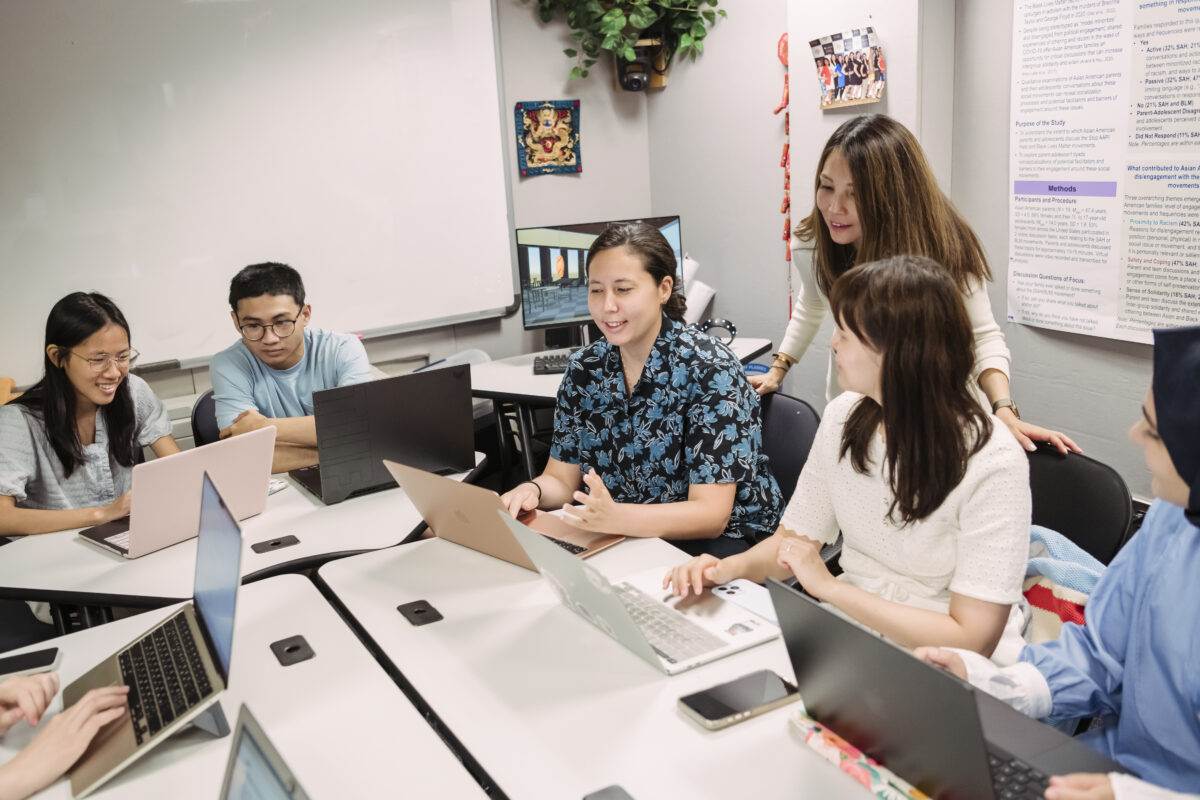
Charissa Cheah and students discuss psych lab work
Charissa Cheah and undergraduate students discuss lab work.  (Marlayna Demond ’11)

Initially, Cho collaborated with Korean American families on the Immigrant Children’s Successful Transition and Adaptation Research project. Later, she became deeply involved in the ARISE project. This work led to several publications and funding awards to complete her dissertation.

Huiguang Ren, Ph.D. ’24, applied developmental psychology, also found his way to Cheah’s lab through a recommendation. As a master’s student in developmental psychology at East China Normal University, “I wasn’t sure whether to go straight into industry or continue with a Ph.D.,” says Ren. He sought guidance from his mentor, who was researching adolescent development in Shanghai with Cheah. Ren started at UMBC as a visiting scholar before joining the doctoral program. “After working with Dr. Cheah, I decided research is something that intrigues me, and it’s a career that I want to pursue. ” 

Passing on the skillset

Ren also worked on several projects in addition to ARISE. He helped set up the Strengthening Asian American Families’ Excellence and Resilience project, one of the first National Science Foundation grants to explore the influences of the COVID-19 outbreak on racial discrimination, identity development, and socialization. Ren and Cho managed classes, guided students through research methods, helped them develop scientific language, and showed them how to analyze the data they collected and disseminate it to families and scholars. He now has a faculty position at his alma mater but initially struggled with imposter syndrome about guiding undergraduates. “And then I realized I have mentored quite a few students during my time in Dr. Cheah’s lab,” Ren says. “And then I realized I have mentored quite a few students during my time in Dr. Cheah’s lab,” Ren says.

Charissa Cheah and students gather around a table to discuss psych research
Cheah discusses work with her students. (Marlayna Demond ’11)

Gursoy is now in the fifth year of her doctoral program focused on the Identities of Muslim American Adolescents and their Growth and Excellence research study. This project explores the impact of identity, interpersonal relationships, racism, and cultural socialization factors on Muslim American development and adjustment. 

Like Cho and Ren, Gürsoy mentors undergraduates, modeling Cheah’s methods and plans on taking those skills with her. “Working with undergraduates is one of the things I love doing best. They are creative, curious, and are not afraid to tell you something that might not work,” says Gürsoy. “Dr. Cheah has been holding my hand throughout my journey. Helping me learn by giving me constructive feedback. I want to give the same kindness to our undergraduates.”

Learn more about UMBC’s psychology department.

Tasneem Khambaty mentors a new generation of doctoral students on novel research for the prevention of type 2 diabetes

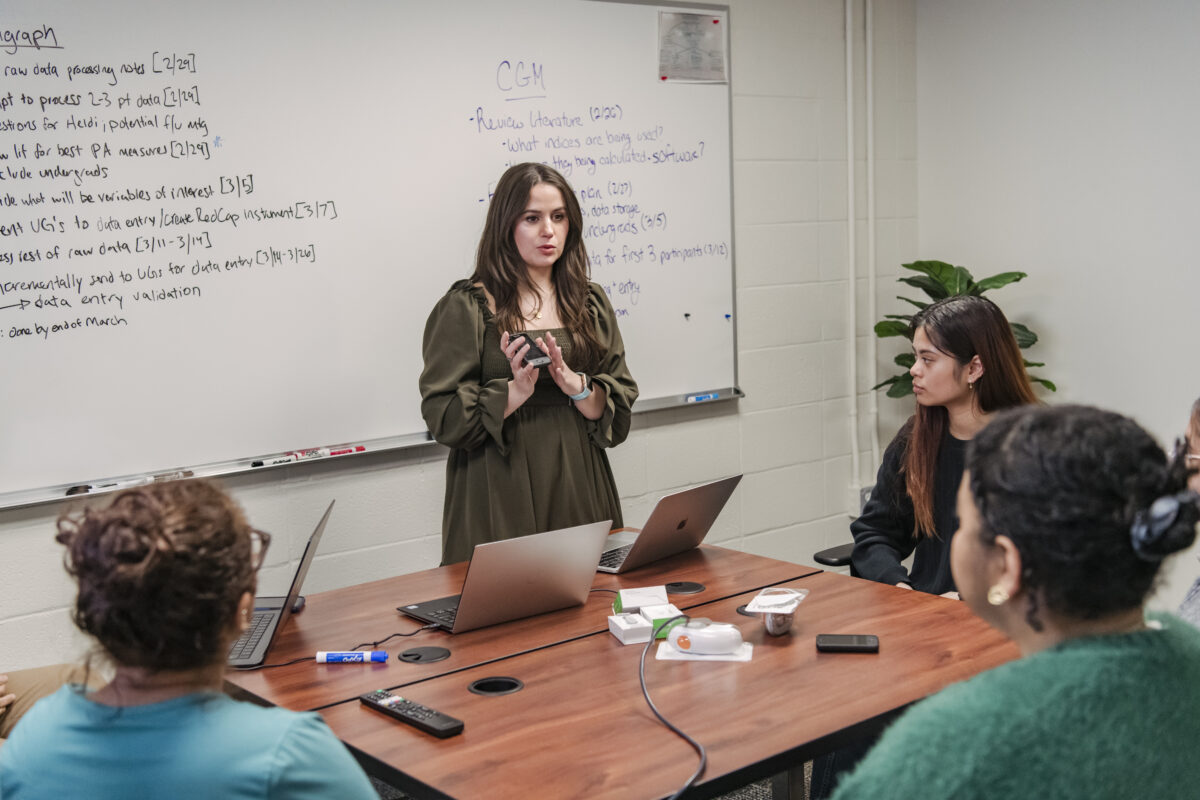
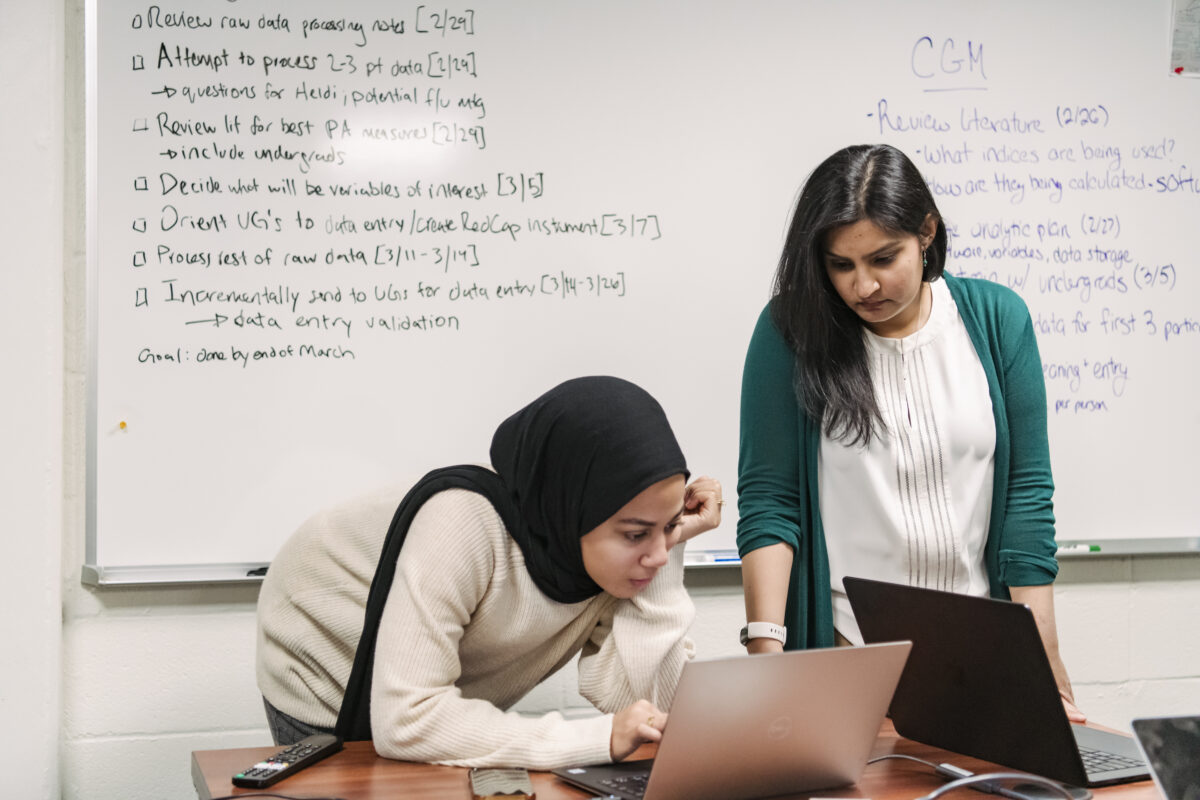
On the fourth floor of UMBC’s math/psychology building, Tasneem Khambaty, associate professor of clinical psychology and behavioral medicine, meets with doctoral students Ashley Splain and Sumaiya DeLane to plan the day’s work at the Cognition, Affect, and Cardiometabolic HEalth (CACHE) lab. The task at hand is analyzing novel data collected by continuous glucose monitoring (CGM) systems. Every detail matters. Splain and DeLane are study coordinators for one of the first research studies to use CGM technology to investigate the precise associations between low and high glucose levels, cognitive function, and key Alzheimer’s disease biomarkers in middle-age and older adults at risk for type 2 diabetes. 

Now in their sixth and fifth years of the clinical psychology and behavioral medicine doctoral program, Splain and DeLane came to UMBC with years of clinical experience working with older adults. As future clinical psychologists, they were looking for a doctoral program that offered strong mentorship enabling them to build their scientific research skills and obtain hands-on experience in a variety of settings to enrich their clinical practice. The CACHE lab allowed all those things to come together. “I was looking for someone who recognized I had a unique set of experiences and skills to bring and was willing to take a chance and be open to teaching me a lot of these basics,” says Splain. “That was something I appreciated about Dr. Khambaty. She recognized what I could bring to the lab.” 

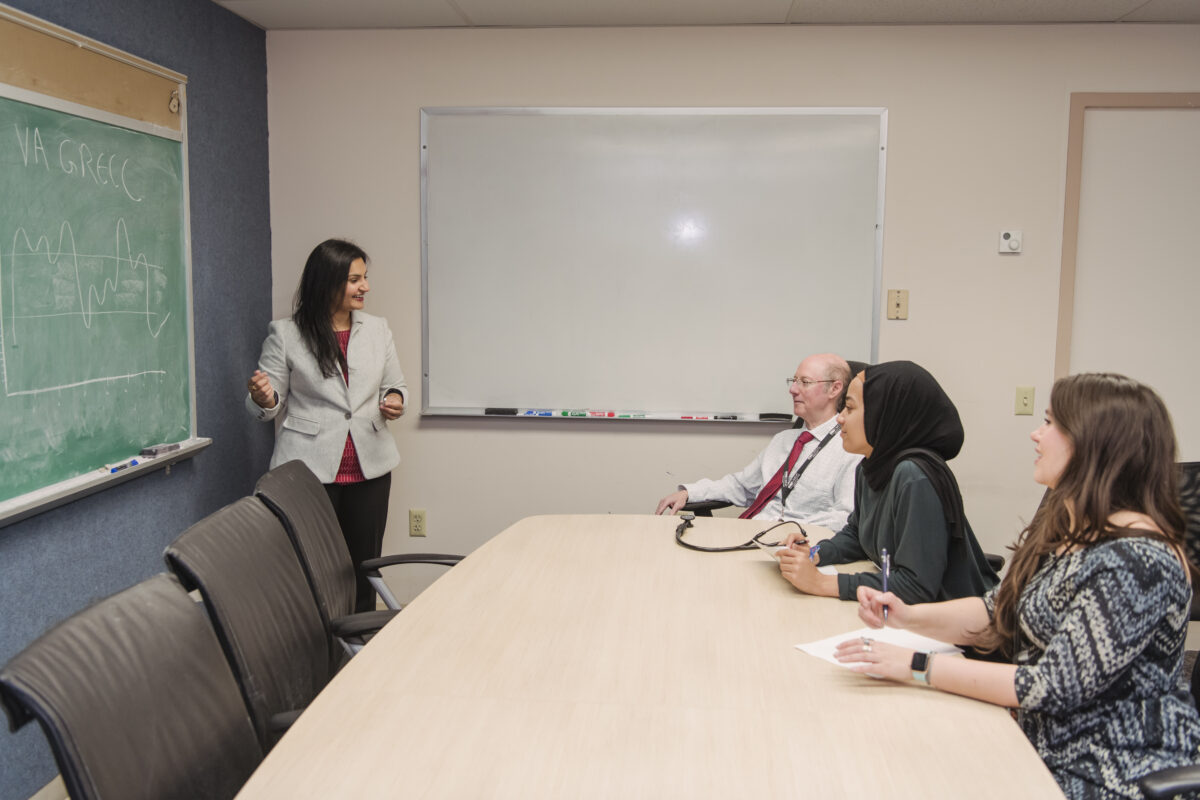
Tasneem Khambaty stands next to a chalk board discussing a graph about type 2 diabetes with three researchers sitting at a conference table
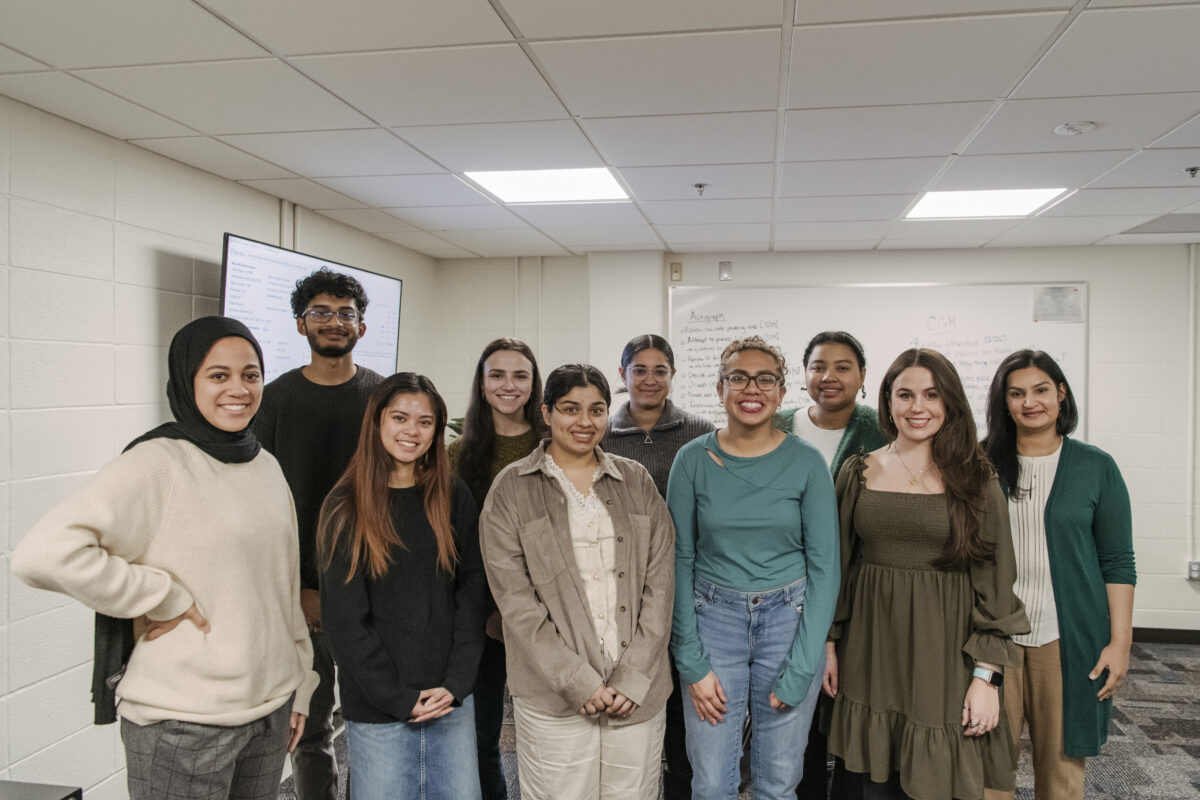
(l-r): Khambaty, Les Katzel, Sumaiya DeLane, and Ashley Splain. (Marlayna Demond ’11/UMBC)

Khambaty, the principal investigator in the CGM study funded by a National Institute of Aging grant, researches the psychosocial and neurocognitive factors that influence the diabetes process across the lifespan of middle-aged and older adults. “This research introduces a cost-effective, user-friendly CGM technology as a novel, sensitive, digital biomarker for the early detection of cognitive dysfunction and stratification of Alzheimer’s disease risk, ultimately, helping older adults preserve cognitive function into later life,” says Khambaty.

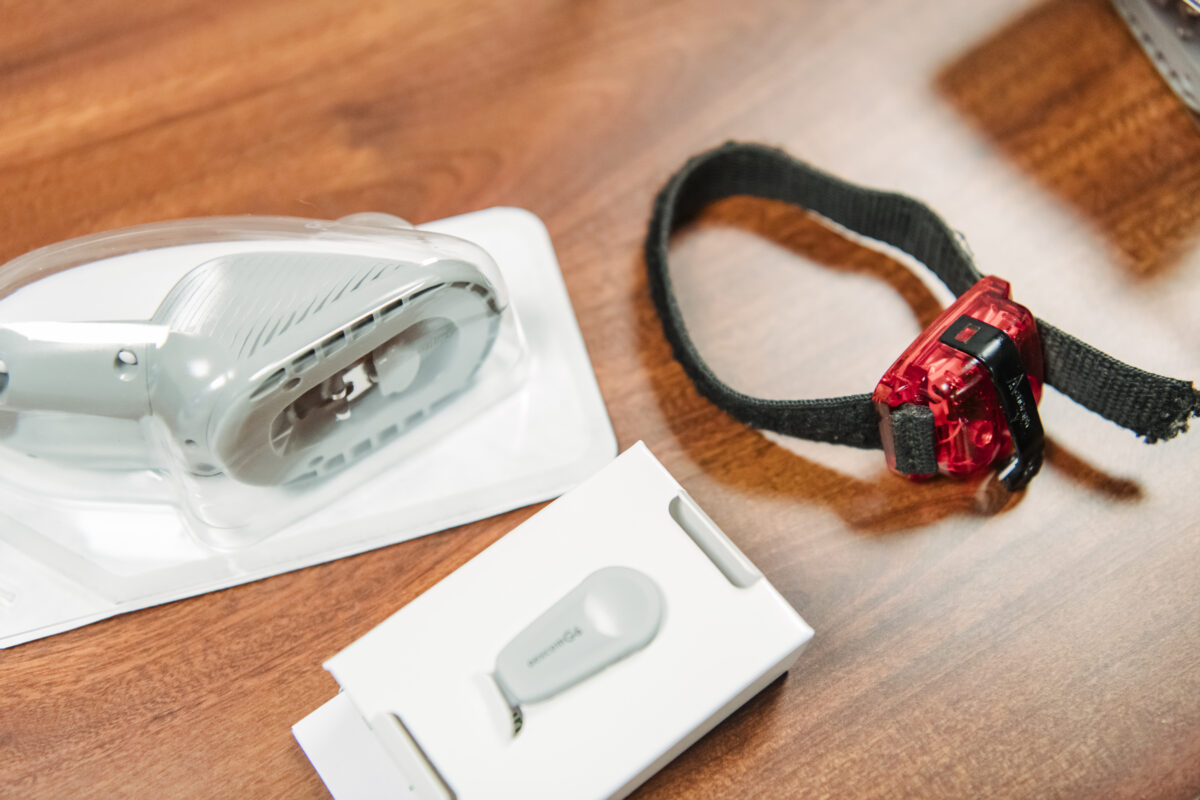
A glucose monitoring system.
Dexcom glucose monitoring system. (Marlayna Demond ’11/UMBC)

Preventing type 2 diabetes

People with Type 1 diabetes cannot produce insulin at all. Type 2 diabetes happens when the body cannot utilize insulin efficiently, and this is the most prevalent type of diabetes, notes Khambaty. “It is linked to cognitive dysfunction in episodic memory and executive functions, and an increased risk for Alzheimer’s disease. “Type 2 diabetes is curable,” she says. “If we focus on prevention, we won’t need a cure.”

A barrier to prevention is reliable, diagnostic, digital CGM tools for the early detection of cognitive dysfunction and Alzheimer’s disease for people at risk of type 2 diabetes. CGM, which gives a precise assessment of fluctuating blood sugar levels, has historically been limited to people who already have diabetes. “Further research is needed to determine the role of glucose fluctuations in the prediabetic stage,” says Khambaty. This requires collaborators. 

Splain and DeLane have been involved in the study from the start, gaining valuable experience alongside an interdisciplinary team of experts in behavioral medicine, endocrinology, geriatrics, and neuropsychology. This includes UMBC’s Shari Waldstein, a professor of psychology who focuses on cardiovascular behavioral medicine and medical neuropsychology, and various physicians and nurses, including Les Katzel a physician of geriatric medicine at the University of Maryland Claude D. Pepper Older Americans Independence Center (UM-OAIC)  and the Geriatric Research Education and Clinical Center (GRECC) within the Baltimore Veterans Affairs Medical Center (VAMC).

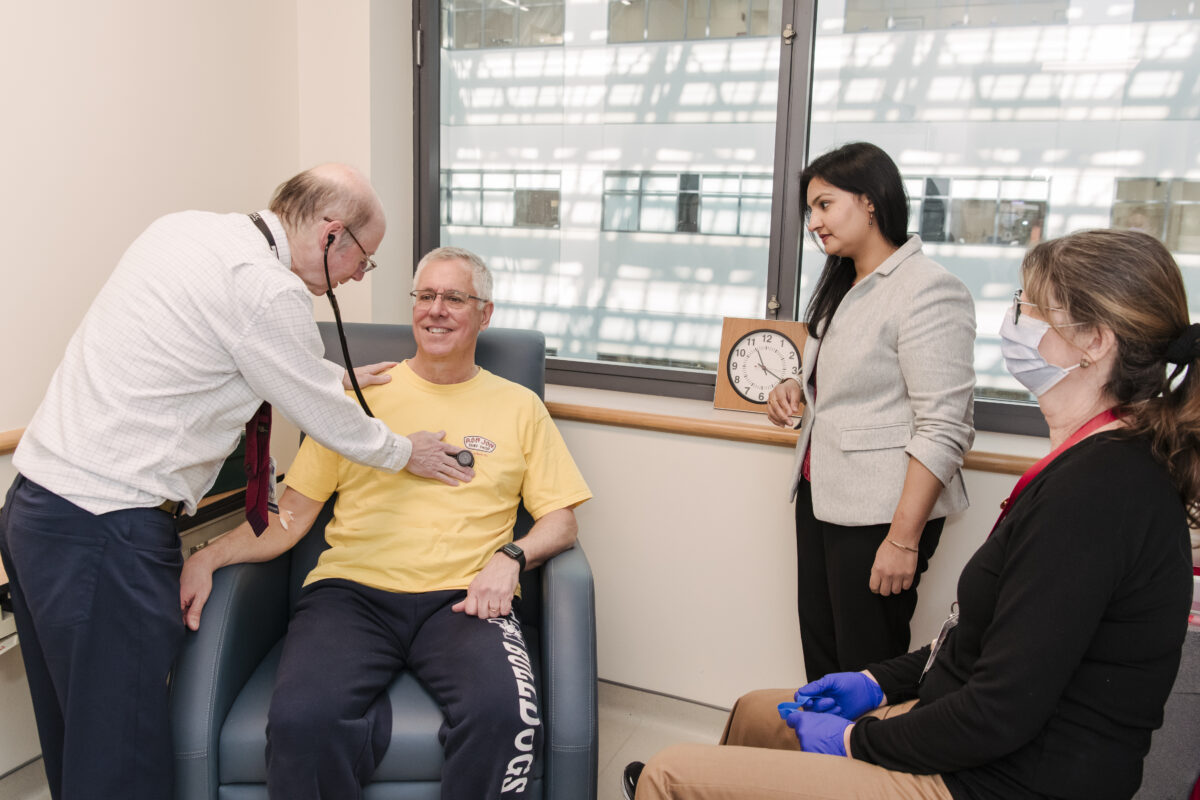
A physician uses a stethoscope to listen to a patient's hear with a nurse and a researcher standing by.
(l-r): The research team models patient care for the students at the GRECC. (Marlayna Demond ’11/UMBC)

A key benefit of being part of an interdisciplinary team is gaining firsthand experience with the infrastructure and technology essential for this level of research. UM-OAIC and the Baltimore VAMC GRECC provide the infrastructure for the research—human subjects oversight, the study’s safety monitoring, study location, nursing support, blood management, and sample storage. The technology partner, Dexcom, develops, manufactures, produces, and distributes CGM systems for diabetes management. Doctoral students witness in real-time the relationships necessary for driving innovation in this field.

Doctoral research with a global impact

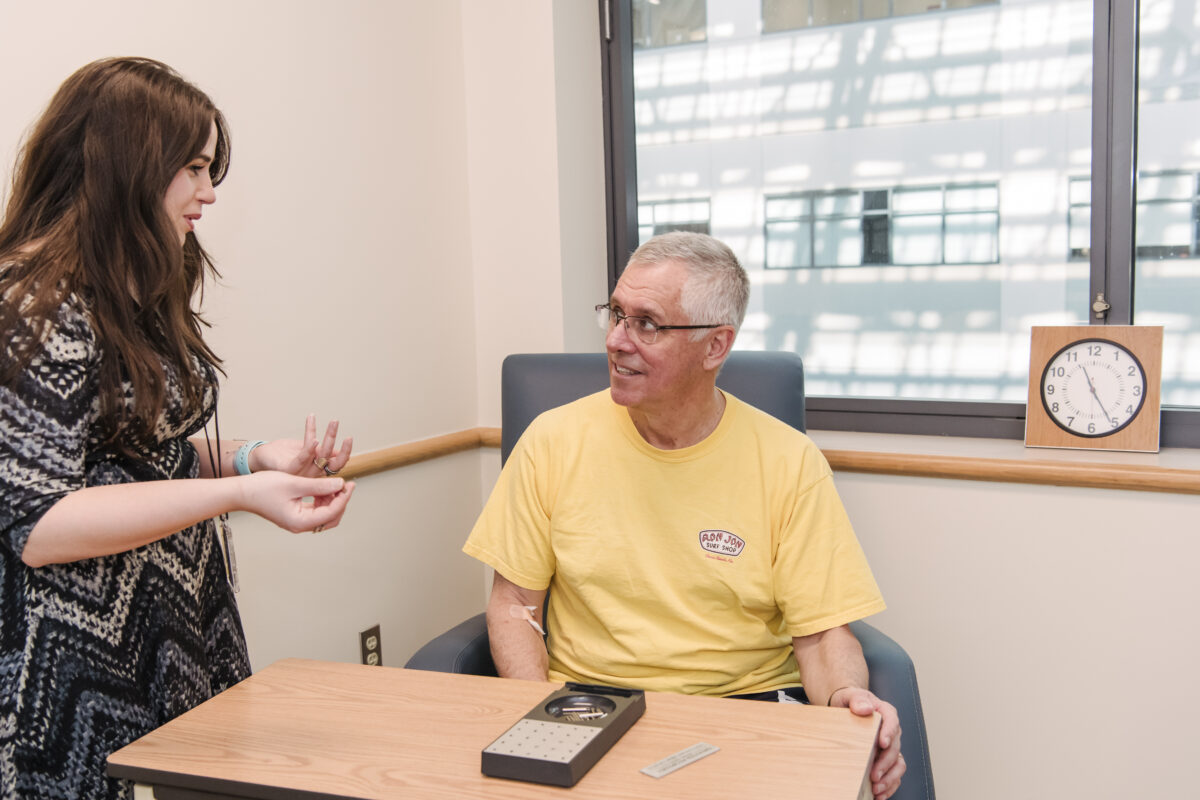
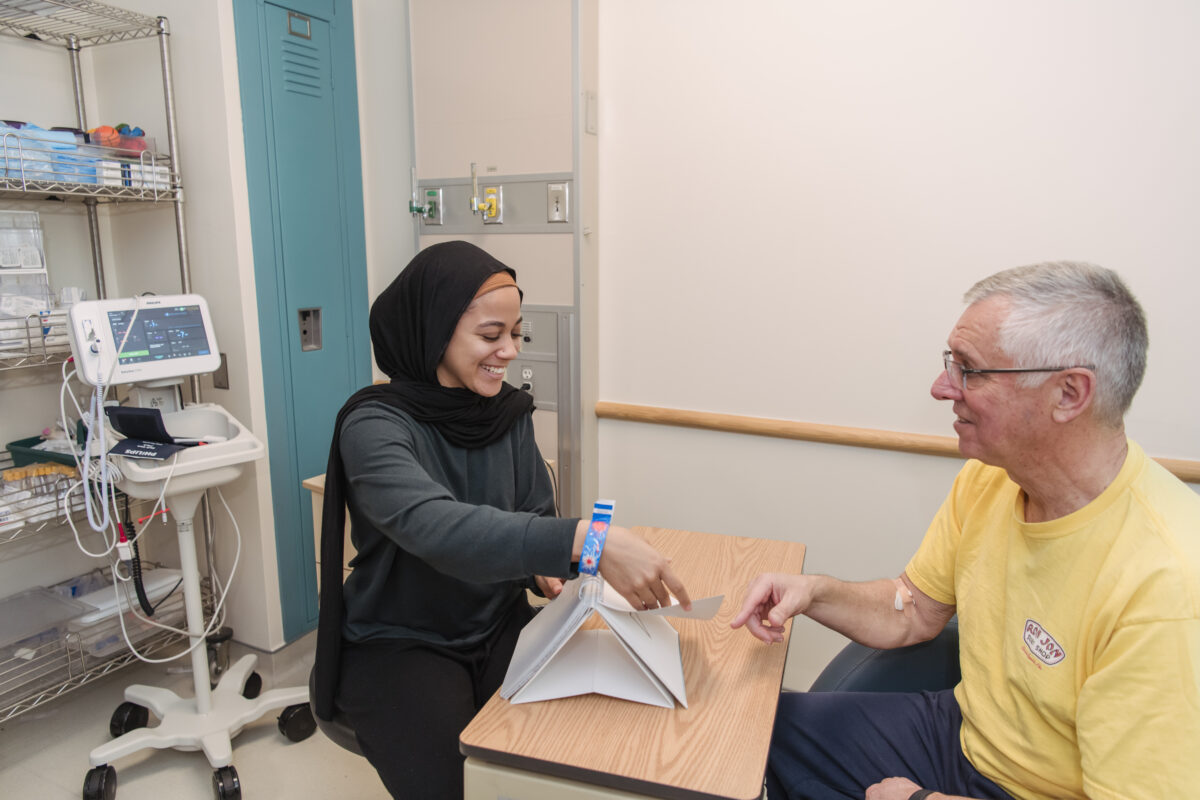
Before participants visit the study nurse at the Baltimore VAMC GRECC to have the Dexcom monitor inserted, they first meet with Splain and DeLane. The pair oversees the entire process, from initial contact to final payment for participation. This includes confirming eligibility, liaising with the nurse practitioners who conduct a physical exam and blood draw, explaining how to use the Dexcom glucose monitoring device and actigraphy band, and conducting neurocognitive assessments to evaluate the participants’ learning, memory, and attention. 

“A lot of our participants have been interested in the study because they have a family history of diabetes and have seen how devastating it can be if left untreated,” says Splain. Her interests in the intersection of cardiometabolic diseases—such as diabetes, heart disease, and hypertension—and the impact of psychological factors like depression and anxiety on their development made her an excellent fit for Khambaty’s lab. “Because of that history, they are willing to give their time so that we can advance how we treat this debilitating condition,” Splain continues.

A graduate students stands in front of a group of students explaining a small glucose monitor works
Splain explains how the monitor gathers information for undergraduate psychology students. (Marlayna Demond ’11/UMBC)

Eight days later, when the monitor is removed, the study coordinators conduct a final review with participants asking about their social networks, mood, and symptoms of depression as well as their sleep and physical activity levels. Meanwhile, back at the UMBC lab, Khambaty, Splain, and DeLane lead undergraduate students in entering, processing, and analyzing the data. The doctoral students dive deeply into the data sets and participant feedback and plan the next phase of their research. 

Tasneem Khambaty works with a graduate student analyzing data on a lap top
DeLane and Khambaty review the latest CGM data. (Marlayna Demond ’11/UMBC)

“Clinic psychology programs require a lot of mental shifting because we’re doing not only research but we’re also doing the clinical piece,” says Splain. “Connecting with participants, hearing their stories, and knowing that our research can hopefully move the field forward keeps us going.”

Welcoming more student researchers

Khambaty is determined to inspire more students in this field. Currently, there are six undergraduates and three graduate students in the lab. Khambaty also shares her research with undergraduate students in her upper-level seminar, Health Promotion and Disease Prevention. “Students are excited to learn about how multidisciplinary perspectives from medicine, public health, epidemiology, and psychology are needed to understand the challenges and opportunities for chronic disease prevention in the U.S.,” says Khambaty.

A group of eight college students and a professor stand together fin a classroom for a group photo in a classroom
The CACHE Lab graduate and undergraduate team. (Marlayna Demond ’11/UMBC)

Now working on her dissertation, DeLane reflects on the impact of the research she’s contributed to. The study is in its second year of funding.“I find it very exciting. I’ve been amazed at how when participants first join our study, they begin to connect the dots between their blood sugar levels and their brain health later in life. It empowers them with a sense of ‘I can do something. I can take control,’” she says. Currently, her research focuses on how psychophysiological factors, such as heart rate variability, can enhance our understanding of the link between anxiety symptoms and glucose regulation, particularly in relation to social support and resilience. Over the next year, she plans to apply for internships in pediatric neuropsychology where she can further investigate how early life experiences interact with these factors to shape cognitive health in children.    

The World Health Organization reports that there is a globally agreed target to halt the rise in diabetes and obesity by 2025. Its latest reports show that about 422 million people worldwide have diabetes, the majority living in low-middle-income countries, and 1.5 million deaths are directly attributed to diabetes each year. “The fact that we are looking at people with prediabetes rather than a confirmed diagnosis empowers people to make small changes in their lifestyle,” says DeLane. “To be able to share that, and from existing research I’m familiar with, to give them a little bit of advice, it makes me feel like I’m making a bit of a difference.” 

Learn more about UMBC’s psychology programs, including the behavioral medicine track.

Register for PSYC 475 – Health Promotion and Disease Prevention.

UMBC and MSDE launch admissions pathway for high school students aspiring to become teachers

Thanks to award-winning education faculty and UMBC’s research-based teacher preparation programs, hundreds of Retriever alumni lead pre-k through 12-grade classrooms across the state, meeting the need for highly qualified teachers. Maryland’s high school students now have a unique opportunity to join their ranks by beginning their teacher training early in preparation for applying to UMBC’s teaching programs. This fall, UMBC joined an existing network of higher education institutions across Maryland that partner with the Maryland State Department of Education (MSDE) and the Teacher Academy of Maryland (TAM) to offer Maryland-high-school students interested in teaching a direct admissions pathway to UMBC’s undergraduate teacher education programs.

An elementary school student reviews a math chart with the teacher who is sitting at a table with other students MSDE
Sherman Teacher Scholars Program alumna, Vanessa Gonzalez ’19, American studies, during her first year teaching at Lakeland Elementary/Middle School in 2019. (Marlayna Demond ’11/UMBC)

UMBC awarded its first TAM scholarship and academic credit this fall to three first-year students, Layla Bugarini, Alna Thekkiniath, and Sofia Driver.“Once the word gets out that UMBC is a TAM-participating institution offering not only great benefits for TAM students but also a high quality and unique teacher education program, we anticipate many more aspiring educators will see UMBC as a destination institution for teacher education,” says Vickie Williams, director of student services and certification officer for UMBC’s Department of Education and a member of the organizing committee

TAM’s mission is to grow and diversify the teaching field by igniting high school students’ passion for teaching. The program provides them with foundational knowledge and skills essential for success as educators, learners, and leaders. Through a partnership with a higher education institution, participants gain valuable experience in a university setting which helps them prepare for their transition to education majors.

Two elementary school teachers stand next to each other inside a classroom MSDE
(l-r): Sherman Teacher Scholars Program alumni, Olivia Grimes ’19, individualized study, and Lydia Coley ’20, American studies, in 2020 during Grimes’s first year of teaching and Coley’s first semester as a student-teacher at Maree G. Farring Elementary/Middle School. (Marlayna Demond ’11/UMBC)

Participating high schoolers develop a portfolio that includes three high school courses: Human Growth and Development through Adolescence, Teaching as a Profession, and Foundations of Curriculum and Instruction. Students are also required to complete an internship in a classroom setting under the supervision of a TAM mentor. After fulfilling all the TAM requirements, students submit their portfolio for review and feedback to the university they plan to attend. Each university offers students different benefits.

UMBC is providing students who successfully complete the TAM program, with several incentives:

  • a $75 application fee waiver
  • three lower-level education elective credits that can be applied towards the 120-minimum credit graduation requirement 
  • for those who matriculate directly from high school, a $1,000 merit scholarship from the Homer and Martha Gudelsky and the Maggie Geeter Hrabowski Scholarship, to be applied directly to their UMBC account to assist with tuition, fees, and other educational expenses
  • an opportunity to interview for UMBC’s Sherman Teacher Scholars Program

“Our undergraduate students enter classrooms equipped with pedagogical knowledge, field experience, and expertise from their academic major. This prepares them for their teacher certification exams in their chosen grade level and subject area,” says Williams. “Collaborating with TAM provides high school students with exposure to rigorous education research and practice, along with guidance, financial support, and mentorship.” 

“My journey with TAM began back in my freshman year at Eastern Technical High School [Baltimore County], where I had the opportunity to intern in a third-grade classroom at Rossville Elementary in Baltimore County Public Schools,” says Bugarini. She notes that the experience led her to enroll in UMBC’s education program and major in psychology. “TAM didn’t just introduce me to teaching in a classroom, it also gave me a glimpse of what education courses at college would be like. This head start has been invaluable as I pursue my education certification and the required classes to complete it.”

To learn more about UMBC’s teacher preparation programs, contact Vickie Williams, director of student services and certification officer.

Retrievers learn the art and heart of cooking Salvadoran food at True Grit’s Test Kitchen

“Recipes are like an address to a homeland, but they’re also very personal to your own story,” said Karla T. Vasquez, author of The SalviSoul Cookbook, in True Grit’s Test Kitchen. Celia Bonilla, a business technology administration sophomore, grinned and nodded—the addresses for her own recipes come from El Salvador and Maryland. Bonilla joined other UMBC students earlier this fall for the “More than Pupusas” cooking demonstration, sponsored by the Dresher Center for the Humanities, to learn how to cook Salvadoran street food.

Bonilla sat at one of two tables set with brown butcher paper with her classmates, Stephania Fonseca, a social work sophomore, and Jeffrey Molina Soriano, a computer science junior. They also have roots in Maryland and El Salvador. “Pastelitos [pah-steh-lee-tos] means little pie and it’s the Salvadoran version of empanadas [em-pah-nah-dahs],” said Vasquez. “Empanadas are well known all over Latin America. Greeks, Italians, and other Europeans make meat pies, too.”

Three UMBC college students sit at a stainless steel table covered with butcher paper with small bowls of water, forks, and a mound of yellow dough with a SalviSoul chef Karla T. Vasquez cooking in the background at the True Grit's Test Kitchen.
Celia Bonilla and Jeffrey Molina Soriano learn how to mold pastelito dough. (Marlayna Demond ’11/UMBC)

Like many Salvadoran students at UMBC, their journeys to UMBC are as complex as the ingredients they use for this meal. “Sometimes Hispanic Heritage Month events portray Latinx culture as a monolith, often focusing on the Caribbean or Mexican American experience,” said Courtney C. Hobson ’10, M.A. ’14, history, program manager at the James T. and Virginia M. Dresher Center for the Humanities. “I grew up in Prince George’s County, Maryland, where a significant part of the Latinx immigrant community comes from Central America, specifically El Salvador. Many of our Latinx students have roots in Central America—I wanted to organize an event that celebrated the rich culture they represent.”

Two people sit next to each other holding up small plates of Salvadoran pastelitos, a small fried vegetable pie, at a cafeteria and holding the SalviSoul Cookbook by Karla T. Vasquez
(l-r): Courtney C. Hobson and Amy Froide, professor of history and director of the Dresher Center for the Humanities. (Marlayna Demond ’11/UMBC)

“I came here when I was six years old from El Salvador,” said Bonilla, who attended the event as part of an assignment for the Spanish for Heritage Spanish Speakers class. Students must participate in two on-campus and two off-campus cultural events that celebrate Hispanic/Latinx culture. While Bonilla is familiar with campus events as the parent of a UMBC alum Jasmine Esmeralda Bonilla ’21, mechanical engineering, this event felt different. “This class gives me a chance to learn more about my culture and language by engaging with people from various countries and age groups.”

Culinary traditions

Most students at the event said they had eaten pupusas (puh-poo-suhz) at home or at a restaurant. This flat corn flour cake, stuffed with cheese, beans, and sometimes meat is the national dish of El Salvador. “I have an aunt who is from El Salvador. She taught my mom, and then my mom taught me how to make pupusas with my sister,” said Fonseca. “My dad is from El Salvador, and my mom is from Mexico. We learned to make pupusas together as a family. So it became a typical food from my home.”

As students kneaded the dough into a palm-sized disc, filled it with sautéed mushrooms, and pinched the edges to seal the pastelitos, they also shared what food meant to them in the context of their family and student life. A clear theme emerged, culinary traditions can extend beyond the kitchen. “We have the Philly pretzel factory. I’ve never been able to find a soft pretzel as good as the Philly Pretzel Factory,” said Ashley Gutshall about her hometown of Royersford, Pennsylvania. Gutshall, a history and Spanish sophomore, shares, “It’s our family tradition to get Philly soft pretzels after doctor’s appointments.”

Students sit at a stainless steel table in a cafeteria shaping yellow dough into palm-sized circles
(l): Ashley Gutshall presses dough into a circular shape to make a pastelito. (Marlayna Demond ’11/UMBC)

Snack routines also create taste memories. “I was born in El Salvador during the Civil War [1980-1992] but was raised in Los Angeles. I would often fantasize about the routines my family would have had if they had been able to stay in their homeland,” said Vasquez, as she cooked down strawberries that she used to sweeten a large container of water filled with chan seeds—similar to chia seeds in texture and nutrition. “Fresco de chan satisfied that question for me because it’s a drink students have after school,” said Vasquez. 

Food as a cultural bridge

Dishes are a fingerprint of a family’s traditions and tastes that can also serve as a timeline marking the evolution of ingredients locally and globally. “When my mom hears of these new trending food ingredients like chia seeds or quinoa,” says Vasquez, “she argues that they have been used in El Salvador and Central American communities for a long time.” 

Whether savory or sweet, the names of foods and spices across Latin America, and the dishes they inspire, are rooted in indigenous, African, and European languages and culinary traditions often fused to create unique dishes with local variations. Vasquez noted that achiote [ah-chee-oh-teh], the spice used to season and enhance the yellow color of the corn flour dough for the pastelitos, is a Nahuat word. Nahuat is a widely spoken indigenous language in Mexico and Central America. The rich legacy of Salvadoran food is seldom recognized alongside Western cuisine, even though many of its ingredients are sourced from the Global South—reinforcing cultural divisions. The Dresher Center’s “More than Pupusas” cooking event aimed to bridge this gap and celebrate the cultural footprint of Salvadoran cuisine.

“I interviewed more than 100 women while I’ve been working on this project. It’s taken me nine years,” says Vasquez about her recent release, The SalviSoul Cookbook. “I wanted to make sure that we’re giving credit where credit is due.” 

The tasters and aspiring chefs were grateful to be part of the long tradition of communities brought together across borders and time to learn, cook, and share a meal with new and old friends. They stamped their seal of approval with dough—a squiggly line, a star, a smile—sealing each pastelito with personal flair.

For 15 consecutive years, UMBC‘s faculty and staff shine in the Great Colleges to Work For survey

In the early hours of the morning, as the windows of Albin O. Kuhn Library begin to reflect the sunrise, UMBC’s faculty and staff are making sure all the campus needs—technology, buildings, streets and sidewalks, lessons, and social media—are ready for students. A close-knit community of over 2,500 faculty and staff is at the heart of UMBC’s vibrant campus, and for the 15th consecutive year, UMBC has garnered the distinction of being on ModernThink’s Great Colleges to Work For list

Retriever Nation spoke loud and clear, sharing what makes their work fulfilling on the 2024 Great Colleges to Work For survey. The survey covered 10 categories, including faculty and staff wellbeing, compensation and benefits, and confidence in senior leadership. The resounding feedback secured UMBC a spot on the Honor Roll among the top 10 four-year institutions with an enrollment exceeding 10,000 students out of 75 outstanding workplaces.

“Great workplaces don’t just happen,” says Lynne Adams, UMBC’s chief human resources officer. “They are built through a collaboration of the community, care, connection, and a shared vision. Our culture really does reflect a team working together continuously evolving into an inspiring workplace for everyone.”

Faculty and staff flourish and enjoy sharing their talents and personal journeys, adding to the campus life through events like yoga and other classes at the RAC taught by Joella Lubaszewski ’10, theatre. UMBC gives space for people to be brave and share their whole selves, as executive administrative assistant Melessia Jasper knows. Visit a McNair Scholars information session to see leadership in action with Michael Hunt ’06, computer engineering, and current Ph.D. student leading the pack. The dedication of our faculty and staff allows students to receive support and shine.

“As we nurture an inclusive and welcoming community and support the professional development of our staff and faculty, they see themselves fully in our mission and believe deeply in the transformative power of education,” says President Valerie Sheares Ashby. “Staff and faculty know their work serves both individual students and the public good. They know their work matters and that they are seen and valued.”

First recipients of the CAHSS Dean’s Education Abroad Scholarship share rich global experiences

Oliver Crossland has fond childhood memories of many fun trips to Salzburg, Austria, from growing up a few hours away in the small town of Sindelfingen in southern Germany. Although his family moved to the U.S. when he was 10 years old, he still remembers Salzburg’s food, people, and candies like Kracher, a large sugar-coated chewy bean-shaped candy with a fizzy powder filling. “I had forgotten entirely about them until I saw them in the grocery store near my hostel and had to purchase them,” says Crossland.

Before beginning his senior year at UMBC, Crossland, music and global studies, took a trip down memory lane and created some new memories through a summer education abroad experience in Salzburg, thanks to the support of the College of Arts, Humanities, and Social Sciences (CAHSS) Dean’s Education Abroad Scholarship.

“I enjoyed the chance to re-engage with aspects of my childhood that were unique to Austrian and German communities. This included food and sweets I have not been able to eat in years and a chance to speak with people in German every day,” says Crossland who speaks German fluently, which helped him research and write a paper on Mozart’s significance in Austrian and Western music. “As a trombone player with a music performance major, living in Salzburg and exploring Mozart’s work in his birthplace and first home was important for me too.”

Crossland is one of 24 recipients of the inaugural CAHSS Dean’s Education Abroad Scholarship, which guarantees $100,000 per year for the following three years to help offset the financial costs of studying abroad. Undergraduate and graduate students with at least one major in CAHSS, and who need additional financial support to study abroad, can apply for awards ranging from $1,500 to $5,000.

“This is a pivotal moment for education abroad at UMBC. The CAHSS Dean’s Scholarship for Education Abroad is the most significant investment in increasing access to study abroad in UMBC’s history,” says Katherine Heird, director of education abroad and global learning at UMBC’s Center for Global Engagement. “If you are a student who wants to study overseas but finances are holding you back, please come and speak with me. We want to make this a reality for you!”

A year of immersion

Thanks to the scholarship, Retrievers spent their summer learning and engaging with communities in Ghana, Greece, Morocco, Spain, Italy, England, Amsterdam, Germany, Switzerland, and Japan. But the scholarship isn’t limited to a season or semester. Samuel Nason, a political science sophomore, set off to Swansea University in Wales, United Kingdom, this fall, and Jessie Gordon, a biochemistry senior, is studying Korean language and culture at Yonsei University in Seoul, South Korea, for the entire 2024 – 2025 academic year. 

“I am immensely grateful for this scholarship, which is allowing me more opportunities to enrich my study abroad experience in Korea,” says Gordon, a biochemistry major and a 2024 UMBC public policy undergraduate summer research fellow. Her research focuses on the accessibility and utilization of healthcare resources by immigrants from Spanish-speaking countries and the Korean Peninsula.

Gordon chose to study in Korea to achieve a similar level of understanding of the Korean language and culture that she has of the Spanish language and Latinx/Hispanic culture. “It is amazing to learn about historic events in the classroom and then be able to physically visit the actual sites. Thanks to this scholarship, I have some extra funds I can devote solely to extra experiences like these!”

There are dozens of education abroad scholarships and education abroad programs available through UMBC. But, with great opportunity comes great responsibility. Crossland has some practical tips for students interested in education abroad, “Stay on top of forms and documents when registering or paying for this experience,” he cautions. “It will prevent you from missing important deadlines.” And no matter where you go, he says, “Be sure to do your research on which sights are to be seen and what foods are to be eaten so that you can plan around your courses and get the very most out of your stay.”

Learn more about the CAHSS Dean’s Education Abroad Scholarship application deadlines:

  • February 10, 2025, for the 2025 – 2026 summer, fall, academic year, winter, and spring program. 
  • September 10, 2025, for the 2026 – 2027 upcoming winter, spring, summer, and fall semesters 
  • Applicants who are not selected may reapply in the next application cycle. 

Meet a Retriever—Ridwan Islam Sifat, international doctoral student in public policy

Meet Ridwan Islam Sifat, an M.P.P. graduate student pursuing a doctoral degree at UMBC’s School of Public Policy researching healthcare disparities among intersex individuals in the United States. Ridwan joined UMBC as an international student after earning both a B.S. and M.S. in development studies from the Bangladesh University of Professionals, where he studied the social exclusion of Hijra (third gender) people in Bangladesh, examining the effects of government policies and healthcare access. Ridwan was awarded the UMBC Adam Yarmolinsky Fellowship, which supports graduate and doctoral students whose research addresses poverty alleviation, social programs for low-income populations, and international diplomacy and peace. Ridwan appreciates the opportunities UMBC has afforded him and the community that supported him through it all. Thanks for sharing, Ridwan!

Q: What’s one essential thing you’d want another Retriever to know about you? 

A: I’m a public policy Ph.D. student in the School of Public Policy and a graduate teaching assistant in the Department of Sociology, Anthropology, and Public Health. I work with the American Political Science Association and the Association for Public Policy Analysis and Management, mentoring graduate students, offering support with graduate admission applications, and research guidance. I also serve as an associate editor for the International Journal of Public Health Science and an article editor for SAGE Open. I have served four times as a judge at the United Kingdom’s Queen’s Commonwealth Essay Competition, the world’s oldest international schools’ writing competition.

A  public policy graduate teaching assistant stands on a classroom stairwell talking to students who are seated with their laptops open
Ridwan Islam Sifat working with students in SOCY 101: Basic Concepts of Sociology. (Marlayna Demond ’11/UMBC)

Q: What brought you to UMBC in the first place?

A: I came to UMBC because of its strong public policy program, particularly, the health policy concentration. The opportunity to study in a supportive environment with access to faculty expertise and resources, aligned with my passion for researching public policy issues made UMBC the perfect place for my academic journey.

My research interests include the intersection of public health policy with artificial intelligence, equity and social justice, and global health systems. I’ve co-authored several journal articles on these topics, including “Transformative potential of artificial intelligence in global health policy,” and “Food‑based domestic violence and anemia among women in sexual unions in Nigeria.”

Q: What clubs, teams, or organizations are you a part of? What do you love about them?

A: I was a Graduate Student Association senator representing the College of Arts, Humanities, and Social Sciences and a committee member for Equity of Funds during the 2023 – 2024 term. I also worked with the Academic Engagement and Transition Programs as a graduate intern and worked with the Office for Academic and Pre-Professional Advising as an orientation advisor. UMBC’s Bangladesh Student Association promotes diversity by sharing our traditions and fostering cross-cultural understanding within the UMBC community.

Q: What’s the one thing you’d want someone who hasn’t joined the UMBC community to know about the support you find here?

A: The support at UMBC is exceptional—faculty and peers genuinely care about our success. From personalized mentorship to collaborative opportunities, the community is dedicated to helping us achieve our academic and professional goals. It’s a place where you feel valued, encouraged, and empowered to thrive.

A doctoral student talk to a professsor on the stairs inside a stadium-style classroom full of college students.
Ridwan Islam Sifat with Mercedez Dunn-Gallier, assistant professor of Sociology, Anthropology, and Public Health, in SOCY 101: Basic Concepts of Sociology. (Marlayna Demond ’11/UMBC)

Q: Tell us about someone in the community who has inspired you or supported you, and how they did it.
A: My dissertation chair, Dr. Nancy Miller, and my co-chair, Dr. Loren Henderson, offer unwavering support, encouraging me to think critically and providing invaluable feedback on my research, helping me refine my ideas and stay focused. Also, my academic advisor, Dr. Zoë McLaren, guides me with relevant resources and opportunities, ensuring that I am well-prepared for the challenges of academia. Their combined mentorship has been essential to my growth as a scholar.

Q: What have you learned from being a graduate teaching assistant?

A: As a teaching assistant, I have worked with various professors who have helped me develop teaching skill sets that will be useful when I lead my own classes. My first in-person teaching assistant roles were in Dr. Sarah Chard‘s SOCY 619: Qualitative Methods in Social Research, Dr. Aubrey Jackson Soller‘s, and Dr. Mercedez Dunn-Gallier‘s SOCY 101: Basic Concepts in Sociology. In these classes, I learned to facilitate in-class activities, which allowed me to engage directly with students and observe their understanding of course material. I continued to practice these skills in spring 2024, as a TA for Dr. Brandy Wallace‘s SOCY 101 online class. I also worked on assessing students using rubric-based grading and providing them with constructive feedback. This semester, I have returned to Dr. Jackson Soller’s and  Dr. Mercedez Dunn-Gallier’s classes where I am applying all of these aspects of teaching.

Q: Tell us about what you love about your academic program or an organization you’re involved in.

A graduate student and professor discuss an image on a computer monitor while standing in front of a an amphitheater-like classroom
Ridwan Islam Sifat with Mercedez Dunn-Gallier, assistant professor of Sociology, Anthropology, and Public Health, in SOCY 101: Basic Concepts of Sociology. (Marlayna Demond ’11/UMBC)

A: I love the supportive and collaborative environment at the School of Public Policy, where the faculty’s dedication to student success, interdisciplinary research, and real-world policy impact creates an enriching academic experience. As a graduate teaching assistant in the Department of Sociology, Anthropology, and Public Health, I’m continually developing my skills and knowledge, preparing me for a future in academia.

* * * * *

UMBC’s greatest strength is its people. When people meet Retrievers and hear about the passion they bring, the relationships they create, the ways they support each other, and the commitment they have to inclusive excellence, they truly get a sense of our community. That’s what “Meet a Retriever” is all about.
Learn more about how UMBC can help you achieve your goals.
Explore opportunities at UMBC’s School of Public Policy and Department of Sociology, Anthropology, and Public Health.