All posts by: Megan Hanks Mastrola


UMBC Cyber Dawgs top 2017 National Collegiate Cyber Defense Competition

The UMBC Cyber Defense Team took first place at the 2017 National Collegiate Cyber Defense Competition held in San Antonio, Texas this past weekend. The team defeated nine other regional winners from across the country in a contest to protect their networks from cyber attacks and threats efficiently and effectively.

“We are as excited about the national cyber defense competition as we are about an NCAA athletic competition,” says UMBC President Freeman Hrabowski. “UMBC is developing brainpower to protect our nation and build the economy in the Baltimore region. Our partnerships with the Department of Defense, NSA, the Naval Academy, NIST, and dozens of cyber companies at bwtech@UMBC and beyond expose students to authentic problems and allow them to immediately provide value to government and business employers. Our campus is an ecosystem for cybersecurity talent development.”

2017 National Collegiate Cyber Defense Competition trophy

Cyber Dawgs’ faculty advisor Charles Nicholas, professor of computer science and electrical engineering, calls the win “my proudest moment at UMBC.” He explains that the competition puts the team in a realistic situation that requires them to use resources and rely on their colleagues and teammates in challenging situations. During 14 hours of competition over two days, the teams are not able to interact with their coaches. Eight students used a dozen pieces of equipment throughout the tournament to keep the services on their network accessible and make sure that the systems are not brought down by hacks or cyber attacks.

“We are absolutely ecstatic with our win at Nationals. We have worked very hard to be the first team from the Mid-Atlantic region to win nationals,” said Christian Beam ‘18, computer science. “I am filled with pride to be a part of such an amazing team, and we are looking forward to returning to compete at the 2018 Collegiate Cyber Defense Competition!”

Leading up to the national and regional tournaments, the team spent hours training, studying, and reviewing scenarios that they might encounter during the competition. They prepared and practiced counterattacks to combat attacks from the other teams.

In early April, the Cyber Dawgs placed first in the Mid-Atlantic Collegiate Cyber Defense Competition, and solidified their spot in the National Collegiate Cyber Defense Competition. The Cyber Dawgs beat teams from Towson University, the University of Maryland, College Park, and Drexel University during the regional competition.

The Cyber Dawgs have been featured in The Daily Record, Technical.ly Baltimore, and Texas Public Radio.

Photos by Marlayna Demond ’11 for UMBC.

Tinoosh Mohsenin receives nearly $500,000 NSF CAREER Award for deep learning technologies

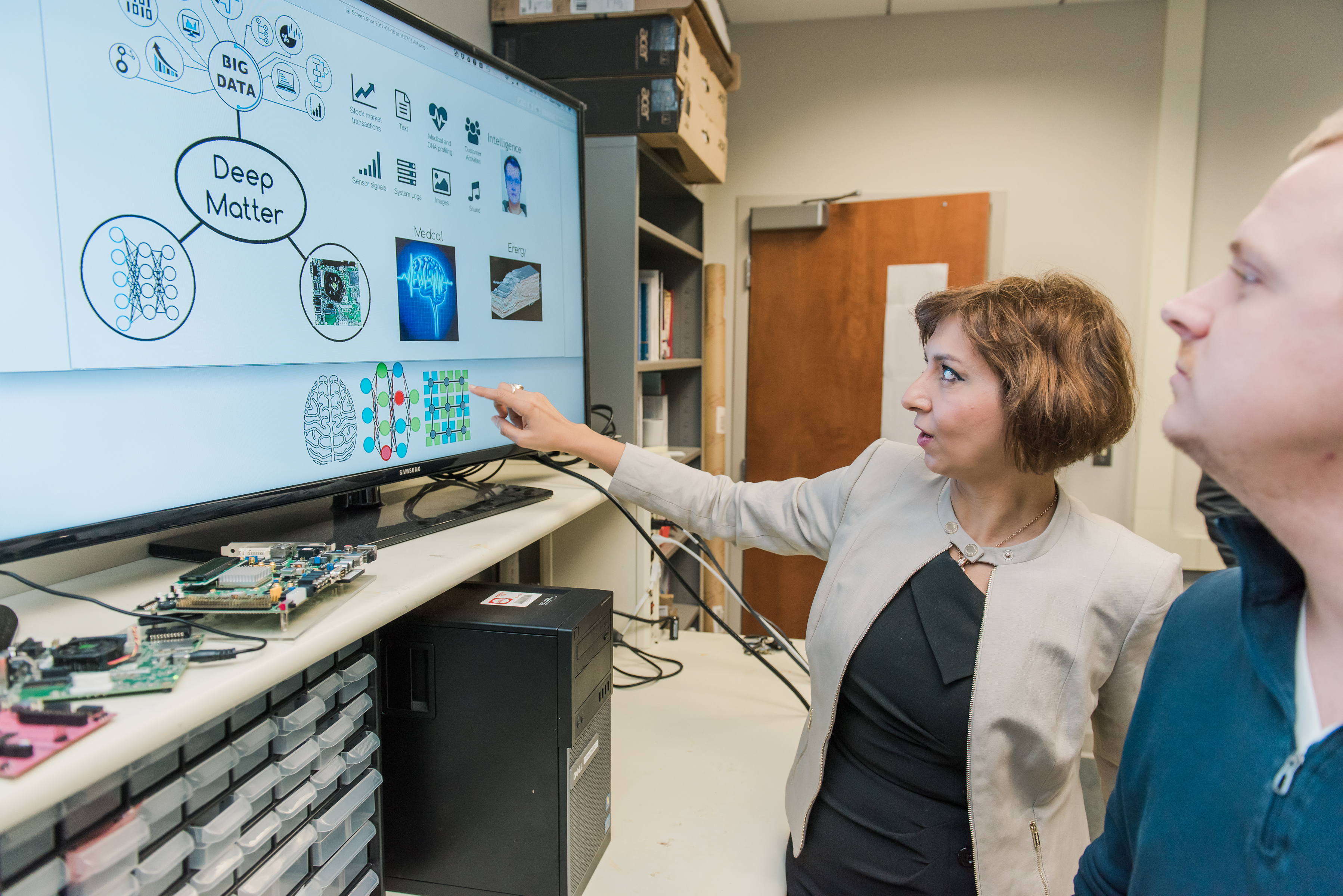
Tinoosh Mohsenin, assistant professor of computer science and electrical engineering, has received a CAREER Award from the National Science Foundation (NSF) to advance her research on energy efficient implementation of deep learning technologies and machine learning algorithms that are developed to function similarly to the brain. Her award totals $475,104 over five years. Mohsenin’s research will enable those in medicine, intelligence, and environmental science to adapt the technology developed in her lab to their own work.

“We congratulate Dr. Mohsenin on her NSF CAREER Award, an important recognition of her groundbreaking work and the impact it will have on other fields,” said Karl V. Steiner, vice president for research. “This recognition of Dr. Mohsenin adds to our growing list of exceptional young faculty recognized by peers and funding agencies alike for the incredible potential their work has to move science and technology forward.”

The CAREER Award will support Mohsenin’s work creating solutions to both software and hardware issues with hardware implementation opportunities in her lab and across many industries. She is the director of the Energy Efficient High Performance Computing (EEHPC) Lab at UMBC. Mohsenin is particularly focused on energy efficiency, and emphasizes the importance of user-friendly, battery-powered and low-cost hardware implementation techniques for future computing.

Tinoosh Mohsenin

In the medical field, Mohsenin hopes her low power deep learning technology will help physicians and medical professionals detect seizures and cancer more quickly and accurately by improving the analysis of highly complex brain signal and image data, beyond what can be gleaned from today’s standard brain monitoring and analysis techniques. Mohsenin hopes her work will also help people with significant mobility limitations who use small multi-modal sensors on their tongue as well as other methods to maneuver wheelchairs or command other technologies. More complex algorithms and their efficient hardware implementation can notably improve the responsiveness of such technologies for users.

“I am very excited about this award as it allows me to take my research to the next level and help society find new computing techniques for smart wearable or mobile devices,” Mohsenin explains. “Current deep learning models have not been explored for power-constrained smart devices, and this research can potentially revolutionize several fields including healthcare, transportation, ecology, surveillance and public utilities.”

The award will provide her with opportunities to engage more UMBC students in STEM research, including women and students from underrepresented minorities. She also looks forward to inspiring local middle and high school students to pursue engineering majors and careers.

Adam Page ‘12, computer engineering and Ph.D. ‘16, computer engineering, worked in Mohsenin’s lab on research that will be continued through the CAREER award.

In the last two decades, UMBC faculty have received 34 NSF CAREER awards. Additional UMBC faculty honored with CAREER awards so far in 2017 include Lee Blaney, assistant professor of chemical, biochemical and environmental engineering, for his work on water contamination, and Ting Zhu, assistant professor of computer science and electrical engineering, for his work to develop a networked system that can accommodate solutions for wireless communications, machine learning, and data processing.

Photos by Marlayna Demond ’11 for UMBC.

Renetta Tull delivers remarks during 61st Commission on the Status of Women event at the United Nations

Renetta Tull, associate vice provost for graduate student development and postdoctoral affairs, spoke at the Commission on the Status of Women at the United Nations Educational, Scientific and Cultural Organization (UNESCO), which was held at the United Nations in New York City in March. Her remarks focused on one of her core areas of research and advocacy: boosting the representation of women in engineering education and careers worldwide.

“It was an honor to be invited by UNESCO to speak about women in engineering at the headquarters of the United Nations,” Tull said. “I am passionate about global diversity in STEM, and to have an opportunity to be a spokesperson for inclusion in engineering, on a ‘world stage’ is a dream come true.”

Tull described, through her talk, how the number of women pursuing degrees and careers in engineering is low across the board, and the numbers are particularly concerning when it comes to women from underrepresented minority groups. She explored approaches to increasing the representation of women in engineering fields, including supporting women on their path to becoming professors, to inspire and teach the next generation of women in engineering.

“I am a proud engineer, and I appreciate UMBC for providing the foundational support for me to be recognized as one of the rising global leaders who is given a voice and space to promote STEM equity and access,” she said.

Tull was recently named vice president of initiatives for the Latin and Caribbean Consortium of Engineering Institutions, an international engineering organization.

Read coverage of Tull’s UNESCO address in Foreign Policy News, and Tull’s recap of the experience on her blog.

Photo by Marlayna Demond ’11 for UMBC.

First-ever Grand Challenge Symposium focuses on value of interdisciplinary collaboration

The Grand Challenge Scholars Program (GCSP) hosted its inaugural symposium in February, featuring lightning talks by faculty who described their research in relation to the program’s 14 global challenge topics in just two minutes. The program highlights the need to combine different perspectives and expertise to solve the world’s most intractable problems, and faculty from all three UMBC colleges reflected on the range of disciplines that play a role in their work.

Collaboration across disciplines is a core lesson for students in the GCSP, now closing in on the end of its first year. Scholars are increasingly appreciating, in a very tangible way, how essential it is to have diverse perspectives around the table to tackle a shared challenge, says Marie desJardins, COEIT associate dean and professor of computer science, and director of UMBC’s Grand Challenge Scholars Program.

“UMBC’s Grand Challenge Scholars Program is open to undergraduate students across all colleges and departments on campus, but sometimes knowing how various disciplines can contribute to the challenges can be difficult to imagine,” explains desJardins. The faculty presentations, combined with the students’ own teamwork throughout the semester, offered scholars a clearer understanding of how interdisciplinary project-based work actually functions.

Nilanjan Banerjee, associate professor of computer science and electrical engineering (CSEE), spoke  about his research on developing sustainable homes powered by solar energy. He explained how he hopes to increase demand for solar energy by developing a simple, affordable sensor system for homes that changes human behavior related to energy use. Also relating to energy, Carlos Romero-Talamas, assistant professor of mechanical engineering, shared how his lab is working to create renewable energy from fusion in response to the high global consumption of electricity from sources that pollute the environment. His research, using rotating mirrors, requires collaboration with physicists and other scientists.

Lee Blaney, assistant professor of chemical, biochemical and environmental engineering (CBEE), discussed water quality issues around the world, and how the UMBC chapter of Engineers Without Borders has helped develop infrastructure to ensure clean water is accessible. He also discussed his own water safety research, which focuses on contaminants of emerging concern, including pharmaceuticals and other health and beauty products.

Two other faculty focused on environmental issues interconnected with public policy discussions. David Lansing, associate professor of geography and environmental systems (GES), shared his soil research, which encourages farmers to create buffer zones to prevent excess nitrogen from running off the land and into waterways. This work is made more complex by local variations in soil and water protection guidelines. Maggie Holland, assistant professor of GES, works to protect Latin American forests by asking how local and national policies and practices encourage or prevent deforestation. Advancing this work, Holland says requires policymakers, social scientists, engineers, and conservation biologists to closely collaborate.
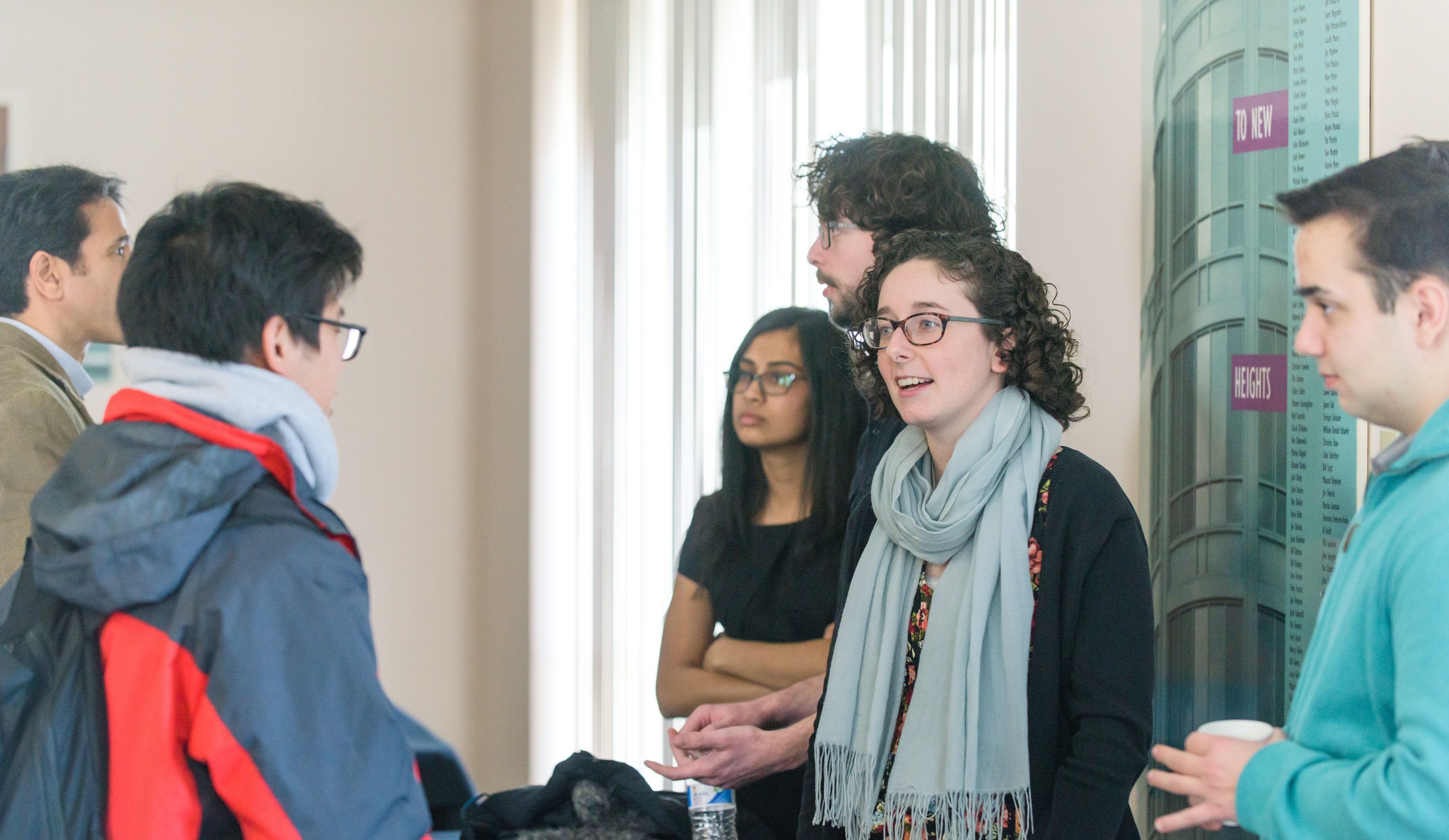
Attendees at the Grand Challenge Scholars Program Symposium.

Several faculty focused on medical research, including Erin Lavik, professor of CBEE, who shared her work developing targeted treatments for traumatic brain injuries. Helena Mentis, assistant professor of information systems, described how physicians and surgeons in the operating room can use wearable telemedicine devices to interact with remote colleagues while ensuring a safe, sterile operating environment. Tim Oates, professor of CSEE, explained how his work enables him to learn about the building blocks of the brain through reverse engineering. Gymama Slaughter, associate professor of computer science and electrical engineering, spoke about developing novel technologies to monitor blood glucose internally without using batteries that require replacement.

Seung-Jun Kim, assistant professor of CSEE explained how urban power grids could be improved through machine learning, and how new sensors and large-scale analysis of power grid data could help detect threats and prevent cyberattacks. Nagmeh Karimi, assistant professor of CSEE, discussed how circuits in computers age just as people do, and that using trusted hardware and protecting hardware as it ages are important ways to protect technology from malicious threats and attacks.

Simon Stacey, interim vice provost and dean of undergraduate education, discussed nuclear weapons and three core factors that protect against nuclear proliferation: controlling the weapons themselves, controlling the materials needed to create nuclear weapons, and controlling transport of the weapons. Work in this arena requires people with a broad range of expertise across science, engineering, public policy, and international relations fields.

From the arts and humanities, Lee Boot, research associate professor of visual arts and director of the Imaging Research Center, spoke about using virtual reality technologies as research tools, and Omar Ka, associate professor of modern languages, linguistics and intercultural communication, discussed the complexity of studying language, how the mind processes it, and its role in society, and how the mind process studies language as an element of society and as a complex structure. He said that collaboration in this area is important to understand how the mind works and processes language.

desJardins urged the students in the audience to encourage their friends, no matter what major they’re in, to get involved with the program. “We really want broad diversity, to bring in people with different backgrounds,” she said. “If you’re not sure if you belong in this program, trust me, you belong in this program, because it is created by the students who are in it.”   

Photos by Marlayna Demond ’11 for UMBC. The Grand Challenge Scholars Program Symposium presentations are available on YouTube.

Lee Blaney receives NSF CAREER Award to address contaminants of emerging concern in urban streams

Lee Blaney, assistant professor of chemical, biochemical and environmental engineering, has received a prestigious CAREER Award from the National Science Foundation (NSF) to advance his research on contaminants of emerging concern and their effects on the environment. The grant, totaling $500,000 over five years, will support Blaney’s research on pharmaceuticals, hormones, and personal care products in the local Gwynns Falls watershed.

“We congratulate Dr. Blaney on his NSF CAREER Award, a recognition of his commitment to impacting and engaging the UMBC and greater Baltimore communities through his research and teaching,” said Karl V. Steiner, vice president for research.

Contaminants of emerging concern include pharmaceuticals and personal care products, such as antibiotics, hormones, sunscreens, and fragrances. Sewer leaks can introduce these everyday chemicals to urban streams, contaminating the environment. Recently, the American Society of Civil Engineers gave wastewater systems in the U.S. a grade of “D.” Blaney explains that it is crucial for these systems to be upgraded to maintain water quality and protect the environment.

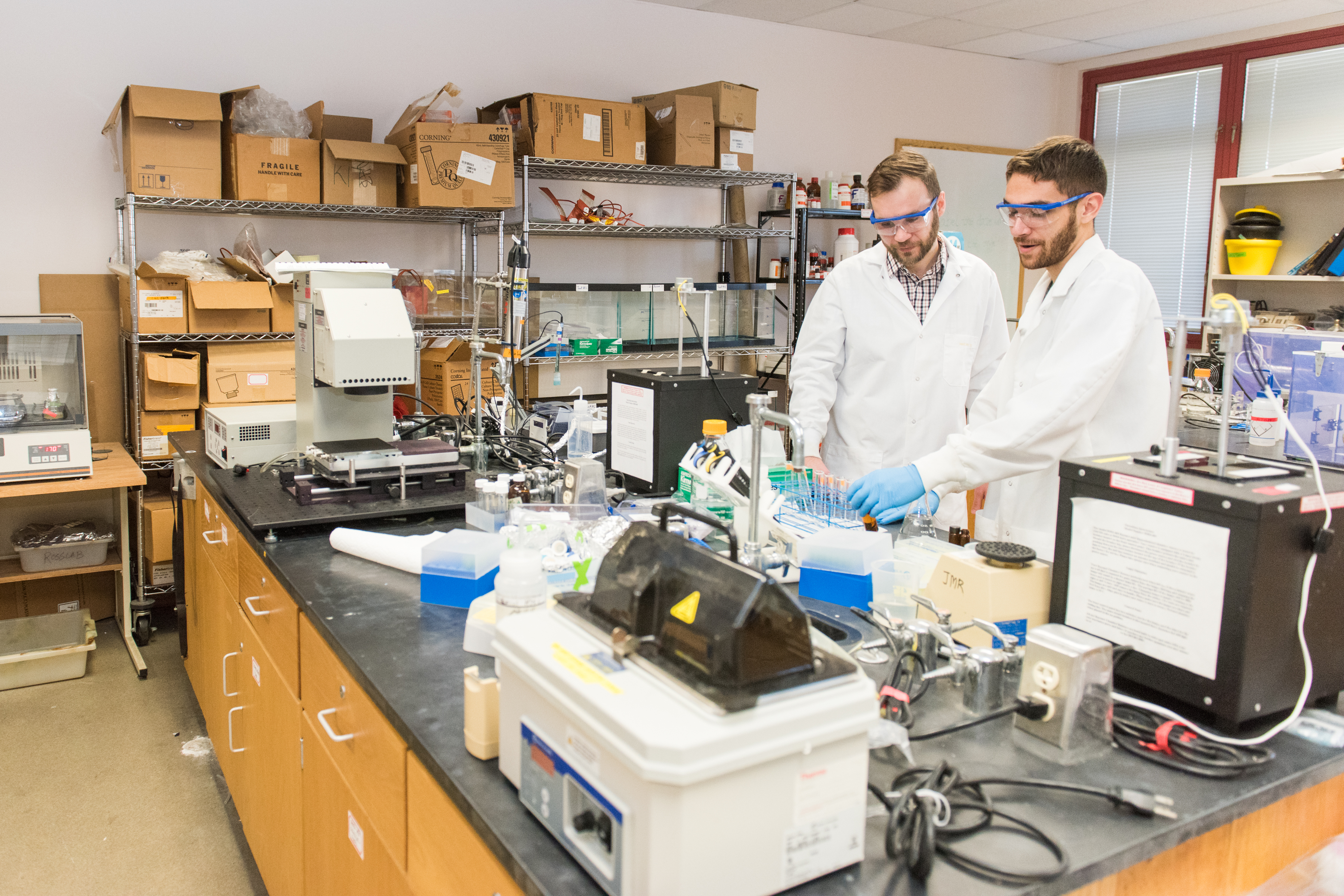
Lee Blaney, and Daniel Ocasio '17, chemical engineering, working in the lab.

Blaney will work alongside the Baltimore Department of Public Works and other stakeholders in the Gwynns Falls watershed to complete his research and put his findings into action. He explains, “This project has a strong potential for broader impacts. It will provide a wealth of information on the occurrence and effects of contaminants of emerging concern in our local environment that can be extrapolated to other urban systems around the world.”

Blaney will use screening tools that identify the presence of wastewater in urban streams to locate sewer leaks that may be adversely affecting streamwater quality and that require repair. In waterways affected by wastewater, contaminants of emerging concern have already been detected in the tissue of both vertebrates and invertebrates, highlighting potential concerns to human and ecological health through antibiotic resistance, endocrine disruption, and other toxicity mechanisms.

This CAREER award also recognizes Blaney’s commitment to increasing the number of women and underrepresented minority students in environmental engineering research through collaboration with UMBC’s Center for Women in Technology, Meyerhoff Scholars Program, STEM BUILD Program, and programs supporting community college alumni completing their undergraduate degrees at UMBC. In addition, Blaney will develop and launch a citizen science program in Baltimore City to increase opportunities for community members to connect with their environment, collect important environmental data, and increase their scientific literacy.

“I cherish the role of teacher-scholar, and I am honored to receive the CAREER Award,” Blaney says. “This award is a testament to the hard work and dedication that I bring to work everyday. The CAREER Award reinforces my approach and will allow me to continue to integrate my research and teaching programs in new and exciting ways.”

UMBC faculty have received 34 NSF CAREER awards since 1995 across a number of fields, including engineering, physics, information systems, and computer science.

Header image: Lee Blaney. All photos by Marlayna Demond ’11 for UMBC.

Wikileaks hack highlights importance of cyberdefense basics, UMBC experts write

The Central Intelligence Agency’s latest leak is the most recent major hack exposing information that could possibly compromise national security. In The Conversation, Anupam Joshi and Rick Forno, explain that this hack is a reminder of how cyberdefense strategies must be continually improved to ensure sensitive information is protected.

Joshi is a professor and chair of the department of computer science and electrical engineering and director of UMBC’s Center for Cybersecurity, and Forno is the assistant director of the UMBC Center for Cybersecurity and director of UMBC’s graduate program in cybersecurity. Their latest article has been republished by media across the globe and has been read more than 20,000 times.

“This round of leaks, of documents dating from 2013 to 2016,reinforces perhaps the most troubling piece of information we already know: Individuals and the government itself must step up cyberdefense efforts to protect sensitive information,” write Joshi and Forno.

Rick_Forno2

They ask readers to consider the risk to security and privacy compared with the benefits and convenience of modern technologies. “As citizens, we must decide what level of risk we — as a nation, a society and as individuals — are willing to face when using internet-connected products.”

Any electronic device connected to the internet is susceptible to a cyber attack, Joshi and Forno go on to explain, noting, “It’s not necessarily a good idea to have always-on and network-enabled microphones or cameras in every room of the house.”

Joshi also spoke with CBS Baltimore about how hacks can impact technologies consumers use every day, such as cars that now feature high tech navigation and entertainment systems. “The more electronic gizmos you have in your car, the newer the car you have, the more you’re connected to the network with your car, the greater the probability something can be done to your car,” he explained. Still, he noted, a hacker would need to have advanced technical knowledge and, likely, close proximity to the car to carry out such an attack.

To ensure that sensitive information is protected, Joshi and Forno say that focusing on “the mundane tasks of cyberdefense” is essential to maintaining security for everyone, from government to individuals, although they emphasize that no internet-connected technologies are immune to cyber hacks. Ultimately, they write, “Keeping others out of key systems is crucial to American national security, and to the proper function of our government, military and civilian systems.”

Read the full article in The Conversation, and watch the complete interview on CBS Baltimore.

UMBC hosts FIRST LEGO League state championship tournament

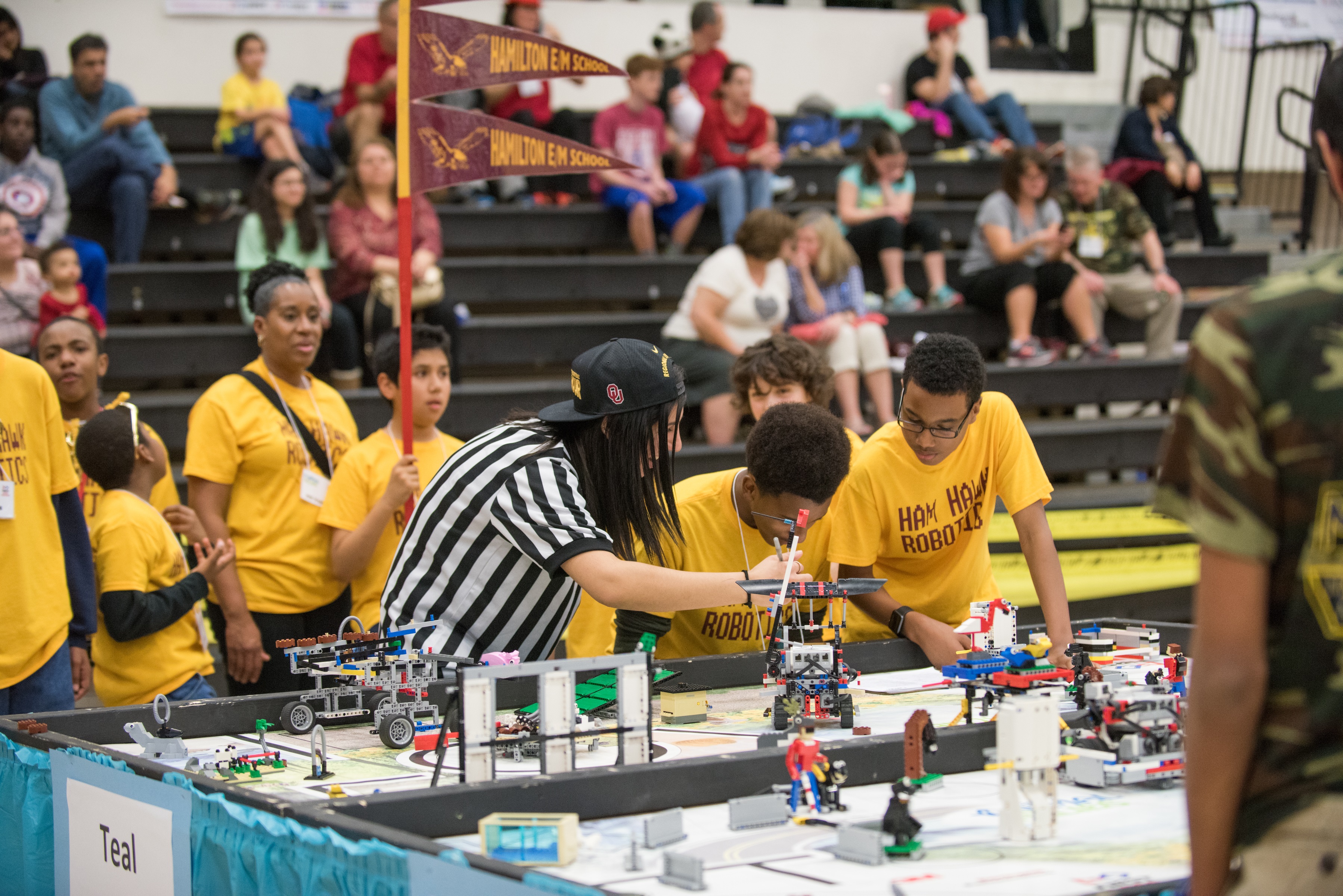
More than 500 kids, ages 9-14, on 72 teams gathered at UMBC on Saturday, February 25 to participate in the Maryland State FIRST LEGO League Championship tournament, completing a set of challenges designed to showcase their innovation and creativity. The event also drew hundreds of spectators and volunteers, including UMBC faculty, staff, and students, particularly from the mechanical engineering department, Center for Women in Technology, and Meyerhoff Scholars Program.

FLL_1

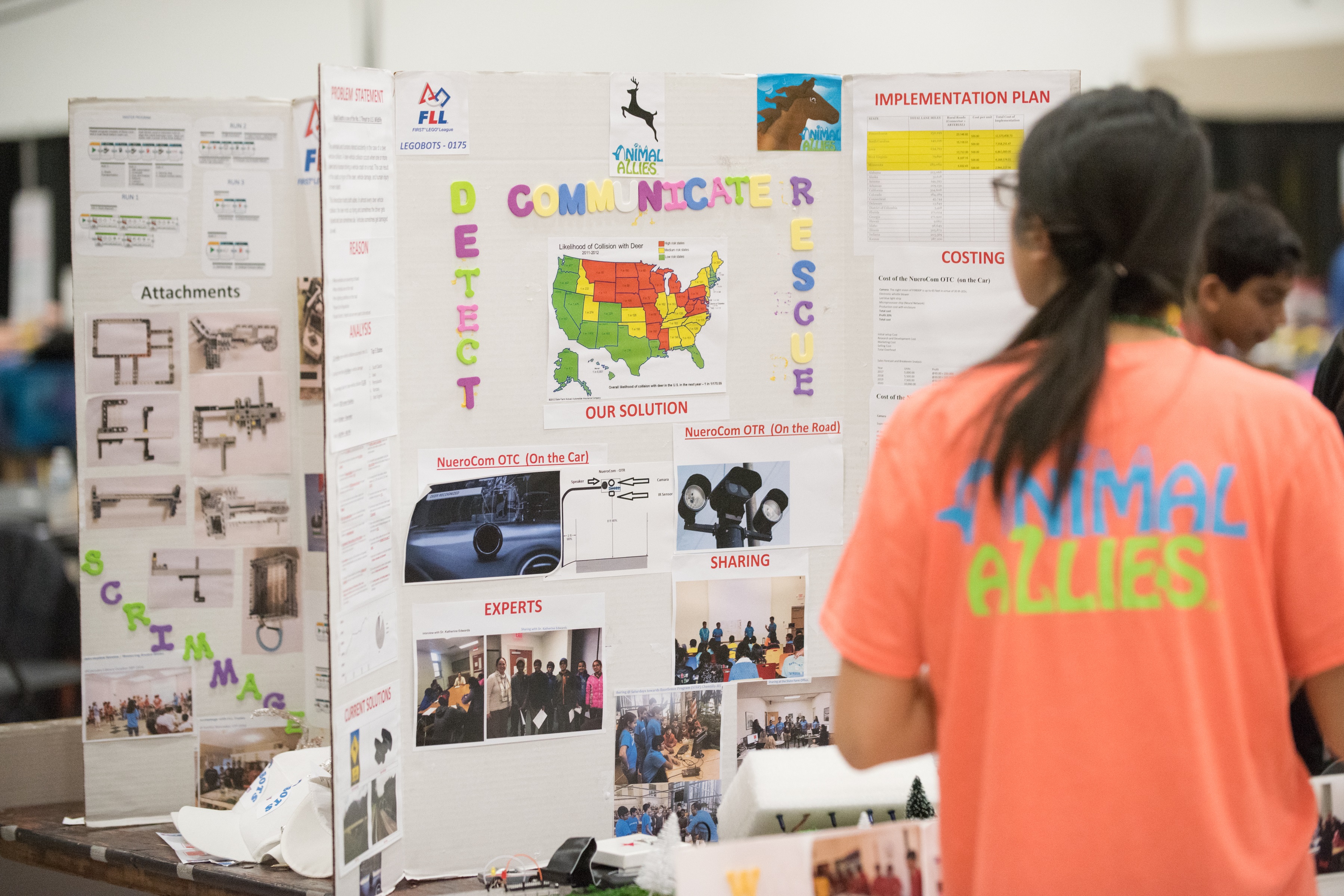
During the morning portion of the tournament, the teams presented solutions that they began working on in August to the judges. Each team was tasked with developing an innovative solution related to the overarching tournament theme: animal allies. The teams also continued to modify and practice with their robots, in preparation for the championship’s signature event, held in the afternoon. Before long, the Robot Challenge matches were underway, with teams guiding their robots through a series of missions with different difficulty levels and point values.

The White Tailed Paradox team from Chapelgate Christian Academy in Marriottsville, MD, took home the top prize at the championship and reflected, “Once you are a team, anything is possible if you work hard and believe in what you are doing.” The also shared how much they enjoyed the opportunity to meet teams from across Marylandkids from different parts of the state who share their interest in robotics.

Both of these values—believing in the power and tenacity of teamwork, and appreciating every chance to connect with like-minded friends of different backgrounds—are central to UMBC’s vision and reputation, and, organizers suggest, reflect what draws participants and spectators to the event at UMBC each year.

FLL_5

UMBC is known for its exceptional STEM programs,” said Jamie Gurganus, associate director of engineering education initiatives, and instructor of mechanical engineering. “This event represents our commitment to increase STEM diversity bringing together the university’s partnerships in K-12 and industry.”

“UMBC has always considered community involvement to be a cornerstone of the institution,” Gurganus explained. “This is a wonderful opportunity for UMBC community members to build relationships with each other, give back, and help encourage the next generation of students.”

The White Tailed Paradox team will compete in the world championship in St. Louis next month, against teams from the United States, Canada, Europe, and Asia. Northrop Grumman has sponsored the FIRST Lego League since 2007.

Banner image: Participants working on their project during the tournament. All photos by Marlayna Demond ’11 for UMBC.

UMBC Engineers Week celebrates contributions of engineers to society and highlights career paths

UMBC’s third annual Engineers Week brought the campus community and corporate partners together for a celebration of the ways engineers contribute to society and the workforce. The week-long celebration was planned by UMBC’s engineering student groups, and included nearly a dozen special events to mark the national week.  

“For this year’s Engineers Week, we wanted to expand the planning committee to include leaders from every engineering organization on campus,” explained Sean Najmi ‘17, chemical engineering, president of Tau Beta Pi, the engineering honors society.

Brian Wayman ‘99, mechanical engineering, now program manager for GE Healthcare, delivered the opening remarks to kick off Engineers Week at UMBC. He shared stories about his personal, academic, and professional journeys.

As a student at UMBC, Wayman was involved with Tau Beta Pi and the National Society of Black Engineers, and held a series of internships that opened doors and had a major impact on his career trajectory. During his time at GE, Wayman has helped develop half a dozen products, including infant incubators, critical to the early lives of premature babies. Wayman detailed challenges he’s faced and difficult decisions he had to make throughout the course of his career, and offered advice for students now exploring their future professional pathways.

ENG-week-opening_1 - Copy

The week’s closing speaker was Dr. Arvind Krishna, senior vice president for hybrid cloud, and director of IBM Research. IBM is currently collaborating with UMBC on the Accelerated Cognitive Cybersecurity Lab. Krishna discussed the cognitive revolution and the rapid technological changes that the world has experienced. He explored how new technologies are not just helping humanity share information on a global scale, but are are solving major societal challenges, such as by reducing pollution, improving food safety, and strengthening banks.

Throughout the week, student organizations within the College of Engineering and Information Technology hosted events to highlight the breadth of opportunities and career paths available to UMBC students. A diversity forum gave students the opportunity to hear from industry professionals at Cisco, Northrop Grumman, and RMF Engineering. During the forum, panelists discussed and reflected on their experiences related to diversity in engineering.

The popular Battle of the Engineers event attracted a large, enthusiastic audience as teams of students from chemical, biochemical, and environmental engineering; computer science and electrical engineering; and mechanical engineering competed in whimsical  and creative minute-to-win-it-style competitions. The CBEE team emerged victorious, and took home the 2017 Battle of the Engineers trophy.  

ENG-week-opening_2 - Copy

Already, organizer Sean Najmi is looking ahead to drawing in student of all majors, including those outside of engineering, with an interest in collaboratively solving major global challenges and exploring diverse career paths. He shares, “My hope is that Engineers Week will soon become something the whole campus community looks forward to each year.”

Header image: Brian Wayman talks to students during the opening event during Engineers Week. All photos by Marlayna Demond ’11 for UMBC.

Josiah Dykstra receives Presidential Early Career Award in Science and Engineering for work tackling cybercrime

Josiah Dykstra, Ph.D. ‘13, computer science, has received the prominent Presidential Early Career Award in Science and Engineering (PECASE) for his work on digital forensics cloud computing, with applications in tackling cybercrime.

While he was a graduate student at UMBC, Dykstra worked full-time at the National Security Agency, where he remains a cybersecurity researcher, but for his dissertation took a fresh path and selected an area of research very different from his projects at the agency. Dykstra worked in UMBC’s Cyber Defense Lab with Alan Sherman, professor of computer science and electrical engineering, and studied how crimes using computers are tracked through information stored on the computers themselves and in email accounts.

Josiah Dykstra '13.

To determine whether and how a crime occurred, Dykstra explains, a law enforcement official may need to extract data from a phone or computer using a third party vendor. He looked at whether law enforcement could trust that the data they are having analyzed to have not been manipulated. The legal and trust issues associated with accessing such data, and the technical and legal challenges associated with information stored on electronics, formed the central focus of Dykstra’s graduate work.

Reflecting on his PECASE award, Dykstra shares, “I didn’t know when I was doing the work at UMBC that it was a possibility” to receive this kind of recognition. He hopes his achievement offers encouragement for students currently working through their dissertations, tackling challenging research questions. “It’s helpful for students to see people who have done work like this,” he says.

The PECASE is one of the highest honors the federal government can bestow on early-stage science and engineering researchers. PECASE award recipients are presented with their awards during a ceremony at the White House, which will be held in the coming months.

Other recent PECASE recipients from UMBC include Kafui Dzirasa ‘01, chemical engineering, now an assistant assistant professor of psychiatry and behavioral sciences at Duke University, who received the award in spring 2016, and Justin Jacobs ‘14 Ph.D., statistics, who was recognized in spring 2014. Rachel Brewster, associate professor of biology, also received a PECASE in 2006.

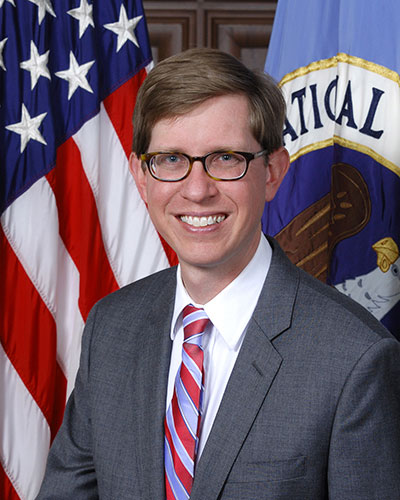
Header image by Geoff Livingston, CC by 2.0. Dykstra’s headshot courtesy of NSA. 

UMBC’s Cyber Scholars program stands out as a national model in “Diverse”

At a time when just 12 percent of information security analysts are black, Hispanic or Asian, and only 20 percent of information security analysts are women, successful student support programs like UMBC’s Cyber Scholars are poised to make a major impact on the field, suggests a new article in Diverse: Issues in Higher Education. The article focuses on this UMBC program as a model for increasing diversity in cyber-related fields through supporting the success of women and underrepresented minority students in cybersecurity, including providing them with opportunities to expand their professional networks.

The UMBC Cyber Scholars program currently includes 40 scholars and 10 associates, and over 97 percent of the scholars and associates in the program have graduated in their intended major, or are pursuing degrees in computer science, computer engineering or information systems, said Cindy Greenwood, assistant director of the program. Of those participating students, 53 percent are women and 40 percent are underrepresented minorities, in stark contrast to national averages for information security professions.

The Cyber Scholars program stands out in higher education because of the variety of elements offered to students, explained Anupam Joshi, professor and chair of computer science and electrical engineering, and director of the Center for Cybersecurity at UMBC. “Many other programs only focus on imparting technology training in cybersecurity,” he said. “Our program is part of formal degree requirements in computer science, computer engineering and information systems” and students can take a broad range of elective courses, which, Joshi noted, “mix instruction in the theory with hands-on projects.”

Each week, Joshi explained, the students in the Cyber Scholars program hear from industry leaders and government officials on topics such as professional development and technical aspects of the field. “They also conduct peer-led workshops in cybersecurity and work with faculty in research labs,” he added. “They are encouraged to do internships in the industry multiple times and get security clearances in the process.”

Alejandra Diaz ‘17, computer science, has been involved with the Cyber Scholars program since she was a freshman at UMBC, and described how the program has helped her grow and access new opportunities. After she met with UMBC President Freeman Hrabowski and Wes Bush, CEO of Northrop Grumman, Diaz interviewed for an internship with Northrop Grumman. Diaz has now interned twice with Northrop Grumman and plans to return to the company before pursuing her master’s degree.

Alejandra Diaz_CyberScholar

Read “Programs Aim to Open Doors to Diversity in Cybersecurity” in Diverse: Issues in Higher Education.

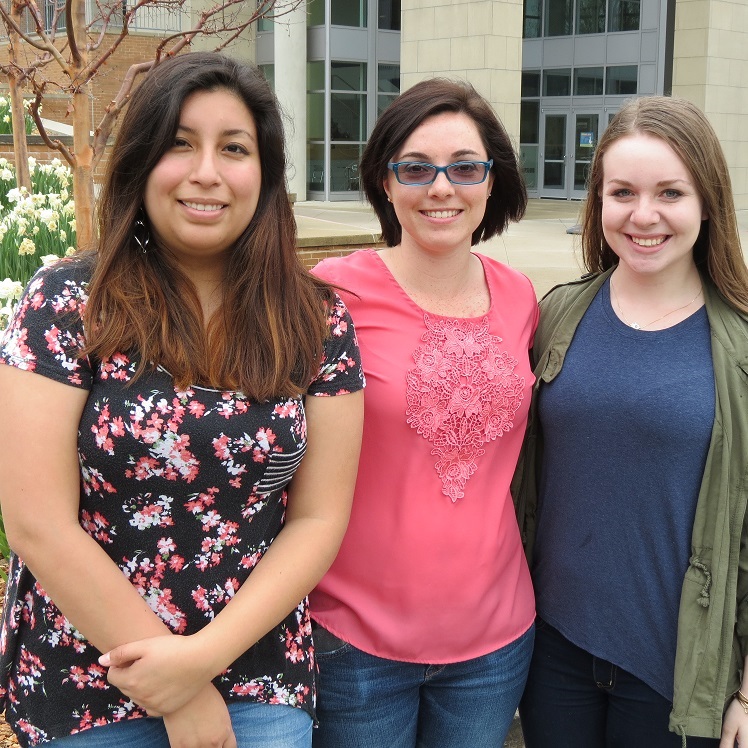
Images: The ITE building at UMBC (top), and Alejandra Diaz, left, with fellow Cyber Scholars (bottom). Header photo by Marlayna Demond ’11 for UMBC, and photo within story by Cindy Greenwood. 

Grad students explain complex research simply through UMBC storytelling workshop

Nearly 100 graduate students from across Maryland gathered last week for a unique workshop bridging research and storytelling. Laura Wexler, co-founder of Baltimore’s Stoop Storytelling Series, led participants through exercises designed to help them more effectively communicate with general audiences about highly complex research fields, increasing the public impact and understanding of their work.

The Graduate School at UMBC, UMBC’s Office of Postdoctoral Affairs, and PROMISE: AGEP, recognized for their leadership in collaborative professional development for graduate students and postdocs, together hosted the event on January 28, 2017.

“Our students and postdocs are participating in more events and competitions that require confident public speaking,” said Renetta Tull, associate vice provost for graduate student development and postdoctoral affairs. “Wexler provided our participants with layers of public speaking advice, infused with scientific reasoning behind the success of storytelling as a method.”

Stoop Stories_4A core aspect of the training involved focusing on relatable themes: concepts that transcend the experience of the researcher and someone they are speaking with, who may not know much about what they are studying. Wexler provided the example of using the failure as a universal, accessible concept.

“Failure is a great theme for storytelling,” explained Wexler, adding that stories about the research process specifically often involve an experience of moving through struggle to find success. By sharing the struggles and failures one experienced throughout the research process, an academic can authentically and relatably convey what motivates them and why their research matters, she suggested.

Stories can also help listeners remember ideas in the longer term, versus lists or even well-structured arguments, Wexler argued, due to how the brain processes different kinds of information. They can also be evocative, powerful, and expedient. “In a five minute story,” she suggested, “you can tell more about yourself than in a 25 minute lecture.”

Graduate students at the storytelling event. Photos by Marlayna Demond ’11 for UMBC.

Cybersecurity experts weigh in on securing the president’s smartphone and avoiding “cyber-fatigue”

With a new administration in the White House, securing the president’s smartphone is a national security priority, but exactly what steps are taken to secure the phone are not made public. In a new article in The Conversation, Anupam Joshi, professor and chair of computer science and electrical engineering, and director of the Center for Cybersecurity at UMBC, discusses several likely ways President Trump’s security team is building protections into his phone, through everything from hardware to settings to app restrictions.

Limiting the number of people who have the president’s new phone number and keeping the unique International Mobile Equipment Identity number guarded can prevent potential attackers from accessing confidential information stored on the phone. This method is called “security by obscurity,” says Joshi.

Joshi also says the device Trump will use was likely made by a trusted manufacturer with carefully created and checked parts, explaining that this minimizes the “risk that the hardware would have any vulnerabilities that an attacker could exploit.”

Customizing the operating system, and allowing the phone to connect only with predetermined networks that are regularly monitored can also help protect against attacks, says Joshi. “Limiting its contact with the internet would, of course, by key,” he notes, “though that would also significantly limit the phone’s usefulness to a president whose routine involves constant connection.” Joshi says that limiting the number of apps on the phone, reducing the ability for additional apps to be downloaded and installed, and disabling automatic updates to the phone could keep the device even more secure.

While it is not certain which methods have been employed to secure the presidential smartphone, Joshi says that Trump trading in his commercial-grade phone for a government-secured device is an important first step in protecting the U.S. from hacks and attacks.

In another article in The Conversation, Rick Forno, assistant director of the UMBC Center for Cybersecurity and director of the Cybersecurity Graduate Program at UMBC, addresses the importance of addressing both short-term and long-term cybersecurity issues. He explains that ignoring underlying problems and only addressing small, attention-grabbing issues does not lead to lasting progress.

Rick_Forno1

“Cyber-fatigue,” explains Forno, is an “inability to think critically about what needs to happen for meaningful, lasting cybersecurity improvements while focusing only on near-term problems.”

He says that while it is important to evaluate the benefits, conveniences and savings that new products and services may offer, the potential risks and problems should be considered, too. “So instead of repeating the same guidelines and recommendations of the past, it’s time to take a new and unconventional look at our approach to technology and how we secure it,” Forno explains. “Unless we’re willing to go beyond our traditional cybersecurity ‘comfort zone’ and explore new solutions, our cyber-fatigue will worsen.”

Read “How to secure a smartphone for the tweeter-in-chief” and Overcoming ‘cyber-fatigue’ requires users to step up for security” in The Conversation. Joshi’s piece also appeared in Mashable and Channel Newsasia, and together the articles have already been read over 36,000 times.

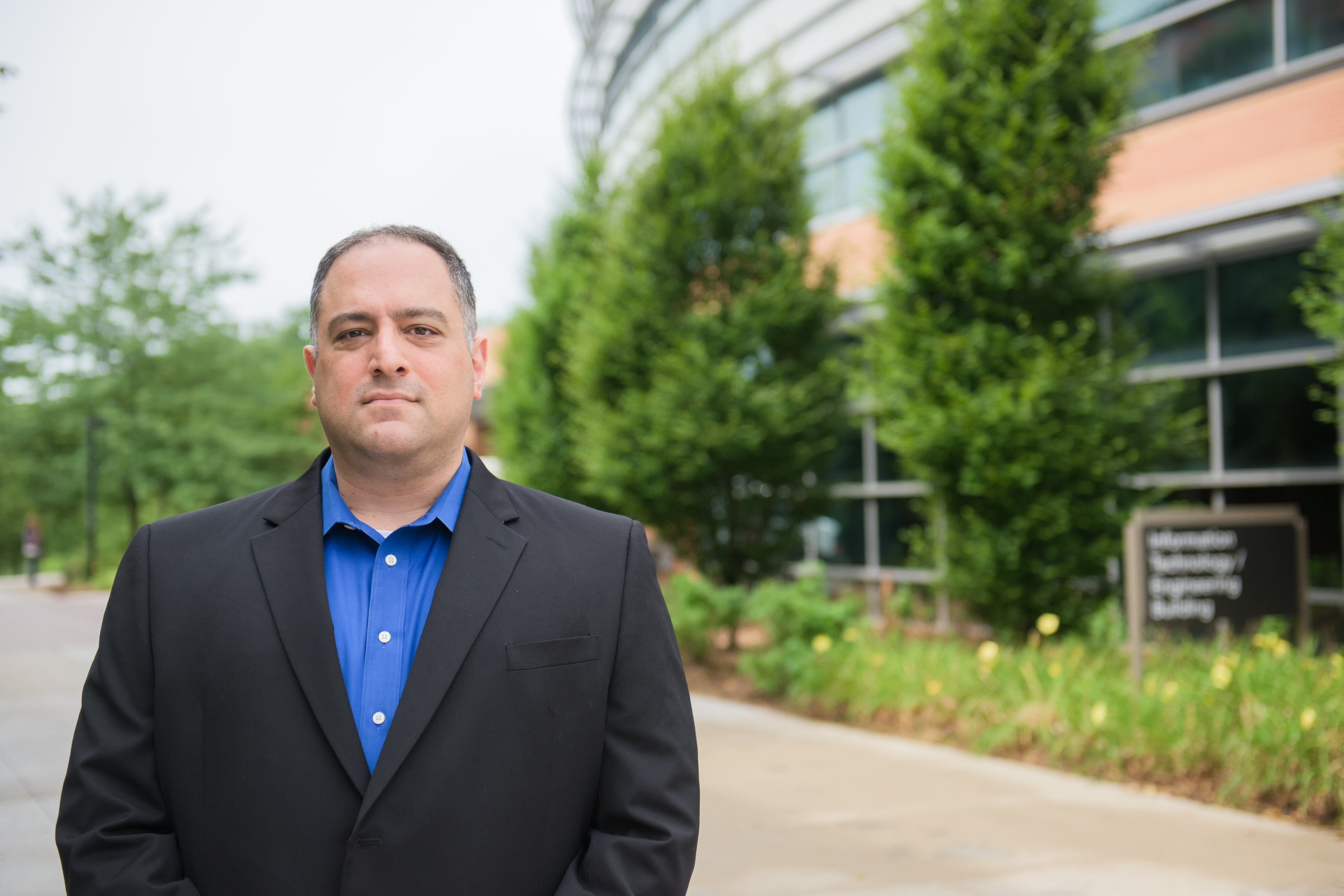
Images: Anupam Joshi (top), and Rick Forno (bottom). Photos by Marlayna Demond ’11 for UMBC.