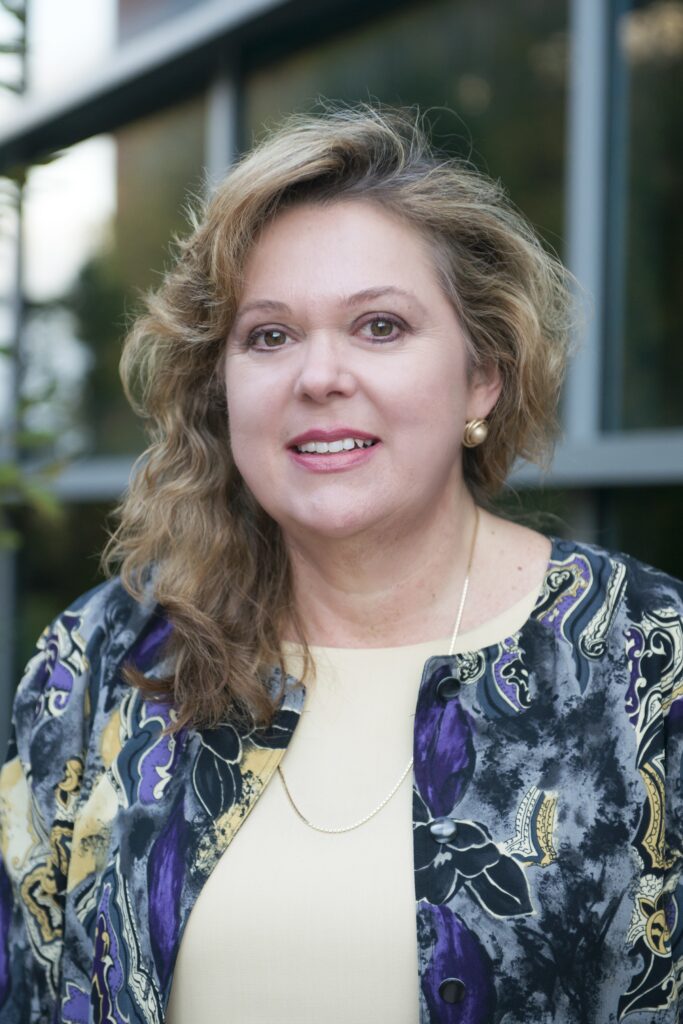
All posts by: Megan Hanks Mastrola


U.S. News ranks UMBC online master’s degree in information systems among top 20 in the nation

In new online degree rankings announced January 10, 2017, U.S. News has again recognized UMBC’s online master’s degree in information systems among the top 20 in the nation. The degree program, through UMBC’s department of information systems, appears on the publication’s 2017 Best Online Computer Information Technology Programs list.

“We continue to be proud of our strong showing in the rankings of online information technology programs,” said Julie Ross, dean of the College of Engineering and Information Technology.

The online master’s program is designed for students who are advancing their education while balancing commitments to careers, family, and military service. Students and faculty in this area often complete research in areas such as health information technology, human-centered computing, data mining, artificial intelligence, and software engineering.

UMBC’s program ranked 19th on the 2017 list, joining other top-20 universities including the University of Southern California, New York University, Boston University, Johns Hopkins University, and Syracuse University. U.S. News also ranked UMBC’s master’s program in information systems in the top 20 in the country in 2016.

Image: UMBC’s IT and Engineering Building. Photo by Marlayna Demond ’11 for UMBC.

Govind Rao receives 2017 Pioneer Award for technologies that empower patients and save lives

Connected World has named Govind Rao, director of the Center for Advanced Sensor Technology (CAST) and professor of chemical, biochemical, and environmental engineering, a 2017 Pioneer Award recipient. He joins nine trailblazers whom the magazine describes as “the disruptors forging new pathways in this ever-emerging digital age.”

During his career, Rao has created technologies that have revolutionized how doctors and hospitals provide care to patients of all ages and from around the world. “This recognition was unexpected, as it comes from a different discipline,” he said of the award. “It illustrates the power of sensor technology to have a broad impact.”

One technology Rao developed has created a more personalized approach to monitoring metabolic parameters in adults. For example, when patients have their blood pressure and heart rate checked by a medical professional, these numbers are often compared only with the average levels of the population, which may not reflect how the individual differs from the general population. Rao and his team are creating “next-generation sensors” that collect more accurate readings, and monitor and track over time individual carbon dioxide, glucose and oxygen levels. The sensors can allow healthcare providers to receive real-time data for the management of diseases such as diabetes, asthma, emphysema and lung infections. The up-to-date data will allow healthcare professionals to provide more tailored care.

As Connected World describes, Rao’s work is “aimed at giving patients better control over their personal health and enabling solutions that are specific to patients’ needs.”

Rao and his team are also known internationally for developing affordable infant incubators that are powered by solar rechargeable batteries. These devices, made from cardboard, are particularly important in preventing deaths among newborn babies in low- or middle-income countries with gaps in healthcare resources. Infants born in low-resource communities often have higher rates of mortality in the first week of life due to preventable causes such as hypothermia and sepsis, so the incubator was designed with their needs in mind.

Read “Scholars Changing our World Through the IoT” in Connected World to learn more about Rao’s work and the other Pioneer Award recipients.

Image: Govind Rao. Photo courtesy Marlayna Demond ’11 for UMBC.

UMBC places 7th at Pan-Am Team Chess Championship

UMBC Chess finished seventh overall at the 2016 Pan-American Intercollegiate Team Chess Championship, held in New Orleans, Louisiana, December 27 – 30.

The UMBC Chess A team finished in 10th place, with victories over the Texas Tech D team, the University of Oklahoma A team, the Columbia University B team, and the Arizona State University team. The UMBC Chess B team earned wins over the Texas Tech E team, and the University of Minnesota Twin Cities B team, and finished 45th overall.

UMBC’s 2016 A team includes international master Levan Bregadze ‘16, financial economics; grandmaster Tanguy Ringoir ‘19, economics; woman FIDE master Ewa Harazinska ’20, chemistry; and Maor Leker Locker ’20, biological sciences. The UMBC Chess B team includes Dobrynya Konoplev ‘18, computer science and mechanical engineering; Nathan Janus ’20, mathematics; Nathaniel Wong ‘18, Asian studies and political science; Abhilash Puranik ‘17, M.S. computer engineering; and Jeffrey Mich Carr ’19, interdisciplinary studies.

UMBC has participated in the Pan-American Intercollegiate Team Chess Championship for the past 26 years, and has won or tied for first place at the Pan-Am Championship ten times. UMBC Chess has also continued on to the President’s Cup—known as the Final Four of College Chess—numerous times, but did not qualify for 2017.

At the 2015 Pan-American Intercollegiate Team Chess Championship, the UMBC Chess A team finished in 10th place, and the UMBC Chess B team finished 31st overall. Alan Sherman, professor of computer science and electrical engineering, serves as director for UMBC Chess and Joel DeWyer, interim director of The Commons, is business manager.

UMBC Chess made headlines earlier in 2016 when Nazi Paikidze-Barnes, information systems, an alumna of the team, won the 2016 U.S. Women’s Chess Championship held in St. Louis.

Image: Members of the UMBC Chess A team before attending the 2016 Pan-American Intercollegiate Team Chess Championship. Photo by Marlayna Demond ‘11 for UMBC.

UMBC engineering students solve local brewery’s production challenges

Faced with production line problems costing potentially thousands of dollars each week, a local brewery turned to a fresh source of technical knowledge from outside the industry: UMBC engineering students.

As part of a capstone project, about 30 UMBC students, led by Neil Rothman, professor of practice of mechanical engineering, worked to address five issues identified by Jailbreak Brewing Company. The largest concern was a halt in production that would happen once an hour when a can would fall off the track. In addition to losing valuable production time, the company would need to throw away beer exposed to too much oxygen during the delay.

Throughout the semester, students wrote proposals to address each identified problem, observed the production line and distribution processes to assess the issues, and determined budgets and timelines to implement solutions. In addition to solving the canning problem, the students developed a new system to let customers know in real time how much of a certain kind of beer is available in the taproom.

Working with UMBC students was rewarding, Kasey Turner, co-founder and COO of Jailbreak Brewing Company, told The Baltimore Sun, in an interview about the collaboration. “They dedicated real time, effort and expertise to these problems,” he said, adding, “The results speak for themselves, that they were able to solve these really hard problems in a very short period of time with a limited budget.”

Tackling real engineering challenges with real clients, while also being supported by faculty, is essential to the capstone course, explains Rothman. “It’s not just me teaching [the students] the process, but working with the clients and real issues that come along,” he noted. The complexity and even the messiness of that process is what Rothman wants his students to experience, to make them as fully prepared as possible for engineering careers.

Read the full article “Jailbreak Brewing Company collaborates with UMBC students to solve brewery issues” in The Baltimore Sun.

Image: UMBC students presenting during the mechanical engineering capstone poster session. Photo courtesy of Neil Rothman. 

In Hour of Code, UMBC students give Baltimore youth hands-on intro to computing careers

At one table, thirteen Lakeland Elementary/Middle School students from Baltimore used tablets to create patterns of colorful shapes through code. At another station, the students composed music and played games on laptops by completing circuits connected to bananas and celery.

The scene in UMBC’s Commons last Thursday was just what Gabrielle Salib ‘17, interdisciplinary studies, had hoped for. “Our world is quickly becoming more automated and by learning how to code, as President Obama has said, we ‘become the creators rather than just the consumers’ of our ever-growing tech society,” shared Salib. She is president of UMBC’s Computer Science Education student organization, which organized the event as part of the international Hour of Code movement

UMBC joined thousands of schools around the world in hosting Hour of Code events to celebrate Computer Science Education Week, drawing both UMBC students and younger area students to learn about circuits, coding, and computing through hands-on activities.

[nivoslider slug=”hour-of-code”]


“Hour of Code events are a great way to gain visibility and awareness of the importance of
CS for All,” said Marie desJardins, COEIT associate dean and professor of computer science, and faculty advisor of the Computer Science Education student organization. “It’s especially important to reach out to young women and minority students in their critical middle school years, and to connect them with peers and role models they can relate to.”

“The Hour of Code day is especially important for our Technovation Club because two days a week our girls spend two hours learning how to code and how to develop their own apps,” said Acacia Asbell, a project director for UMBC’s Sherman STEM Teacher Scholars Program who works closely with Lakeland Elementary School. “This event really reinforces how important coding is, and how they can have an impact on the world around them.”

The Lakeland Elementary School students were not the only ones to gain valuable experience from the event. “Our student volunteers also benefited by increasing their own confidence in their skills, connecting with other students and faculty, and knowing that they are making a difference in the world around them,” said desJardins.

One major challenge with engaging young students in coding is the intimidation factor, UMBC President Freeman Hrabowski told The Baltimore Sun, at the event. He noted that Hour of Code events give hands-on experience that removes that barrier and encourages young students to pursue college degrees and careers in technical fields.

For Salib, that hands-on experience is core to bringing home the point that anyone can code, and that coding can open doors to creative careers.“I had some students tell me that coding was much more fun than they thought it’d be,” she said. “That was precisely the purpose of our event: to show the UMBC community that they, too, can code!”

Read “City students get early exposure to computer careers at UMBC” in The Baltimore Sun.

UMBC cybersecurity instructor selected for prestigious Brookings Legis Congressional Fellows Program

Diana Parr, adjunct instructor for the Cybersecurity Graduate Program, has been selected to participate in the highly competitive Brookings Legis Congressional Fellows Program. The year-long program allows professionals in the public and private sectors to work on Capitol Hill alongside individual members of the U.S. Congress or on a congressional committee to understand the policy-making side of government.

Diana Parr.“I am most excited about the opportunity to work for a member of Congress and to learn how the legislative process flows. It will be a huge time for change on Capitol Hilla new president and many newly elected officials. I would like to bring my technical knowledge to the Hill as those new officials discuss legislation relating to cybersecurity,” she said.

In addition to her role at UMBC, Parr is a cybersecurity technical leader for the National Security Agency. She anticipates that her work in Congress will focus on cybersecurity education.

There are many opportunities for new legislation this year to make our nation stronger and safer,” Parr said. “My biggest hope is to build awareness of the need to grow educational opportunities for young people, especially young women, in the growing field of cybersecurity.”

Jeff Hayter ’09, political science and mathematics, has also been selected to participate in the Brookings Legis Congressional Fellows Program. He is currently a program analyst at the Bureau of International Information Programs, where he is a responsible for the strategic planning and resource oversight.

Jeff Hayter.

“I recognize this fellowship as a unique opportunity to peer behind the curtain of the legislative process.  Very few people are afforded such a great learning opportunity,” Hayter said. “In addition to learning the ins-and-outs of policymaking, I hope to use to the fellowship to grow as a leader and broaden my expertise in foreign policy.  To be honest, I’m not sure there has ever been a more interesting time to be on the Hill.”

During his time at UMBC, Hayter interned with the State Department. After graduation, he accepted a full-time position as a Freedom of Information Act Specialist with the State Department, where he worked until he moved to his current role at the Bureau of International Information Programs.

More information about the Brookings Legis Congressional Fellows Program can be found on the Brookings Institution website.

Header image by Robert Lyle Bolton, CC by 2.0. Parr’s headshot by Marlayna Demond ’11 for UMBC. Hayter’s headshot courtesy of Jeff Hayter. 

Online communication researcher Stacy Branham offers tips to more deeply connect with family and friends over the holidays

The winter holiday season can offer important in-person opportunities to strengthen relationships and deepen communication with family and friends, says Stacy Branham, lecturer in information systems at UMBC. Branham’s new article in The Conversation describes how the ubiquitous technologies that impact nearly every aspect of contemporary life for many in the United States have in some ways made it more challenging to build and maintain relationships. “Americans are more digitally connected, yet less interpersonally connected, than ever,” she writes.

“We need more empathetic communicationthe slow, deep (inter)personal discourse that can nurture identity and build and strengthen relationships,” argues Branham, a computer scientist focused on human-computer interaction. Engaging in deep conversations with others can help people gain empathy, learn about other cultures, and experiencing what others have gone through, she says, explaining, “Empathy is not only the key to feeling connected—’I understand you’but also the foundation for changing our narratives about one another‘now I see we are not so different’.”

Unfortunately, Branham suggests, “contemporary communication platforms can make it harder to build empathy with conversational partners.” How does this work? “Our written interactions through technology are increasingly short, with less sophisticated language,” she says. “More and more, our thoughts are broadcast to everyone instead of intended for someone special.”

Branham also explores how social media can be a place for people to be validated or to impress others, rather than to connect deeply with others. “In many ways, our devices help us talk at instead of with one another,” she explains.

To counteract this, she suggests people find opportunities to connect directly with just one or a few other people at a time, whether online or in person.“When your communication is focused on or intended for another person, it can catalyze empathic connection because you have to imagine and capture the other person in your text,” Branham says.

Taking time to write down thoughts before or after face-to-face conversations is another way to have more empathetic interactions with others, she says, explaining, “Personal writing is a form of self-reflection and narrative crafting. Simply writing your thoughts out can change them.”

Read the full article “You should talk about politics this Thanksgiving – here’s why, and how,” in The Conversation. The article also appeared in Raw Story.

Cyber Monday will soon be the biggest shopping day of the year, predicts e-commerce expert Ant Ozok

When Cyber Monday was created in 2005, retailers wanted to target workers who were in their offices, in front of computers, and possibly “could be enticed by a few special deals,” explains Ant Ozok, associate professor of information systems, in Newsweek. According to Ozok, Cyber Monday has changed as consumers’ shopping methods have evolved, and it is poised to keep growing.

“[Cyber Monday] is no longer a day where shoppers look for electronics only or deals they missed during Black Friday,” he says. “Now Cyber Monday is a broad shopping experience spanning every product category imaginable.”

In 2015, about half of all product browsing on Cyber Monday came from mobile users, and nearly one third of items were purchased using a mobile phone or tablet, but the future popularity of e-commerce was not guaranteed in its earliest days. “Early researchers did not view mobile commerce as a replacement of computer-based e-commerce, but rather as a convenience tool for on-the-go purchases like concert tickets, and to carry electronic coupon codes rather than printing them for use at brick-and-mortar stores,” Ozok explains.

Smartphones have quickly become many Americans’ primary web surfing device, he says, adding that some retailers report that more sales are being made using mobile devices than using desktop and laptop computers combined. “We were proved wrong when the smartphone brought together a fully-functional computer and a high-resolution camera, along with touch-screen controls allowing zooming in on images,” Ozok says.

He anticipates that Cyber Monday will soon become the biggest shopping day of the year, adding that that growth will rely on Americans’ increasing use of mobile devices to purchase items on the go.

“It would be difficult to imagine Cyber Monday getting this big if not for the increased availability of mobile technologies,” he said. “Until only a few years ago, the year-to-year growth of mobile commerce was just incremental.”

Read the full article “Cyber Monday gives a big boost to mobile commerce,” in The Conversation. The article also appeared in Newsweek, SF Gate, and the Houston Chronicle.

Baltimore City elementary school students learn about college opportunities through UMBC visit

Prospective students tour UMBC on a daily basis, rain or shine, but last week saw a particularly special visit from around 80 fifth graders from Armistead Gardens Elementary School in Baltimore, who came to get a taste of the opportunities available at UMBC and a sense what the college experience could have in store for them.

The Shriver Center at UMBC coordinated the visit, including Michele Wolff, director of The Shriver Center, Lori Hardesty, assistant director of service-learning, K-16 partnerships, Sandra Abbott, curator of collections & outreach for the Center for Art, Design and Visual Culture, Mavis Sanders, professor of education, and Shane McCormick, coordinator of administration, evaluation & operations for the office of academic opportunity programs. Faculty, staff, and students from across the university, gave the students a truly broad sense of what UMBC offers.

“At UMBC, we want youth to feel, think, dream, and know that they can achieve their goals,” Hardesty said. “We encourage them because we believe in them, too.”

True Grit and members of UMBC’s Admissions Team welcomed the students and led enthusiastic cheers to kick off the day. “UMBC is a place that embraces diversity,” said Ana María Schwartz Caballero, associate professor of Spanish, second language education, and modern languages, linguistics and intercultural communication (MLLI), during her welcoming remarks. Schwartz Caballero highlighted UMBC’s shared community values, including a strong commitment to fostering an inclusive and welcoming environment.

A panel of UMBC students, including Joy Kish ‘17, biological sciences; Ramses Long ‘17, biology, Yamani Narayan ‘18; health administration and public policy; and Jaelyn Bos ‘17, biological sciences and environmental science, discussed career goals, involvement on campus, and how and when they decided to attend UMBC.

“I was fourteen when I discovered UMBC on a class tour in middle school,” shared Long, who plans to become a physician.“I was excited to expose a younger generation to UMBC so it can motivate them and show them a pathway to a better life. That was what my tour did for me.”

UMBC encourages students to pursue their interests outside of the classroom. The clubs and organizations at UMBC are “opportunities to express yourself,” Kish said.  

Faculty and staff across all three UMBC colleges led sessions for the elementary school students. One group learned about chemistry through an interactive demonstration by Bill LaCourse, dean of the College of Natural and Mathematical Sciences, and Josh Wilhide, M.S. ’10, chemistry, manager of the Molecular Characterization and Analysis Complex (MCAC) at UMBC. Another group of students visited the Joseph Beuys Sculpture Park, completing a scavenger hunt and creating nature drawings with Abbott. 

Doug Hamby, associate professor of dance, and director of the Linehan Artist Scholars Program, led the third group through the steps of creating a new, improvisational dance. The fourth group explored engineering with Jamie Gurganus, associate director of engineering education initiatives and instructor of mechanical engineering, building structures out of small wooden planks. The students tested their structures with heavy textbooks to see how well they tolerated stress.

Parents were invited to attend a session about resources for planning and preparing for college, led by Sanders, Karen Watkins-Lewis, lecturer in psychology, and Claudia Galindo, associate professor of Teaching and Learning, Policy and Leadership at the University of Maryland, College Park. The Baltimore City Public Schools Office of Family and Community Engagement provided books for the students, and gave turkey dinners to two parents who attended the session.

Bos enjoyed connecting with the students individually, on light topics like favorite animals and more serious issues like how to pay for college. “Bringing fifth graders to campus gives them the opportunity to see themselves at college, and inspires them to see their own education as interesting and meaningful,” she said.  

Moving forward, Hardesty plans to welcome greater numbers of K-12 students to campus regularly, to help them envision themselves pursuing a college degree. She also hopes to keep engaging Armistead Gardens Elementary School students as they move through their middle school and high school years, on the path to college.

“Many youth must manage barriers, including others telling them that they ‘can’t,’ a perception that there are not enough resources available, or that they are not aware of others who reached their goals despite their own obstacles,” said Hardesty. “It’s more critical than ever that all youth have an equal opportunity to dream about what they love, shape how they see themselves in the world, and create their own futures.” 

Image: A group of UMBC students answering questions from fifth graders at Armistead Gardens Elementary School. Photo by Marlayna Demond ’11 for UMBC.

Baltimore Sun highlights UMBC’s focus on empowering students as leaders, partners, and community-builders

The Baltimore Sun’s new education section focuses on the impact of UMBC programs that enable students to apply their knowledge from the classroom to action in communities on issues that matter to them. Highlighted programs include the newly launched Grand Challenge Scholars Program, the Center for Women in Technology Scholars Program, BreakingGround, and Prove It!, an initiative of UMBC’s Student Government Association.

The Grand Challenge Scholars Program (GCSP), featured in a large, full-color cover photo, encourages students to look at the world broadly and work collaboratively across disciplines to address issues of global concern. The first cohort, announced this fall, includes 17 students from across all three UMBC colleges, who work together to explore 14 areas of concern noted by the National Academy of Engineering, from sustainability and security to public health.

Toluwanimi Bello ‘17, chemical engineering, a GCSP student, became interested in the program because of the problems he saw in Nigeria, where he is from. “There aren’t many people thinking about alternative energy sources or recycling in Nigeria,” he said. “Things like that inspired me to join the program to make changes in the world.”

The program is structured in a way that encourages students to pursue their passions. “Each student gets to tailor the program to his or her own interest,” explains Marie desJardins, associate dean in the College of Engineering and Information Technology (COEIT), professor of computer science, and director of the GCSP. Initially, Bello chose to focus on the environmental sustainability, but is also working on the personalized medicine challenge because of his interested in developing a cure for diabetes.

The GCSP “embodies what the university is all about,” says desJardins.

The Center for Women in Technology focuses on cultivating a supportive peer group committed to the success of women in computing, engineering, and other tech-oriented careers, where they remain notably underrepresented. “At its heart it’s a community of women in computing and engineering,” explained Penny Rheingans, professor of computer science, and director of CWIT.

CWIT scholar Sara Masoudi ‘18, computer science, explained how CWIT serves as a support system for her. “CWIT has…eased my concerns time after time. Its supportboth academically and mentallyis extremely important during the volatile college years,” she said.

“CWIT is unique” even among similar support programs for students, said Rheingans. “I have not seen anything like it. Programs [elsewhere] seem ad hoc or like a club. But CWIT is a program created with intentionality and pieces that fit together. During the last eight years, we have built structure, activities and seminars at touch points.”

Without CWIT, Masoudi is not sure she would have had the great opportunities to expand her skills and work with industry leaders. “CWIT has changed my life. Without it, I wouldn’t be attending UMBC. I wouldn’t have spent my summer interning at Microsoft. It’s an A-plus community to lean on. CWIT truly teaching us how to success.”

UMBC is a “hub of diversity and commitment,” said David Hoffman, assistant director of student life for civic agency. “We are preparing students to change the world for the better by teaching them to think critically and envision themselves a co-creators of community. That starts with the campus community.”

BreakingGround is one major initiative Hoffman is passionate abouta campus-wide movement to support this kind of empowerment and make more visible existing civic engagement efforts. One example of an existing project now seen as a model for how community co-creation can work is UMBC’s Prove It! competition, which enables students to compete for significant funding for innovative ideas on how to better the UMBC community through a project of articulating and clearly planning out how those ideas would be executed with campus partners.

“Being actively involved and trying to get others to be involved aligns with the university’s vision to encourage students to practice social responsibility and civic engagement,” said Bentley Corbett-Wilson ‘17, music education, president of the Student Government Association at UMBC.

“Serving this community as a student leader inspires me to want to serve whatever community I will be a part of in the future, in addition to whatever career I may be in, which is hopefully being a teacher,” he told the Sun. “I will use my passion for engagement to try to inspire my students to be engaged in their communities, so that they can be further prepared to be engaged citizens once they matriculate into the workforce as well.”

Read the full articles “Students Taking the Initiative,” “Unique Student Groups Make the Grade,” and “Life Skills” in The Baltimore Sun.

Image: The Commons. Photo by Marlayna Demond ’11 for UMBC.

UMBC voices discuss opportunities for today’s students in rapidly growing cybersecurity field

Responding to the rapid growth of the cybersecurity industry, including a steep uptick in the demand for qualified cybersecurity professionals, Lauren Mazzoli ‘15, computer science and mathematics, and Eric Conn ‘85, computer science, joined President Freeman Hrabowski for “Building the Cyber Workforce,” a livestreamed, interactive conversation hosted by Northrop Grumman.

The panelists discussed how to engage young students in cybersecurity, what cybersecurity professionals do day-to-day, and the importance of partnerships between academic institutions and industry leaders, to create internship and research opportunities for students. Mazzoli, a cyber software engineer at Northrop Grumman, decided to pursue a career in cybersecurity after she was required to take a computer science course as part of her math degree at UMBC. “I got over the intimidation factor and…[realized] it was okay that I didn’t know everything,” she said.

UMBC’s Cyber Scholars program supported Mazzoli through challenging courses, and helped her learn more about the industry, connecting her with experts from various areas of the cybersecurity industry as well as other students who shared her interest in the field. Mazzoli explained that she found it helpful to “get a little taste here and there” of different career pathways in the profession, “since cybersecurity is so big and so broad.” And once the door to the field was opened, she said, “I realized that I could do it if I worked hard enough.”

President Hrabowski firmly agreed. “Anyone can do math or computer science,” he said, arguing that educators need to push back against stereotypes about who succeeds in STEM if they are to effectively engage students from diverse backgrounds in cybersecurity. “We have to stop thinking ‘these kids are good at math and science, and these [students] are not’. We [at UMBC] use the word ‘grit’…It’s about how hard you are willing to work, to ask questions, to get involved, to get help.”

Hrabowski highlighted several ways that young students learn about computer science and other STEM areas at UMBC, including a Mind, Body & Coding summer camp for middle school girls. He noted, “starting in middle school and all the way up to graduate programs, you’ve got an ecosystem developing in Maryland, including teaching teachers in K-12 how to go about teaching these courses in computer science that can lead to cybersecurity”.

Conn, co-founder and CEO of the tech company Leverage, encouraged students and professionals at all levels to explore their interests in technology and shared that, ultimately the success of a company like his is all about the people. “I’ve been running software companies for 20 years, and software companies are driven by people,” he emphasized, noting that talented and driven employees are his largest investment, and he prioritizes ongoing training for them as his company grows.

That continuous professional growth is key, Mazzoli agreed: “in this growing field of cybersecurity…things change every single day.”

Watch the full panel discussion on the Northrop Grumman YouTube channel.  Read “How to build ideal candidates for all those cybersecurity job openings” in The Christian Science Monitor.

Image: Lauren Mazzoli at UMBC in 2015. Photo by Marlayna Demond ’11 for UMBC.

Anupam Joshi offers advice on limiting risk with internet-connected devices after far-reaching cyberattack

Last week’s cyber attack interrupted internet use for millions of people, and while this particular attack is likely over, the possibility of future similar attacks remains. Anupam Joshi, professor and chair of computer science and electrical engineering, and director of the Center for Cybersecurity at UMBC, explained what took place during the attack, and his ongoing concerns for the future, in a live interview on Maryland Public Television on October 24.

“Tens of millions of devices across the world were taken over…and then they were used to send fake traffic to this address book…denying legitimate users access to the devices’ services,” Joshi said of the attack.

Imagine you are in a grocery story, he explained. The recent cyber attack is like a flood of  people going to the grocery store, asking the cashier to check the price of an item, and then leaving the store without purchasing the item, tying up the system and making it impossible for you to purchase what you came to buy in the store. In the cyber world, this is called the “distributed denial of service,” noted Joshi.

Attacks of this nature can affect systems that rely on the internet to work properly and deliver certain services, such as cameras that monitor homes. “Increasingly, computing is embedding itself into our day-to-day lives,” he said, adding that cyber-physical systems like the power grid, driverless cars, and smart cities are all potentially subject to these kinds of attacks.

To minimize risk, consumers should be aware of and maintain control over their devices’ internet connectivity. “People should know that these kinds of devices have logins and passwords, and, of course, change them,” said Joshi.

Watch the full video segment on Maryland Public Television’s Direct Connection.