All posts by: Megan Hanks Mastrola


The Daily Record’s “20 in their Twenties” list highlights three UMBC alumni as emerging leaders in Maryland

The Daily Record’s “20 in their Twenties” list for 2016 highlights the achievements of three UMBC alumni, all emerging leaders in their fields. Christine Osazuwa ‘11, interdisciplinary studies; Katie Dix ‘10, American studies and political science; and Matthew Stubenberg ‘09, political science, were identified as up-and-coming young professionals who are already making major contributions to Maryland.

Osazuwa, Dix, and Stubenberg were selected by past recipients of the “20 in their Twenties” award, based on their professional accomplishments, civic engagement and the impact of their achievements. Osazuwa works as social media and web coordinator for the division of professional studies at UMBC. Dix is the volunteer manager of the Watershed Protection Program at Blue Water Baltimore. Stubenberg is the IT director for the Maryland Volunteer Lawyers Service.

“In your twenties, there are no longer syllabi around to tell you that you’re making the right choice or what your expected outcome will be. No matter how confident you are, once in a while you question your choices” and you wonder “am I really making a difference?” says Osazuwa. She shares, “That’s why this award from The Daily Record means so much to me.”

Osazuwa says the award also helps her think of the people who support her. “It reminds me that there are people out there who believe in me, my future, and my decisions. Validation like this goes a long way in any young person’s life, and I’m eager to see what opportunities await me in the future,” she explains.

Read the full list of the “20 in their Twenties” award winners for 2016 in The Daily Record.

Image: Christine Osazuwa. Photo by Marlayna Demond ’11 for UMBC.

UMBC Chess alumna wins 2016 U.S. Women’s Chess Championship

Nazi Paikidze-Barnes, information systems, an alumna of the UMBC Chess Team, won the 2016 U.S. Women’s Chess Championship, and is now qualified for the Women’s World Championship tournament. The tournament was held in St. Louis, MO, April 13-30, 2016.

Twelve of the best female chess players in the United States, including Paikidze-Barnes, competed in a round-robin tournament with 11 rounds. After the tenth round, she was neck-and-neck for first place, trailing Tatev Abrahamyan by only half of a point. She clinched the championship victory in her final match.

Paikidze-Barnes earned her Women’s Grandmaster title in 2010, and her International Master status in 2012. She has won the Moscow Women’s Championship and the Moscow’s Open Women Tournament.

For more information about Paikidze-Barnes’ U.S. Women’s Chess Championship win, check out the UMBC Chess Program blog.

Image: Nazi Paikidze-Barnes playing chess. Photo by Marlayna Demond ’11 for UMBC.

Michael Nance receives distinguished Humboldt Research Fellowship for political philosophy research at Goethe University

Michael Nance, assistant professor of philosophy, has won the prestigious Humboldt Fellowship for Experienced Researchers. The Alexander von Humboldt Foundation awards the fellowship to leading scholars from around the world who have made significant contributions to their discipline and would like to pursue long-term research in Germany.

With the support of the award, Nance will serve as a visiting scholar in the philosophy department at Goethe University in Frankfurt, Germany. He will work on a book that reconstructs the political philosophy of J.G. Fichte, an 18th century German philosopher. Nance says that Fichte’s perspective on political philosophy is one that ties various issues together (such as practical agency, rights, legitimacy, political freedom and economic justice) and continues to be actively discussed among philosophers today.

“This fellowship provides me with up to 18 months of support over the next three years to devote solely to the book, which will be tremendously helpful,” said Nance. “I am grateful to my colleagues at UMBC and especially the Dresher Center for the Humanities for support in applying for the fellowship. Frankfurt’s philosophy department is one of the strongest in the world in the area of German political philosophy, with several well-known research centers and a strong concentration of faculty, post-docs, and graduate students working in the area. It will provide the ideal environment for carrying out my project.”

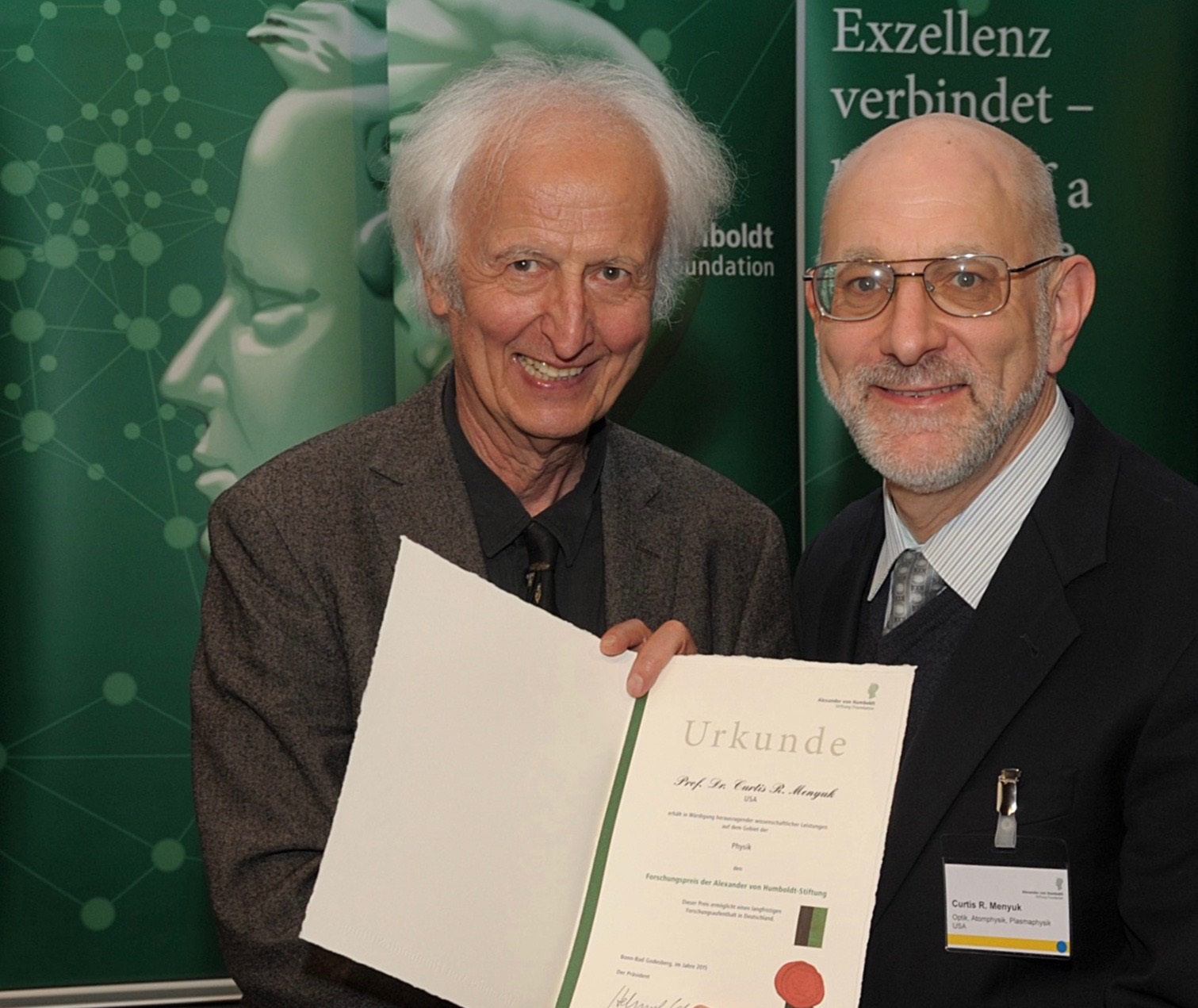
Last year, Curtis Menyuk, professor of computer science and electrical engineering (CSEE), received the Humboldt Research Award to support his work on optics and photonics. He is working with the Max-Planck Institute for Light in Erlangen, Germany.  

Images: Michael Nance (top); Curtis Menyuk, right, with Dr. Helmut Schwarz, president of the Alexander von Humboldt Foundation.

Karuna Pande Joshi says data leaks from insiders are increasingly hard to prevent

The leak of confidential financial documents from a Panamanian law firm, known as the “Panama Papers,” has raised major questions about how wealth moves across international borders. For governments and companies that manage sensitive information, it’s also raised questions about the possibilities and limitations of safeguards designed to protect data. Karuna Pande Joshi, research assistant professor of computer science and electrical engineering, explains through a new op-ed in The Conversation how data breaches occur, how to avoid them, and how they are, at some point, unavoidable.

Joshi describes how companies often devote resources to protect data from external hackers and cyber attacks, but that internal threats raise different challenges. “Organizations spend significant resources to firewall their data against attacks by external hackers and cybercriminals,” Joshi says. “However, they have to often face the dichotomy of effectively preventing leaks of data by the very employees who need to use it for their daily work.”

One common issue that companies need to deal with is the use of smartphones in the workplace, and the increasing capacity of smartphones, Joshi says. Some employers allow employees to access confidential data with their smartphones and store it on the device for easier access in the future.

Companies can configure computers in ways that prevent people from printing, moving, or copying documents, Joshi says, but doing so can have the negative impact of restricting employee access to documents and data in ways that make it difficult for them to accomplish their duties. “In today’s world, where employees often collaborate on documents and use shared data sets to complete their work, it is impossible to prevent an insider attack,” notes Joshi.

Read the full article, “Panama Papers: how do leakers leak?,” in The Conversation.

Image: Karuna Pande Joshi. Phoyo by Marlayna Demond ’11 for UMBC.

Randi Williams, UMBC advocate for women and minorities in tech, heads to MIT Media Lab

Randi Williams
B.S., Computer Engineering
Summa Cum Laude
Hometown: Bowie, Maryland
Plans: Master’s in media arts and sciences at MIT

UMBC has groomed me into a leader which, as a shy and nerdy freshman, I never imagined that I could be… Mentors placed me in the position to speak before the world and lead other students in promoting diversity in technology.

During her time at UMBC, Randi Williams has seen herself grow from a shy freshman to a vocal advocate for women and minorities in technology through work in prestigious internships and fellowships with leading research institutions and tech start-ups.

Williams has been heavily involved on campus, as a Meyerhoff Scholar, a member of the Honors College, and co-founder and former vice president of the popular HackUMBC student group and annual hackathon. She has also completed internships at the NASA Jet Propulsion Lab, MIT Media Lab, and Jawbone, a wearable technology company. It was the experience at Jawbone, through the prestigious CODE2040 Silicon Valley fellowship program, that inspired Williams to co-organize the first HackUMBC event.

Williams has received numerous awards, including the INCOSE Scholarship, Xerox Minority Technical Scholarship, Ida Greene Fellowship, and Pfizer Scholarship. She is a member of the engineering honor society Tau Beta Pi and the liberal arts and sciences honor society Phi Beta Kappa.

With a particular interest in human-robot interaction and creating wearable technology for people with disabilities, Williams will return to MIT to earn a master’s degree in media, arts, and sciences, working with the Personal Robots Group of the MIT Media Lab. She plans to complete a Ph.D. and develop technologies that address global challenges in education and healthcare.

randi-williams_2

Image: Randi Williams, far right, and other HackUMBC attendees pose for a photo with President Hrabowski; photo courtesy of Randi Williams. Portrait by Marlayna Demond ‘11 for UMBC.

Sara “Cheli” Arussy to pursue Ph.D. at Stanford after growing passion for medical research at UMBC

Sara “Cheli” Arussy
B.S., Chemical Engineering
Summa Cum Laude
Hometown: Fair Lawn, New Jersey
Plans: Ph.D, Stanford University

UMBC students and faculty members hold themselves to the highest standards of academic excellence and research rigor, but at the same time foster an environment of support and camaraderie. This culture has made it fun to pursue my research interests and extracurricular passions, and it’s certainly prepared me for my future career.

Cheli Arussy came to UMBC with an interest in medicine following a year volunteering at the Pediatric Dialysis Center at Shaare Tzedek Medical Center in Jerusalem. After hours of hard work in UMBC faculty labs, that spark grew into a clear career plan to become a medical researcher and professor.

Once on campus, Arussy jumped right in, pursuing her degree in chemical engineering while doing research in the lab of Mark Marten, chemical and biochemical engineering. She quickly became a leader in the lab, training nearly 20 new lab members. Arussy then went on to work on prostate cancer research with Chuck Bieberich, biology, and spent two summers as a student researcher at MIT.

Arussy is a member of Tau Beta Pi, the honors engineering society, and a recipient of the national Tau Beta Pi scholarship and the Carmi Award at UMBC. She is a Meyerhoff Scholars Program affiliate, member of the Honors College, and has presented at six research fora. She has also earned notable recognition for her research, including UMBC’s Undergraduate Research Assistantship Support Award and Undergraduate Research Award, and became a member of Sigma Xi, the national honor society for scientific research.

This fall Arussy will pursue her Ph.D. at Stanford University, where she hopes to create electronic, wearable materials to help patients restore their sense of touch.

Cheli-Arussy_2

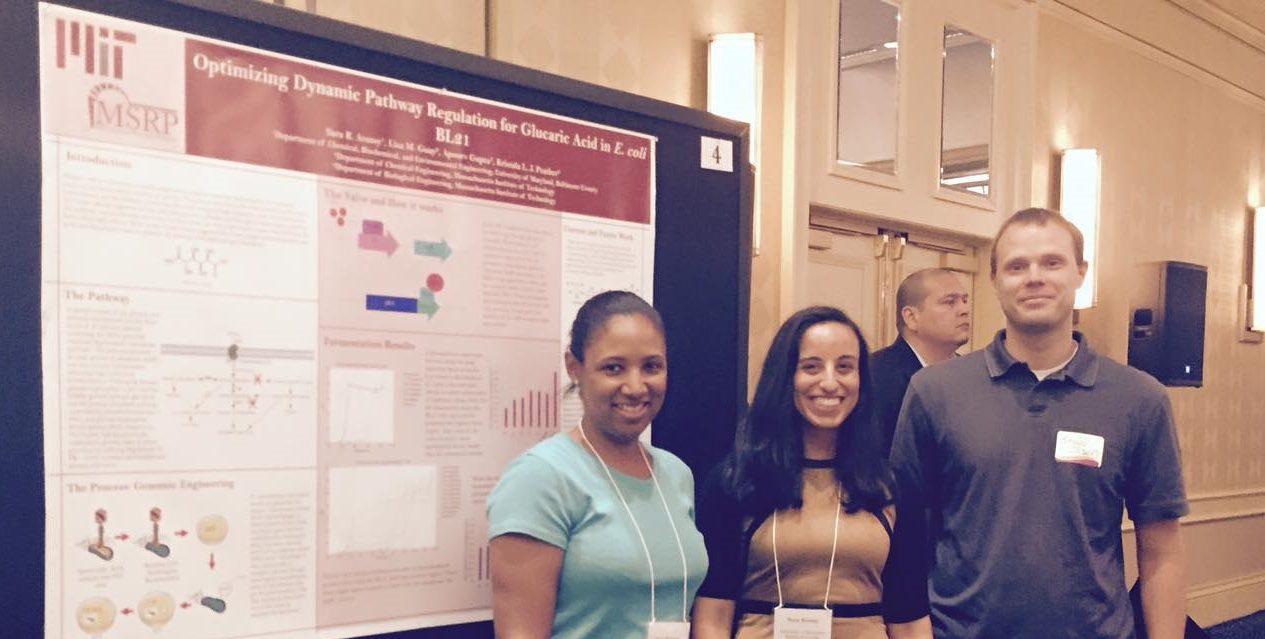
Image: Cheli Arussy, center, pictured with her faculty mentors from the MIT summer research program, which she participated in twice; photo courtesy of Cheli Arussy. Portrait by Marlayna Demond ‘11 for UMBC.

Kiante Brantley, peer mentor in computer science, to pursue Ph.D. in machine learning  

Kiante Brantley
Plans: Ph.D. in Computer Science, University of Maryland, College Park
M.S., Computer Science
Magna Cum Laude
Hometown: Baltimore, Maryland

UMBC has prepared me for my next goals in life, both academically and professionally. A person’s environment has a huge impact on helping them achieve their goals. UMBC’s environment has provided me with a very enriching atmosphere to help me explore my interest in data science.

Kiante Brantley ’15, computer science, began his college career at the Community College of Baltimore County before coming to UMBC, where he earned his bachelor’s degree in just two years as a participant in the NSF-funded Transfer Scholars in Information Technology and Engineering (T-SITE) program. Brantley has continued on to complete his M.S. in computer science in one year, and he is now preparing to pursue a Ph.D. in computer science, with a focus on machine learning, at the University of Maryland, College Park.

As a highly successful, driven, self-directed learner, Brantley has become a role model for transfer students and computer majors from underrepresented groups. He credits UMBC with helping prepare him for his next set of goals, both academically and professionally.

Through high-level coursework, lab research, and mentoring opportunities, Brantley has cultivated both technical skills in computer science, machine learning, and data science, and soft skills in public speaking and professional writing. He has given back to the T-SITE community as a mentor for transfer students pursuing computer science degrees.

Brantley currently works at the U.S. Department of Defense, which he plans to continue through his Ph.D. studies.

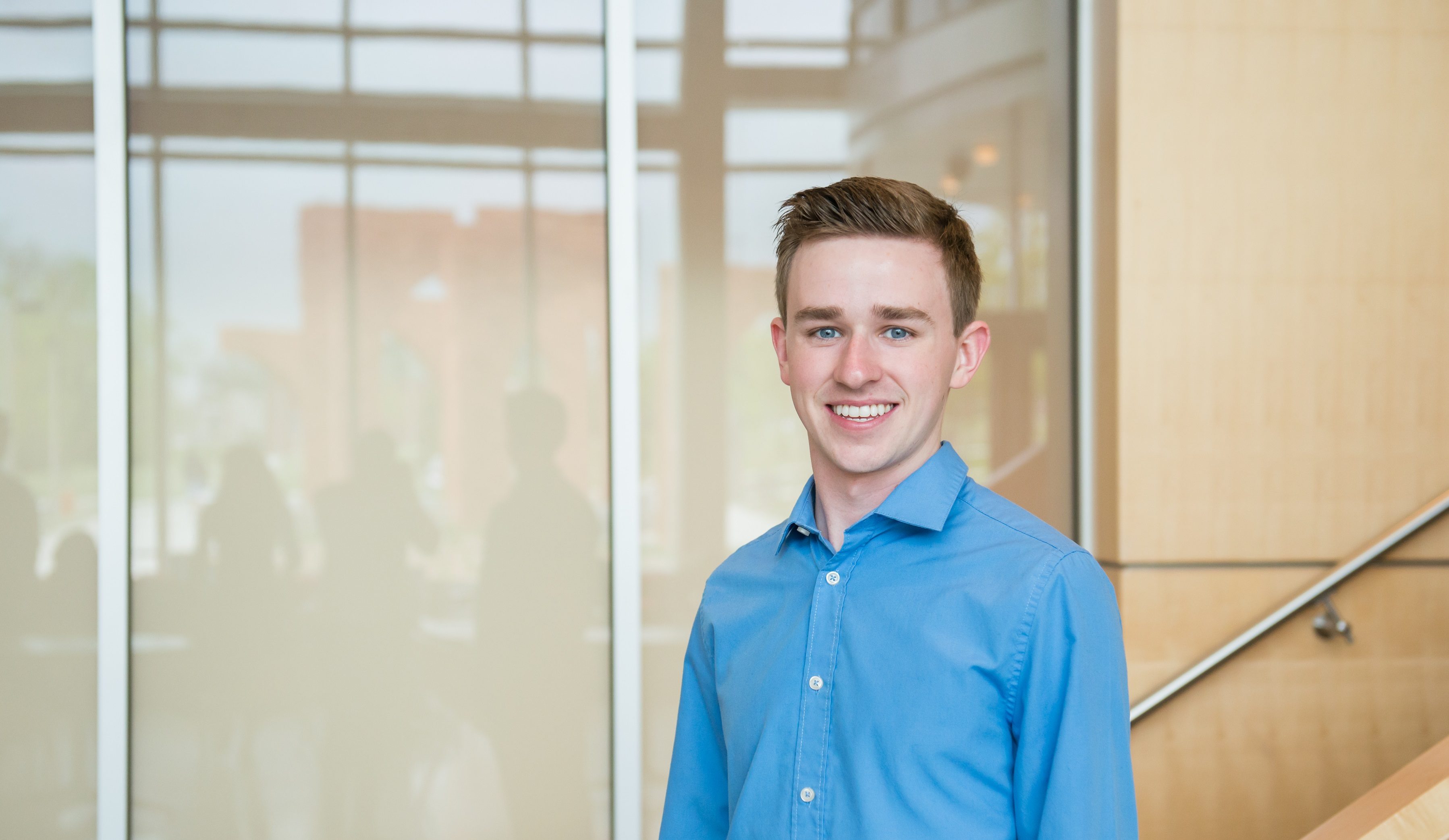
Image: Portrait by Marlayna Demond ‘11 for UMBC.

Travis Dennis, athlete and chemical engineer, to continue leadership off the field

Travis Dennis
B.S., Chemical Engineering
Hometown: Bowie, Maryland
Plans: Manufacturing Leadership Program, W.R. Grace & Co.

[UMBC] has given me the knowledge and critical thinking skills needed to solve any problem. It has taught me to be versatile…and to persevere in the midst of adversity.

During his time on UMBC’s men’s soccer team, Travis Dennis has been part three America East Conference Championships and one memorable NCAA College Cup, making it to the Final Four of the NCAA Tournament in December 2014. Dennis credits UMBC with helping him learn how to be versatile, work hard, and persevere through challenges.

When not on the soccer field, Dennis has been involved with the American Institute of Chemical Engineers, National Society of Black Engineers, Black Student Union, and Meyerhoff Scholars Program, as an affiliate member. In Summer 2015 he worked for McCormick as a process engineer. He excelled in a part-time position at W.R. Grace & Co. prior to being offered a full-time position at the company, in its Manufacturing Leadership Program, to begin after graduation.

travis-dennis_2

Image: Travis Dennis and his UMBC’s men’s soccer teammates after they won the 2013 America East Championship title, with President Hrabowski; photo courtesy of Travis Dennis. Portrait by Marlayna Demond ‘11 for UMBC.

Michael Bishoff, hackathon organizer, takes interest in immersive technology to Silicon Valley

Michael-Bishoff

Michael Bishoff
Plans: Software engineer at Lyft
B.S., Computer Science
Cum Laude
Hometown: Clarksville, Maryland

UMBC has opened my mind to what I can accomplish in my career. I would honestly not be where I am today if it wasn’t for the amazing faculty, staff, and friends at UMBC. Everyone is very passionate about what they do and we fuel each other to achieve greater goals.

Michael Bishoff found his passion for hackathons during his years at UMBC. He is a co-founder and president of HackUMBC, a 400-member strong student organization that hosts a 24-hour programming competition on campus each year. He has also been recognized at eight hack events worldwide, with awards from “best use of technology on the move” to “best use of virtual reality with robotics from Oculus.”

After taking the bronze at MHacks, a major student programming competition at the University of Michigan, for a haptic feedback suit that makes virtual reality more immersive, Bishoff’s team was invited to participate at the Global Hackathon in South Korea.

Bishoff is a member of Tau Beta Pi, the engineering honors society, and received a Northrop Grumman Scholarship and TIAG Scholarship. He has interned at Google and the U.S. Department of Defense. He also completed a summer undergraduate research fellowship through the National Institute of Standards and Technology (NIST), and served as a research assistant in the MAPLE Lab and an undergraduate teaching assistant in computer science.

Soon after graduation Bishoff will start as a software engineer for the rideshare company Lyft.

Image: Michael Bishoff, second from the left, with fellow HackUMBC organizers during the closing ceremonies of the competition; photo courtesy of Michael Bishoff. Portrait by Marlayna Demond ‘11 for UMBC.

Ganesh Mysore combines social science and engineering degrees with commitment to civic engagement

Ganesh Mysore
Plans: Working in biotech while applying to graduate schools
B.S., Chemical Engineering; B.A., Political Science
Cum Laude
Hometown: Clarksville, Maryland

The opportunities I had, and the guidance I received, at UMBC have shaped me into an engaged citizen, and not just a capable engineer.

Ganesh Mysore isn’t earning a degree this spring; he’s actually earning two degrees in very different fields and he’s passionate about them both. Through advanced coursework in both chemical engineering and political science, Mysore has developed a unique skill set and approach to solving challenging problems, he says.

Mysore is a member of the Honors College and Pi Sigma Alpha, the national honor society for political science, and recipient of the Premier Award Scholarship. Beyond his achievements in the classroom, he has also been a highly engaged campus leader, serving as president of UMBC’s Student Government Association as a junior and as a member the working group for BreakingGround, UMBC’s nationally recognized civic engagement initiative.

Mysore credits UMBC mentors with helping him understand the importance of creating positive change through taking action in his community, whether that is a community of students or, in the future, engineering professionals.

Portrait by Marlayna Demond ‘11 for UMBC.

Lee Blaney’s lab reimagines chicken litter challenge as an opportunity for sustainable farming

Where many see waste, UMBC’s Lee Blaney, assistant professor of chemical, biochemical and environmental engineering, sees opportunity.

As Blaney explains in Chemical & Engineering News, poultry litter is a very abundant waste product that is regularly used as a fertilizer, but its high phosphorus content poses challenges. Blaney and the students in his lab extract phosphorus from poultry litter in a way that provides a sustainable source of that nutrient for farmers who want to use it, and leaves behind rich organic matter that can be used as fertilizer by farmers who do not want to add more phosphorus to their soil.

In Maryland, new regulations will be fully implemented by 2022 that will limit the amount of phosphorus allowable in fields, to prevent phosphorus runoff that can damage local watersheds. The amount of phosphorus already in the soil will impact the amount of phosphorus farmers can add to their land as fertilizer.

Blaney uses reactors to extract phosphorus from poultry litter. The extracted phosphorus can be sold to farmers who want to add higher levels of the nutrient to their land within the new guidelines, and the leftover material can be used by people who want fertilizer for their land but have already hit the phosphorus limit.

“The easiest thing to doand what has been historically successfulis to use litter as fertilizer,” says Blaney. He explains that the method that he uses in his lab can be a cost-effective option for farmers to add phosphorus to their land within legal limits, reuse a material that is abundant, keep costs low, and access a new source of revenue in excess isolated phosphorus that can be resold. Blaney is working with several farmers on Maryland’s Eastern Shore, and hopes to have a phosphorus extraction system up and running on one farm in Wicomico County, Maryland in the next year.

Read “How to get the good stuff out of chicken manure” in Chemical & Environmental News.

Image: Lee Blaney works with a student in his lab. Photo by Tim Ford, coordinator of illustrative services in the biological sciences department at UMBC.

“Seeing Science” research forum connects cells, space, and the senses

“We hope you will leave inspired and with new views about what is possible,” said Karl V. Steiner, vice president for research, as he welcomed the audience of  “Seeing Science: Photography, Science, and Visual Culture.” UMBC’s Office of the Vice President for Research hosted the forum on April 8, 2015, as an opportunity to examine imaging and visualization methods that support new scientific insights across diverse areas of research.

Sheldon Brown, John D. and Catherine T. MacArthur Foundation Endowed Chair in Digital Media and Learning at the University of California, San Diego (UCSD) and director of the Arthur C. Clarke Center for Human Imagination, delivered the opening keynote. He challenged attendees to understand how seeing translates into meaning.

“Imagination is the key to every new area of knowledge,” Brown explained. He added that art is “a collaboration between our senses, memories, and imagination,” more about asking new questions and offering new perspectives than about giving answers.

The first panel, moderated by Marvin Heiferman, senior visiting research scholar at UMBC’s Center for Art Design and Visual Culture (CADVC), explored how researchers utilize imaging to deduce and convey knowledge about Earth and outer space.

Max Mutchler, head of the research and instrument analysis branch at Space Telescope Science Institute at Johns Hopkins University, talked about his work on the Hubble Space Telescope. Over time, he explained, the quality of photos taken by the telescope improved, but “the best stuff we did, no one predicted.”

Christopher Shuman, associate research scientist of geography and environmental systems and faculty at UMBC’s Joint Center for Earth Systems Technology (JCET), offered insight into how imaging helps scientists track environmental changes. Imaging allows Shuman to reveal the losses and reformations of Antarctic ice from 1986 through the present, helping scientists and non-science audiences alike better visualize and understand environmental change as it is taking place.

Joseph Tatarewicz, associate professor of history and director of the Human Context of Science and Technology (HCST) certificate program, took attendees back in time more than 400 years and talked about the first synthetic imaging tool used by Galileo in 1610. Although many images feel immediate and organic, he explained, there is no such thing as an unmediated image.

The second panel, moderated by Steiner, featured faculty working at a smaller scale.

Kirk Czymmek, director of North American applications and labs at Carl Zeiss Microscopy, LLC, described how 3D tools can help people visualize inner space by making cells and other small entities appear lifelike.

Michelle Starz-Gaiano, associate professor of biological sciences, discussed using images in computer modeling to show cellular change. She studies fruit flies to understand how developing cells know where to navigate and what function they will serve. In her lab, she marks cells with dye to track their movement and see exactly how cell migration takes place.

Stephen Bradley, associate professor of visual arts, discussed how art and science overlap in many ways. Bradley has studied past imaging technology used in science.  

Tom Cronin, professor of biological sciences, gave the audience a sense of what the world looks like through the eyes of animals. “Eyes are the link between things we see and what is happening between cells,” he explained.

By studying mantis shrimp, Cronin wants to understand why and how animals see the world in ways different from humans. Whether on a species level or on an individual level, Cronin noted, “All eyes see the world differently.”

Image: Sheldon Brown speaks with President Freeman Hrabowski during the “Seeing Science” forum. Photo by Marlayna Demond ’11 for UMBC.