All posts by: UMBC News Staff


Imagining America receives Phi Beta Kappa Key of Excellence

On Thursday, October 1 during the Imagining America National Conference, the Phi Beta Kappa Society presented the capstone Key of Excellence Award and its $10,000 prize during a reception at the Baltimore Museum of Art. The ceremony featured remarks from Johnnetta Betsch Cole, director of the Smithsonian National Museum of African Art.

In a press release announcing the award, Imagining America stated that “The Phi Beta Kappa Society created the Key of Excellence Awards to energize support for the arts and sciences because of their value to the nation. ‘The Key of Excellence showcases innovative programs that demonstrate the excellence, range, and relevance of the arts and sciences to their communities,’ said Phi Beta Kappa President Katherine Soule. ‘We aim to show decision makers that the arts and sciences develop both inventive employees and thoughtful citizens. They are vital to a vibrant culture and democracy.’” Read more on the Imagining America website.

UMBC is hosting the Imagining America National Conference in Baltimore this week. MICA and Morgan State University are cosponsors of the event, in partnership with Towson University. Read more about UMBC’s role in Imagining America and why it was selected to host the conference.

Roundup: UMBC in the News

One of the things that makes UMBC great is how wonderful our alumni, students, faculty, and staff are. Because of these amazing people, UMBC often finds itself “in the news,” so each week, we’ll be sharing with you a round-up of the most newsworthy achievements from our community.

UMBC hosts Imagining America 2015 with local partners

Educators, cultural leaders, and activists from across the country will convene in Baltimore this week for the Imagining America National Conference, hosted by UMBC. This groundbreaking four-day gathering asks how, in the wake of the Baltimore Uprising, the arts, humanities, and design can help our city heal and grow.

At its core, Imagining America emphasizes the power of many voices coming together to envision our nation’s future, engaging with topics like race, inequality, and community-based approaches to spur collective action. UMBC was selected as host thanks to a track record of powerful civic work and commitment to fostering innovative, engaged scholarship, where excellence and inclusion go hand-in-hand.

The Maryland Institute College of Art (MICA) and Morgan State University are co-sponsoring the conference. Dozens of arts, culture, and community organizations have also been immersed in the planning process from the beginning. Unlike traditional academic conferences, many events will engage local residents, and partnerships formed through the event are expected to continue far into the future.

“The process of planning the conference has been deeply collaborative, reflecting a UMBC culture that embraces diversity and authentic connections,” shares David Hoffman, assistant director of student life for civic agency.

Much of the conference will take place in the heart of downtown Baltimore with sessions hosted by community organizations involved in creative social justice work.

“At their core, the arts, humanities, and design allow for ambiguity, and deal with human culture and the way human beings interact with their world and one another,” reflects Lee Boot, associate research professor and associate director of the Imaging Research Center. “Because at this time in our history, the challenges we face can also be traced to those interactions, those disciplines have elevated promise, if their practitioners rise to the occasion.”

Imagining America is designed to be deeply interactive, with a strong emphasis on workshops, collaboration, and relationship-building.

“Public universities have a responsibility to foster honest, open conversations about the tough issues,” explains Scott Casper, dean of UMBC’s College of Arts, Humanities, and Social Sciences. “We have an ability and opportunity to convene people broadly, perhaps more than many smaller organizations can. So we contribute by convening and participating in the conversations, and by lending our expertise and experience, while also listening to and learning from the expertise and experiences of others at the table.”

Conference highlights include an opening plenary session with UMBC President Freeman Hrabowski; Scott Casper; Joe Jones ’06, social work, founder and CEO of the Center for Urban Families; and Rebecca Alban Hoffberger, founder and director of American Visionary Art Museum (AVAM), to address innovative approaches to significant challenges facing the country. UMBC student Manisha Vepa ’18, financial economics, will lead a closing plenary session discussing final reflections and thoughts on sustaining meaningful partnerships.

Site-specific workshops on October 1 and 2 are the result of almost a year of organizing meetings around the city that engaged more than 150 community members, many representing local groups. With Imagining America recognizing the essential contributions of these community members and the importance of having these conversations in a public forum, the workshops are free and open to the public.

“I think we’re going to be dazzled by the collaborative civic work that will emerge in the months to come,” says Hoffman.

A complete conference schedule with details on each session is available on the Imagining America website.

Image: Baltimore skyline. Photo by Marlayna Demond ’11.

Career Q&A: Nilusha Jayasinghe ’13, biological sciences and Spanish, M.S. ’15 applied molecular biology

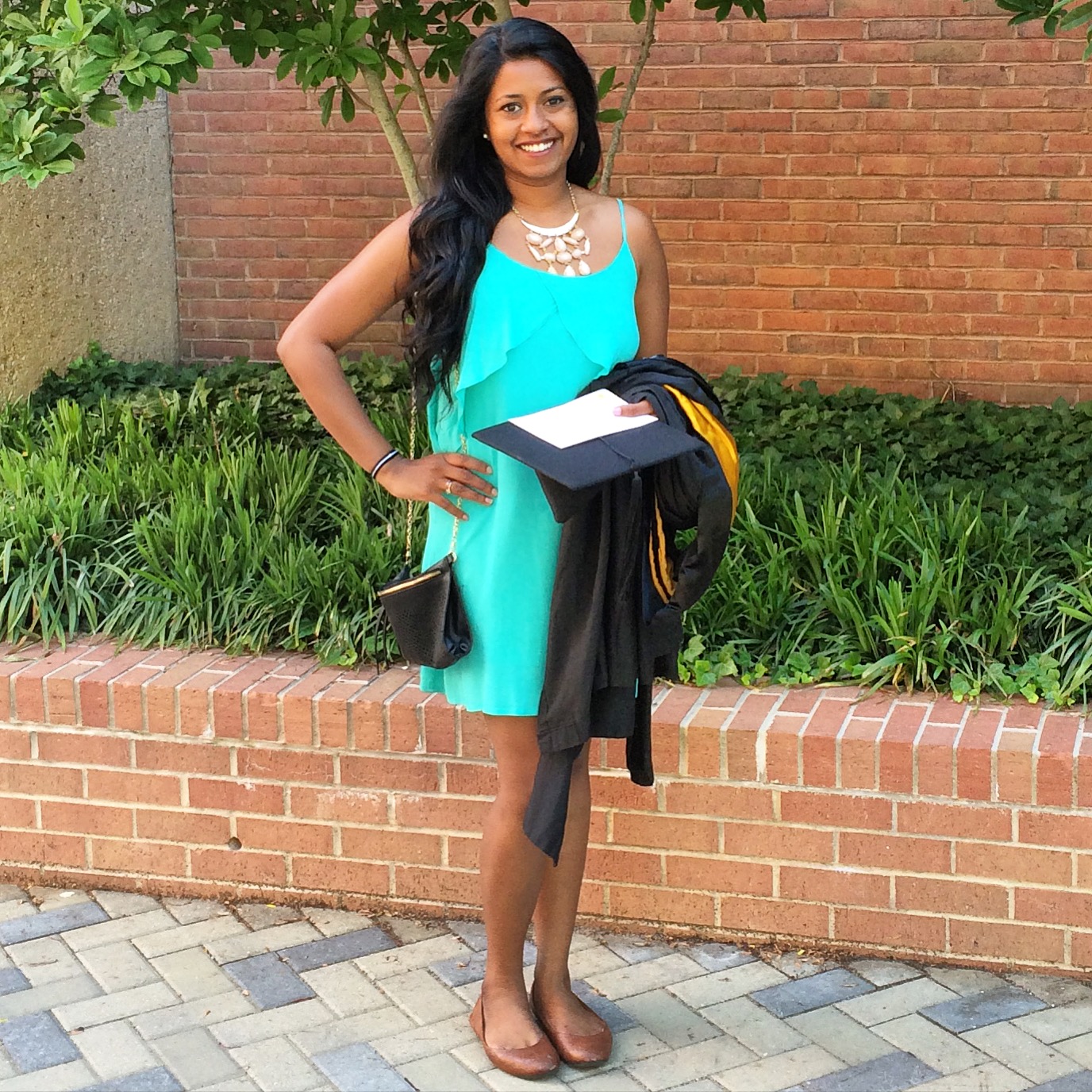
Every so often, we’ll chat with an alum about what they do and how they got there. Today we’re talking with Nilusha Jayasinghe ’13, biological sciences and Spanish, M.S. ’15 applied molecular biology, about her work as a researcher at the National Institutes of Health.

image1Name: Nilusha Jayasinghe
Job Title: Intramural Research Fellow, National Institutes of Health
Major/Minor: Undergrad: Biology and Spanish, Grad: Applied Molecular Biology (AMB)
Grad Year: Undergrad: 2013, Grad: 2015

Tell me a little about the research project you’re involved in at NIH. I study the genetics of blood and lymph vessel development and differentiation during vertebrate development using the model organism zebrafish. We look at the genes that are critical in different signaling pathways that dictate proper vessel development, which can also play a role in cancer metastasis since tumors need these vessels to survive. Zebrafish develop rapidly and produce transparent embryos which are fertilized outside of the mother, which enable us to use them to study our topic very easily. Most importantly, development in zebrafish is very similar to human development, so we can translate our findings into the genetics behind circulatory defects in humans which is really interesting and useful!

How did your UMBC experience bring you to your current position in research? I was a pre-med student back then at UMBC (currently I’ll call myself pre-health, since I am also considering [physician assistant] school as well), and one of the things that make a competitive applicant is research experience. I also have skills and interests in the biological sciences which were especially refined during my master’s program, so I thought that I’ll take a few years post-graduation to do more research. I ended up at the NIH because of their amazing research facilities and track record, as well as their extensive pre-health community and resources.

Is there a particular class or professor at UMBC that inspired you? Yes! I’ll have to say that Dr. Richard Wolf (now retired, taught prokaryotic molecular biology and directed the AMB program) and Ms. Julia Wolf (taught the lab part of the AMB program) both inspired and challenged me a lot during my master’s program. They were excellent instructors and mentors, teaching with both care and the necessary challenge[s] to push their students to their [maximum] potential.

Having had the experience, what piece of advice would you give a new UMBC student? There is so much that I learned at UMBC and so many things I can say, but I think one of the most valuable things is to realize the amount of resources and great minds there are [here]. With that said, in order to make the best of your experience I think that getting involved and networking is so important! Tell people about what interests you and what you hope to do short-term or long-term, and I guarantee that they will want to help you! You never know what others may know about or can do for you that might open the doors for some of the best experiences of your life. This happened to me many times at UMBC [,and these experiences] helped me land graduate assistantships, learn about the AMB program, and finally get a spot in the NIH, for some examples. So, put yourself out there and let yourself be known!

Raising Voices: Stefanie Mavronis ’12 on her work on the Marc Steiner Show

Stefanie Mavronis ‘12, political science and media and communication studies, has been committed to social justice for a long time now, and eventually plans to pursue graduate study in public policy. But for now, she’s doing that work in a somewhat unconventional and unexpected place: a Baltimore radio station. Over the past three years, she’s used her job as a producer on WEAA-FM’s Marc Steiner Show to forge valuable relationships within the city that she loves and tell award-winning stories about the people who live there.

This past June, she and her co-producer Mark Gunnery (pictured on the right) received awards from the Chesapeake Associated Press Broadcaster’s Association for two pieces they created for the Steiner Show. Both are related to Baltimore’s reaction to the August 2014 killing of Michael Brown, an unarmed black teenager, by white police officer Darren Wilson in Ferguson, Missouri.

Perhaps due to the subject matter, and even more so the timing (the award came just over a month after riots erupted in Baltimore over the police-custody death of Freddie Gray), the accomplishment felt “bittersweet” to Mavronis. Nonetheless, she says, “we have a great responsibility to cover these stories responsibly, and to [bring underrepresented voices] to the table.”

Mavronis was a Steiner Show intern as an undergrad, and was hired as a full-time producer after graduation. “I felt well-prepared [for the job] coming out of UMBC,” she says, both because of her heavy involvement on campus and her commitment to social justice work.

One of the many groups she was a part of at UMBC – besides (seb), the Honors College, and the Sondheim Public Affairs Scholars Program, to name a few – was the Solidarity Coalition, a student organization that pushed to improve working conditions for campus employees. In 2010, the group worked with the university administration to create a worker-centered buying contract for UMBC-branded apparel: in other words, no more sweatshops.

“I learned so much…being involved so heavily,” she says. “I think [that] has helped me a lot [with] being able to jump right in.” She specifically credits her job at commonvision and her old boss, Laura Schraven, with giving her the project management skills that have been invaluable to her as a radio producer. She remains connected to the campus as an adjunct lecturer in the media and communication studies department, teaching the Media Literacy Lab course that’s now a requirement for all MCS majors.

For now, though, she is committed to amplifying Baltimore’s unheard voices over the airwaves.

Mavronis says she knew she was going to learn a lot about Baltimore, as the show frequently features key players – officials, activists, organizers – in the community. She and Gunnery recently produced a series of short video documentaries on the Baltimore Uprising, and she had the chance to be part of some “interesting conversations.”

“[Baltimore] will always be a part of my heart,” she says.

“[It’s] my home…and the city I care about a lot.”

– Julia Celtnieks ’13

Alumni Awards 2015: Nicole DeBlase ’06, Financial Economics

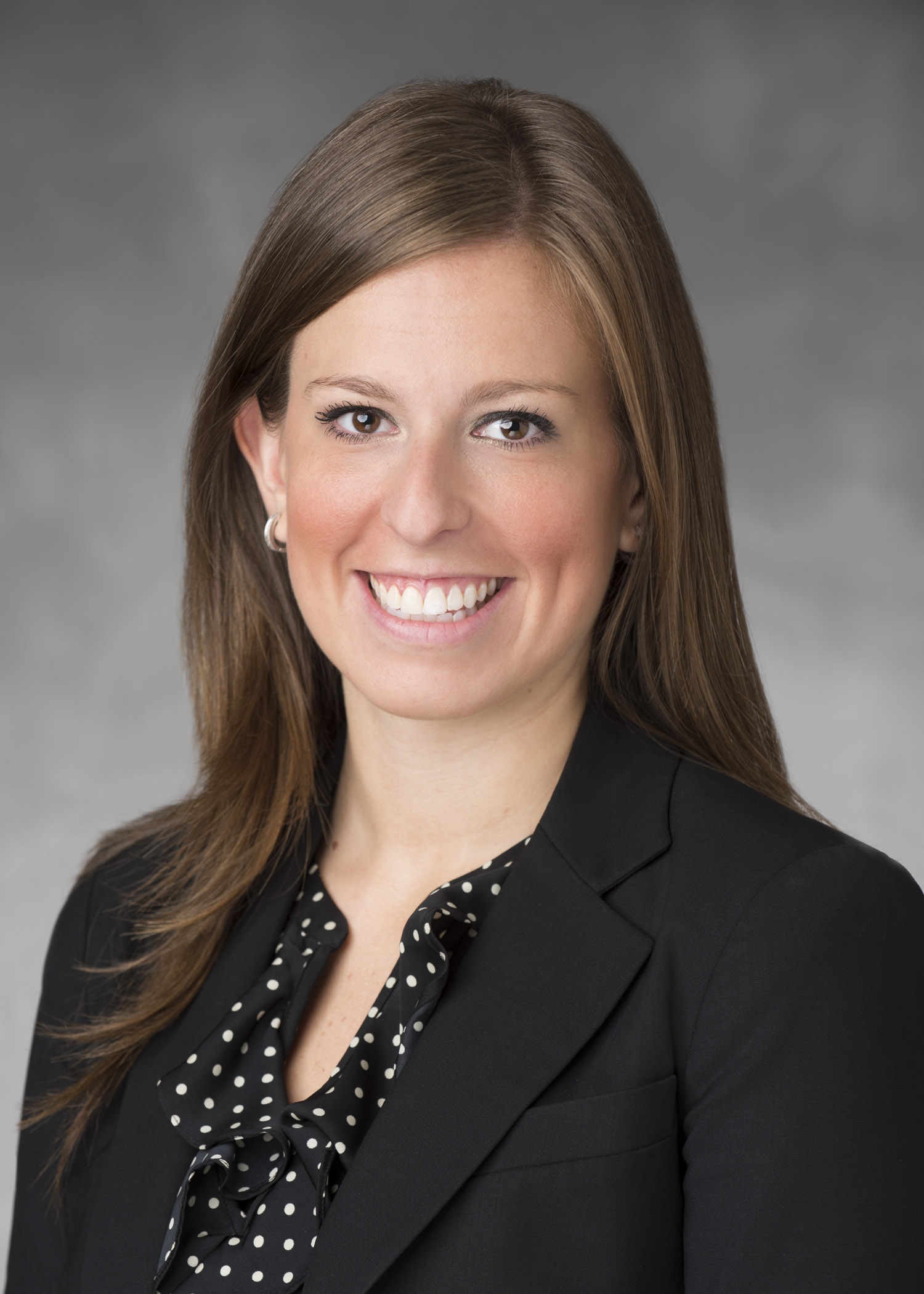
In the weeks leading up to the Alumni Awards Ceremony, we’ll be profiling each of this year’s honorees in detail here on the blog. Today we’re featuring our 2015 Rising Star alumna, Nicole DeBlase ’06, financial economics. 

DeBlaseNicole DeBlase is an Executive Director at Morgan Stanley, a position she has held since early 2014. Prior to this, she worked her way up the equity research ladder from Baltimore to Wall Street. She started off as an undergraduate intern at the Mercantile Safe Deposit and Trust Company and moved into their rotational analyst program after graduation. When that bank was acquired by PNC in her second month on the job, effectively eliminating her department, she decided to fulfill her longtime goal of moving to New York City. She started out on Wall Street as an Equity Research Associate at Deutsche Bank. During her time there, she and her supervising senior analyst built an Industrial Conglomerate team that leapt the ranks on the Street under their direction, and she was promoted to Vice President a year earlier than normal. When her supervisor left Deutsche Bank for Morgan Stanley in 2011, she decided to join him. Since then, she has risen through the ranks from a Senior Analyst covering machinery stocks to an Executive Director, and achieved “runner-up” status in the Machinery category in Institutional Investor magazine. In addition to building a career in finance and a life in Manhattan, Ms. DeBlase has traveled to Europe, Asia, and South America, and has run her first 5K after an extensive amount of training.

Register for the Alumni Awards Ceremony on Thursday, October 8!

UMBC visit offers Chancellor Caret glimpse of “innovation that matters”

UMBC welcomed new University System of Maryland (USM) Chancellor Bob Caret for a busy, full-day campus visit on September 24, 2015. Chancellor Caret has a long relationship with UMBC, but this visit offered a special opportunity for him.

“We are delighted the chancellor is taking this time to connect directly with our students, faculty, and staff, and to develop a deeper understanding of UMBC’s culture, vision, and priorities,” said UMBC President Freeman Hrabowski.

Chancellor Caret shared his view of the special role Maryland’s public universities play in a region that boasts so many high caliber, internationally known centers of higher education. “In the USM,” he said, “we wake up every day and think about what we can do for Maryland.”

This theme carried through the day as UMBC community members shared their experiences, goals, and innovative work with the chancellor.

One highlight of Caret’s morning was a meeting with undergraduate and graduate student leaders, which included a discussion on college affordability. Caret remarked that this meeting with students, in particular, gave him “a sense of excitement about the future.”

A subsequent meeting with faculty and staff senate leaders demonstrated the important role of shared governance at UMBC, where faculty, staff, and student groups actively collaborate to make decisions that impact the university.

Following a lunch with college deans, Chancellor Caret toured spaces known across campus as hubs for collaboration and hands-on learning—places that foster interdisciplinary work and harness creative potential. These spaces included, among others, the Retriever Learning Center, Linehan Concert Hall, Imaging Research Center, English Writing Labs, and Science Learning Collaboratory, a model for the future Interdisciplinary Life Sciences Building.

Vice President for Research Karl Steiner explained that while the university is tremendously excited about these new facilities, in a certain sense “a building is just a building.” When it comes to how the university advances education and research, he said, “It is what happens inside that matters.”

A tour of the bwtech@UMBC Research and Technology Park offered a clear picture of what makes UMBC a distinctive community: promoting collaboration among creative faculty researchers, undergraduate and graduate students, alumni entrepreneurs and key partners.

UMBC provides essential support to bring innovations and best practices to the public, for the benefit of the state’s economy and the health and well-being of Marylanders. Faculty from psychology to cybersecurity, as well as young companies led by talented USM alumni, explained what this can look like across academic disciplines and industries.

Each conversation offered a different glimpse of what Karl Steiner has called the “unique research culture here at UMBC”—a culture focused on bringing together inquisitive minds with diverse perspectives, but the shared goal of social and economic impact. The recent expansion of collaborative research between UMBC and the University of Maryland-Baltimore demonstrates the exciting potential of this work. Steiner explained, “We call it innovation that matters.”

Caret began his service as USM chancellor in July 2015, after four years serving as president of the University of Massachusetts System. His time in Massachusetts followed more than 25 years at Towson University, where he began as a faculty member and served as president 2003-2011. The chancellor will visit additional USM institutions during a statewide listening tour, October 12-15, 2015.

Learn more about Chancellor Caret through his video greeting to USM communities:

Image: Chancellor Bob Caret and Ganna Vikhlyayeva ’15, animation and interactive media, in UMBC’s Imaging Research Center. Photo by Marlayna Demond ’11.

Visual and Performing Arts Alumnae in the News

No matter what they study, our alumni go on to do some pretty amazing things after they graduate. Today, we’re featuring Dani Baer ’13, graphic design, and Megan Zlock ’09, animation, two women who each took a less-than-conventional path after graduating with arts degrees.


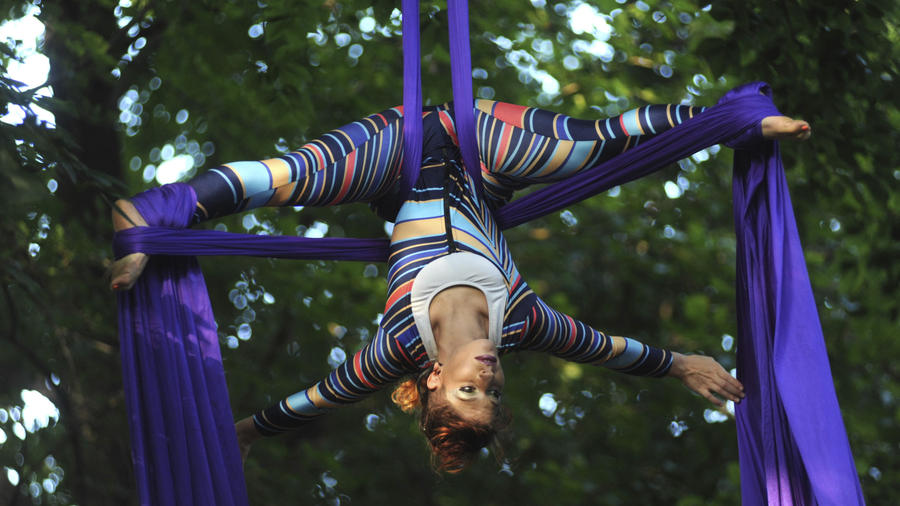
Dani Baer ‘13,baer graphic design,
performed with Suspended Citizens, an all-female aerialist troupe, at this year’s 29th annual Reisterstown Festival. Baer, who has experience in dance and gymnastics, first got into aerial silks last year, and now trains every day in addition to her full-time job as a graphic designer. For more about Suspended Citizens, and for videos of Dani and the rest of the troupe in action, click here.

zlock

Megan Zlock ‘09, animation, was recently interviewed by Technical.ly about her career as a front-end developer at Viget, an agency that designs digital brands and platforms for customers. After receiving a BFA in animation from UMBC, Zlock went back to school for a professional certificate in web design and development, and has been working in tech ever since. She has also been named one of DC’s 30 Powerful Women Programmers by DCFemTech.

Alumni Awards 2015: Dr. Lisa Urkevich ’86, Visual and Performing Arts

In the weeks leading up to the Alumni Awards Ceremony, we’ll be profiling each of this year’s honorees in detail here on the blog. Today we’re featuring our Visual and Performing Arts award winner, Dr. Lisa Urkevich ’86, visual and performing arts (music).

UrkevichDr. Lisa Urkevich is an ethnomusicologist and academic who has been based primarily in Kuwait since 2003. She is a 2015-16 Visiting Scholar at Harvard’s Center for Middle Eastern Studies, and her book, Music and Traditions of the Arabian Peninsula: Saudi Arabia, Kuwait, Bahrain, and Qatar–which is based on years of research conducted in that part of the world–was published earlier this year. Dr. Urkevich chose UMBC for its renowned ethnomusicology program, and says she was inspired by all of her music professors, who “exposed [her] to a world of new ideas and cultures.” After graduating from UMBC, she received a second bachelor’s degree in music education from Towson University, followed by a master of music from Florida State University and a Ph.D. from the University of Maryland. Her first professorship at Boston University led to a Fulbright grant to Kuwait, and when a new university opened up there she was asked to stay on. In addition to her field research, she has collected Peninsula instruments for a U.S. museum, brought traditional folk musicians along on her public speaking engagements, and developed a course called Music in Arabian Culture, which is not taught in any other Western-style university across the globe and is considered by UNESCO to be “safeguarding […] intangible cultural heritage.” She is proud to be a “bridge between [Western] cultures and those of the Arabian Peninsula.”

There’s still time to register for the Alumni Awards Ceremony, Thursday, October 8!

Alumni Awards 2015: Dr. Yoon-Ho Kim, Ph.D. ’01, Applied Physics

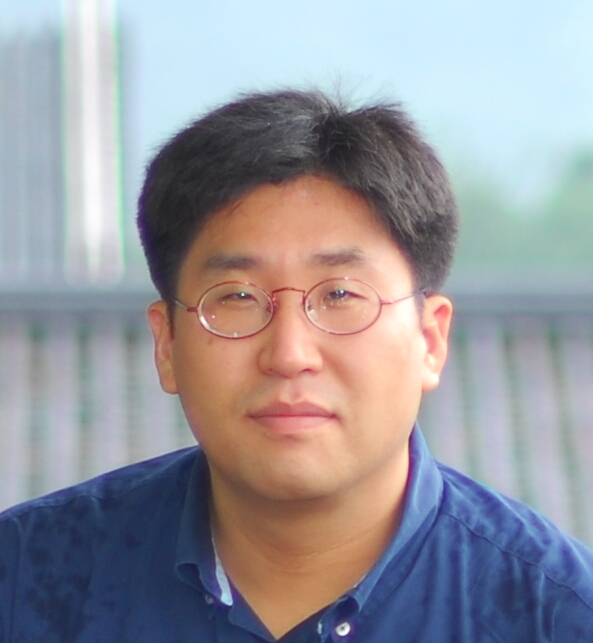
In the weeks leading up to the Alumni Awards Ceremony, we’ll be profiling each of this year’s honorees in detail here on the blog. Today we’re featuring our Natural and Mathematical Sciences award winner, Dr. Yoon-Ho Kim, Ph.D. ’01, applied physics.

Kim2Dr. Yoon-Ho Kim is a physicist, researcher, and professor at Pohang University of Science and Technology (POSTECH) in South Korea. He received his Ph.D. in applied physics from UMBC in 2001 and worked as a Wigner Fellow at the Oak Ridge National Laboratory before starting at POSTECH in 2004. Currently, his research involves the experimental aspects of quantum information and quantum optics. He chose UMBC precisely for its reputation in optics and says he was inspired by several of his professors here, including his thesis advisor Dr. Yanhua Shih and professor emeritus Dr. Morton Rubin. Getting his research re-established upon returning to Korea was a challenge, he says, but today he has his own research group, and greatly values the chance to do interesting work in physics. He also takes pride in seeing his students earn their degrees and go on to their own research positions.

Don’t forget to register for the Alumni Awards Ceremony on Thursday, October 8!

At Play – Fall 2015

Education In Motion

It’s a bright Saturday morning in mid-July, and the first floor of the Fine Arts Building is covered in plastic grocery bags, chicken wire, and paint buckets. A four-person surrey bike, girded with steel pipes and pontoons, looms in the front window like the skeleton of a prehistoric sea monster. In the shadow of a stairwell, a giant octopus waits to be attached to the bike, its one water-cooler-jug eye glinting in the dim light.

This colossal cephalopod, its wire frame furred with shreds of plastic water bottles, is the Kraken Upcycle. The machine is the result of three semesters’ labor by a group of students and alumni working with Steven McAlpine, assistant director of interdisciplinary studies. The Kraken was the winning entry in the 17th annual East Coast Kinetic Sculpture Race hosted by Baltimore’s American Visionary Art Museum.

Kinetic sculpture racing contestants build all-terrain bicycle-powered works of art to navigate 14 miles through Baltimore’s harbor. After seeing the race five years ago, and being captivated by the way each entry combined creative artistry with engineering expertise, McAlpine brought the idea to UMBC.

McAlpine and UMBC students from a variety of disciplines explored the idea in a pilot course in spring 2014, then designed and built the Kraken Upcycle over the next year. The project drew student artists and engineers, as well as students from the humanities and interdisciplinary studies.

“It’s such a great example of why you need community to do a project,” says McAlpine in front of the pontoon system, built from plastic barrels and steel pipes salvaged from the trash, and cut outdoors in 20-degree weather. “[This group has done] amazing and transformative things with things that would have ended up in a dumpster.”

The larger idea behind the Kraken, says McAlpine, is that single-use plastics – bottles, jugs, soda can rings – are the new monsters of the deep. He observes that 1,500 plastic bottles per second end up in the ocean, and that only 30 percent actually make it into the proper recycling stream.

As the June 14 race date drew closer, the team tested the Kraken, even throwing it into Pig Pen Pond. During the race, Gabriel Margarida, mechanical engineering; Rob Ford, environmental science; Vijay Raju, media and communication studies; and Kirby Kelbaugh ’15, interdisciplinary studies, powered and piloted the Kraken, eventually overcoming a mechanical breakdown to win the race and qualify for the Kinetic Grand Championship in California.

Today, the students are preparing the Kraken for a victory lap at Baltimore’s annual Artscape festival. This time, the concepts of “kinetic” and “race” will be left out of the equation, and the sculpture itself will be displayed with the interactive sound wall the students are building for the festival.

“[We needed to] somehow upcycle the upcycle,” says Heather Mortimer, interdisciplinary studies, one of the undergraduate students who worked on the project. “We’re trying to find a retirement plan.”

Perhaps this Kraken will be retired, but plans are afoot to field another kinetic UMBC entry next year.

— Achsah Callahan ’12 and Julia Celtnieks ’13

Next Steps
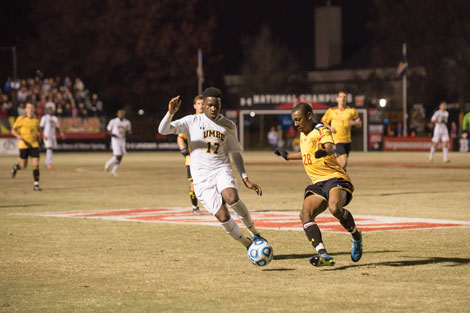
fa15_ATPLAY-soccer-players_webGetting to the Final Four of men’s college soccer in 2014 was a crowning achievement for a Retrievers program that has made steady strides in recent years. It was the team’s fourth trip to the NCAA tournament in the last five years, and they shocked the soccer world with an amazing run of four road victories against national powers (Wake Forest, Maryland, Louisville and Creighton) to land in the national semifinals.

But UMBC Head Coach Pete Caringi won’t be resting on those laurels. He is already preparing his 2015 squad to understand the challenges last year’s success will bring.

“Teams will be zeroing in on UMBC,” says Caringi. “That’s the beauty of being where we’ve been, and accepting the fact that once you get there, you’re a marked team. That’s great, and we have to have players that have the mentality that they’ll accept that and understand it and not be afraid of it.”

The 2015 team will have a different look, with only three starters returning to Retriever Soccer Park this season.

Senior midfielder Malcolm Harris scored the game-winning goal for UMBC in the NCAA tournament victory against the University of Maryland, College Park on the Terrapins’ home pitch. He knows opponents will be eager for their chance to play a national semifinalist.

“Now there’s a target on your back,” he said. “Whether you like it or not, we’re now that top dog. Whether you like it or not, teams are going to be excited to play us. Whether we care or not, they’re going to be there. As a group, we’re going to have to understand that.”

Still, success isn’t all watching your back. It’s about looking confidently to the future. Caringi says that with the support of Tim Hall, director of athletics, UMBC is planning upgrades to the stands and the scoreboard at Retriever Soccer Park for fans who cheer for UMBC this season.

Caringi also hopes the momentum created by the team’s success will bring a new soccer stadium to campus, with a location just across the road from the Events Center that will open in 2018.

“Our ultimate goal is to try to put a nice soccer stadium here,” he says, “where we can all look back…and realize the success that we’ve had the last couple of years was the springboard [to it].”

Last season’s memories will be hard to forget, however. They have catapulted UMBC soccer to new levels. After a shaky start, the Retrievers peaked late in the season and put together a 10-game unbeaten streak that carried them to the Final Four and a fourth-place ranking in the final national men’s collegiate soccer polls.

Associate head coach Anthony Adams ’97 is excited by the rise of UMBC men’s soccer. But he says that there’s still a lot of work to do. “When I went here, nobody ever heard of UMBC,” says Adams. “And now we [have gone] to the Final Four. But last year’s over. Now we move on.”

— Jeff Seidel ’85