All posts by: Magazine Editor


Yes, most workers can collect more in coronavirus unemployment than they earn – but that doesn’t mean Congress should cut the $600 supplement

By David Salkever, professor emeritus of Public Policy, UMBC

Americans who lost their jobs because of the pandemic had been getting a US$600 bump on top of state benefits in their weekly unemployment checks since March. That ended on July 31, and lawmakers are debating whether to extend the program and if so by how much.

Senate Republicans are arguing it’s too generous to the 18 million who are unemployed and serves as a disincentive to returning to work. Their initial proposal in the ongoing negotiations would slash the benefit to $200 a week.

As an empirical economist, I wanted to see if their concerns about the disincentive were valid. So I analyzed data on earnings and unemployment benefits to estimate the share of benefit-eligible workers who could collect more on the dole than on the job.

Replacement wages

I started my analysis by looking at 2019 Current Population Survey data to estimate weekly earnings of private-sector employees, both nationally and state by state. I then adjusted the numbers for wage inflation and compared the results with jobless benefits and “replacement wages,” which vary from state to state.

Iowa is the most generous and replaces 49% of a worker’s weekly wages with a cash benefit when he or she loses a job involuntarily, while Alaska is the stingiest and replaces only 28% of income. I estimated that on average the replacement rate for all workers in the U.S. was about a third.

Once the $600 federal supplement is added in, the national average wage replacement rate soars to 127%. On an individual basis, I found that 56% of eligible workers would receive more in benefits than they would earn gainfully employed. Among those workers, the average excess benefit was $253.

This figure also varies in each state, depending on replacement rates as well as average weekly earnings. For example, benefits exceed their earnings for little more than a third of workers in Washington, D.C., while that figure is 75% in New Mexico.

If Congress passes a lower federal supplement of $200, the result would drastically change the picture. As a result, I estimate only 9.5% of workers across the country would receive more in benefits than what they could earn – on average about $61 – and the replacement rate would drop by half to about 65%.

The Republican plan would eventually have the $200 supplement replaced with a system that provides workers with a combined state and federal benefit equal to a replacement rate of 70%. The federal share would be capped at $500.

Why $600 is still important

While Republicans are right that the $600 jobless benefit may seem high, that alone does not mean it should be cut.

The unemployment insurance program started in 1935 soon after the Great Depression ended with two major objectives: to provide temporary partial wage replacement to unemployed workers and to help stimulate the economy during recessions.

The second objective is important. With the U.S. economy sinking into recession, a more generous supplement acts as a powerful stimulus. Consumer spending makes up more than 70% of the economy, and most of those who receive the benefit will spend it quickly. This powerful and ongoing jolt would help revive the economy – or at least keep it alive – as well as offset worries that economic inequality will soar as a result of the pandemic.

In addition, unemployment insurance only replaces wages. A job often comes with other benefits, such as health insurance and retirement plans. Even full-time service workers in the private sector, who as a group earn less than $15 per hour in wages, receive an average of $1.99 per hour in employer-paid insurance, mostly for health care.

Overall, non-cash job benefits amount on average to 19% of total employee pay. Factoring in that non-cash dollar value reduces the average replacement rate to 108% and lowers the share of employees receiving excess benefits from 56% to 43%.

Finally, employment insurance works in a way that limits its ability to act as a disincentive to work. People who quit their jobs voluntarily are ineligible for benefits. And someone without a job who receives a suitable offer of employment is no longer eligible to continue receiving benefits. That’s one explanation cited in a recent study by Yale economists that found no evidence that the $600 federal supplement reduced employment.

Altogether, I find Republican concerns that the $600 supplement dissuades work unpersuasive in the context of the current pandemic. A generous policy that helps support the economy and aids those at risk of losing their homes or struggling to feed their families seems more sensible than one that assumes someone collecting unemployment benefits could just as easily be working.

*****

David Salkever, Professor Emeritus of Public Policy, University of Maryland, Baltimore County

This article is republished from The Conversation under a Creative Commons license. Read the original article.

[Deep knowledge, daily. Sign up for The Conversation’s newsletter.]

Header image: The $600 federal jobless benefit expired on July 31. Joe Raedle/Getty Images
Parents with Children Forced to Do School at Home Are Drinking More

By Susan Sonnenschein, professor, Applied Development Psychology, UMBC and Elyse R. Grossman, M.P.P. ’08, Ph.D. ’14, public policy, policy fellow, Department of Health, Behavior and Society, Johns Hopkins Bloomberg School of Public Health

The Research Brief is a short take about interesting academic work.

The big idea

We found that parents who are stressed by having to help their children with distance learning during the COVID-19 pandemic drink seven more drinks per month than parents who do not report feeling stressed by distance learning. These stressed parents are also twice as likely to report binge drinking at least once over the prior month than parents who are not stressed, according to our results. Binge drinking, which varies by gender, is when women consume at least four, or men have at least five alcoholic beverages (which includes beer, wine, or liquor) within a couple hours of each other.

We learned this from our online survey, which 361 parents with children under 18 years old currently living with them completed in May 2020. Seventy-eight percent of the parents had children who did distance learning in the Spring of 2020. Of those, 66% reported that the experience caused them stress because they were not sure how to help.

We sent the survey out through social media sites and listservs to people throughout the U.S. However, this is not a nationally representative sample. As is common with such surveys, most of the parents who responded were middle-income or higher. The results of the study have not yet been published.

Why it matters

While many people joke about how booze is getting them through the COVID-19 pandemic, drinking can be harmful. More people die each year from drinking alcohol than from motor vehicle crashes, guns or illegal drugs. Increased drinking is also related to many public health problems, such as violence, crime, poverty and sexually transmitted diseases.

Drinking alcohol is especially dangerous during COVID-19 because alcohol use weakens your immune system. Drinking increases your likelihood of getting COVID-19 and, if you do get it, of having worse outcomes.

People increase their alcohol consumption after stressful times, such as tsunamis and hurricanes. Research has shown that this pattern has held before during disease outbreaks, including SARS in 2003, and following the 9/11 terrorist attacks.

COVID-19 is another stressful situation. One study in Poland with over 1,000 participants found that people are currently drinking more wine, beer and liquor than before the pandemic.

Given that distance learning is going to continue for the near future, we believe it is warranted to decrease stressors that lead to parents’ drinking.

What other research is being done

Parents are drinking more during the COVID-19 pandemic than people without children. Our survey is the first one to look at the relationship between alcohol use and the stress caused by distance learning during the COVID-19 pandemic.

What still isn’t known

School systems throughout the U.S. currently are planning for the upcoming year. In many cases, that will require more distance learning. For distance learning to be successful for children and parents, more needs to be known about what makes it stressful.

Another study of ours, currently underway, suggests that one reason that parents are stressed is that they are not getting enough guidance from teachers or schools. This is a particular concern for low-income families whose children, in general, already fare worse in school than more affluent children.

It is important to realize that teachers and other school staff are also experiencing stress and not getting enough guidance on how to do distance learning.

Our results were collected in May 2020. As distance learning becomes the new normal, at least for now, it is important to see what, if anything, changes in how well schools provide distance learning and how it affects parents.

*****

Susan Sonnenschein, Professor, Applied Development Psychology, University of Maryland, Baltimore County and Elyse R. Grossman, Policy Fellow, Department of Health, Behavior and Society, Johns Hopkins Bloomberg School of Public Health

This article is republished from The Conversation under a Creative Commons license. Read the original article.

[Get facts about coronavirus and the latest research. Sign up for The Conversation’s newsletter.]

Header image: More people turn to alcohol in the wake of disasters, research has found. Kerkez/GettyImages

Making coronavirus testing easy, accurate and fast is critical to ending the pandemic – the US response is falling far short

By Zoe McLaren, associate professor of public policy, UMBC

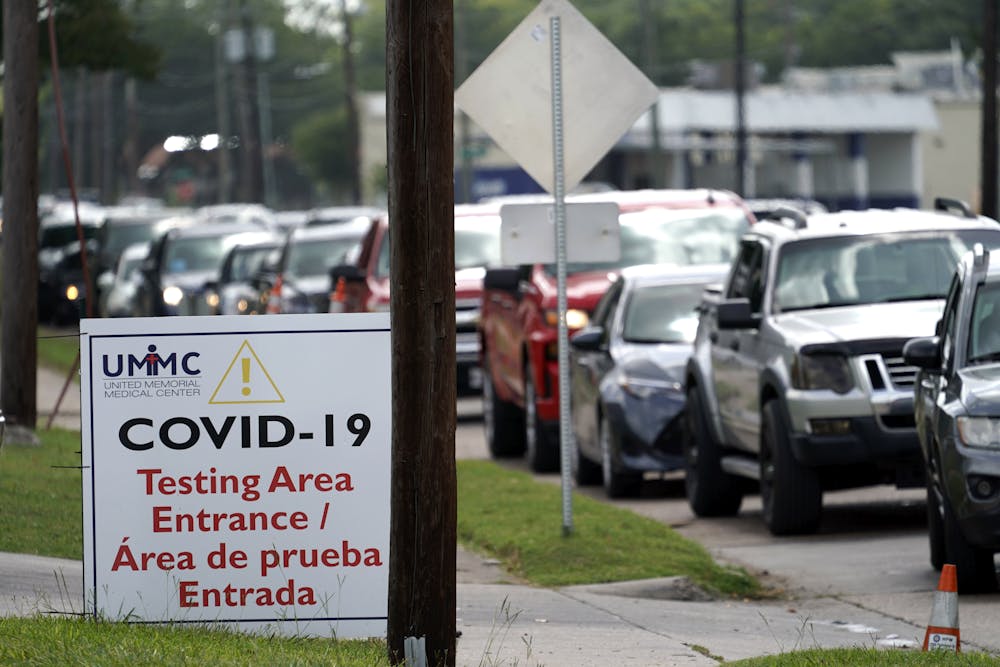
For many people in the U.S., getting tested for COVID-19 is a struggle. In Arizona, testing sites have seen lines of hundreds of cars stretching over a mile. In Texas and Florida, some people were waiting for five hours for free testing.

The inconvenience of these long waits alone discourages many people from getting tested. With the surge in cases, many public testing sites have been reaching maximum capacity within hours of opening, leaving many people unable to get tested for days. Those that do get tested often face a week-long wait to get their test results.

Every person who isn’t tested could be spreading COVID-19 unknowingly. These overstretched testing programs are a weak link in the U.S. pandemic response.

study public health policy to combat infectious disease epidemics. The key to overcoming this pandemic is to slow transmission of the virus by preventing contagious people from infecting others. A widespread quarantine would accomplish this, but is economically and socially burdensome. Testing offers a way to identify contagious people so they can be isolated to prevent the spread of the disease. This is especially important for COVID-19 because an estimated 40% or more of all people infected with SARS-CoV-2 have few or no symptoms so testing is the only way to identify them.

Some states are doing much better than others. But as a whole, the U.S. is falling far short of the amount of testing needed to control the pandemic. What are the challenges the U.S. is facing? And what is the way forward?

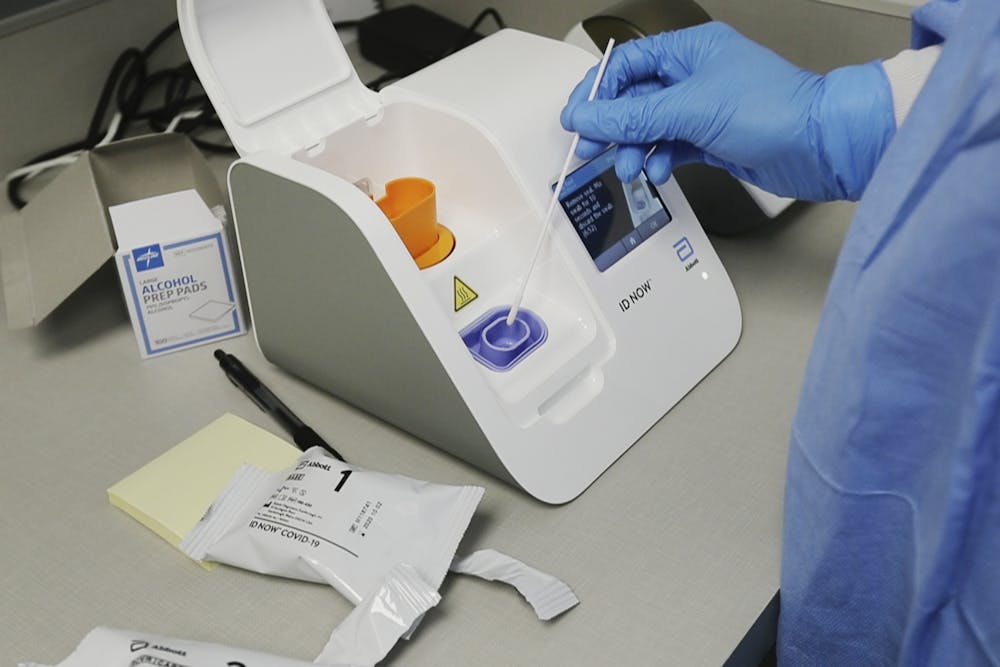
A lab technician using a swab to put a sample into a rapid test machine.
Currently, rapid tests that take about 15 minutes to process are a quick and easy way to diagnose COVID-19 infections, but there are concerns about accuracy. AP Photo/Carlos Osorio

Testing should be free, easy, fast and accurate

The ultimate goal of testing is for everyone, regardless of symptoms, to know at all times whether they are infected with the coronavirus. To achieve this level of testing, tests should be free, very easy to perform and provide accurate results quickly.

Ideally, free COVID-19 tests would be delivered to everyone directly. The tests would be simple to perform – like a saliva test – and would give a perfectly accurate result within minutes. Everyone could test themselves weekly or anytime they were going to be in close contact with other people.

In this ideal scenario, most, if not all, contagious people would be detected before they could spread the virus to others. And because of the rapid results, there would be no burden of quarantining between doing the test and getting the result.

Researchers are working on better-quality tests, but access is a problem of infrastructure, not science. Right now, nowhere in the U.S. comes close to meeting surging demand for testing.

A line of people waiting in cars in front of a sign for COVID-19 testing.
Long lines, slow turnaround times for results and shortages of testing capacity all make Texas one of the worst places to get a test in the U.S. AP Photo/David J. Phillip

One of the worst cases: Texas

The difficulty of getting a COVID-19 test varies by state, but currently, people in Texas face some of the biggest obstacles, which results in far fewer tests being done than is needed to control the pandemic.

First, Houston – which is experiencing a surge in cases – and many testing sites across the state recommend or offer testing only to people who have symptoms, were exposed to a COVID-19 case or are a member of a high-risk group.

Even people recommended for testing still face challenges. It is possible to request an appointment for a free COVID-19 test, but testing facilities can handle only so many patients a day and testing slots fill up quickly. Even if someone gets an appointment, they may face an hours-long wait at the testing site.

Finally, public health experts recommend that people who may have been exposed to COVID-19 should quarantine at home for 14 days or until they receive a negative test result. In Texas, patients are supposed to get results through an online portal in three to five days, but many labs have been taking seven to nine days to return results. These long delays mean people face a much higher burden of quarantining while waiting for results.

All of these challenges make it clear that Texas is simply not testing enough people to keep the spread of COVID-19 in check.

To gauge the success of COVID-19 testing programs, epidemiologists use a measure called test positivity. This is simply the percentage of tests that come back positive. The lower the test positivity, the better, because that means very few cases are going undetected. A high test-positivity rate is usually a sign that only the sickest people are getting tested and many cases are being missed.

The World Health Organization guidelines say that if more than 1 out of 20 COVID-19 tests comes back positive – a test positivity of more than 5% – this is an indication that a lot of cases are not diagnosed and the epidemic is not under control. Texas currently has a test-positivity of around 16%, which means that a lot of infected people are not getting tested and may be unknowingly spreading the disease.

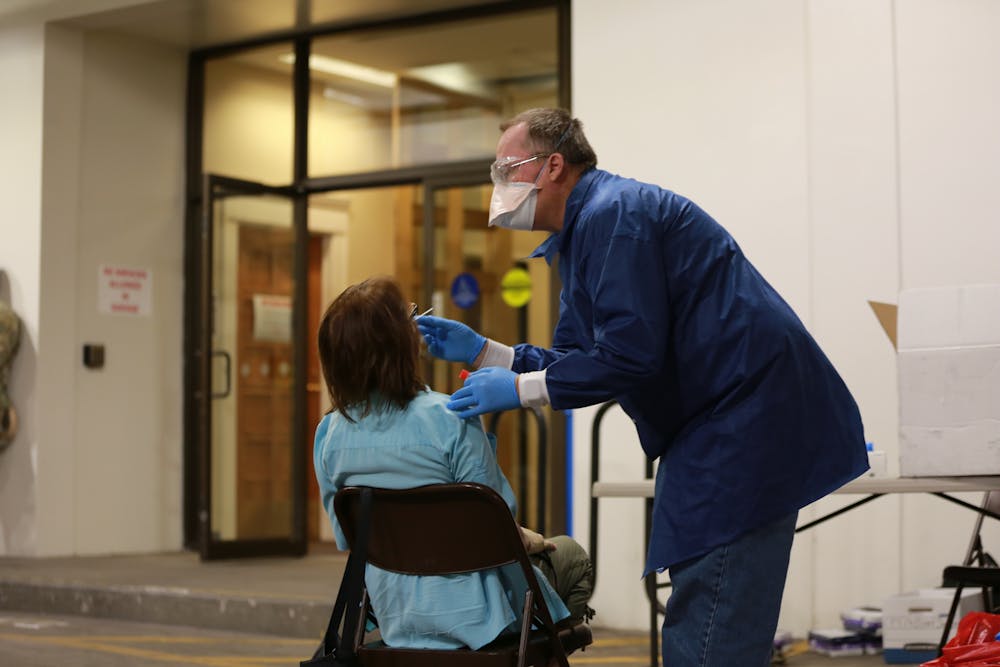
A doctor using a nasal swab to test a state senator of New Mexico.
In New Mexico, it is relatively easy to get a test, so more people are getting tested. AP Photo/Cedar Attanasio

One of the best cases: New Mexico

In stark contrast to Texas is New Mexico, which has one of the strongest testing programs in the U.S.

First, public health officials there encourage everyone to get tested for COVID-19 regardless of symptoms or exposure. The state has also prohibited health providers from charging patients for tests. People seeking a test have the option to walk in or to make an appointment ahead of time, whichever is more convenient.

All of this relatively good access to testing has resulted in one of the highest per capita testing rates in the country, at over 20,000 tests per 100,000 people, and a test-positivity rate of around 4%. New Mexico’s testing program is diagnosing a relatively high proportion of cases despite the state experiencing a recent surge.

[Expertise in your inbox. Sign up for The Conversation’s newsletter and get expert takes on today’s news, every day.]

New Mexico still has room for improvement. Long lines, wait times and limited capacity are becoming more common as cases surge, but the foundation of a strong testing program has helped the state cope with the increase in cases.

The big-picture problems

The pre-pandemic infectious disease testing capabilities in the U.S. are clearly unable to meet the current demand. A nationwide response is needed, and there are three things that Congress, the federal government and local governments can do to help ensure COVID-19 tests will be easy to get, fast and accurate.

First, Congress can provide funding to stimulate the testing supply chain, scale up existing testing programs and promote innovation in test development. Second, governments can improve the management and coordination of testing programs to more efficiently use existing resources. And third, innovative testing methods that reduce the need for lab capacity – like paper-strip tests and pooled testing – need be approved and implemented more quickly.

Every little improvement in testing capabilities means more COVID-19 cases can be caught before the virus is transmitted. And slowing the spread of the virus is the key to overcoming the pandemic.

* * * * *

The Conversation

Zoe McLaren, Associate Professor of Public Policy, University of Maryland, Baltimore County

This article is republished from The Conversation under a Creative Commons license. Read the original article.

Why Hydroxychloroquine and Chloroquine Don’t Block SARS-CoV-2 Infection of Human Lung Cells

By Katherine Seley-Radtke, professor, Chemistry and Biochemistry, UMBC

The big idea

A paper came out in Nature on July 22 that further underscores earlier studies that show that neither the malaria drug hydroxychloroquine nor chloroquine prevents SARS-CoV-2 – the virus that causes COVID-19 – from replicating in lung cells.

Most Americans probably remember that hydroxychloroquine became the focus of numerous clinical trials following the president’s statement that it could be a “game changer.” At the time, he appeared to base this statement on anecdotal stories, as well as a few early and very limited studies that hydroxychloroquine seemed to help patients with COVID-19 recover.

Many in the antiviral field, including myself, questioned the validity of both, and in fact, one of the papers was later disparaged by the scientific society and the editor of the journal that published it.

Since then, HQC has had a bumpy ride. It was initially approved by the FDA for emergency use. The FDA then quickly reversed its decision when numerous reports of deaths caused by heart arrhythmias emerged. That news brought many clinical trials to a halt. Regardless, some scientists continued to study it in hopes of finding a cure for this deadly virus.

How the work was done

The new study was carried out by scientists in Germany who tested HCQ on a collection of different cell types to figure out why this drug doesn’t prevent the virus from infecting humans.

Their findings clearly show that that HQC can block the coronavirus from infecting kidney cells from the African green monkey. But it does not inhibit the virus in human lung cells – the primary site of infection for the SARS-CoV-2 virus.

In order for the virus to enter a cell, it can do so by two mechanisms – one, when the SARS-CoV-2 spike protein attaches to the ACE2 receptor and inserts its genetic material into the cell. In the second mechanism, the virus is absorbed into some special compartments in cells called endosomes.

Depending on the cell type, some, like kidney cells, need an enzyme called cathepsin L for the virus to successfully infect them. In lung cells, however, an enzyme called TMPRSS2 (on the cell surface) is necessary. Cathepsin L requires an acidic environment to function and allow the virus to infect the cell, while TMPRSS2 does not.

In the green monkey kidney cells, both hydroxychloroquine and chloroquine decrease the acidity, which then disables the cathepsin L enzyme, blocking the virus from infecting the monkey cells. In human lung cells, which have very low levels of cathepsin L enzyme, the virus uses the enzyme TMPRSS2 to enter the cell. But because that enzyme is not controlled by acidity, neither HCQ and CQ can block the SARS-CoV-2 from infecting the lungs or stop the virus from replicating.

Why it matters

This matters for several reasons. One, much time and money has been spent studying a drug that many scientists said from the very beginning was not going to be effective in killing the virus.

The second reason is that the studies that have reported antiviral activity for hydroxychloroquine were not in epithelial lung cells. Thus, their results are not relevant to properly studying SARS-CoV-2 infections in humans.

What’s next?

As scientists proceed with investigating new drugs as well as trying to repurpose old ones, like hydroxychloroquine, it is critical that researchers take the time to think about their study design.

In short, those of us involved in antiviral drug development should all take a lesson from this study. It is important not only to focus our efforts on pursuing drugs that will directly shut down viral replication, but also to study the virus in the primary site of infection.

*****

Katherine Seley-Radtke, Professor of Chemistry and Biochemistry and President-Elect of the International Society for Antiviral Research, University of Maryland, Baltimore County

This article is republished from The Conversation under a Creative Commons license. Read the original article.

[Deep knowledge, daily. Sign up for The Conversation’s newsletter.]

Header image: Chloroquine is an antimalarial drug originally developed in 1934; it doesn’t block coronavirus infection in humans. Brasil2 / Getty Images

Electoral College Benefits Whiter States, Study Shows

By William Blake, assistant professor, Political Science, UMBC

States can force members of the Electoral College to vote for the winner of the popular vote in their state’s presidential primary, the Supreme Court recently ruled. The July 6 decision removed one of the two reasons why the framers of the U.S. Constitution created this election system: to empower political elites who may know more about the candidates than ordinary voters. Now, the founders’ only remaining justification for the Electoral College is structural racism.

Though the Electoral College has changed since it was first used to elect George Washington to the presidency in 1789, my research shows that the system continues to give more power to states whose populations are whiter and more racially resentful.

Electoral College myths and realities

The Founding Fathers created the Electoral College in large part because they feared voters would not know all the candidates who would be running for president. In that era, most people never left their home states, so they were not likely to know candidates from other states.

The founders did not foresee the development of political parties and campaigns, which help teach voters about their options. Instead, Alexander Hamilton argued that those serving in the Electoral College would be “most likely to possess the information and discernment” needed to choose a president.

With its recent decision, the Supreme Court has abandoned the possibility that electors might vote for people other than the candidate who wins the popular vote in their state.

The other reason for the Electoral College was to bridge a major divide among the states: slavery. As James Madison said at the Constitutional Convention: “[T]he great division of interests in the U. States did not lie between the large & small States; it lay between the Northern & Southern” because of “their having or not having slaves.”

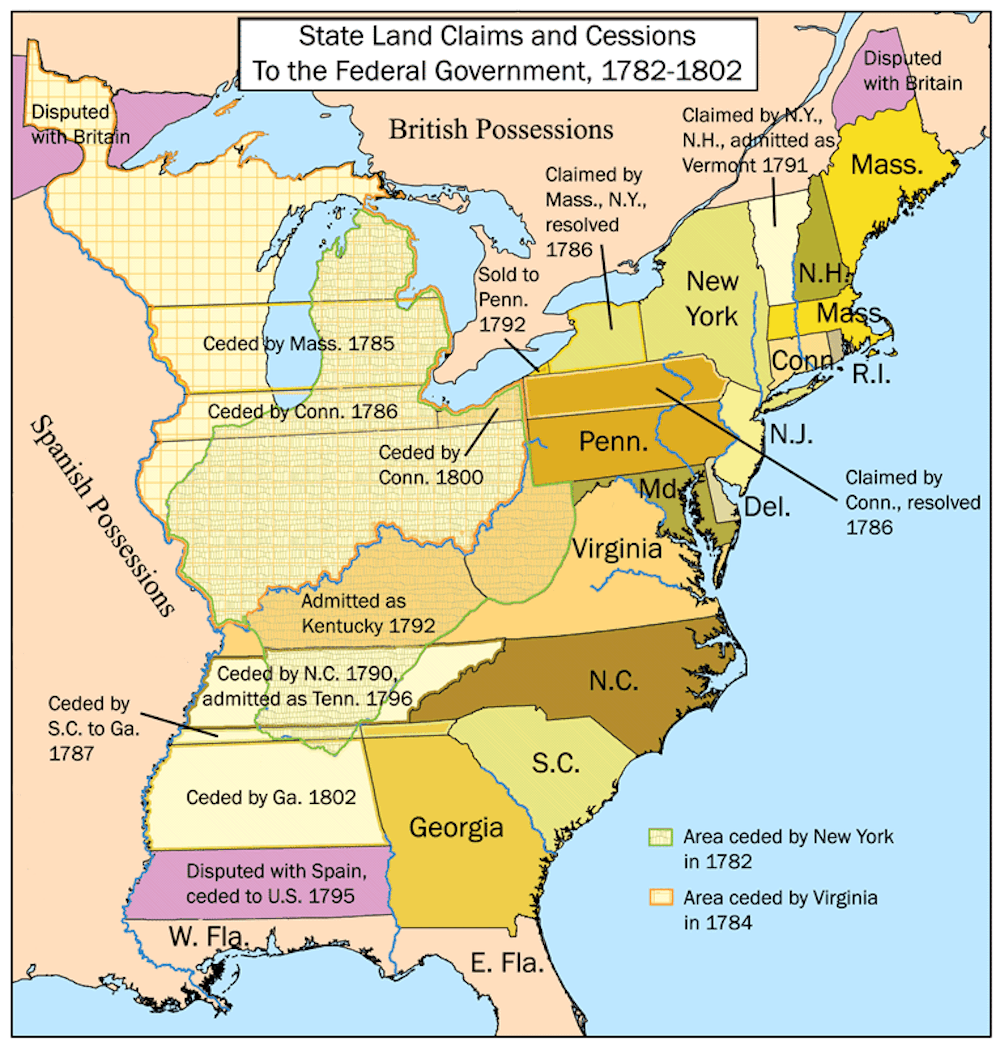
The original 13 U.S. colonies and their territorial changes from 1782 to 1802.
The 13 colonies had competing land claims in the early years of the United States. Kmusser, CC BY

Race in early America

By the time the founders discussed how to pick a president, they had already made the so-called “three-fifths compromise,” counting enslaved people as three-fifths of a person in the census and allotting seats in the House of Representatives accordingly. That gave Southern slave states an advantage over the Northern states in the House.

Slave states – with many people and with fewer – insisted on the Electoral College to preserve this advantage to give them a similar advantage in presidential selection. Ultimately, delegates to the Constitutional Convention decided that each state would receive votes in the Electoral College equal to their representation in both houses of Congress.

As a result, after the 1790 census, Virginia got 21 electoral votes and Pennsylvania got 15, though both were home to just over 110,000 free white male adults, who were then the only Americans allowed to vote. That’s because Virginia had 292,627 enslaved residents, to Pennsylvania’s 3,737, the country’s very first census shows.

Similarly, South Carolina and New Hampshire had nearly identical numbers of free white men – right around 36,000. But South Carolina got two more electoral votes, for a total of eight, because more than 100,000 enslaved people lived there, compared to New Hampshire’s 158 enslaved people.

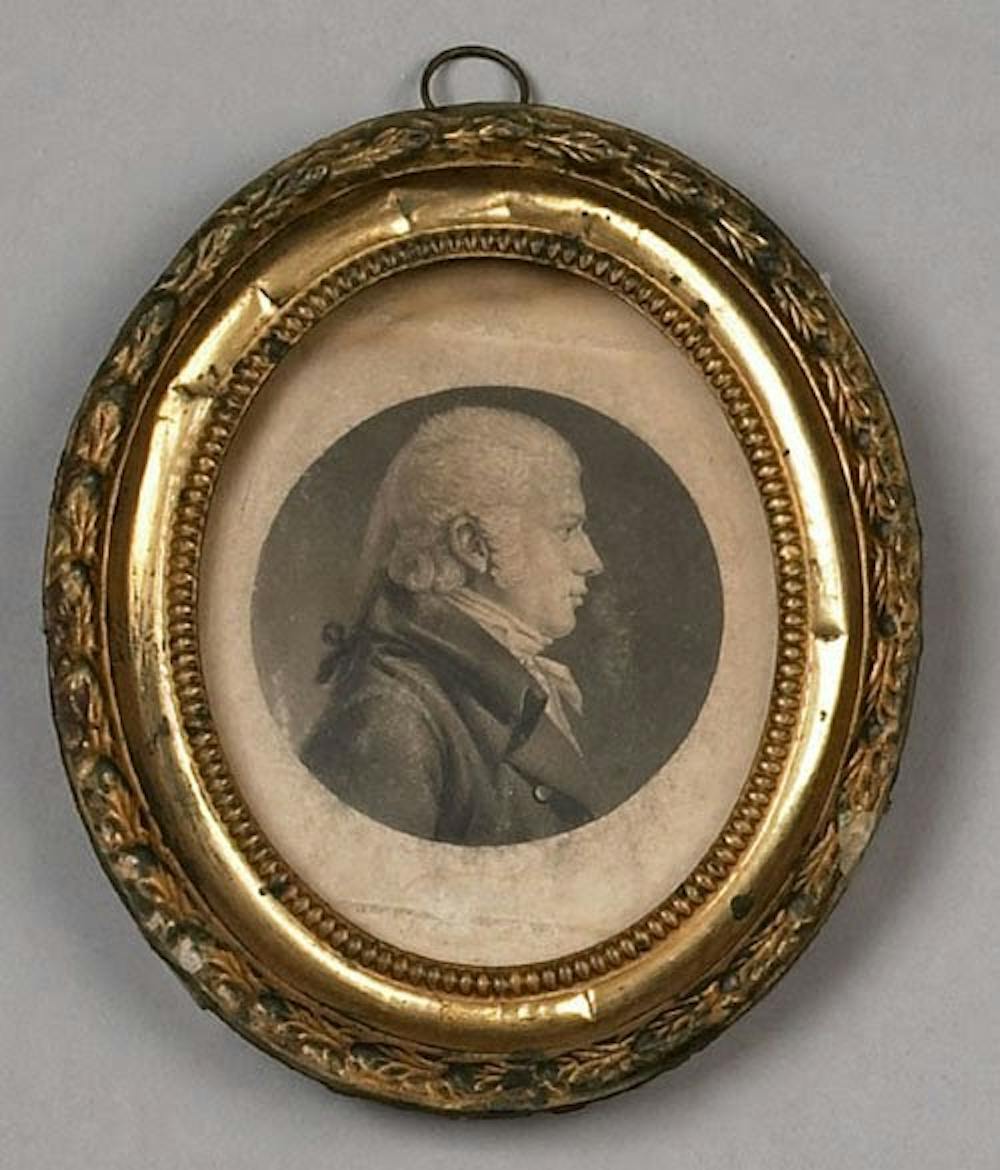
Congressman Samuel Thatcher of Massachusetts.
U.S. Rep. Samuel Thatcher, in 1806. Fevret de Saint Memin/Wikimedia Commons

In 1803, the 1800 census was about to shift the balance even more toward slave states. Representative Samuel Thatcher of Massachusetts complained that counting enslaved people added significant numbers to the slave states’ delegations.

The slavery bonus ensured that the nation’s first 18 presidential elections delivered a slave-owner as either president, vice president or both. Only in 1860, with the victory of Abraham Lincoln from Illinois and his running mate, Hannibal Hamlin of Maine, did a team of Northern politicians manage to beat the Electoral College’s skew toward white Southerners.

After the Civil War

Following the Civil War, the 14th Amendment removed the three-fifths clause, and the 15th Amendment should have protected African Americans’ legal right to vote. But that didn’t fix the Electoral College’s anti-Black bias. It actually made the problem worse, because Southern state governments were happy to get the representation from their large numbers of Black citizens – while keeping them from voting through discriminatory practices like literacy tests and poll taxes.

Judicial decisions at the time upheld Jim Crow restrictions on the right to vote, but those practices are illegal today.

This system benefited the Democratic Party, which was dominant in the South. Republicans tried to counter that power by strategically admitting new states from the Great Plains and Mountain West. In part because of racially disparate postwar settlement policies, these states – such as Nebraska, the Dakotas and Wyoming – were unusually thinly populated, heavily white and reliably Republican.

A woman looks at papers.
Staff of the House of Representatives review Illinois’ Electoral College vote report in January 2017. Samuel Corum/Anadolu Agency/Getty Images

Race and the Electoral College now

Those statehood decisions made a century and a half ago still reverberate today. States with smaller populations have more electoral votes per resident because, no matter how few people they might have, they still get two senators and one House member.

I recently performed a quantitative analysis of race and the allocation of electoral votes. The data indicate that whiter states consistently wield more electoral power partly because of their population.

On average, as a state’s racial composition gets whiter, its electoral power increases. For instance, in 2016, North Dakota was the seventh whitest state and 47th on the list in terms of adult population. It had more than 5.2 electoral votes per million adult residents, when an average state had just 2.2 electoral votes per million adult residents. According to my analysis, a state that is 10% whiter than the average state tends to have one extra electoral vote per million adult residents than the average state.

I also found that states whose people exhibit more intense anti-Black attitudes, based on their answers to a series of survey questions, tend to have more electoral votes per person.

Statistically speaking, if two states’ population numbers indicate each would have 10 electoral votes, but one had substantially more racial resentment, the more intolerant state would likely have 11.

This is not an ironclad rule, and the inherent bias isn’t always decisive. For instance, Donald Trump owes his presidency to winning Wisconsin, a state that is whiter than the average state, but that has slightly less electoral votes per capita than average.

In addition, the centuries-old racial bias in the Electoral College could disappear with future population changes. Perhaps other states with relatively few people will follow the pattern of Nevada, whose population has recently become larger and more racially diverse. But the Electoral College remains a system born from white supremacy that will likely continue to operate in a racially discriminatory fashion.

*****

William Blake, Assistant Professor of Political Science, University of Maryland, Baltimore County

This article is republished from The Conversation under a Creative Commons license. Read the original article.

[Get the best of The Conversation, every weekend. Sign up for our weekly newsletter.]

Header image: A congressional staffer opens the boxes containing the Electoral College ballots in January 2017. Tom Williams/CQ Roll Call

Alumni Business Q&A: Precise Software Solutions

UMBC alumni businesses are doing what they can to stay strong and build community during these troubled times. UMBC Magazine will be publishing occasional interviews with alumni business owners to show their resilience in the face of this global pandemic.

Find more alumni businesses at the UMBC Alumni Business Directory.

* * * * * *

Founded by alumnus Zhensen Huang, M.S. ’00, Ph.D. ’04, information systems, Precise Software Solutions “helps their customers capitalize on the efficiencies offered by technological advancements and ensures the integrity of their IT systems and programs so they can perform their public mission more effectively.” Today, Huang reflects on the challenges of the last few months, and why he continues to be filled with gratitude and hope.

Can you tell us a little bit about what you do? What’s your favorite part of the work?

My background is in IT/technology, and this is my first time serving as the CEO of a company. So, the experience of starting up and leading a new company has involved a big learning curve for me. But I love learning and finding solutions to complex problems, and there have been endless opportunities for me to learn and grow along with the company. As for my favorite part, I love working with people. I have been blessed with an amazing team of extremely smart, dedicated, and innovative people. I also love working with our growing customer base, which has included developing productive, trusting relationships, serving as a problem solver in helping them achieve their mission, and driving organic growth for the company with the help of the successes and accolades of our customers.

Image courtesy of Huang.

How do you connect your work back to your experience at UMBC? 

I am eternally grateful for the excellent education, support, and mentorship I received as a UMBC student, and I attribute much of my success in my career and this Precise business venture to the solid launch I achieved with the help of the school. I went back to teach some courses at UMBC, and I remain in regular contact with the school through the Development Office. I continue to look for ways to reinforce the connection between myself, Precise, and UMBC, ensuring that the mutual benefits we’ve enjoyed are nurtured and expanded.

Precise also has several alumni on staff, including Kaustav Lahiri, M.S. ’14, computer science; Fan Ping, M.S. ’15, computer science; and Edison Trickett ’13, business technology administration.

In these tough times, how do you keep going? What inspires you?

It’s true, we’ve been experiencing some very tough times. The pandemic has been a real test to our resilience, as individuals, as a community, and as a company. It has been difficult to witness the terrible suffering that the virus has caused, not to mention the more recent unrest following the killing of George Floyd. In the midst of these crises, my overwhelming feeling has been one of gratitude—for the health and safety of my family and the ability of Precise to continue our work. These feelings of gratitude have inspired in me a great sense of responsibility. I am constantly looking for ways to give back, to offer support and assistance to those who have not been as fortunate as I have been.

Are there specific ways you’re giving back to the community right now?

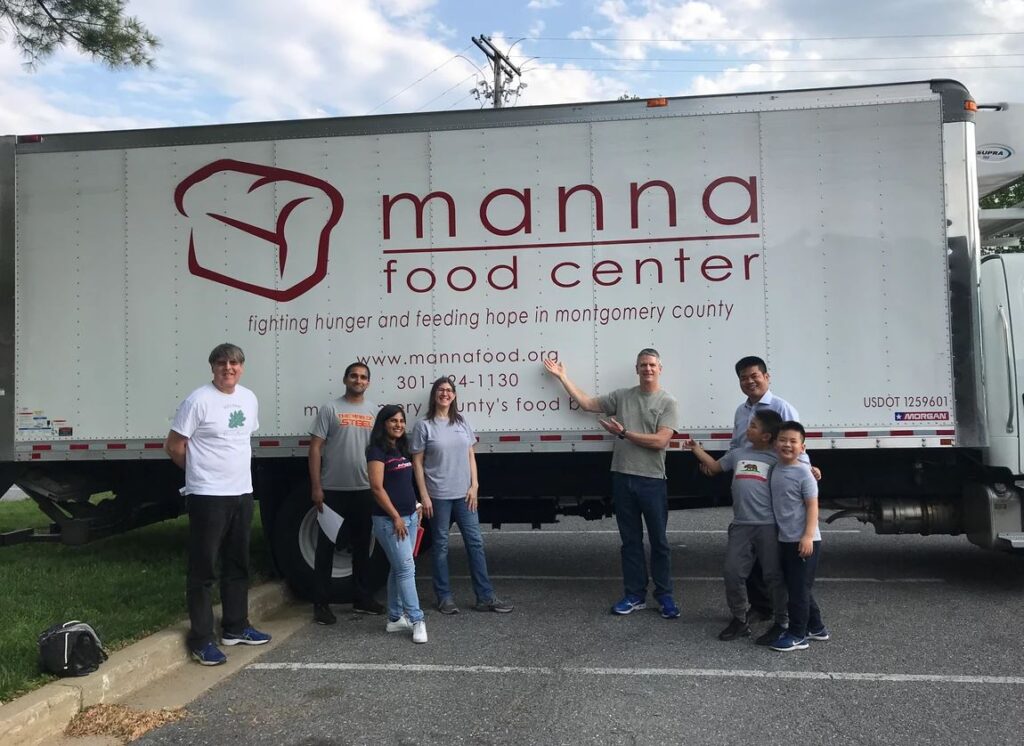
In general, our company has actively engaged in community service events. We regularly organize company service events such as coordinating groups of Precise employee volunteers to support the work of the Manna Food Center, an wonderful organization that collects, purchases, and distributes food to the needy in our community. More recently, at the outset of the coronavirus epidemic, Precise organized a donation challenge in which we raised over $22,000 dollars for Manna. We also purchase company gift cards from some of our local food vendors as a way to infuse some cash flow into their businesses which were suffering huge losses due to the lockdown.

Image courtesy of Precise website.

As part of our response to the protests following the killing of George Floyd, Precise organized internal discussions and listening sessions to ensure we are identifying and addressing any racial inequities that may exist within the company. In addition to donating $20,000 to the ACLU in support of social justice in our community and across the country, we also gave to UMBC’s Stay Black and Gold Emergency Fund. Supporting UMBC students during this time seemed to be a logical step, to help these students stay on track for their academic careers.

What advice would you give to others looking to start their own business?

I recommend following one’s passion, as that is the surest way to develop and sustain inspiration and resilience in what is a very difficult endeavor. Seek out mentors who have blazed the trail before you. I am constantly seeking out guides to help me navigate this business terrain. Again, this is my first experience building a business and being a CEO, so I am painfully aware of how much I still don’t know and need to learn. I have had many generous people who have more experience in this domain who have been willing to offer useful advice and guidance as I’ve worked to grow the company.

Another piece of advice I would offer is to practice humility and always work to keep your ego in check. You can’t learn and grow—and can’t succeed in business or any professional endeavor—if you don’t actively seek out your blind spots.

*****

Header image: Zhensen Huang and Julia Zhuhui Chen, M.S. ’02, information systems, at an SBA (Small Business Administration) event in 2019. Photo courtesy of Chen.

Sending International Students Home Would Sap US Influence and Hurt the Economy

By David L. Di Maria, Associate Vice Provost for International Education, UMBC

U.S. Immigration and Customs Enforcement, or ICE, made a decision on July 6 regarding international students in the U.S. that will affect far more than just the roughly 870,000 international students themselves.

Based on what I know about the power and influence of higher education in the U.S., this decision could increase the tuition American students pay, cost thousands of jobs throughout the nation and erode America’s stature in the world.

Under this new rule, international students may stay in the country only if they attend a college or university offering in-person classes this fall. Otherwise, they won’t be able to get visas, enter the country or stay here if they plan to attend one of the many schools that are teaching students entirely online.

In effect, thousands of students from other countries who attend schools that do not plan any in-person instruction this fall may have to immediately transfer to another school or leave the country. Otherwise, they could face deportation.

Against the backdrop of what top U.S. public health officials describe as an out-of-control virus, this new immigration rule puts U.S. colleges in a jam. Schools must choose between bringing students together on campus to comply with the immigration restrictions, or adhere to public health precautions related to physical distancing.

It may be hard to do both if the online option is off the table when it comes to international students. Which means U.S. colleges and universities could take a significant financial hit in the form of lost tuition revenue beyond what they were anticipating as a result of COVID-19.

Colleges must scramble

As of July 6, more than 1,000 colleges and universities have already released plans for fall instruction. Of those, 60% plan currently plan to offer in-person classes, 24% plan to offer hybrid and 9% plan to offer courses online. The remaining colleges are still undecided.

[Deep knowledge, daily. Sign up for The Conversation’s newsletter.]

Now, some institutions will have to scramble to develop alternatives that can enable international students to remain enrolled without breaking the new rule. Schools must report how they plan to proceed by Aug. 1, based on the ICE announcement.

Far-reaching impact

The impact of this rule is not just limited to the hundreds of thousands of international students enrolled at U.S. colleges, who represent 4.39% of the 20 million people who currently attend U.S. colleges and universities. It also affects their institutions, their faculty and the local communities as well.

Consider that colleges and universities, which are the largest employers in 1 in 5 states, are already reeling from heavy financial losses associated with the pandemic.

While many schools have had to slash budgets due to refunds issued to students in the spring of 2020, disruptions to research, canceled athletic events and cuts to state funding, others are still waiting to see whether or not they will meet their enrollment targets for fall.

Still, more than 200 colleges and universities have already announced layoffs, furloughs or contract nonrenewals.

At a time when the U.S. is trying to overcome record unemployment and manage its biggest public health crisis in a century, international students seem to be caught in the middle of a partisan divide on reopening the country.

The new guidelines could place many colleges and universities in an impossible position: Increase the number of in-person classes and risk that COVID-19 will spread further.

What they bring to the table

Given how much international students contribute to the economy, you might assume ICE would find a way to keep them in the U.S.

The students affected by the new rule are the same people who help support about 460,000 American jobs.

The higher tuition and fees they pay helps keep tuition lower for American students. But their contributions transcend economics.

Their academic talents help advance scientific discoveries, which are more critical than ever given the nation’s ongoing battle against COVID-19. The fallout will be severe should these students choose to study in other countries instead. Australia and New Zealand, for example, have recently made their policies more welcoming.

Giving ground to other nations

Booting international students would surely reduce America’s influence in the world as well.

According to the State Department, the alumni of educational and cultural exchange programs include more than 75 Nobel Laureates and nearly 450 current and former heads of state and government. Having established personal ties, international students often return home as unofficial ambassadors for the U.S.

International alumni are more likely to look to the U.S. for ideas and trade agreements and to otherwise exert influence abroad that benefits U.S. interests.

While the share of international students studying in the U.S. has steadily declinedfrom 28% of the world’s 2.1 million international students in 2001 to 21% of the world’s 5.3 million international students in 2019 – other countries have made significant gains in attracting global talent due to national strategies.

Most notably, China now hosts nearly 1 in 10 students who study abroad globally, including more students from Africa than the U.K. and U.S. combined. One reason for China’s rise as a study destination is its leaders’ realization that it is lagging behind the U.S. in terms of soft power with only a few world leaders having graduated from Chinese institutions.

In my view, ICE’s new guidance is only the latest step in a steady retreat from global engagement that clears the path for other nations to attract more of the students that might otherwise study in the United States.

*****

David L. Di Maria, Associate Vice Provost for International Education, University of Maryland, Baltimore County

This article is republished from The Conversation under a Creative Commons license. Read the original article.

Header image: Boston Globe/Getty Images

Medicine Without Borders

Coco Tang’s medical missions around the world would sound like a summer action movie if they weren’t a matter of life and death.

Just behind the front lines of the battle of Mosul in Iraq, Tang ’14, visual arts, history, and political science, dressed wounds of civilians and soldiers during the day and slept under windows rattling from shelling at night.

Dropped by Global Outreach Doctors into a camp surrounded by violent uprisings in the Democratic Republic of Congo, Tang—a specially trained emergency medical technician—helped assess the victims of sexual violence perpetrated during the country’s 40-year war, then got stranded with one of her crew, a few locals, and nearly nonexistent cell service. After four days, a plane finally showed up.

Tang helped women, usually arriving by mule, deliver their babies at 10,000 feet in Ethiopia. She treated Rohingya Muslim refugees in a Bangladeshi camp. Ebola in Sierra Leone, earthquake in Nepal, typhoon in the Philippines, Tang was there for them all. She has worked or volunteered as a contract paramedic with Global Rescue, Medics Without Borders, All Hands Volunteer, and other nongovernmental organizations. After a few months as a camp medic in Afghanistan, she provided medical care at a San Diego-based coronavirus quarantine ward, then started 12-hour shifts in March supervising nurses on a COVID-19 surge floor in New York City.  

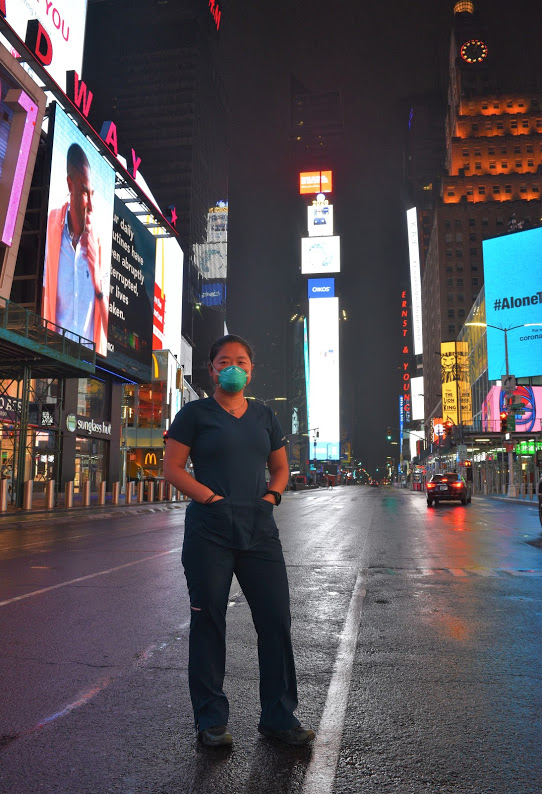
Coco Tang in Times Square during her time working on a COVID-19 unit.

If there’s a humanitarian emergency around the world, Tang heads into the eye of the chaos.   

“I’m a bit of an adrenaline junkie,” Tang says. “I wish I could say it was all altruistic reasons, but I like being in the thick of things. I like knowing I was part of a historical moment, and that I had something to contribute. I feel strongly that if you have the ability to help, the responsibility should be on you to do what you can.”

A Life in Extreme Medicine

A management consultant by profession, Tang takes leaves of absence to volunteer around the world on medical missions. She speaks Mandarin, Arabic, Japanese, German, and Russian. With an MBA from George Mason and a master’s degree in international security from Georgetown University, Tang has nearly finished a master’s in extreme medicine from Exeter University. And though “extreme medicine” may sound like a metaphor for her life, Tang explains that the degree focuses on medicine in extreme environments, such as deserts, jungles, polar ice, and the ocean. Eventually, she wants to go to medical school.

Tang started at UMBC as a visual arts major, but her time spent studying abroad led to learning more languages and history. She found her niche in the global studies program. When looking for a job during college, she started training as an emergency medical technician simply because it paid more than most undergraduate gigs, Tang says. 

On a Boren scholarship in Jordan, that training came in handy when she witnessed the Syrian refugee crisis. She volunteered as a medic, transporting wounded Syrian refugees from border crossings to field hospitals. Originally slated to study water rights, Tang changed her topic, and ended up filming a documentary about Syrian refugees fleeing ISIS and the Bashir Assad regime for her 2013 URCAD project. 

Her experience in the refugee camp, which melded her travel bug, her yen for danger, and her urge to help, cemented her future as a humanitarian medical worker. She returned to Jordan for a year on a Fulbright scholarship in 2014. 

Brigid Starkey, director of UMBC’s global studies program and Tang’s undergraduate advisor, recommended her for those scholarships. She remembers reading Tang’s first paper.

“I immediately recognized that her writing and her level of analysis was incredible,” Starkey says. “She’s that rare student who can move across the curriculum. She might be a kind of genius.”

Tang’s courage and hunger to travel, Starkey says, leads her to dangerous spots. “She’s uniquely talented and very, very dedicated to going to places that are the most grim in the world and trying to help,” Starkey says. “She does have a deep desire to go where no one has gone, not only geographically. I think that’s why she gravitates toward medical work. She has nerves of steel, an unflappability, and a curiosity.”

Eyes and Ears Around the World

In 2018, Andrew Lustig, founder and director of Global Outreach Doctors, a humanitarian medical organization, chose Tang as one of their 330 volunteers worldwide and she’s been working with the organization ever since. 

“She quickly became a great asset,” Lustig says. “She’s worked in areas that require an understanding of security, a strong understanding of business and guiding people, she has humanitarian medicine experience, she’s a great networker, a logical thinker, she’s exceptionally organized, which is required in places where there’s mostly chaos. She is basically our eyes and ears for the projects.”

Lustig described Tang’s mission to Congo. The medical crew landed in Rwanda, and had to go by air over the border, deep into remote Congo, where there was danger of violence, kidnapping, rape, illness. Tang, he says, knew the team needed to release tension and bond. She organized a trip to see the gorillas in Rwanda, Lustig says, which was perfect for the task.

“She has an ability to find something social, with laughter and peace in between all the tension, because otherwise you’ll burn out your team,” Lustig says.

Coming to Peace with Fear 

When Tang needs a break, she turns to playing her violin or Chinese zither, painting or drawing, or extreme sports—mixed martial arts, skydiving, SCUBA.

“If you’re standing on the edge of an airplane and have to make a decision to throw yourself out, there’s something about the Zen of it, coming to peace with that kind of fear, and overcoming it, it’s a good mental exercise for me,” Tang says.

Her dream job?

“Space doctor.” She’s not kidding. “If there ever is an opportunity for doctors to participate in space missions, or if there ever was a colonization mission where you don’t come back? I’d do that.”

Sounds like another action thriller in the works.

—Susan Thornton Hobby

*****

All photos courtesy of Coco Tang.

AI Could Help Solve the Privacy Problems It Has Created

By Zhiyuan Chen, associate professor, Information Systems, UMBC and Aryya Gangopadhyay, professor, Information Systems, UMBC

The stunning successes of artificial intelligence would not have happened without the availability of massive amounts of data, whether its smart speakers in the home or personalized book recommendations. And the spread of AI into new areas of the economy, such as AI-driven marketing and self driving vehicles, has been driving the collection of ever more data. These large databases are amassing a wide variety of information, some of it sensitive and personally identifiable. All that data in one place makes such databases tempting targets, ratcheting up the risk of privacy breaches.

The general public is largely wary of AI’s data-hungry ways. According to a survey by Brookings, 49% of people think AI will reduce privacy. Only 12% think it will have no effect, and a mere 5% think it may make it better.

As cybersecurity and privacy researchers, we believe that the relationship between AI and data privacy is more nuanced. The spread of AI raises a number of privacy concerns, most of which people may not even be aware. But in a twist, AI can also help mitigate many of these privacy problems.

Revealing models

Privacy risks from AI stem not just from the mass collection of personal data, but from the deep neural network models that power most of today’s artificial intelligence. Data isn’t vulnerable just from database breaches, but from “leaks” in the models that reveal the data on which they were trained.

Deep neural networks – which are a collection of algorithms designed to spot patterns in data – consist of many layers. In those layers are a large number of nodes called neurons, and neurons from adjacent layers are interconnected. Each node, as well as the links between them, encode certain bits of information. These bits of information are created when a special process scans large amounts of data to train the model.

For example, a facial recognition algorithm may be trained on a series of selfies so it can more accurately predict a person’s gender. Such models are very accurate, but they also may store too much information – actually remembering certain faces from the training data. In fact, that’s exactly what researchers at Cornell University discovered. Attackers could identify people in training data by probing the deep neural networks that classified the gender of facial images.

They also found that even if the original neural network model is not available to attackers, attackers may still be able to tell whether a person is in the training data. They do this by using a set of models that are trained on data similar, but not identical, to the training data. So if a man with a beard was present in the original training data, then a model trained on photos of different bearded men may be able to reveal his identity.

AI to the rescue?

On the other hand, AI can be used to mitigate many privacy problems. According to Verizon’s 2019 Data Breach Investigations Report, about 52% of data breaches involve hacking. Most existing techniques to detect cyberattacks rely on patterns. By studying previous attacks, and identifying how the attacker’s behavior deviates from the norm, these techniques can flag suspicious activity. It’s the sort of thing at which AI excels: studying existing information to recognize similar patterns in new data.

Still, AI is no panacea. Attackers can often modify their behavior to evade detection. Take the following two examples. For one, suppose anti-malware software uses AI techniques to detect a certain malicious program by scanning for a certain sequence of software code. In that case, an attacker can simply shuffle the order the code. In another example, the anti-malware software might first run the suspicious program in a safe environment, called a sandbox, where it can look for any malicious behavior. Here, an attacker can instruct the malware to detect if it’s being run in a sandbox. If it is, it can behave normally until it’s released from the sandbox – like a possum playing dead until the threat has passed.

Making AI more privacy friendly

A recent branch of AI research called adversarial learning seeks to improve AI technologies so they’re less susceptible to such evasion attacks. For example, we have done some initial research on how to make it harder for malware, which could be used to violate a person’s privacy, to evade detection. One method we came up with was to add uncertainty to the AI models so the attackers cannot accurately predict what the model will do. Will it scan for a certain data sequence? Or will it run the sandbox? Ideally, a malicious piece of software won’t know and will unwittingly expose its motives.

Another way we can use AI to improve privacy is by probing the vulnerabilities of deep neural networks. No algorithm is perfect, and these models are vulnerable because they are often very sensitive to small changes in the data they are reading. For example, researchers have shown that a Post-it note added to a stop sign can trick an AI model into thinking it is seeing a speed limit sign instead. Subtle alterations like that take advantage of the way models are trained to reduce error. Those error-reduction techniques open a vulnerability that allows attackers to find the smallest changes that will fool the model.

These vulnerabilities can be used to improve privacy by adding noise to personal data. For example, researchers from Max Planck Institute for Informatics in Germany have designed clever ways to alter Flickr images to foil facial recognition software. The alterations are incredibly subtle, so much so that they’re undetectable by the human eye.

The third way that AI can help mitigate privacy issues is by preserving data privacy when the models are being built. One promising development is called federated learning, which Google uses in its Gboard smart keyboard to predict which word to type next. Federated learning builds a final deep neural network from data stored on many different devices, such as cellphones, rather than one central data repository. The key benefit of federated learning is that the original data never leaves the local devices. Thus privacy is protected to some degree. It’s not a perfect solution, though, because while the local devices complete some of the computations, they do not finish them. The intermediate results could reveal some data about the device and its user.

Federated learning offers a glimpse of a future where AI is more respectful of privacy. We are hopeful that continued research into AI will find more ways it can be part of the solution rather than a source of problems.

*****

Header image from The Conversation.

[You’re smart and curious about the world. So are The Conversation’s authors and editors. You can read us daily by subscribing to our newsletter.]

Zhiyuan Chen, Associate Professor of Information Systems, University of Maryland, Baltimore County and Aryya Gangopadhyay, Professor, Information Systems, University of Maryland, Baltimore County

This article is republished from The Conversation under a Creative Commons license. Read the original article.

Change

A message from President Freeman Hrabowski and Provost Philip Rous

Many faculty, staff, students, and alumni have shared deep and urgent concerns in recent weeks about structural racism, calling for change in America and within our UMBC community. We hear your concerns, and we share your sense of urgency—and we have hope, because we know that the UMBC community is committed to effecting change. 

Looking in the mirror as a campus

UMBC has not always looked as it does today. When faced in the past with high drop-out rates among Black students, too few Black students in STEM fields, inadequate recruitment and retention of faculty and staff from underrepresented groups, and urgent concerns about sexual assault and hate speech, our campus has learned to look in the mirror, name the issues, listen to diverse voices, and work together to address the deeply rooted structural barriers to our becoming a more inclusive community. 

We are committed to addressing issues involving the community as a whole, as well as issues in specific departments and units on campus through continued listening and appropriate actions. We will continue to communicate with our campus community on these very important issues. 

At this critical time, we must be clear that our work is far from complete, while drawing strength from our successes:

  • There is no overall academic achievement gap at UMBC, and we must continue to increase the retention and graduation rates for students of all backgrounds.
  • UMBC has a national reputation for producing Black leaders in fields ranging from public service and the arts to STEM and healthcare, and yet we must do an even better job of supporting our students and creating an inclusive classroom and campus experience as they prepare to serve and lead in the larger society.
  • Increasing the proportion of underrepresented faculty at UMBC is a strategic priority of the University. This work has been supported by numerous initiatives, and yet we recognize that we have deeper institutional work to do if we are to succeed in recruiting, retaining, and promoting meaningful numbers of Black faculty and others from diverse backgrounds.
  • UMBC offers a wealth of courses and programs that explore structural racism, and yet we must ensure that the academic and co-curricular experiences of all students include meaningful engagement with issues surrounding diversity, including race, national origin, gender, religion, ability, gender identity, gender expression, sexual orientation, pregnancy, veterans status, and marital/family status. Our strategic plan, recently developed by faculty, staff, and students, recognizes this as a key priority, and we will begin planning for a major revision of our General Education Program in the coming months. 
  • This work has not just begun. Over the past year, we have been working on several major organizational and personnel decisions, and our proactive approach has led to the promotion and hiring of several additional Black faculty and staff in senior positions. In addition, we created a new Office of Equity and Inclusion that is working with students, faculty, and staff on critical civil rights issues. And yet we know that success is never final. We have much work to do. 

Change requires courage, because it requires us to see things differently from the way they are at present. It requires us to recognize our failures as well as our successes. Most of all, it requires us to challenge ourselves to be better as individuals and as a community. The work ahead calls for awareness of self and others, honesty, humility, and the skill to both push and support one another. The work is hard. It is vital. And we believe there is no better place to advance the change we want to see than UMBC.

It is particularly important to recognize our Black faculty and other campus experts who are nationally recognized for their research addressing inequality. Their work speaks truth to power, and they inspire all of us.

We invite you to join us on Thursday, June 18, 4 – 5:30 p.m. for The Many Faces of Structural Racism: A Campus Conversation to learn more from some of these experts as we continue to consider how to address structural racism, both in America and on our campus. Presenters include:

  • Dr. Kimberly Moffitt, director and professor, Language, Literacy, and Culture, and affiliate professor, Africana Studies
  • Dr. Keisha Allen, assistant professor, Education
  • Dr. Shawn Bediako, professor, Psychology
  • Dr. Tyson King-Meadows, professor, Political Science, American Council on Education (ACE) fellow
  • Ariana Arnold, Esq., Director, Office of Equity and Inclusion
  • Dr. Jasmine Lee, Director of Inclusive Excellence, Student Affairs
  • Dr. David Hoffman, Director, Center for Democracy and Civic Life

We know that a variety of departments and divisions have sponsored and are planning events to support our community during this time. We will be compiling and sharing these through the Office of Equity and Inclusion’s website. Please contact oei@umbc.edu if you have an event or resource to share.

A Career of Putting Others First—Q&A with Nicki Fiocco ’11

If volunteer coordination is “all about finding the right person to do the right job,” as Nicki Fiocco ’11, geography and environmental systems, explains, then the Hogan Administration found the exact right person to direct the Governor’s Office of Service and Volunteerism. Fiocco—who started in that role in December 2019—shares how her UMBC grit laid the foundation for her career in public service and how Marylanders can assist one another during, and after, the COVID-19 pandemic.

UMBC Magazine: You’ve worked in volunteer coordination roles since you’ve graduated. How did you get started with that career?

Nicki Fiocco: Volunteer coordination is all about finding the right person to do the right job. You could say I started by coordinating parent volunteers while coaching my kids in soccer. Then I got plugged into a regional service ecosystem, after graduating UMBC in 2011 through an internship with Smithsonian Environmental Research Center (SERC). Coordinating student volunteers for SERC, I witnessed firsthand their resilient spirit (in every imaginable kind of weather!) and was inspired to pursue a service career path.

My AmeriCorps service year with Volunteer Maryland paved the next step. Launching environmental projects allowed me to learn about volunteer program management on a larger scale. I’ve been hooked ever since! AmeriCorps has been a door-opener for my career. It led directly to my Program Director role with Volunteer Maryland, an AmeriCorps program, and my current leadership role in a state service commission for the Hogan Administration. I’m honored to engage with dedicated volunteer networks throughout Maryland.

UMBC Magazine: Your work in the Governor’s office is relatively new— what’s it been like to face such a large crisis like COVID-19 early on?

Nicki Fiocco: A decade of service-based career experiences has informed and shaped how I’m approaching the challenges we’re facing right now. No matter how “prepared” we may be on paper, in any crisis there’s no substitute for the daily workout I’ve had—listening closely, learning how to respond, and adapting with limited resources at hand. 

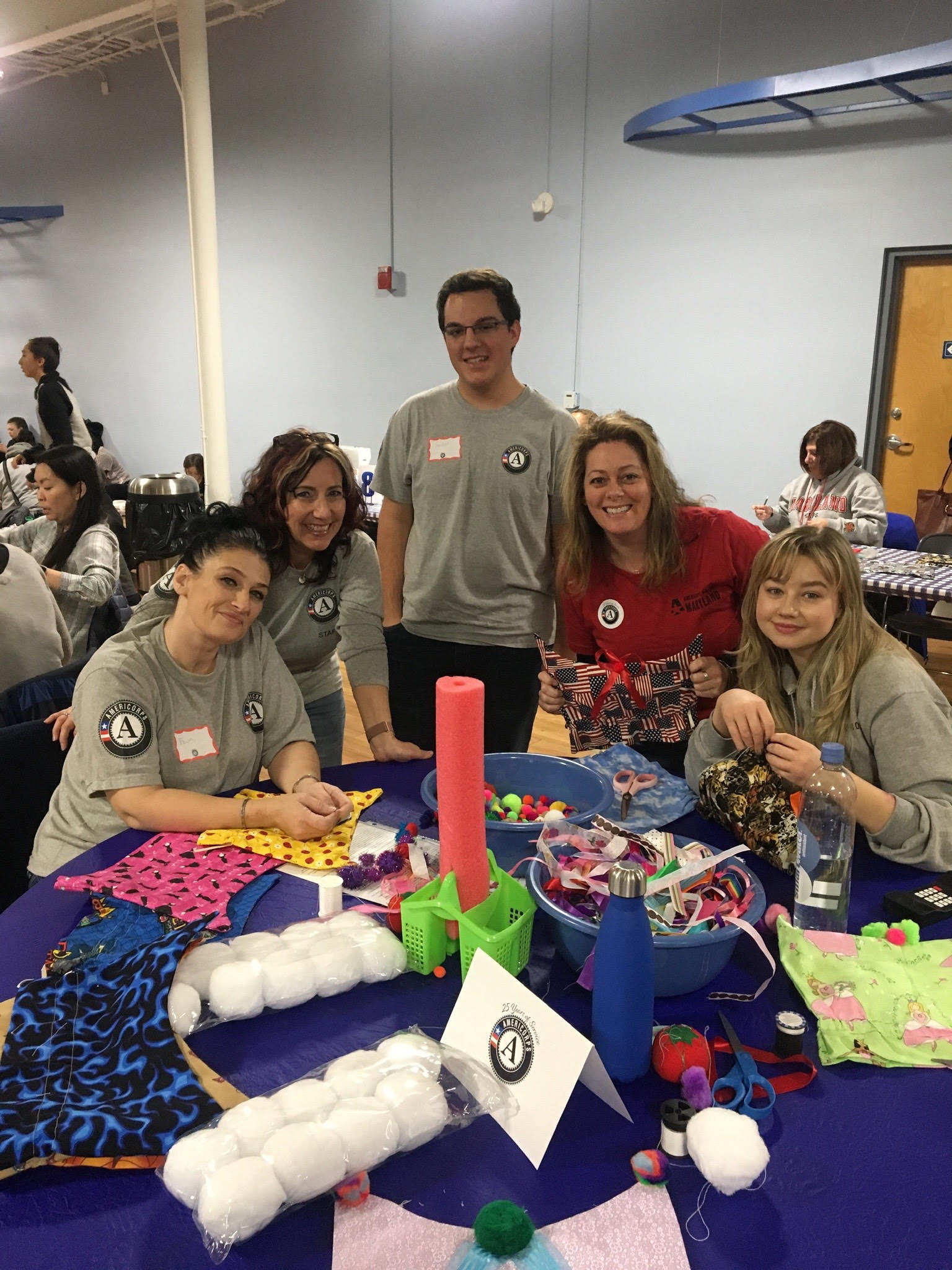
Fiocco joined Frostburg University’s AmeriCorps members during MLK Day 2020 celebration, making hats for terminally ill children. Photo courtesy of Fiocco.

Fortunately, being part of a strong service community also means I’m not facing these challenges alone. I’m grateful to be backed by the leadership of the Hogan Administration, and supported by over 600 boots-on-the-ground Maryland AmeriCorps members, program directors, and partners of the Governor’s Office on Service and Volunteerism (GOSV).

We’re getting things done by drawing on the deep experience of a service network that’s always had its finger on the pulse of critical community needs. I’m humbled and energized by what I’m seeing everyday in response to this crisis: a state-wide landscape of service and compassion meeting critical needs.

It’s easy to lead when things are going well. The true test is how well you function through a crisis. We are all capable of meaningful, impactful service. Marylanders have an opportunity to come out of this crisis stronger and more united through acts of service and volunteerism.

UMBC Magazine: How has your role supported efforts in fighting COVID-19?

Nicki Fiocco: Governor Hogan prioritizes getting things done, through a united response to COVID-19. We’re all being called upon to pivot where necessary, and we’re empowered to do so. For example, in addition to my regular duties, I was activated to serve in the Maryland Emergency Management Agency (MEMA), which means I’ve been working on connecting Marylanders to relevant and geographically accessible opportunities to serve their neighbors.

So far, Maryland AmeriCorps members are helping by checking on seniors through the Maryland Department of Aging; establishing support networks; addressing access to education and the digital divide; and by distributing 20,000 pounds of fresh produce and prepared meals, 5,000 bottles of hand sanitizer and bars of soap, 1,000 rolls of toilet paper, and 200 handmade face masks. 

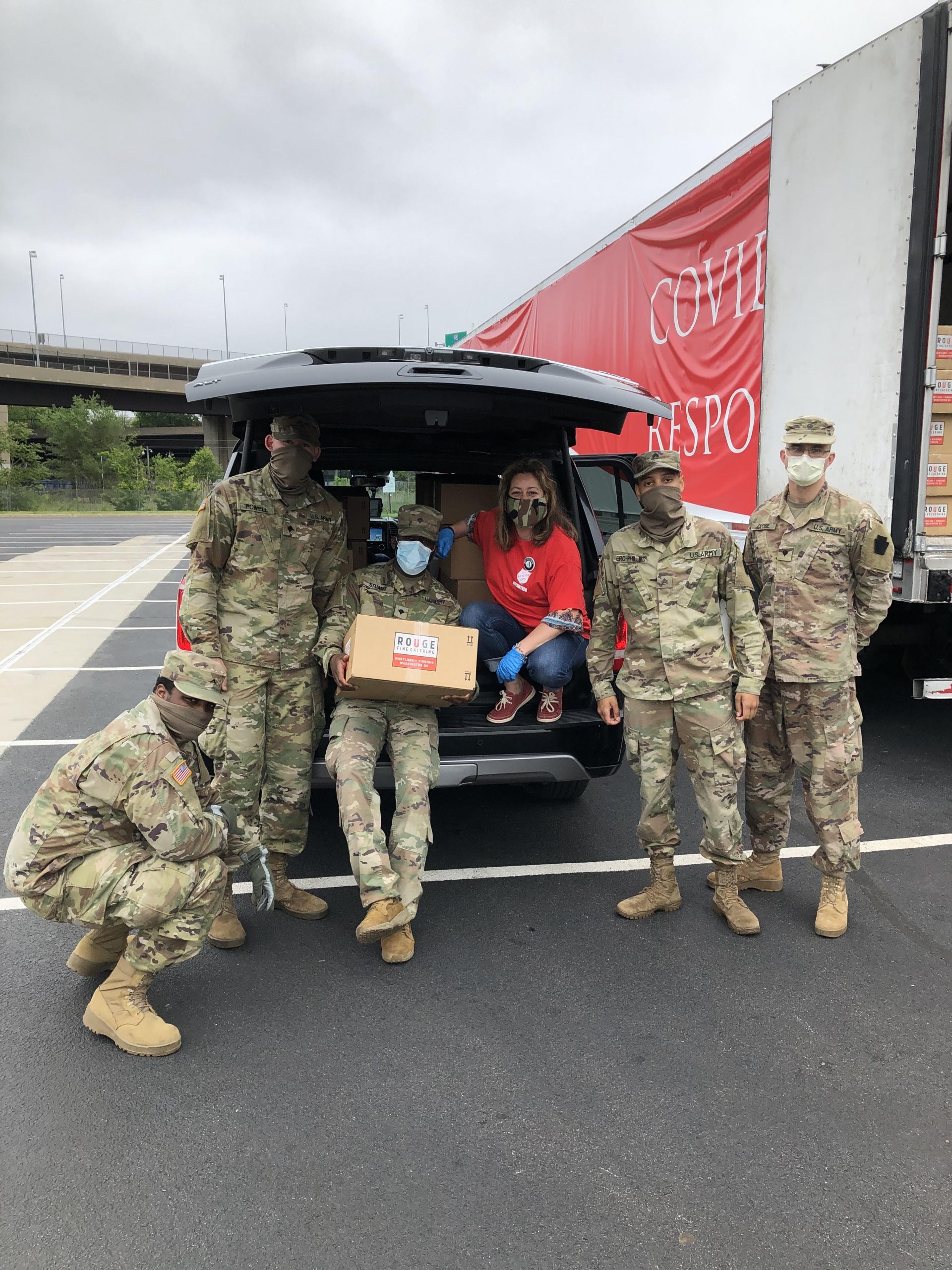
Responding to COVID-19 by delivering food in Baltimore to seniors through an effort organized by the Salvation Army and supported by the Army National Guard. Photo courtesy of Fiocco.

For the Maryland Unites initiative, my team partnered with the Governor’s Office of Community Initiatives to launch Marylanders Serving Marylanders, a webpage for sharing coronavirus resources. GOSV’s Acting Deputy Director Kerry Ose and I are leading a collaborative effort capturing best practices for the Governor’s “Maryland Strong: Roadmap to Recovery.” Our non-profit working group listens to and elevates the voices of a diverse mix of 30 large and small non-profit organizations, with the common goal of strengthening our state’s response, recovery, and re-building after COVID-19.

UMBC Magazine: What have been some of the biggest challenges / biggest rewards (of your job)?

Nicki Fiocco: My personal philosophy is to approach challenges as opportunities and focus on removing any obstacles for the people around me. Being tapped into so many organizations and agencies, I see the pendulum swing between great needs and tremendous generosity. During this pandemic, a constant challenge has been connecting the right dots in a thoughtful and timely fashion. I bear this responsibility seriously. I’m approaching my role as a platform for solving problems.

UMBC Magazine: How does your geography and environmental systems (GES) major play a role in what you do today?

Nicki Fiocco: My GES major at UMBC really laid the framework for my thinking about ecosystems, and the unexpected relationships woven throughout. In our service ecosystem, I apply those lessons to being mindful when we’re planning and accommodating for regional, local, and cultural needs.

In the same way that my GES studies taught me knowledge of local flora (when you want to install a rain garden or increase wildflowers along a park trail), it’s also internalized the importance of socio-economic boundaries that could impact volunteer recruitment, local community buy-in, and long-term program sustainability.

UMBC Magazine: So many of us feel so useless right now—how would you encourage Marylanders outside of public service to volunteer/help right now?

Nicki Fiocco: Marylanders who are staying home and practicing physical distancing are already serving by protecting our public health and safety. It’s a tremendous sacrifice, and I want to thank Marylanders on behalf of the Hogan Administration for doing so.

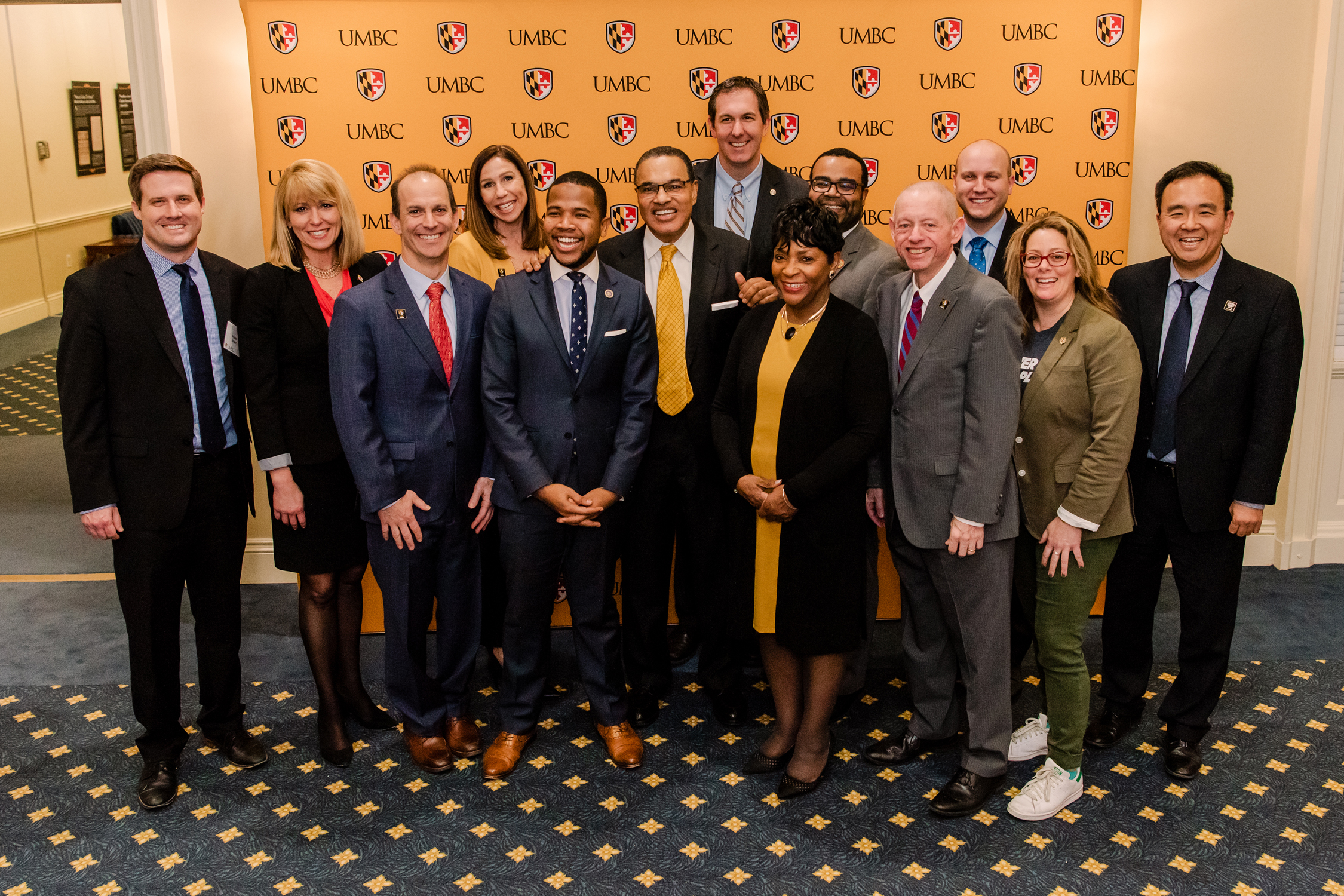
Fiocco, second from right, with a group of fellow alumni in Maryland legislature in Annapolis, February 2020. Photo by Marlayna Demond ’11.

For those who want to help more, the number one priority of GOSV is safety. We have on-site essential volunteer opportunities on Maryland Unites (Medical Reserve Corps, Maryland Food Bank, Red Cross), and virtual opportunities on Marylanders Serving Marylanders. Volunteerism can also look like sharing state and community resources to friends in your network who may not be aware, and checking in with them regularly.

UMBC Magazine: What are some UMBC lessons that have stuck with you over time?

Nicki Fiocco: GRIT. Sticking with things, doing what is right, and not letting anything throw you off course is my favorite value I gained at UMBC. I make it a point to participate in the UMBC alumni receptions in Annapolis, and I enjoy hearing President Hrabowski speak about grit!

The implications in public service—the grit to serve while putting others first—returns tenfold in growth and development. Grit is a muscle you build and take to any career or field.

UMBC Magazine: Does a specific professor’s advice come to mind, or has a particular class stayed with you?

Nicki Fiocco: My UMBC experience is something I continue to lean on. The lessons (and contacts) I’m able to draw from and share with others have been invaluable. A true mentor for me is Sandy Parker. He was my advisor, (and department chair for geography and environmental studies at the time). Funny thing is, our daughters are the same age—so we not only had ongoing conversations about school and my path forward—we were constantly talking about parenting.

I remember the semester before my graduation, Dr. Parker told me I needed to apply for graduation to finish my degree. At the time, I was resistant. There was nothing I wanted more than to stay forever at UMBC and just continue to learn. I was afraid I didn’t have what it would take to be successful; I wasn’t even sure what I would even do after school. Dr. Parker  encouraged and assured me that I would find my way. Ultimately, getting my degree was about achieving a major personal milestone—I’m really glad I did it for me!

UMBC Magazine: Is there anything we haven’t asked yet, that you’d still like to share with alumni?

Nicki Fiocco: “The obstacle is the way.” Meaning, that when things are getting tough, you need to keep going through, not around. Working through the big, bad, ugly thing you may be afraid of is exactly what will make you stronger, wiser, and better. It’s not always about the big things you do, it’s about the things you do consistently. Your consistent actions provide the momentum; then suddenly—you are living your purpose.

*****

Header image: Fiocco at an Annapolis reception for alumni in Maryland legislature, February 2020. Photo by Marlayna Demond ’11.