All posts by: Magazine Editor


Not All Americans Have a Fair Path to a Good Death – Racial Disparities Are Real

By Jason Ashe, doctoral student in human services psychology, UMBC, and Danielle L. Beatty Moody, assistant professor of psychology, UMBC

What does it mean to “die well”?

The world got an idea recently from the 92-year-old Buddhist monk and peace activist Thich Nhat Hanh, who popularized mindfulness and meditation in the U.S. The monk returned to his home in Vietnam to pass his remaining years. Many admired his desire to live his remaining time in peace and dignity.

Researchers from the University of California, San Diego recently did a literature search to understand what Americans might consider to be a “good death” or “successful dying.” As can be expected, their findings varied. People’s views were determined by their religious, social and cultural norms and influences. The researchers urged health care providers, caregivers and the lay community to have open dialogues about preferences for the dying process.

As scholars who study social health and human services psychology, we found something missing in these conversations – how race impacts life span.

It’s important to recognize that not everyone has an equal chance at “dying well.”

Black population and ill health

Take the disease burden of the African American population.

African Americans experience an earlier onset and greater risk of what may be referred to as lifestyle-related diseases, including cardiovascular disease, stroke and diabetes. More than 40% of African Americans over the age of 20 are diagnosed with high blood pressure, compared to 32% of all Americans.

In addition, the Centers for Disease Control and Prevention reports that the likelihood of experiencing a first stroke is nearly twice as high for African Americans compared with whites. African Americans are more than two times more likely to experience a stroke before the age of 55. At age 45, the mortality rate from stroke is three times higher for blacks compared to whites.

This disease burden consequently leads to their higher mortality rates and overall shorter life expectancy for blacks compared to whites.

And while the life expectancy gap differs by only a few years, 75.3 for blacks and 78.9 for whites as of 2016, research suggests that African Americans suffer more sickness. This is due in part to the increased prevalence of high blood pressure, obesity and diabetes in this population.

Genetics, biological factors and lifestyle behaviors, such as diet and smoking, help explain a portion of these differences. However, researchers are still learning how race-related social experiences and physical environments affect health, illness, and mortality.

Access to health care

Photo by rawpixel.com from Pexels.

One factor is that African Americans have historically underutilized preventive medicine and health care services. They also delay seeking routine, necessary health care – or may not follow medical advice.

One study found that during an average month, 35% fewer blacks visited a physician’s office, and 27% fewer visited an outpatient clinic compared with whites.

“The only time I go to the doctor is when something is really hurting. But otherwise, I don’t even know my doctor’s name,” said a young African American male during a research study in Chicago, Illinois.

There are reasons for this mistrust. Researchers who study medical mistrust argue that high-profile cases of medical experiments are still playing a role in how African Americans view health care systems and providers. In the past, physicians have intentionally done harm against people of color. A well-known case is the Tuskegee Study of Untreated Syphilis in African American men, which lasted from 1932 to 1972.

In this clinical study, 399 African American men, who had already contracted syphilis, were told that they were receiving free health care from the government. In fact, doctors, knowing their critical condition, were awaiting their deaths to subsequently conduct autopsies and study the disease’s progression.

Even though penicillin had been proven to treat syphilis by 1947, these men were denied the treatment.

Why discrimination matters for health

Other studies suggest that regardless of their knowledge of past medical abuse, many African Americans have low levels of trust in medical establishments.

African Americans have historically underutilized preventative health services.

“Doctors, like all other people, are subject to prejudice and discrimination,” writes Damon Tweedy, author of “Black Man in a White Coat: A Doctor’s Reflections on Race and Medicine.” “While bias can be a problem in any profession, in medicine, the stakes are much higher.”

Unfortunately, these fears are underscored by empirical evidence that African Americans are less likely to receive pain medication management, higher-quality care or survive surgical procedures.

In addition, a growing body of literature has established that experiences of discrimination are extremely harmful for physical and mental health, particularly among African Americans.

This research adds to the body of evidence that experiences of discrimination harm people’s health and may contribute to the increased rates of premature decline and death among blacks.

What does it take to die well?

As African American scholars, we argue the “art of dying well” may be a distant and romantic notion for the African American community.

African Americans are also exposed to earlier and more frequent deaths of close loved ones, immediate family members and friends.

Their increased “vulnerability to untimely deaths,” writes Duke University scholar Karla Holloway, shows African Americans’ lack of access to equitable and fair paths in life.

Before defining “a good death,” American society must first begin to fundamentally address how to promote quality living and longevity across all racial groups.The Conversation

****

Jason Ashe, Doctoral Student (Ph.D.), Human Services Psychology, University of Maryland, Baltimore County and Danielle L. Beatty Moody, Assistant Professor, Behavioral Medicine & Community Psychology Subprograms, University of Maryland, Baltimore County

Header image by Jenna Hamra from Pexels.

This article is republished from The Conversation under a Creative Commons license. Read the original article.

Video Extra: Lifespan of a Dragonfly

In the spring 2019 issue of UMBC Magazine, writer Sarah Hansen, M.S. ’15, shares the research of Colin Studds, assistant professor of geography and environmental systems, senior author of a recent paper detailing the full life cycle of the dragonfly for the very first time. (Read the full story here.)

To celebrate this exciting discovery, UMBC designer Layla Thompson-Koch created this web extra to show the full cycle. Enjoy!

The Best Team You’ve Never Heard Of

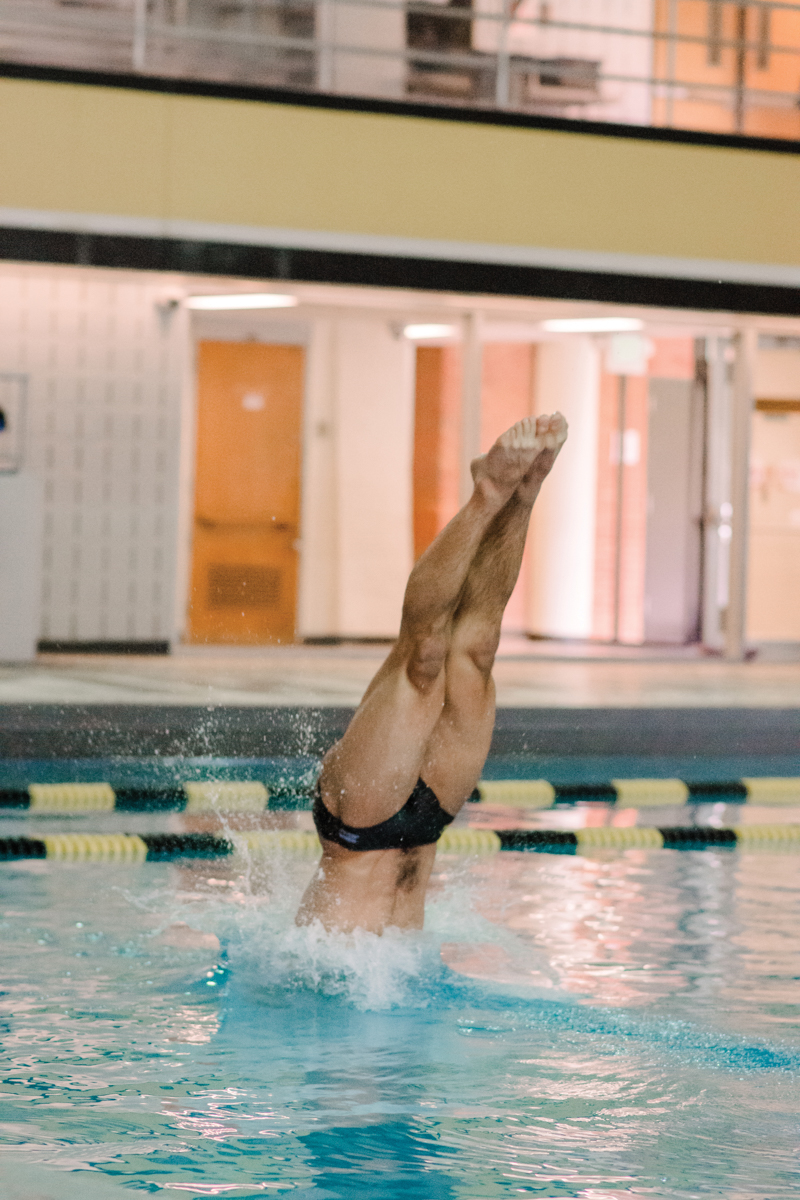
When a swimmer is good—really good—the sound of their stroke is smooth and quiet. The athlete plunges neatly into the water as if into another layer of air. Gentle ripples of movement belie the engine propelling it powerfully beneath the surface.

For years, the UMBC swimming and diving team has been quietly winning its way into university history. Since 1999, they have amassed 32 championship trophies, not to mention consistent accolades for athletic prowess and coaching. And they’ve done this largely without the fanfare received by more popular sports.

So, what’s the secret to this powerhouse squad’s success? What keeps them coming to the pool again and again?

It’s simple: They don’t do it for the splash.

By Jeff Seidel ’85

Beneath the surface

The UMBC men’s basketball team shocked many and generated a huge amount of publicity when they beat Virginia 74-54 in the first round of the NCAA basketball tournament in March 2018. By now, the story is well-known because it was the first time in the history of that tournament when a No. 16 seed beat a No. 1.

The basketball program and school received a deluge of publicity from all around the country after that. Places like the New York Times, Washington Post, and ESPN suddenly wanted to know not just what the letters “UMBC” meant, but everything about the basketball program and school. The attention seemed endless— and that was all for just one game.

The UMBC men’s and women’s swimming and diving programs have won plenty in their own right—even if most people don’t realize it. They swept the America East championships this past winter, claiming the 31st and 32nd titles for the Retrievers—26 of which have come since Chad Cradock ’97, psychology, became the head swimming and diving coach in 2001.

The Retrievers swept the America East championships this past winter, claiming their 31st and 32nd titles. Photo by Marlayna Demond ’11.

Those are staggering numbers, but since swimming gets less attention than basketball and other big college sports in this country, the men and women on this team know the score. Even Cradock understands the deal and shrugs it off. What can they do?

“It’s not seen as popular of a sport, and that’s the way America looks at it,” Cradock says. “If we were in Australia, swimming would be the number one. Even in Hungary, it’s very popular. It’s the most-watched sport in the Olympic Games.”

But every day, the swimmers and divers head to the pool anyway. And year after year, the program broadens its family of alumni. It’s a connection that goes far beyond the pennants and tailgating of other sports. It’s a culture all its own.

“We do it because we love it,” Cradock says.

The daily grind

What many don’t realize is the grind the Retrievers endure to find all of their success, Cradock says. This is a year-round gig for the coaches, who often arrive on campus at 6 a.m. and stay until 7:30 p.m., with six to eight more hours on Saturday, plus other work on Sunday.

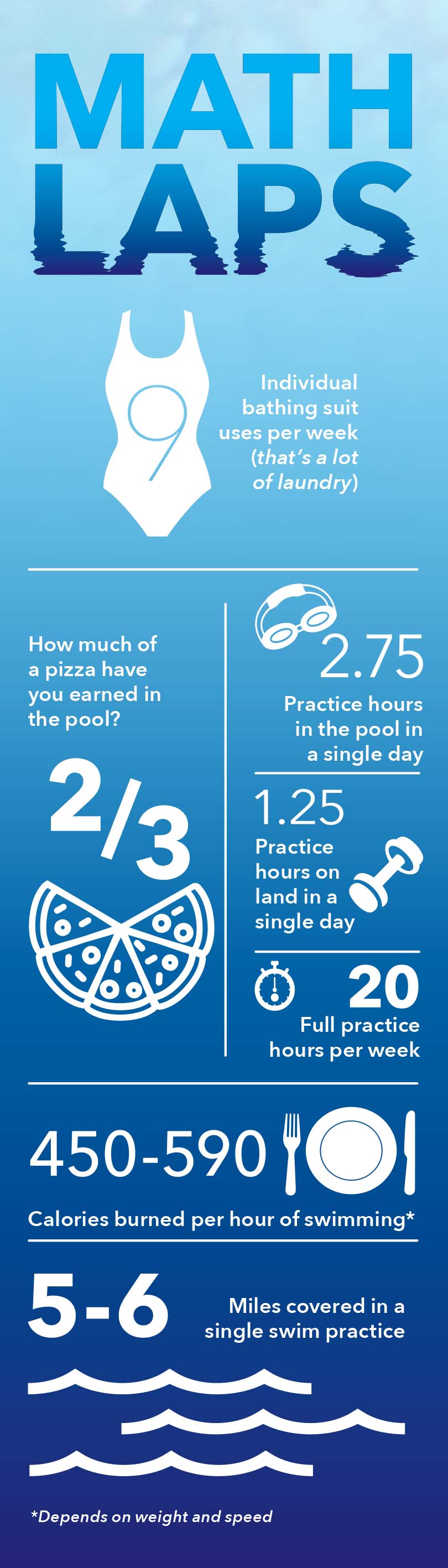
The workouts are long and laborious. On Monday, Wednesday, and Friday, they do weights from 6:15 to 7 a.m., then swimming drills, kicking technique, and recovery (7 to 7:45 a.m.). Later in the day, they work out on land (1:15 to 1:45 p.m.) and then it’s back in the pool from 1:45 to 3:45 p.m. On Tuesday and Thursday, practices stretch from 1:30 to 1:45 p.m., with a two-hour swim right after that. It all continues into Saturday, a fact the swimmers understand and accept. It’s all part of the game.

“We enjoy the sport…and we’re not doing it to be famous or anything,” says Hania Moro, a senior financial economics major from Egypt. Hania—who has fallen in love with bagels while at UMBC and wants to open a bagel store when she goes back to her home country—just set the school record in the 1650 free at the America East 2018 title meet. “We love to be here, and we love to be with each other, and we love to enjoy our time. This is about swimming.”

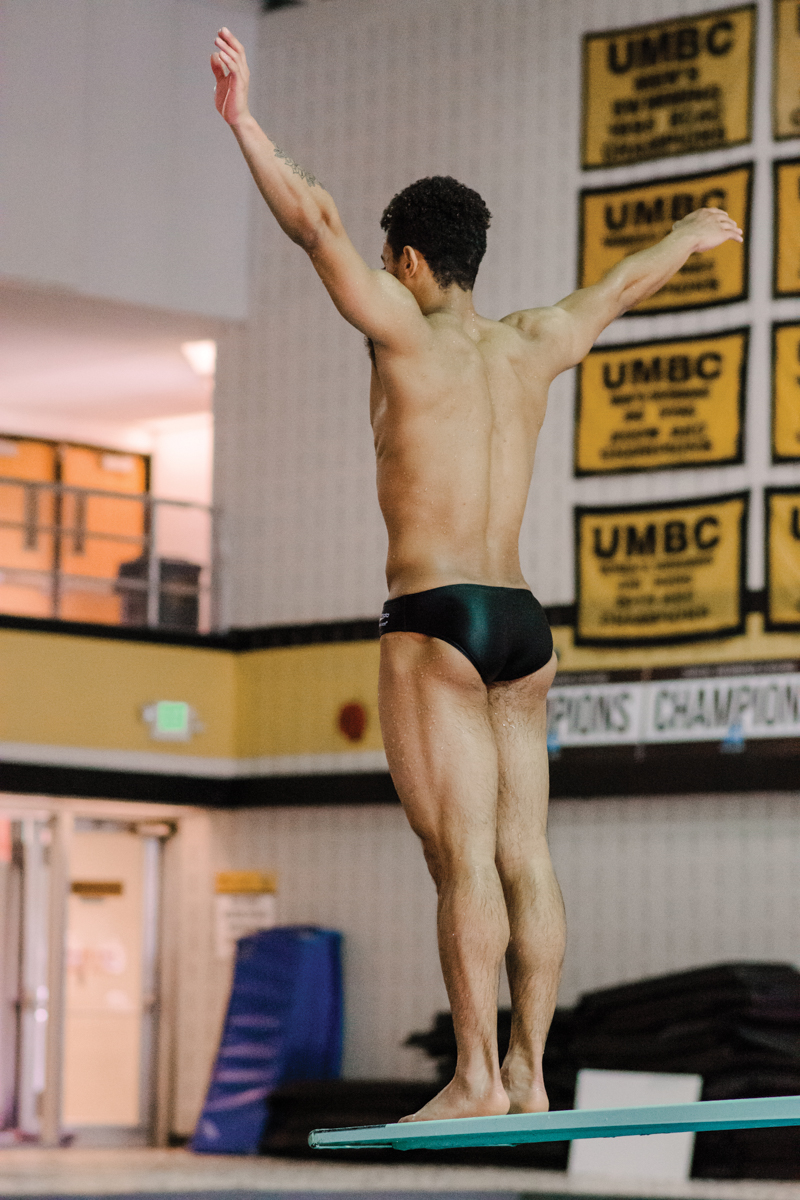
Elijah Wright , a diver from Baltimore, says the Retriever swimmers and divers put in the foundational hard work to find their success. For example, Wright wakes up at 5:30 a.m. Monday through Saturday and goes to practice from 6 to 8 a.m. from early September through February. Plus, he lifts weights on Monday, Wednesday, and Friday.

The swimmers and divers work through a long and tough regimen all season to earn those championship banners, something they all take pride in.

“When you walk into the pool area, you see all the banners, and you would think that’s just decoration if you didn’t see all the hard work we put in each and every day,” Wright says.

Team as family

Cradock swam at UMBC from 1993 to 1997, lettering all four years and earning the Matt Skalsky Outstanding Scholar-Athlete award as a senior. He became head coach in 2001, bringing with him a philosophy that emphasized the coaches working with the student-athletes and not dictating to them.

Growing up at UMBC, so to speak, the team has become a second family for Cradock. Coaching with Cradock now are Chris Gibeau ’93, biological science; Nikola Trajkovic ’18, financial economics; and Elyse Gibson-Clegg ’06, sociology, along with diving coach Petar Trifonov, all of whom work to create an environment where the swimmers and divers feel at home and are comfortable throughout the daunting schedule swimming requires. That means team shout-outs on birthdays and creating spaces where athletes can talk with coaches on a regular basis about problems in swimming, classes, and life. These personal touches help draw the swimmers closer as a group.
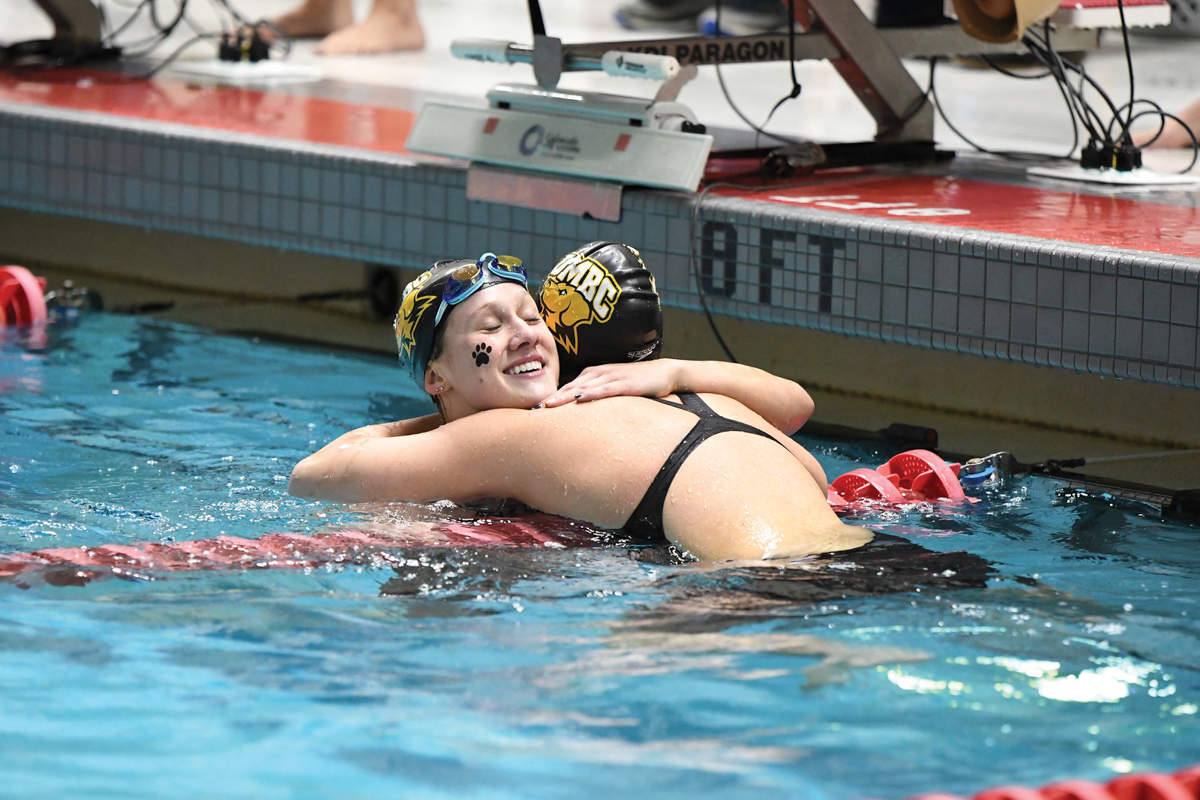
Haylee Committee hugs Tonia Papapertrou after the 100 freestyle. Photo by Colleen Humel.

For junior economics major Sotia Neophytou, who came to UMBC this year from Cyprus (a 30-hour trek to Catonsville), the family spirit shined especially bright around the holidays.

“I didn’t go home for Christmas, but Chad invited me to his house, and I spent an amazing Christmas there,” she says. “Chad is amazing, and he knows what he’s doing. I trust him so much. You need to communicate with your coach, and Chad and I have that.”

Cradock, who has three children of his own, certainly understands the parents’ feelings when they turn their swimmers over to him for four years. UMBC has about 65 swimmers total on this year’s championship teams, and it’s a very diverse group with athletes from around the globe.

And family membership doesn’t end at graduation. Many of Cradock’s swimmers stay in touch long after commencement, often giving back to the program as a way of showing their commitment.

David Miller ’96, economics, is now a corporate lawyer in New York. He swam with UMBC from 1993 to 1996 and still keeps in touch with some from the program, especially when he makes it back to campus. He also ran into other former Retriever swimmers recently at an event that UMBC hosted in New York City at the One World Observatory. Miller still holds the record for the 1,000-yard freestyle in the UMBC pool and was delighted to learn that the younger folks were aware of him.

“They knew who I was, and it was definitely really cool to know that after all these years, that I still hold some sort of presence there…I was still on the record books…so that sort of helped,” he says with a laugh.

Miller says that he remembers his swimming days at UMBC where there were just about a dozen swimmers on the team. There are now more than five times that many, but Cradock has worked to keep the big group close, as he believes that helps with the overall success of the teams.

“[Being a student athlete is] hard in general, but what I’ve tried to do have the swim team become part of my family so that nobody kind of resents each other,” Cradock says. “We treat them the way we would want our kids to be treated wherever they went.”

Olympic aspirations

Another thing that might surprise those new to the sport is the level of international competition the Retriever swimmers and divers engage in throughout the year—including the most watched competition of all, the Olympics.  

Neophytou swam for her home country at the Olympics in Rio three years ago and said it was an amazing experience. When she competed in the 100 butterfly on August 6—she still remembers the date—she said, with a smile, “my dad came to see me, [and when] I found him, he was still crying. I made him proud.”

Neophytou, the third Retriever to make the Olympics, said her UMBC teammates often pick her brain about what it was like to swim there, and getting that rare opportunity improved her self-confidence. That, combined with the transfer to UMBC and her respect for Cradock and his coaches, has made her a better swimmer.

“There’s a lot of respect out there for our program [world-wide],” Cradock said. “We are well-respected internationally. It took a lot of time.”

Mac Hoskins celebrates a great race. Photo by Colleen Humel.

UMBC also has a chance for two others to earn spots in the 2020 Tokyo Olympics. Moro is trying to represent Egypt there while senior mechanical engineering major and Meyerhoff Scholar Alexander Gliese hopes to make it with Denmark, the country he was born in before growing up in nearby Howard County. Both are within range to qualify and will be spending plenty of time this year focusing on that goal.

Gliese is a two-time captain at UMBC and the Danish national record holder in the 200-meter backstroke. He also mentioned that the family atmosphere Cradock and his coaches created gives him help in many ways in and out of the pool.

“It motivates you every single day; you have somebody there who’s pushing you or you have somebody who’s there when you’re not having the greatest day,” Gliese said. “Somebody says ‘hey, it’s OK to have a bad day.’ I’m still [getting better]. I don’t know if I would have seen the same success or not [somewhere else].”

Making their mark
Cradock said one moment that they all enjoyed recently came after winning the America East championship and the team returned to campus. They were honored during a media timeout of a basketball game at the UMBC Event Center and received a large ovation from the crowd that night, something that the swimmers just loved.

It was a moment in the sun on their own campus, one that doesn’t happen often with this sport.

“We went up there to do our job and we did,” Cradock said. “The theme this year was Love It, Live It, Enjoy It, and we did just that.”

The Retrievers certainly did what they planned for when taking the men’s and women’s team titles in the February 2019 America East championships in Worcester, Massachusetts. Moro broke the school record in the 1650 freestyle and won a gold medal in that event. Gliese set a school and conference record for the 200 backstroke (1 minute, 42.56 seconds in a preliminary race) and later took home a gold medal in the event.

Moro also earned the Dave Alexander Coaches’ Award, for the senior who gets the most points during the meet. Gliese received the same honor on the men’s side and was named Most Outstanding Swimmer. He also broke the America East record in the 100 backstroke. Wright won gold in 1 meter and 3 meter dives and was named Most Outstanding Diver of the Meet, while Cradock and his coaches were named the men’s and women’s Coaching Staff of the Year.

Cradock and the team are enjoying their successes and the extra attention that comes with it.

“I think it has a lot of effect, and it starts with name recognition,” Cradock said. “It’s become a lot easier that we’re more respected in the athletic world because of what they did. It’s probably tripled in one year the amount of people that reached out to the swimming program. [UMBC was] the big story last year.”

The publicity that follows the athletic success of some teams, well, that’s for other sports. Building a solid environment to compete, that’s for this program, and it’s why they’ve been so successful.

“Sustained success is one of the most difficult things to accomplish on the Division I level,” said Tim Hall, director of athletics, physical education, and recreation. “This is what UMBC Swimming and Diving programs have achieved under the leadership of Chad and his staff. The student-athletes are wonderful representatives of the university and the alumni stay very connected. All of Retriever Nation should be extremely proud of this model program.”
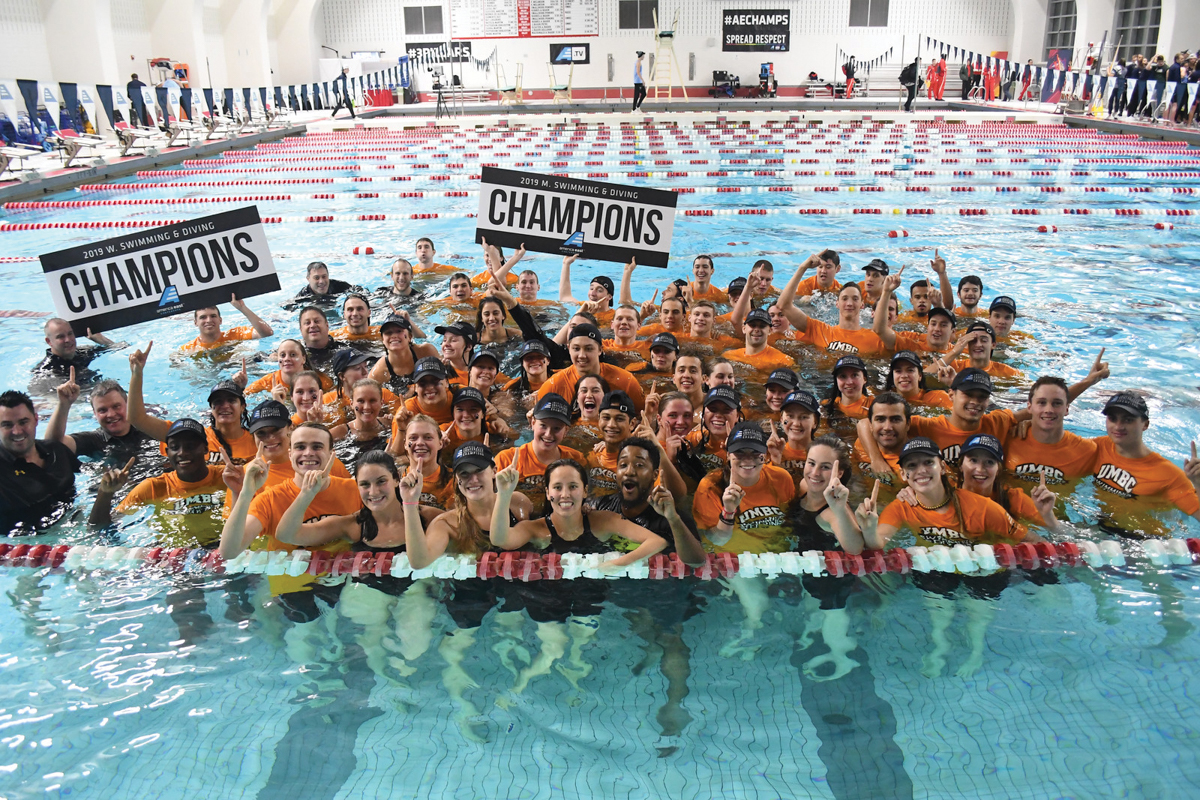
The teams celebrate their America East championships victory with a commemorative jump into the pool. Photo by Colleen Humel.

*****

Header image by Marlayna Demond ’11.
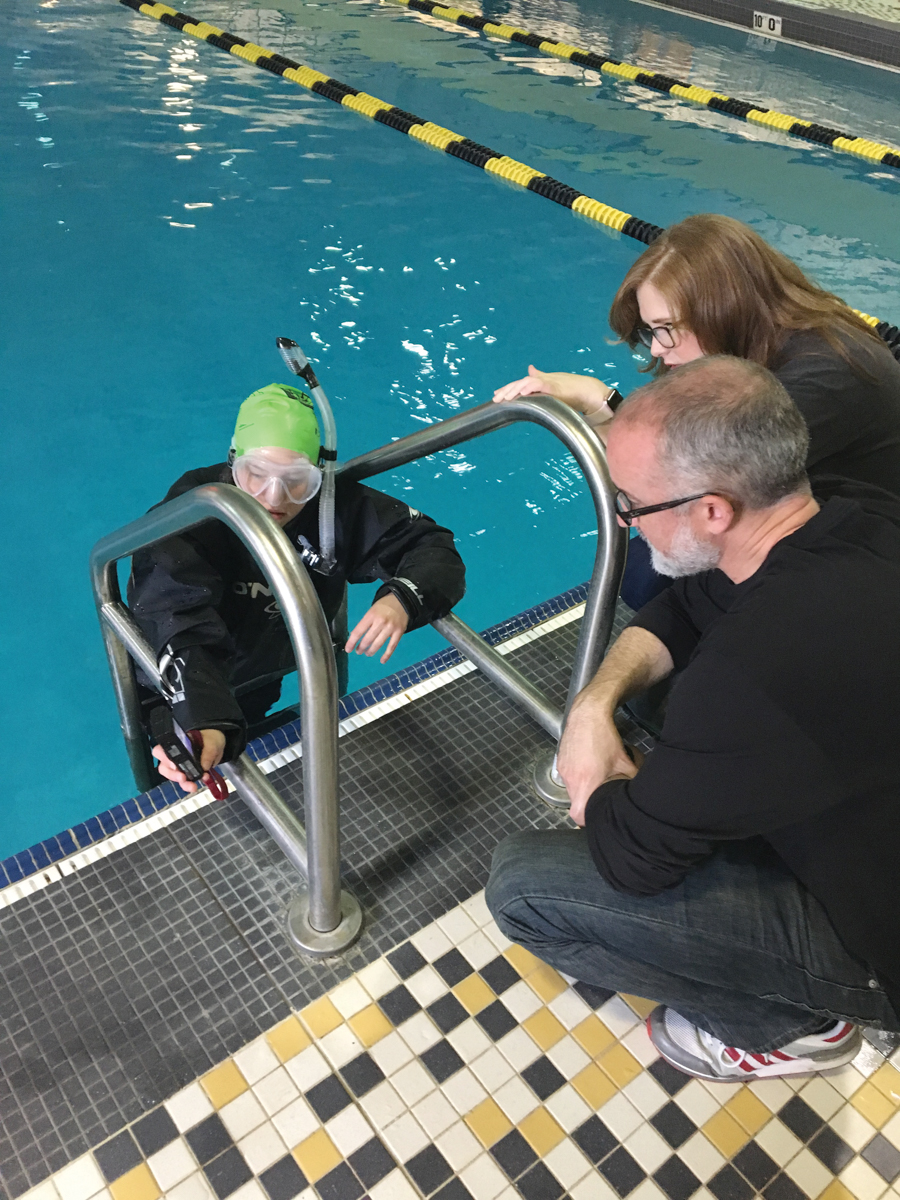
WEB EXTRA: Our photographer, Marlayna Demond ’11, will do almost anything to get her shot — even submerse herself and her camera. Visit umbc.edu/swimming for a first-hand look at what it took to do our DIY underwater photo shoot.


Ellicott City: A Timeline of Resilience

1772 ⬗ Since its founding in 1772, Ellicott City “has come in for an inordinate amount of disasters from floods, fires and railroad wrecks,” wrote Fred Rasmussen in The Baltimore Sun in 2012.

1868 ⬗ Known as the Great Flood, in 1868 the Patapsco rose more than 20 feet and 43 people were killed. “The sufferers by the flood are very numerous,” The Sun reported on July 27, 1868. Floods would come again in 1901, 1917, 1923, 1942, and 1952.

1972 ⬗ The next most memorable event was Hurricane Agnes in 1972. The Patapsco river flowed 14.5 feet above its banks. It took out a concrete bridge and destroyed the Jonathan Ellicott home and the 1910 Victor Blode water filtration plant. Eloise (1975), Hugo (1989), and Lee (2011) were other vicious storms of note.

1984 ⬗ From an editorial in The Sun from 1984 about Ellicott’s City’s resilience: “The town’s special charm lies in wear-and-tear, in improvisation over the decades, in workaday flavor more comparable to what might be found in a none too prosperous Old World community.”

2016 ⬗ Water again rushed down Main Street on July 30, 2016. The flash flood coursed through many historic buildings, washing away the town’s iconic clock, and ultimately killing two.

2017 ⬗ Originally donated in 2000 by the Ellicott City Kiwanis Club, the restored clock was put back in place in 2017.

The 2017 restored clock before it was again washed away. Photo by Maryland GovPics on Flickr.

2018 ⬗ Less than two years later, on May 27, 2018, disaster struck again, days before the town’s new flood emergency alert system was to become operational. Homes and businesses were again destroyed, the newly erected clock disappeared, and a National Guardsman lost his life trying to rescue others.

In June and July 2018, the post and the face of the clock were found again, damaged in the Patapsco.

On July 20, 2018, Main Street was opened to cars and pedestrians and some shops reopened, although most continue to deal with the flood fallout.

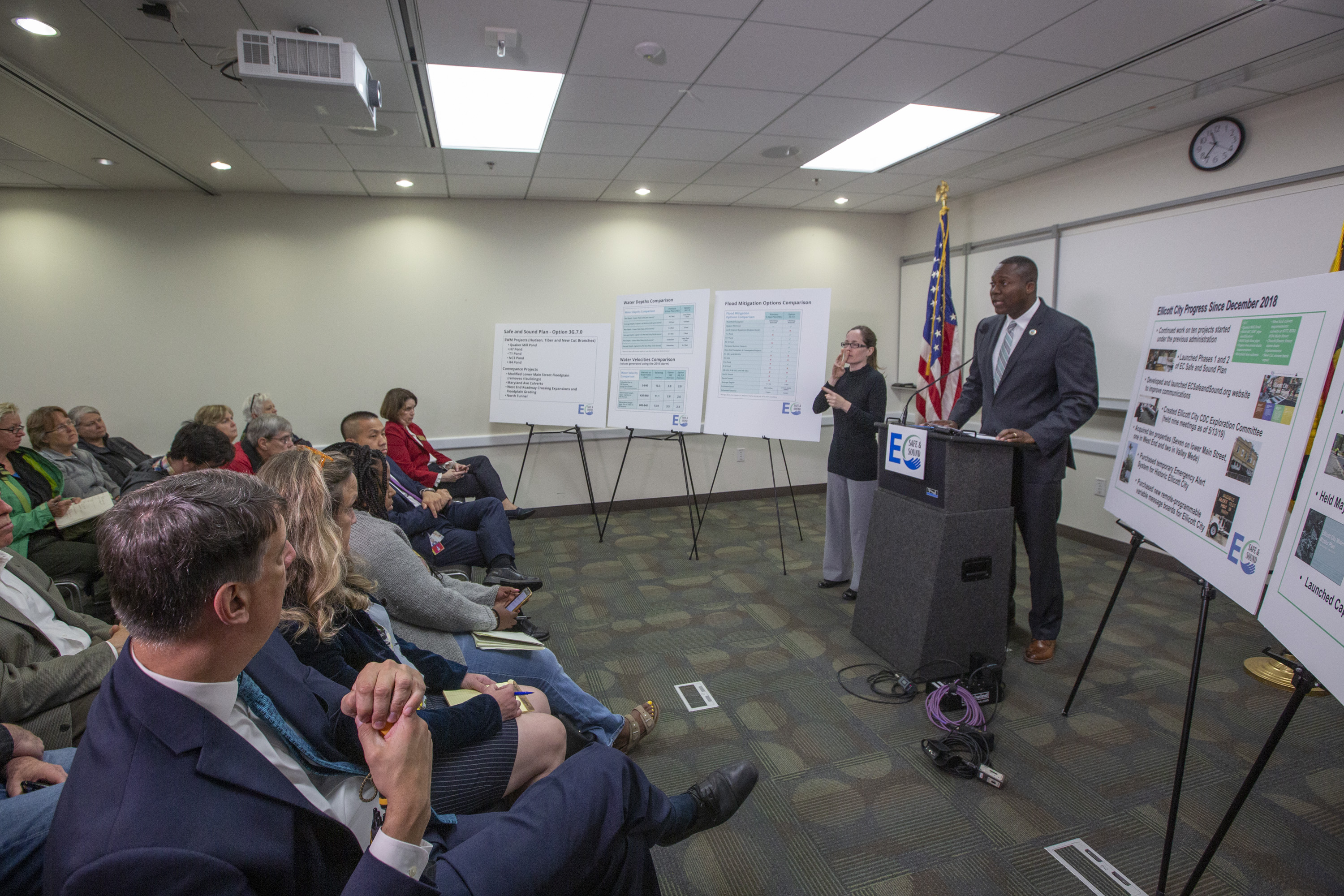
Howard County Executive Calvin Ball revealed the second phase of the Ellicott City Safe and Sound plan in December 2018.

Calvin Ball speaks at a community meeting. Photo by R. Scott Kramer, Howard County Government.

2019 After considering community feedback, Ball announced his decision on May 13, 2019, to move forward with “3G.7.0,” a five-year, $140 million option to tear down four buildings—Phoenix Emporium, Discoveries, Bean Hollow, and Great Panes Art Glass Studio—and build a tunnel to carry future flood waters away.  

2020 The 2020 state capital budget includes $3.4 million in funds for Ellicott City’s Safe and Sound plan and a minimum of $8 million investment is planned over the next three years.

*****

Read More:  Learning from Ellicott City

Read More:  An Ounce of Prevention

Header image by Sun photographer Frank A. Miller. 

Q&A: Dr. Michael Summers on the Meyerhoff Scholars Program

Dr. Michael Summers is the Robert E. Meyerhoff Chair for Excellence in ​Research and Mentoring​; a Distinguished University Professor​; and an Investigator with the Howard Hughes Medical Institute. Over the years, he has worked with dozens of Meyerhoff scholars in his lab. UMBC Magazine sat down with Summer​s to talk about his history with the Meyerhoff Scholars Program, now celebrating its 30th year.

UMBC Magazine:  Can you tell us what your involvement has been with the Meyerhoff Scholars Program over the years?

Mike Summers:  Well, I have no administrative role with the Meyerhoff program. I got started when [UMBC President] Freeman [Hrabowski] was vice provost, and I was an assistant professor. He called me up, and we talked about general things, like my life, my background. He said, “Thanks for meeting with me, and I remember leaving, thinking, “What was that about?” Then maybe a couple of months later, a young student, Chianna Paschall, came into my office and wanted to do research. I said, “What’s your GPA?” She said, “Well, I have a 4.0, and I’m a Meyerhoff Scholar.” And I said, “Oh, tell me. What is Meyerhoff?”

Then she ended up doing some very high-profile work that was published on the cover of a journal and now it’s in a lot of textbooks.  The next year, there were about four Meyerhoff scholars who wanted to work in my lab. And, now there are typically 20 or so undergraduates in my lab, including not only Meyerhoff Scholars, but MARC and BUILD scholars as well, along with UMBC students who aren’t in any particular program.

UMBC Magazine:  How do you make sure students are on the right track with their research?

Mike Summers:  What I try to do is get students to start talking to faculty about research after their first semester at UMBC. I encourage them to meet with different faculty, learn about their research, talk to students in the lab, find out if it’s an environment and the kind of research that they’re interested in. Do they think they could have a good rapport with a faculty member? I always say there are no bad mentors. There are just poor mentor-student dyads.

There are some faculty who probably would be terrific mentors to only a few students who need a certain type of mentoring. I think our best mentors are those that can adjust to a broader range of student needs. UMBC is fortunate because we’ve got lots of really terrific mentors and research labs, so students can choose from a multitude of really good opportunities. If a student comes and says they want to work in my lab, I first make sure that they’re on good academic footing because I tell them, “No matter what you want to do when you graduate, people are going to  look at your GPA first.”

UMBC Magazine:  How would you describe the effects of the Meyerhoff Scholars Program on the way you and others teach? And how has that changed over time?

Mike Summers:  Think about what happens when you intentionally put a group of 20 or 25 high-achieving minority students shoulder to shoulder in the front row of a classroom of 350 students. They are in their seats 10 minutes before class, asking good questions and typically doing extremely well on exams. It causes you to change the way you think about the abilities of minorities in science.  Prior to Meyerhoff, the well prepared minorities would be sprinkled around the class or sitting in the back. They didn’t stand out, and we tended not to notice or pay attention to them even when they did do well. As a white male who was raised in the South, I had my own set of prejudices and misconceptions when I started at UMBC. But I believe that people who go into academics typically do so because they want to do something good for society.  They generally want to do the right thing. So it’s a natural thing for us to see that kind of performance among minorities in our classrooms and laboratory, and then go home and look in the mirror and say, “Wow, I couldn’t have been more wrong in my thinking.” When that happens, faculty like me begin reaching out and communicating in different ways. Our expectations just naturally go up, for all students.

And I think the high visibility of the Meyerhoff Scholars also raises expectations among minorities who are not in the program. Consider a non-Meyerhoff who earns a C on their first entry-level chemistry exam; it’s not that they haven’t studied hard, but they don’t know how to study for a college-level exam. For me, it took years to figure out how to go from a C/B average to a B/A average. They get their first test back, and because they weren’t asked to just recite what they’ve been taught, as happens often in high school, they were asked to take what they’ve been taught and apply it in a way they’ve never seen before, and they don’t know how to do that yet.  Now, the sense of imposter syndrome creeps in.

So, I believe that the Meyerhoff program directly addresses imposter syndrome because these students look up in that front row and there are those Meyerhoff Scholars who are making As. Rather than thinking, “I don’t belong here. Society was right. I’ve been hearing this message my whole life,” they instead think, “Okay, what do I have to do differently?” They might go to the tutorial center and be tutored by somebody who looks like them and has common life experiences.  What our studies show is that the number of minorities who aren’t even in the program and graduate with science degrees has increased dramatically since Meyerhoff started, even for students who are not in the program. As the saying goes, a rising tide raises all the boats up.

UMBC Magazine:  Have you seen these changes happen beyond UMBC?

Mike Summers:  Fortunately, yes!  Over the years, lots of schools have visited UMBC and learned about our program, but they tended to pick and choose what they wanted to do. They had some success, but nothing like our success. A few years ago, the Howard Hughes Medical Institute funded a partnership experiment between UMBC, UNC, and Penn State.  The leadership at those schools expressed a willingness to “go all in.” It was a risky thing for HHMI to support: Freeman has shown what can be done at a majority school by a dynamic, charismatic black leader. The chief diversity officer at Penn State said, “This will never work here because parents of high-achieving black children will not trust us with their kids. They are so isolated. Their minority population is much, much lower than UMBC’s as a percentage, and they don’t have the history.” The question was, can it be done at different institutions with majority leadership and with different histories and different geographies?

Penn State and UNC agreed to try to replicate Meyerhoff as faithfully as they possibly could, and they got help not only from UMBC administrators, faculty, and staff, but even from Meyerhoff Scholars who visited their campuses and helped them recruit their first cohorts.   

The best news is that their outcomes dramatically exceeded expectations — reaching Meyerhoff-like academic performance, retention, and matriculation to Ph.D. and/or M.D./Ph.D. programs in their very first year.  Both programs are now institutionalized and supported by major endowments, and both continue to share ideas and outcomes with UMBC as we work together to strengthen our programs and show the rest of the nation how true inclusive excellence can be achieved.


Convicts Are Returning to Farming—Anti-Immigrant Policies Are the Reason

By Stian Rice, visiting assistant research professor, Center for Urban Environmental Research and Education, UMBC

Prison inmates are picking fruits and vegetables at a rate not seen since Jim Crow.

Convict leasing for agriculture—a system that allows states to sell prison labor to private farms—became infamous in the late 1800s for the brutal conditions it imposed on captive, mostly black workers.

Federal and state laws prohibited convict leasing for most of the 20th century, but the once-notorious practice is making a comeback.

Under lucrative arrangements, states are increasingly leasing prisoners to private corporations to harvest food for American consumers.

Why now?

The U.S. food system relies on cheap labor. Today, median income for farm workers is US$10.66 an hour, with 33% of farm-worker households living below the poverty line.

Historically, agriculture has suppressed wages—and eschewed worker protections—by hiring from vulnerable groups, notably, undocumented migrants. By some estimates, 70% of agriculture’s 1.2 million workers are undocumented.

As current anti-immigrant policies diminish the supply of migrant workers (both documented and undocumented), farmers are not able to find the labor they need. So, in states such as Arizona, Idaho and Washington that grow labor-intensive crops like onions, apples and tomatoes, prison systems have responded by leasing convicts to growers desperate for workers.

The racist roots of convict leasing

Since Reconstruction, states have used prisoners to solve labor supply problems in industries such as road and rail construction, mining and agriculture. But convict leasing has also been a powerful weapon of white supremacy, and now, anti-immigrant sentiment.

After Emancipation, southern economies faced a crisis: how to maintain a racial caste system and a supply of surplus labor now that blacks were free.

Southern states passed vagrancy laws, Black Codes, and other legislation to selectively incarcerate freed slaves. For example, under Mississippi’s vagrancy law, all black men had to provide written proof of a job or face a $50 fine. Those who could not pay were forced to work for any white man willing to pay the fine—an amount that was deducted from the black man’s wage.

During the late 1800s, mass incarceration created an army of cheap labor that could be leased to private businesses for substantial profit. In 1886, state revenues from leasing exceeded the cost of running prisons by nearly 400%. Between 1870 and 1910, 88% of convicts leased in Georgia were black.

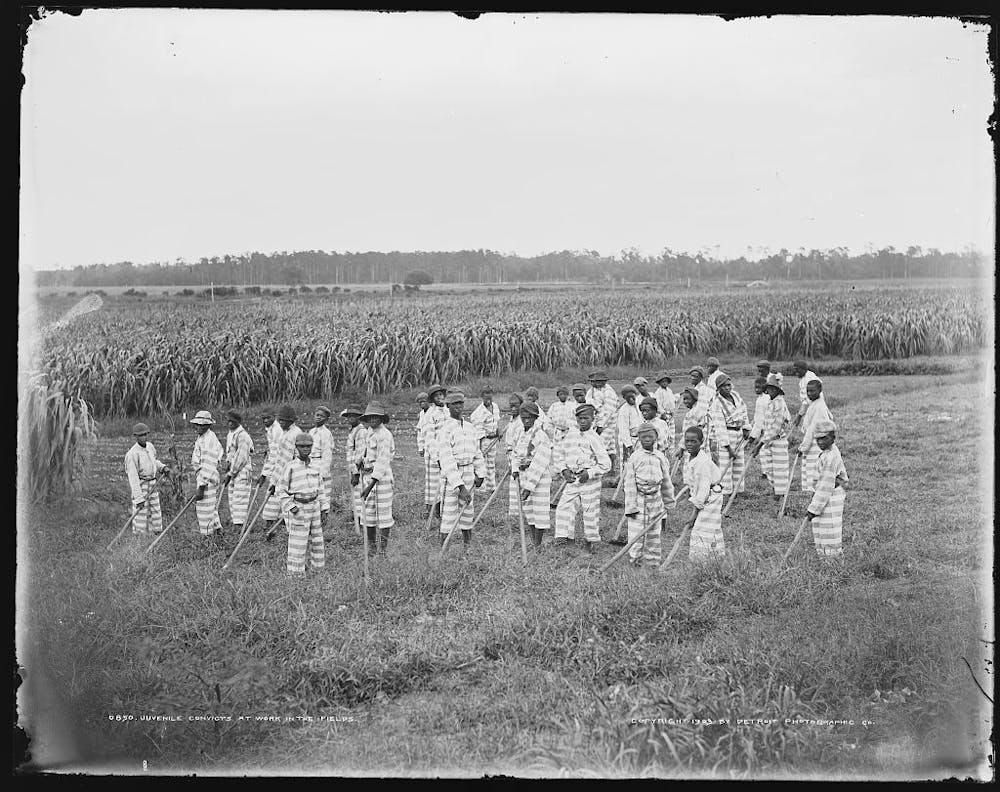
In this Library of Congress photo from 1903, juvenile convicts are shown at work in the fields, location unknown.
Library of Congress/Detroit Publishing Co.

Populist response

But cheap convict labor also suppressed wages for free whites, and by 1900, poor whites began pushing back.

In 1904, James Vardaman was elected governor of Mississippi on a platform of returning whites to work and blacks to confinement. These populist white supremacist sentiments dovetailed with national economic concerns during the Great Depression, when agricultural failures led to widespread unemployment.

In the 1930s, the Ashurst-Sumners Act and accompanying state laws prohibited convict leasing and the sale of prisoner-made goods on the open market. Inmates still worked in agriculture, but the food they produced had to be consumed by other prisoners or state workers.

By the late 1970s, with growing competition from foreign manufacturing, U.S. companies sought out domestic sources of cheap labor.

Under pressure from corporate lobbies like the American Legislative Exchange Council, Congress relaxed restrictions on convict leasing with the Justice System Improvement Act. As the manufacturing and service sectors began hiring prisoners, agriculture expanded its use of migrant workers.

Profit and exploitation

Today, convict leasing offers significant revenues for prisons.

Most wages paid to inmates are garnished by prisons to cover incarceration costs and pay victim restitution programs. In some cases, prisoners see no monetary compensation whatsoever. In 2015 and 2016, the California Prison Industry Authority made over $2 million from its food and agriculture sector.

Growers can reap significant revenues, too. Inmates are excluded from federal minimum wage protections, allowing prison systems to lease convicts at a rate below the going labor rate. In Arizona, inmates leased through Arizona Correctional Industries (ACI) receive a wage of $3-$4 per hour before deductions. Meanwhile, the state’s minimum wage for most non-incarcerated farm workers is $11.00/hr.

Beyond the unfairness of low wages, inadequate state and federal regulations ensure that agricultural work continues to be onerous. Laborers endure long hours, repetitive motion injuries, temperature and humidity extremes and exposure to caustic and carcinogenic chemicals.

For inmates, these circumstances are unlikely to change. U.S. courts have ruled that prisoners are prohibited from organizing for higher wages and working conditions—though strikes have occurred in recent years.

Furthermore, inmates are not legally considered employees, which means they are excluded from protection under parts of the 1964 Civil Rights Act, the Equal Pay Act, the Fair Labor Standards Act, the National Labor Relations Act and the Federal Tort Claims Act.

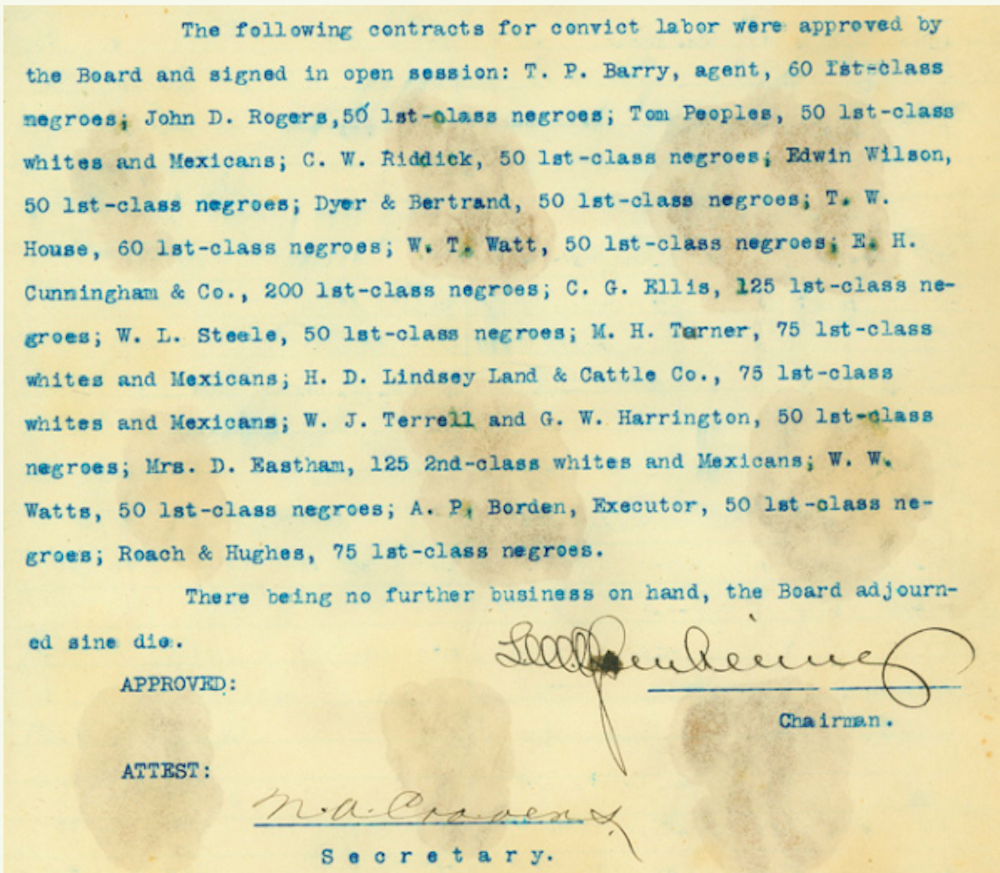
Excerpt from minutes of the regular meeting of the Texas Penitentiary Board, Nov. 12, 1903.
Board of Criminal Justice minutes and meeting files, Texas Department of Criminal Justice, Archives and Information Services Division, Texas State Library and Archives Commission.

Whose labor is being sold?

The total number—and racial makeup—of leased inmates is difficult to calculate. Not all prison systems report on farming operations or leased labor arrangements. According to one advocacy group, at least 30,000 inmates work within the food system. But to the extent that convict leasing reflects overall inmate demographics, prison agriculture is distinctly racial.

Blacks make up 39% of inmates, but only 12% of the general population, making blacks six times more likely than whites to be incarcerated. Over the last 50 years—the same period that saw the return of convict leasing—the black incarceration rate quadrupled.

Proponents of “prison industries” argue that leasing provides rehabilitative benefits like on-the-job training for reentry. But research shows that within the prison system, whites receive better jobs than blacks, with better pay and more beneficial skills.

Whereas migrant workers often benefit home communities by returning a portion of their wages as remittances, the garnishing or nonpayment of convict wages prevents inmates from contributing to their families and home economies.

Since Emancipation, agriculture has moved its focus from one labor source to another in response to shifting currents of populism, nativism and racism. All three benefit from the exploitation of minority populations, and all three justify policies of exploitation in economic terms.

Convict leasing is the first—and now the latest—strategy.The Conversation

******

Stian Rice, food systems geographer, Center for Urban Environmental Research and Education, University of Maryland, Baltimore County

Header image by Rasmus Landgreen on Unsplash

This article is republished from The Conversation under a Creative Commons license. Read the original article.

Hackers Seek Ransoms from Baltimore and Communities Across the US

By Richard Forno, assistant director, UMBC Center for Cybersecurity, director, cybersecurity graduate program

The people of Baltimore are beginning their fifth week under an electronic siege that has prevented residents from obtaining building permits and business licenses – and even buying or selling homes. A year after hackers disrupted the city’s emergency services dispatch system, city workers throughout the city are unable to, among other things, use their government email accounts or conduct routine city business.

In this attack, a type of malicious software called ransomware has encrypted key files, rendering them unusable until the city pays the unknown attackers 13 bitcoin, or about US$76,280. But even if the city were to pay up, there is no guarantee that its files would all be recovered; many ransomware attacks end with the data lost, whether the ransom is paid or not.

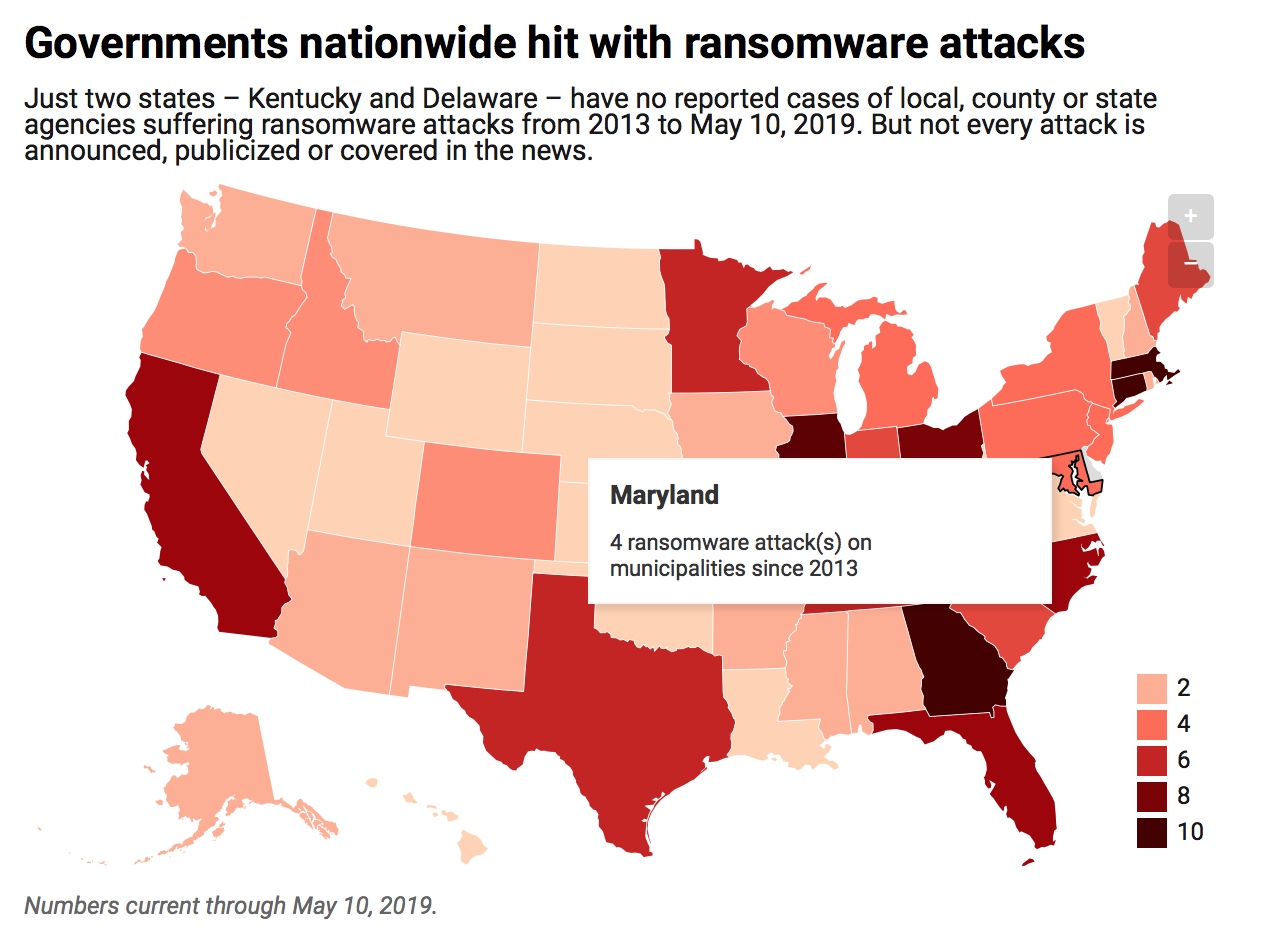
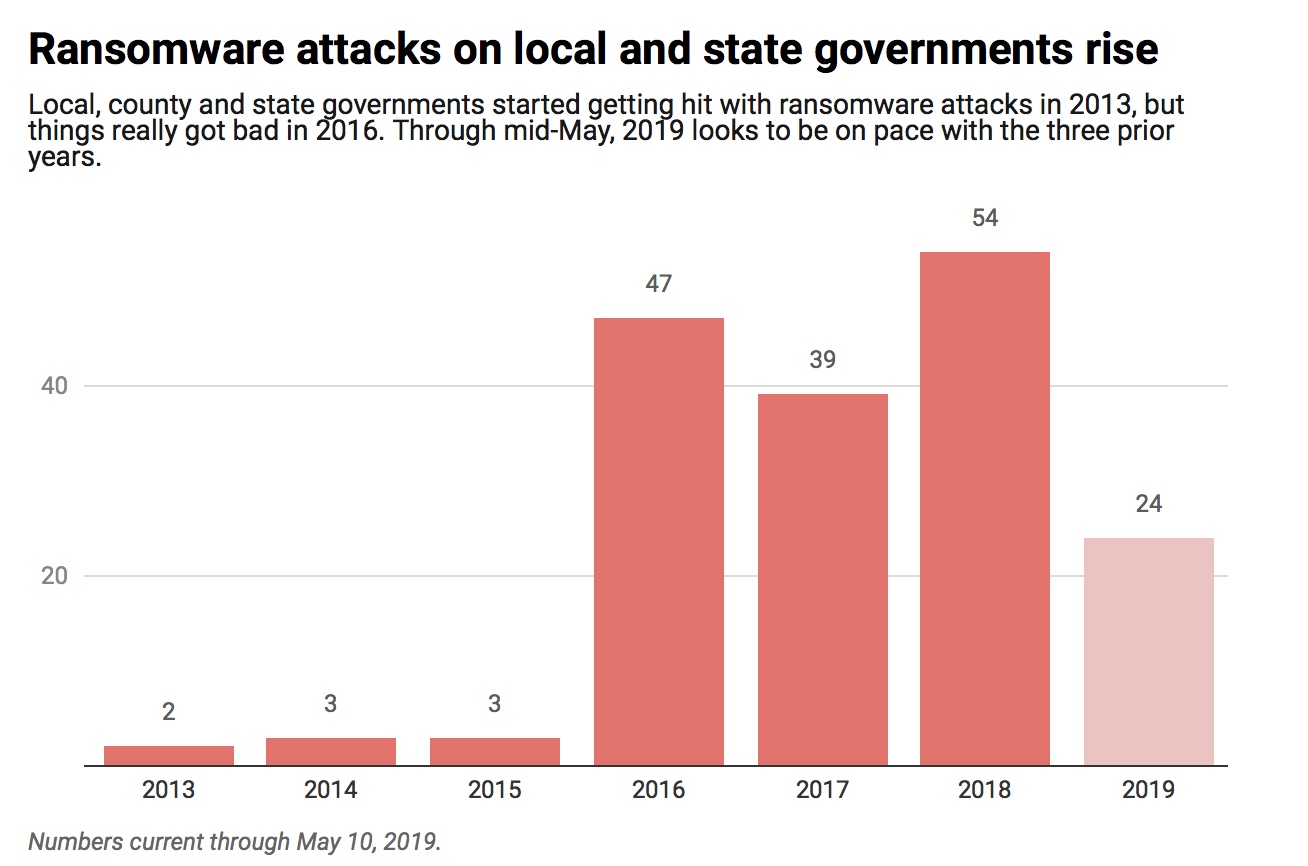
Similar attacks in recent years have crippled the United Kingdom’s National Health Service, shipping giant Maersk and local, county and state governments across the U.S. and Canada.Map: The Conversation, CC-BY-ND Source: Recorded Future Get the data Map: The Conversation, CC-BY-ND Source: Recorded Future

These types of attacks are becoming more frequent and gaining more media attention. Speaking as a career cybersecurity professional, the technical aspects of incidents like this are but one part of a much bigger picture. Every user of technology must consider not only threats and vulnerabilities, but also operational processes, potential points of failure and how they use technology on a daily basis. Thinking ahead, and taking protective steps, can help reduce the effects of cybersecurity incidents on both individuals and organizations.

Understanding cyberattack tools

Software designed to attack other computers is nothing new. Nations, private companies, individual researchers and criminals continue developing these types of programs, for a wide range of purposes, including digital warfare and intelligence gathering, as well as extortion by ransomware.

Many malware efforts begin as a normal and crucial function of cybersecurity: identifying software and hardware vulnerabilities that could be exploited by an attacker. Security researchers then work to close that vulnerability. By contrast, malware developers, criminal or otherwise, will figure out how to get through that opening undetected, to explore and potentially wreak havoc in a target’s systems.

Sometimes a single weakness is enough to give an intruder the access they want. But other times attackers will use multiple vulnerabilities in combination to infiltrate a system, take control, steal data and modify or delete information – while trying to hide any evidence of their activity from security programs and personnel. The challenge is so great that artificial intelligence and machine learning systems are now also being incorporated to help with cybersecurity activities.

There’s some question about the role the federal government may have played in this situation, because one of the hacking tools the attackers reportedly used in Baltimore was developed by the U.S. National Security Agency, which the NSA has denied. However, hacking tools stolen from the NSA in 2017 by the hacker group Shadow Brokers were used to launch similar attacks within months of those tools being posted on the internet. Certainly, those tools should never have been stolen from the NSA – and should have been better protected.

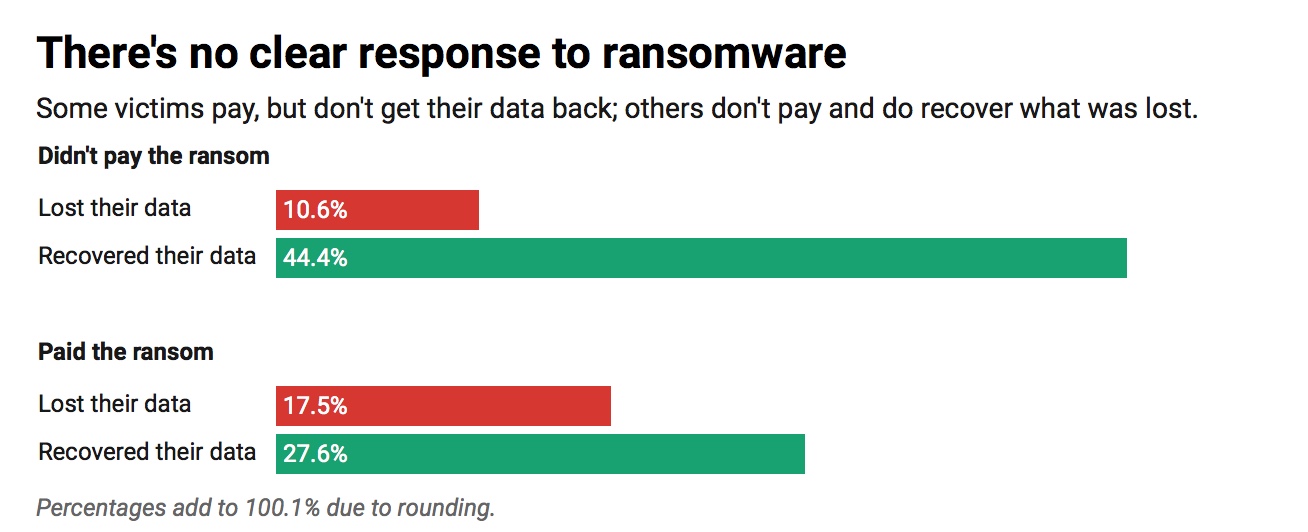
But my views are more complicated than that: As a citizen, I recognize the NSA’s mandate to research and develop advanced tools to protect the country and fulfill its national security mission. However, like many cybersecurity professionals, I remain conflicted: When the government discovers a new technology vulnerability but doesn’t tell the maker of the affected hardware or software until after it’s used to cause havoc or disclosed by a leak, everyone is at risk.Chart: The Conversation, CC-BY-ND Source: CyberEdge Group Cyberthreat Defense Report 2019 Get the data

Chart: The Conversation, CC-BY-ND Source: CyberEdge Group Cyberthreat Defense Report 2019

Baltimore’s situation

The estimated $18 million cost of recovery in Baltimore is money the city likely doesn’t have readily available. Recent research by some of my colleagues at the University of Maryland, Baltimore County, shows that many state and local governments remain woefully underprepared and underfunded to adequately, let alone proactively, deal with cybersecurity’s many challenges.

It is concerning that the ransomware attack in Baltimore exploited a vulnerability that has been publicly known about – with an available fix – for over two years. NSA had developed an exploit (code-named EternalBlue) for this discovered security weakness but didn’t alert Microsoft about this critical security vulnerability until early 2017 – and only after the Shadow Brokers had stolen the NSA’s tool to attack it. Soon after, Microsoft issued a software security update to fix this key flaw in its Windows operating system.

Admittedly, it can be very complex to manage software updates for a large organization. But given the media coverage at the time about the unauthorized disclosure of many NSA hacking tools and the vulnerabilities they targeted, it’s unclear why Baltimore’s information technology staff didn’t ensure the city’s computers received that particular security update immediately. And while it’s not necessarily fair to blame the NSA for the Baltimore incident, it is entirely fair to say that the knowledge and techniques behind the tools of digital warfare are out in the world; we must learn to live with them and adapt accordingly.Chart: The Conversation, CC-BY-ND Source: Recorded Future Get the data

Chart: The Conversation, CC-BY-ND Source: Recorded Future: Get the data

Compounding problems

In a global society where people, companies and governments are increasingly dependent on computers, digital weaknesses have the power to seriously disrupt or destroy everyday actions and functions.

Even trying to develop workarounds when a crisis hits can be challenging. Baltimore city employees who were blocked from using the city’s email system tried to set up free Gmail accounts to at least get some work done. But they were initially blocked by Google’s automated security systems, which identified them as potentially fraudulent.

Making matters worse, when Baltimore’s online services went down, parts of the city’s municipal phone system couldn’t handle the resulting increase in calls attempting to compensate. This underscores the need to not only focus on technology products themselves but also the policies, procedures and capabilities needed to ensure individuals and/or organizations can remain at least minimally functional when under duress, whether by cyberattack, technology failures or acts of nature.

Protecting yourself, and your livelihood

The first step to fighting a ransomware attack is to regularly back up your data – which also provides protection against hardware failures, theft and other problems. To deal with ransomware, though, it’s particularly important to keep a few versions of your backups over time – don’t just rewrite the same files on a backup drive over and over.

That’s because when you get hit, you’ll want to determine when you were infected and restore files from a backup made before that time. Otherwise, you’ll just be recovering infected data, and not actually fixing your problem. Yes, you might lose some data, but not everything – and presumably only your most recent work, which you’ll probably remember and recreate easily enough.

And of course, following some of cybersecurity’s best practices – even just the basics – can help prevent, or at least minimize, the possibility of ransomware crippling you or your organization. Doing things like running current antivirus software, keeping all software updated, using strong passwords and multifactor authentication, and not blindly trusting random devices or email attachments you encounter are just some of the steps everyone should take to be a good digital citizen.

It’s also worth making plans to work around potential failures that might befall your email provider, internet service provider and power company, not to mention the software we rely on. Whether they’re attacked or simply fail, their absence can disrupt your life.

In this way, ransomware incidents serve as an important reminder that cybersecurity is not just limited to protecting digital bits and bytes in cyberspace. Rather, it should force everyone to think broadly and holistically about their relationship with technology and the processes that govern its role and use in our lives. And, it should make people consider how they might function without parts of it at both work and home, because it’s a matter of when, not if, problems will occur.The Conversation

******

Richard Forno, Senior Lecturer, Cybersecurity & Internet Researcher, University of Maryland, Baltimore County

Header image: Many of Baltimore’s city services are crippled by a cyberattack.
The Conversation from City of Baltimore and Love Silhouette/Shutterstock.com, CC BY-SA

This article is republished from The Conversation under a Creative Commons license. Read the original article.

Spider Glue’s Sticky Secret Revealed By New Genetic Research

By Sarah Stellwagen, postdoctoral researcher in biological sciences, UMBC

What do all of the over 45,000 described spider species on Earth have in common? Each makes at least one type of silk. And there are an awful lot of types out there.

An individual orb weaving spider – the kind that spins the classic two-dimensional aerial spiral webs that seem to always be suspended at human face-height – can produce seven different silks, each with unique material properties.

Dragline silk forms the frame of an orb web and is famous for its strength and toughness, comparable to that of steel. The capture spiral is made of a highly stretchy version called flagelliform silk. Orb weaving spiders use an additional type of silk to wrap prey and create web decorations.

But there’s another kind that, on the surface, doesn’t resemble silk at all: the sticky glue with which some spiders cover their silk capture threads. It doesn’t look like the classic threads that come to mind when thinking of spider silk, but the gluey substance from these webs is in fact a silk protein.

For many years, researchers have been uncovering the secrets of spider glue, which stays wet in its open air environment and sticky over many rounds of attachment and release. Its genetic blueprint has remained elusive, however, meaning scientists haven’t been able to think about setting up large-scale production of this potentially useful biomaterial.

Using new technology, my colleague and I have been able to sequence the the first full genetic sequences that code for spider glue proteins.

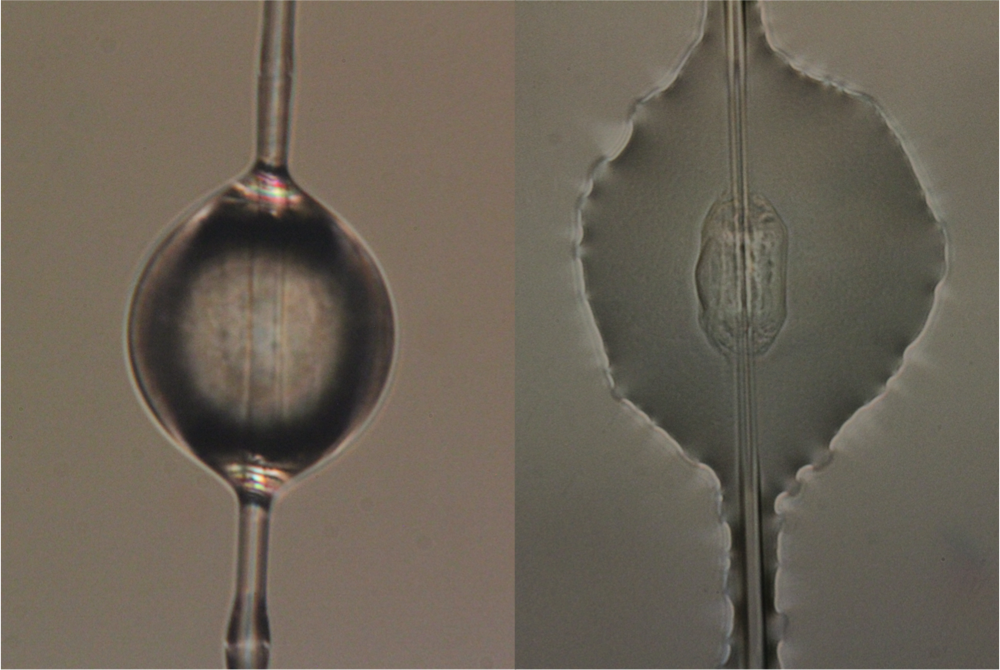
Spider glue drops spread along a strand of capture spiral silk.Sarah Stellwagen, CC BY-ND

A silk that’s really a sticky glue

Under a microscope, orb weaver glue resembles beads on a string – little glistening spheres along a strand of stretchy support silk. Instead of being spun into a fiber as it leaves the spider’s body like other silks, the glue proteins are extruded as a jumbled mass. Their job is to stickily retain prey that get caught in the web.

Different spider species produce glue tailored to their habitat’s conditions and prey.

The glue of tropical orb weaving species is sticky in the spider’s wet habitat, but downgrades to just tacky in low humidity. The glue of orb weavers from dry regions becomes dilute and thin if the humidity is too high.

Bolas spiders forgo the orb web, and instead produce a large globule of glue at the end of a long strand of silk that they whirl rapidly through the air. The glue of this sticky snare is specialized for capturing moths covered with loose scales.

Widow spiders produce vertical, glue-covered trip lines that detach from the ground when encountered by an unsuspecting victim, springing the prey into the air where it hangs suspended. Unlike orb weaver glue, widow glue is resistant to fluctuating humidity.

These various specialized adhesive properties have intrigued biomaterials researchers who can dream up plenty of uses for artificial versions of spider glues. But without knowing the genes that code for these proteins, there hasn’t been a clear road map for how to produce synthetic spider glues.

https://www.pexels.com/photo/female-males-autumn-spiders-metellina-segmentata-60694/

Cracking a long, repetitive code

Surprisingly, researchers have only sequenced around 20 full-length spider silk genes despite the incredible diversity of spiders and decades-old interest in silk as a useful biomaterial.

It turns out that not only are the properties of spider silk amazing, but so is the DNA code that stores the instructions for making the protein. Spider silk genes are extremely large; in itself that’s not a problem, but the bulk of their sequence is made from repeats of the same small DNA bits.

Imagine that the sentence “THE QUICK BROWN FOX JUMPED OVER THE LAZY DOG” is a sequence of DNA that encodes for a protein, but whose exact order of letters is still unknown.

In order to discover this sequence, the main method of DNA sequencing technology available today has three main steps. Once a DNA sample is collected, many copies of the sentence are randomly broken up into small pieces. For example, you might end up with a collection of fragments like “THE QU” “QUICK B” “BROWN FO” “WN FOX J” “AZY DOG” and on and on.

Then a DNA sequencing machine discovers each letter of each piece. The final step is stitching all the short pieces, technically called “reads,” back together in one sequence to figure out the original sentence.

For the sentence above, this is an easy task. The sequence of letters is unique, and as long as there are at least five characters in each read, it’s possible to figure out where one fits relative to another.

Now imagine a similar sentence: “THE QUICK BROWN FOX JUMPS JUMPS JUMPS JUMPS JUMPS JUMPS JUMPS JUMPS JUMPS JUMPS JUMPS OVER THE LAZY DOG.” Given many random short reads from the middle region like “UMPS J” or “S JUMP,” no matter how you slice and dice, it’s impossible to use this method to figure out the number of “JUMPS” in the complete sentence.

Sequencing a long read of DNA in one go

For many years DNA sequencing has been limited to this short-read strategy: breaking a gene into bits and then reassembling into one cohesive sequence.

Setting aside some difficult and expensive techniques that are out of reach for standard labs, the best way to fully discover a long, repetitive gene is to sequence the repetitive part from start to finish in one go. Fortunately, emerging technology, while still in its infancy, is starting to allow this long-read sequencing by getting around the chemistry limitations of the short-read method. For those that study super-repetitive DNA this is excellent news: New types of DNA sequencers are finally resolving the “JUMPS.”

Now that two spider glue genes are fully sequenced, the first step towards making a synthetic version is complete. Researchers can now insert the genes into other organisms, like bacteria or yeast, to make the glue in bulk.

Droplet of spider glue suspended on capture spiral silk (left) and after adhering to a glass slide (right).Sarah Stellwagen, CC BY-ND

Unlike solid silks, the glue proteins do not have to be transformed from a liquid to a solid fiber, something spiders do effortlessly but that scientists have trouble replicating. The glue has the potential for many unique applications and is biodegradable, water soluble and stays sticky for months or even years.

Imagine safer pest control or washable filters. Or frat boys wrestling in a kiddie pool of the stuff. Either way, someday soon it might be possible to reach your hand into a bucket of spider glue – the tricky part will be not sticking to whatever you touch next.The Conversation

*****

Sarah Stellwagen is a postdoctoral researcher in biological sciences at University of Maryland, Baltimore County

Header image: Spider glue is actually a specialized silk protein. Sarah Stellwagen, CC BY-ND

This article is republished from The Conversation under a Creative Commons license. Read the original article.

Antibiotic resistance is not new – it existed long before people used drugs to kill bacteria

Ivan Erill, Associate Professor, Biological Sciences, UMBC

Imagine a world where your odds of surviving minor surgery were one to three. A world in which a visit to the dentist could spell disaster. This is the world into which your great-grandmother was born. And if humanity loses the fight against antibiotic resistance, this is a world your grandchildren may well end up revisiting.

Antibiotics changed the world in more ways than one. They made surgery routine and childbirth safer. Intensive farming was born. For decades, antibiotics have effectively killed or stopped the growth of disease-causing bacteria. Yet it was always clear that this would be a rough fight. Bacteria breed fast, and that means that they adapt rapidly. The emergence of antibiotic resistance was predicted by none other than Sir Alexander Fleming, the discoverer of penicillin, less than a year after the first batch of penicillin was mass produced.

Yet, contrary to popular belief, antibiotic resistance did not evolve recently, or in response to our use and misuse of antibiotics in humans and animals. Antibiotic resistance first evolved millions of years ago, and in the most mundane of places.

I am a bioinformatician, and my lab studies the evolution of bacterial genomes. With antibiotic resistance becoming a major threat, I’m trying to figure out how resistance to antibiotics emerges and spreads among bacterial populations.

A billion-years-old arms race

Most antibiotics are naturally produced by bacteria living in soil. They produce these deadly chemical compounds to fend off competing species. Yet, in the long game that is evolution, competing species are unlikely to sit idly by. Any mutant capable of tolerating a minimal quantity of the antibiotic will have a survival advantage and will be selected for – over generations this will produce organisms that are highly resistant.

So it’s a foregone conclusion that antibiotic resistance, for any antibiotic researchers might ever discover, is likely already out there. Yet people keep talking about the evolution of antibiotic resistance as a recent phenomenon. Why?

Resistance can and does evolve when bacteria are persistently exposed to a new antibiotic they have never encountered. Let’s call this the old-fashioned evolutionary road. Second, when bacteria are exposed to a novel antibiotic and are in contact with bacteria already resistant to this antibiotic, it is just a matter of time before they get cozy and trade genes. And, importantly, once genes have been packaged for trading, they become easier and easier to share. Bacteria then meet other bacteria, which meet more bacteria, until one of them eventually meets you.

Bacteria can evolve resistance to high levels of antibiotics in just days.

The rise and fall of sulfa drugs

For all their might, antibiotics are not the only substances capable of effectively killing bacteria (without killing us). A decade before the mass production of penicillin, sulfonamide drugs became the first commercial antibacterial agent. Sulfa drugs act by blocking an enzyme – called DHPS – that is essential for bacteria to grow and multiply.

Sulfa drugs are not antibiotics. No known organism produces them. They are chemotherapeutic agents synthesized by humans. No natural producer means no billion-year-old arms race and no pool of ancient resistance genes. We would expect bacteria to evolve resistance to sulfa drugs via the good old-fashioned way. And they did.

Just a few years after their commercial introduction, the first cases of resistance to sulfa drugs were reported. Mutations to the bacterial DHPS enzyme made sulfa drugs ineffective. Then penicillin and the antibiotic era came about. Sulfa drugs were relegated to a secondary role in medicine, but they gained popularity as cheap antimicrobials in animal husbandry. By the 1980s resistance to sulfa drugs was rampant and worldwide. What had happened?

At odds with resistance

To answer this question our research team took sequences of sulfa drug resistance genes from disease-causing bacteria and compared them to millions of “normal” versions of the DHPS enzyme in nonpathogenic bacteria.

The team identified two large groups of bacteria that had DHPS enzymes resistant to sulfa drugs. By studying their DNA sequences, we were able to show that these resistant DHPS enzymes had been present in these two groups of bacteria for at least 500 million years. Yet sulfa drugs were first synthesized in the 1910s. How could resistance be around 500 million years ago? And how did these resistance genes find their way into the disease-causing bacteria plaguing hospitals worldwide?

The clues left in gene sequences are too fuzzy to conclusively answer the latter, but we can certainly speculate. The bacteria we identified as harboring these ancient sulfa drug resistance genes are all soil and freshwater bacteria that thrive under the well-irrigated subsoil of farms. And farmers have been adding huge amounts of sulfa drugs to animal feed for the past 50 years.

The sublethal concentrations of sulfa drugs in the soil are the perfect setting for resistance genes to be transferred from these ancient resistant bacterial populations to other bacteria. All it takes is for one lucky bacterium to meet one of these ancient resistant ones in the subsoil. They trade some genes, one bacterium to the next, and resistance spreads until a newly minted resistant bacterium eventually makes it to the groundwater supply you drink from. You do the math.

Nothing new under the sun

As for why sulfa drug resistance genes would be around 500 million years ago, there are two plausible explanations. On the one hand, it could be that 500 million years ago there was a bacterium that synthesized sulfa drugs, which would explain the evolution of resistance. However, the lack of remnants from such a biosynthetic pathway makes this unlikely.

On the other hand, resistant bacteria may have been around just by chance. The argument here is that there are so many bacteria, and such diversity, that chances are that some of them are going to be resistant to anything scientists come up with. This is a sobering thought.

Then again, this is already the baseline for antibiotics. Like climate change, antibiotic resistance is one of those problems that always seem to be a couple decades away. And it may well be. A turning point for me in the climate change debate was a decade-old opinion piece in New Scientist. It stated that we should make every possible effort to prevent climate change, especially in the unlikely case that it was not caused by man, because that would mean that all we can do is palliate a natural phenomenon.

Our research points in the same direction. If resistance is already out there, drug development can offer only temporary relief. The challenge then is not to quell resistance, but to avoid its spread. It is a big challenge, but not an insurmountable one. Not feeding wonder drugs to pigs would do nicely, for starters.

* * * * *

Ivan Erill, Associate Professor of Biological Sciences, University of Maryland, Baltimore County

This article is republished from The Conversation under a Creative Commons license. Read the original article.

Header image by Drew Hays on Unsplash
The Conversation

Choosing Her Own Adventure

Halfway through her senior year at UMBC, Naomi Mburu M26, ’18, chemical engineering, was named the very first Rhodes Scholar in university history. So, following Commencement, she packed her bags and—after squeezing in a summer trip to Kenya—headed for jolly old England to make her mark on Oxford, the oldest English-speaking university in the world. Today, more than 3,500 miles from home in her pursuit of a doctorate in nuclear fusion, Mburu writes to share her thoughts on her first year at Oxford, and the ways she’s making herself right at home.

Roughly a year and a half ago, I received one of the biggest surprises I have ever received: the opportunity to attend the University of Oxford in England. As someone who has lived and attended elementary, middle, and high school all within 15 minutes of UMBC, I was itching to see the broader world and what it had to offer. Now, I have been living in Oxford for a little over six months and wanted to share some experiences and observations with my UMBC community.

There have been several wonderful and difficult moments woven throughout my experience thus far. Meeting hundreds of other Rhodes Scholars has been one of the most wonderful aspects of this experience, as the scholars come from many corners of the world and each have such interesting experiences and perspectives on life. Some of the moments I most enjoy at Oxford involve exchanging life stories with my fellow “Rhodies” and hearing my classmates passionately talk about topics that are close to their hearts.

Having the Rhodes community around me has definitely helped ease my adjustment to English life, but there have still been many times when I felt the loneliness of leaving home and starting off alone in a new country. I found that close community and friendship can sometime take quite a bit of time, patience, and effort to create, and maintaining old friendships across time zones can be a difficult thing to juggle. Luckily, there is so much fantastic technology like WhatsApp and FaceTime that allow me to easily connect with family and friends back home, and my family was able to visit me in April. There have also been some unexpected differences that I am learning to adjust to, the main being the weather and the sun setting at 3 p.m. in the winter.  

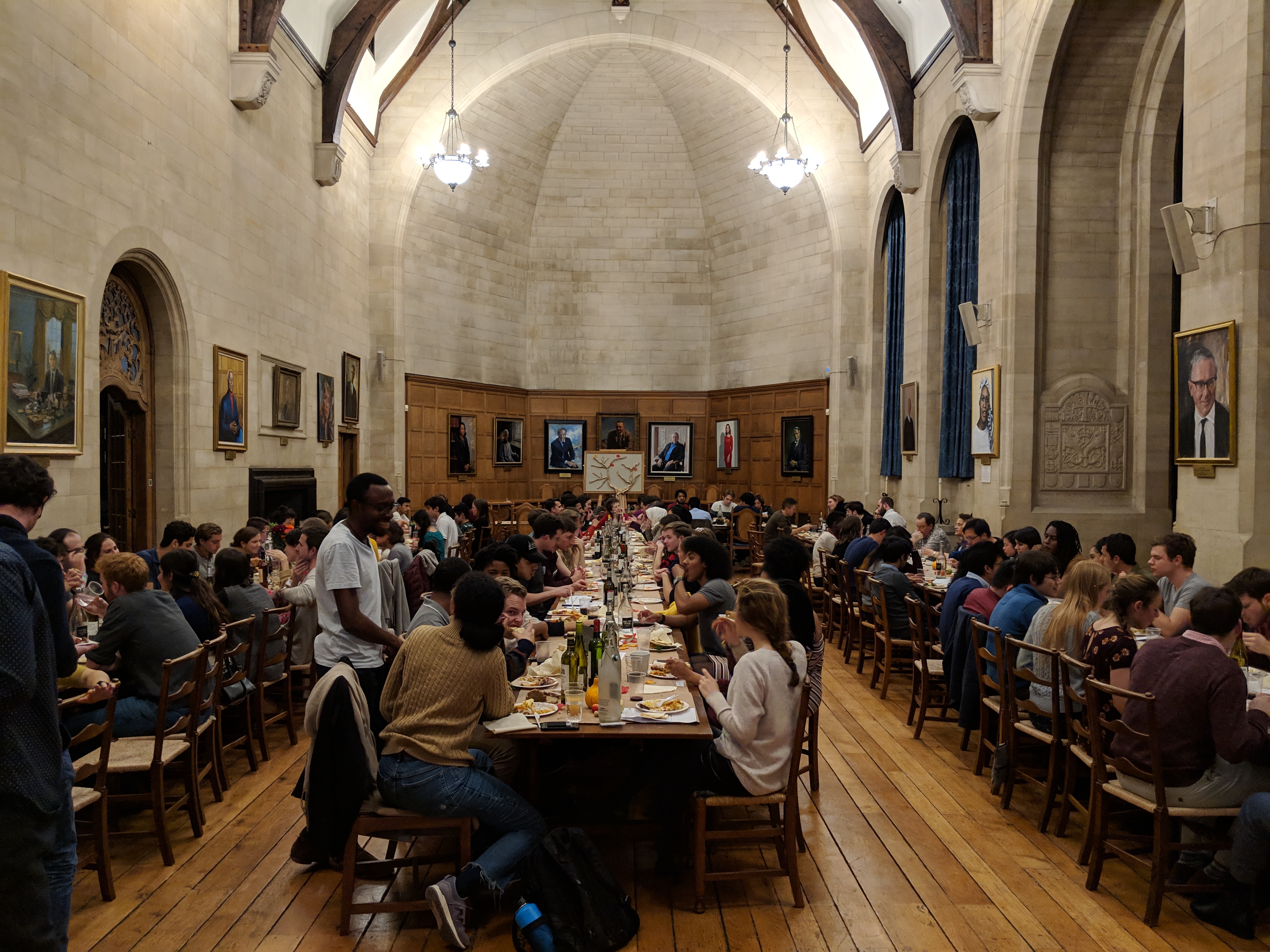
Eating an American-style Thanksgiving together in Milner Hall of the Rhodes House.

One of the biggest surprises of Oxford has been the structure of the Ph.D. compared to universities in America. For starters, here the Ph.D. is instead called the D.Phil., and in my department the D.Phil. process solely consists of an in-depth research project conducted over 3-4 years. There are no class or teaching requirements; the only responsibility is conducting research. This was quite a shift from my time at UMBC where I found myself balancing a full, pre-determined chemical engineering course load along with extracurriculars, teaching, and research. This has given me the chance to spend my first few months at Oxford really diving into my new field of nuclear fusion and thinking critically about what I want to get out of my Ph.D.

The increased freedom does come with added responsibility, howeverstudents must decide for themselves what they want their D.Phil. experience to look like and proactively seek out those opportunities. Coming from a more structured undergraduate experience, this freedom was initially quite intimidating. However, I have seen how the flexibility of this new schedule has afforded me lots of time to try new things, travel, ponder, and simply do things that make me happy. Oxford has lots of great spots where I go to relax, read, or think, such as Christ Church Meadow, a beautiful field complete with cows which runs along the Thames River, or any of the beautiful college gardens.

Oxford and the Rhodes community are bursting with opportunities for students to “choose their own adventure.” The Rhodes House has been a central part of my experience thus far, as it serves as a meeting place for scholars past and present to plan events, study, and hang out. I have attended many scholar-led talks, musical performances, and even a mindfulness course there. The house also serves as the location for the annual Rhodes Retreat, which is a unique chance to spend a few days reflecting and discussing deep issues of life and purpose with your cohort.

Eating an American-style Thanksgiving together in Milner Hall of the Rhodes House.

In November, I helped organize an American Thanksgiving dinner for 130 people in the Rhodes House with a diverse team of people, some of whom had never experienced this type of holiday celebration. We had mashed potatoes, macaroni and cheese, stuffing, sweet potato casserole, homemade bread, turkey, a vegan option prepared by a scholar from Israel, and one of the Jamaican scholars even made jerk sauce for the turkey! Every year, the Rhodes House also sponsors scholar trips to places like Israel, China, Palestine, and Chile. I attended the Chile trip in March, where I joined a group of 11 other scholars on a nine-day backpacking expedition through Patagonia National Park.

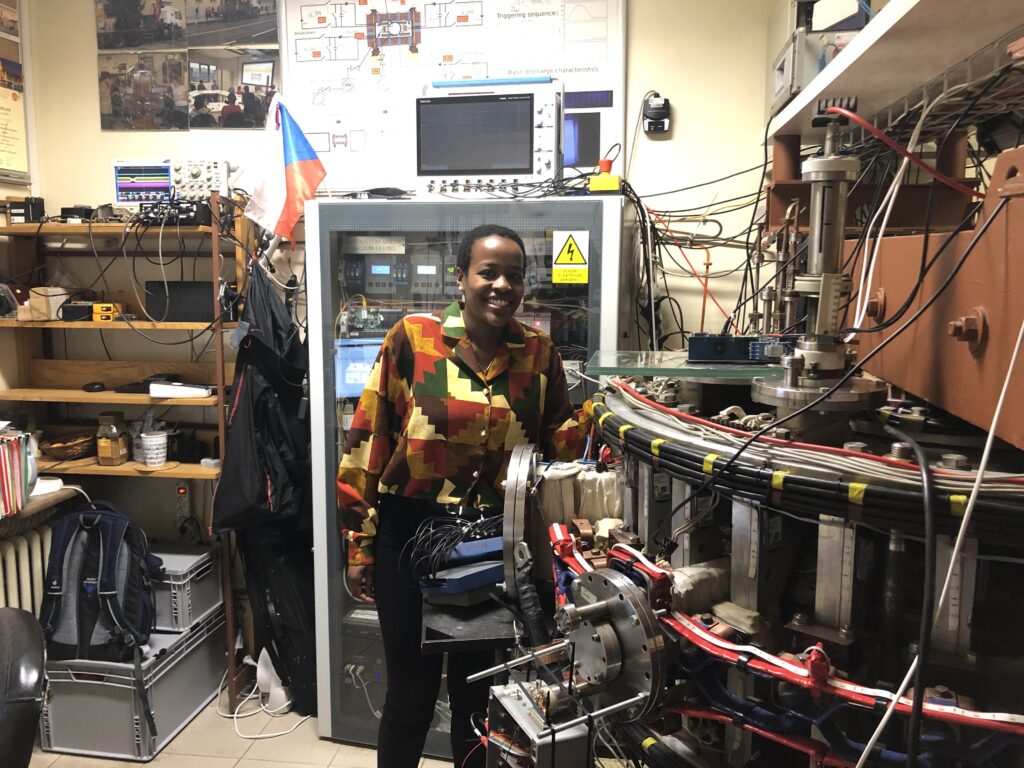
Outside of the Rhodes House, I have attended talks at Oxford ranging from brain surgery to the evolution of language, tried new sports like rowing, and engaged in ancient traditions such as attending formal hall in the Harry Potter-style dining halls where we wear a mandatory black gown and stand for a formal Latin grace before the meal. And in March, the university supported me to attend a fusion-focused, week-long program that involved operating the world’s oldest functioning nuclear fusion reactor, located in Prague, Czech Republic, which was a great chance to meet other students in Europe interested in fusion and gain some hands-on experience with a fusion reactor.

Overall, my time at Oxford has been full of experiences that are continuing to shape the way I view the world and use my time. I look forward to all of the adventures the next year has in store!

–Naomi Mburu ’18

*****

Header image: Mburu finds the end of the rainbow during a Rhodes trip to Chile, which included a backpacking expedition through Patagonia National Park. All images courtesy of the author.

Q&A: Earnestine Baker, Executive Director Emerita, Meyerhoff Scholars Program

From its very first days, Earnestine Baker, Executive Director Emerita, has been an integral part of the Meyerhoff Scholars Program. UMBC Magazine sat down with Baker to talk about some of the ways she — along with other staff and students — laid the foundation for the program’s successes over the last thirty years.

UMBC Magazine: What are some of your first memories of how the Meyerhoff Scholars Program came to be?

Earnestine Baker: Immediately what comes to mind is the phone call I received from Dr.Hrabowski, inviting me to a meeting in his conference room. I was working in the Office of Financial Aid as the Associate Director of Financial Aid and Scholarships; UMBC did not have a scholarship program at that time. Tom Taylor, the Director of Financial Aid, initiated UMBC’s formal scholarship program.

So in that capacity, I worked to establish the scholarship program for incoming freshmen. One afternoon in the summer of 1988, I received a life-changing call from the Assistant to the Vice Provost, Dr. Freeman Hrabowski, inviting me to come to a meeting to discuss scholarships. I was thinking that we would talk about my work and plans for UMBC’s scholarship program, but instead he laid out his plan for recruiting, to UMBC, African American men who would go on and achieve Ph.D.s in science. He met with Mr. and Mrs. [Robert] Meyerhoff, and he wanted to develop this program. I hesitated a little but finally said “Okay,” and he said, “I want to create the environment that we had when we were undergraduates [at Hampton Institute now Hampton University.]” And when he said that, I knew immediately what he was talking about. … During the meeting he asked if I would look into developing an application for the Meyerhoff Scholars Program. I went back to my office, developed a design and that’s how I began working with the Meyerhoff Scholars Program. By the way, the first application received for the Meyerhoff Scholars Program was from Chester Hedgepeth now an M.D./Ph.D. from the University of Pennsylvania.

UMBC Magazine: How did you initially spread the word about it?

Earnestine Baker:  So that’s an excellent question, because what happened after that meeting I thought was very smart of Doc. He sent letters to all the state superintendents of schools, principals, the heads of private and parochial schools, letters to guidance counselors throughout the state, community leaders, inviting them all to come to UMBC for a meeting. During this meeting, he again laid out his plan for the Program; first buy-in approach I thought.

Additionally, we asked students who were the people who made an impact in their lives educationally. And they said, “My teacher in biology,” or “My guidance counselor,” or, “My minister,” “My pastor of my church,” or “Someone down the street.” We collected names and addresses of individuals and invited them also to this meeting, and … asked them to nominate students for the scholarship. From this came the Meyerhoff Nomination Process.

UMBC Magazine: How did folks react to the program at the very beginning?

Earnestine Baker: That’s what was great about this meeting with the superintendents, principal and others …yes we announced the scholarship, but we also wanted support, buy-in, plus community ownership for the Program we were about to launch.

UMBC Magazine:  So in a way, you were opening the door to the people who were most likely to make it successful, because someone coming to the meeting was already going to believe in what you’re talking about. That seems like just such a smart move.

Earnestine Baker:   Right, it was a very wise decision. We let our leaders in education know that UMBC will provide another opportunity for them to support students whose goal is to increase the number of scientists who will teach and become researchers.

UMBC Magazine: What was it like bringing students into research opportunities for the first time, when you were still figuring pieces of the experience out?

Earnestine Baker:   The students were very excited. We knew for them to have a competitive application for graduate and professional schools, they needed strong research experiences, be it in industry or in higher education. Initially, a larger number of students were completing research in industry and not in higher education, at the NIH, National Science Foundation, NSA, and NASA; we had more connections in industry at that time.

At UMBC, the first faculty member to take one of our students in his lab was Dr. Frank Hanson in the Biology Department. I said to Frank, “I need to find a lab placement for one of our students,” and he said, “Well, let’s look at it and see what we can do.”

It took many, many meetings with high schools, universities, federal and state agencies and individuals to get our message “out.” Many of these meetings included Charles “Tot” Woolston – you don’t hear much about his efforts, but he gave tremendously while promoting the Meyerhoff mission and goals. Dr. Phyllis Robinson, Biology Department was extremely helpful in advising the program for internships and graduate school placements. A major breakthrough for research opportunities came when Dr. Hrabowski connected with Leadership Alliance, whose executive office is at Brown University.

Dr. James “Jim” Wyche was the director of the Leadership Alliance as well as a faculty member at Brown. This partnership, provided opportunities for our students to participate in research at the top leading institutions across the nation. There are about 38 schools in the Alliance now. I invited one of the Leadership Alliance faculty members from Harvard University to visit UMBC, meet faculty and the Meyerhoff Scholars. From this meeting – the next two summers, she (the late Dr. Jocelyn Spragg) selected three Meyerhoff Scholars for summer research at Harvard. The Meyerhoffs Scholars were Crystal Watkins M3, Damon Tweedy M4, and Andrew Atiemo M4. Their work was exceptional and created an interest in Meyerhoff Scholars at other top tier universities. This was a very exciting time, and my confirmation that “yes, we can do this.” Jocelyn invited me to visit Harvard while Damon and Andrew were there. She remained a good friend and strong supporter of UMBC and the Meyerhoff Program.


UMBC Magazine:   I would love to talk about Summer Bridge, because that is what comes up so often with everyone as a really pivotal moment of the Meyerhoff experience.

Earnestine Baker:  I feel Summer Bridge is the key component. It is the beginning stages of becoming a Meyerhoff Scholar and truly understanding the goals of the Program and what it means to work together as a family; the true feeling of the Meyerhoff family.  I often say to students “you don’t have to love each other, you don’t have to like each other, but you have to help each other.”

It’s not only about working together as students, but also learning how to work with faculty, staff and administrators; teaching the UMBC way, the Meyerhoff way. Academically, we talked about high expectations and goals. We had regular meetings and talked about how the Program expected students to perform academically, personally, socially … in all aspects of their undergraduate career.

What is critically important, and what we have tried to communicate over the years, is that you cannot be successful in STEM trying to do it alone, nor should you try. Interdependence is taught during Summer Bridge, and it’s very important. Some students’ approach is similar to high school, “I have to do this by myself. I cannot – I don’t – I shouldn’t ask questions, because if I ask questions it shows that I’m not smart, I’m not capable, and I’m not intelligent.” Hence some don’t want to ask questions or reach out for help. Some have the mindset, “It’s me. It’s mine. And that’s the way it’s going to be.”   I know it’s a part of their growing-up experience. For some, it’s the first time — hearing when you gain knowledge and achieve you should, and we expect you to, share what you have gained with others. When one wins we all win. When one fails we all fail. In Meyerhoff failure is not an option.  Can you imagine the reaction in a calculus class when the lowest grade on a test – let’s say 69 – becomes the grade for everyone in the class? Not happy campers.  Over the years I have enjoyed and appreciated the lesson learned in this class; seeing the class come together and work to achieve an “A” was just what I hoped would happen. It’s a powerful lesson and it has been passed forward.  During Summer Bridge scholars are expected to move about campus together – a part of the bonding process.  I remember once a group of scholars decided to leave their cohort early for lunch.  Upon my arrival to the dining hall one of the dining hall staff members reported to me that some Meyerhoffs had arrived early and she knew that they were not supposed to do that.  This to me was a wonderful example of institutional buy-in.  This staff member knew and supported our mission.

It begins with Summer Bridge, and the lessons learned hopefully will continue. I’m told it continues at the graduate level and in the work place. Summer Bridge is not easy. LaMont (Toliver) and I used to plan, plot, and scheme to make each Meyerhoff co-hort the best they could be. No gaps in the line while walking to class together, 6 a.m. wake-up calls, never late to anything, sit in the front of class … Scholars were not always happy with us, I know, but I hope they realize the reasons and can see and appreciate the benefits. For what we have accomplished over thirty years – “it is worth it.”

UMBC Magazine: What’s it like talking with students about Summer Bridge now, especially those who didn’t initially understand what you were trying to do?

Earnestine Baker:  It was a challenge seeing Meyerhoff Scholars go through Summer Bridge and initially not understanding its purpose, not getting it. Sometimes I saw hurt on their faces, or anger, and I said to them, ‘ Just listen. Just listen and you’ll come to understand what it is that we are trying to do.’ … And now I hear – ‘Okay, I’m out. I’ve graduated now, and I get Summer Bridge. I understand’…and they find themselves repeating some of the same principals not only to their students and colleagues, but to their kids…. I feel this part of my life has been so worthwhile. At the end of the day, I exhale and reflect, and I say, ‘Thank you, God.’”  Many scholars have expressed their gratitude for my support over the years and I am grateful.  But the only thank you I desire is to see them give back to others.

Learn more about the Meyerhoff Scholars Program at meyerhoff.umbc.edu.

Photos, top to bottom, provided by the Meyerhoff Scholars Program: Baker with Lamont Dozier, a member of the second Meyerhoff cohort; Early Meyerhoff students studying; Baker with members of the Meyerhoff Parents Association; Meyerhoff student activity on the Quad.

Up on the Roof – Spring 2019

In 1989, Baltimore philanthropist Robert E. Meyerhoff sat down with then-UMBC vice provost Freeman Hrabowski with a bold vision for the University—to create a program that would offer high-achieving African American men a doorway into STEM scholarship at the highest levels. Thirty years later, the Meyerhoff Scholars Program is a national leader on the forefront of efforts to increase diversity among future leadersboth women and menin science, engineering, and related fields. Because of that, UMBC is also the leading producer nationally of African American undergraduates who go on to earn M.D./Ph.D. degrees.

This spring, as the program celebrates its 30th anniversary with its more than 1,100 alumni worldwide, Meyerhoff and Hrabowski sat down again to discuss the impact of what they started. This is an edited excerpt of that conversation.

Hrabowski:  Bob, you may recall that at that time UMBC was having a challenge in that young African Americans were coming in wanting to major in science or pre-med, and they were not doing well. They were not doing well….

Bob Embry of the Abell Foundation called me and he said, “Bob Meyerhoff has an interest in talking to you.” And when I got to you, it was like a marriage made in heaven, because all you did, the whole time, was ask me questions. You were trying to understand the problems, and the issues, and you did tell me, I will never forget it, that you truly believed that if children were given the same opportunities as your children, with the same support, they would do just as well. They would do quite well. And that’s how we got started.

Meyerhoff: And, there’s no question about it, that I was impressed right from the beginning with the first class. the students you had … were really impressive….And almost every year, they are more impressive.

Hrabowski: And let me just say, the fact that [the] Howard Hughes [Medical Institute] has put so much money into replicating the program at other places, and that the Chan Zuckerberg Initiative is just starting this process out in California, replicating the program, says a lot. The most important thing is…you have to have people who really care, and as you said at the beginning, who believe these young people can do it. And then we have to be clear about those expectations…And then we have to evaluate and be honest about what works and what doesn’t work. That makes the difference.

Meyerhoff: I’m so proud. I mean, if I wasn’t proud of them, I wouldn’t like the idea they call themselves Meyerhoffs. It’s complimentary to me that they’re called Meyerhoffs. I mean, they’re all much more educated in science than I am, and they have accomplished much more in science and engineering than I have or ever could. So I’m so very proud of the fact that they are where they are. They’re just so outstanding, and they’re just proving day after day after day how successful the program is.

Hrabowski: That’s right. And you have been a pioneer in being a visionary for this program, and these students are pioneers, because many have become the first African American, for example, or the first woman to complete these degrees. And once the first does it, then other people say, “I want to be like that.”

Meyerhoff: Right.

Hrabowski: “And I want to do that.” And that’s for every race in the program, for every possible group, they have been leading and showing other kids that it can be done…

You know when I think about it, this 30th anniversary, Bob, represents two things. Number one, your belief in the dream. The dream that these young people could excel. And number two, the magical notion that this is a time that we celebrate dreams realized. These are dreams realized, when you look out and you see hundreds of young people who are now serving society as scientists, and engineers, and physicians, we can’t help but think dreams realized. We continue to hold fast to dreams.


For more information about the Meyerhoff Scholars Program and the 30th Anniversary Celebration, visit meyerhoff.umbc.edu.


*****

Header image by Marlayna Demond ’11.