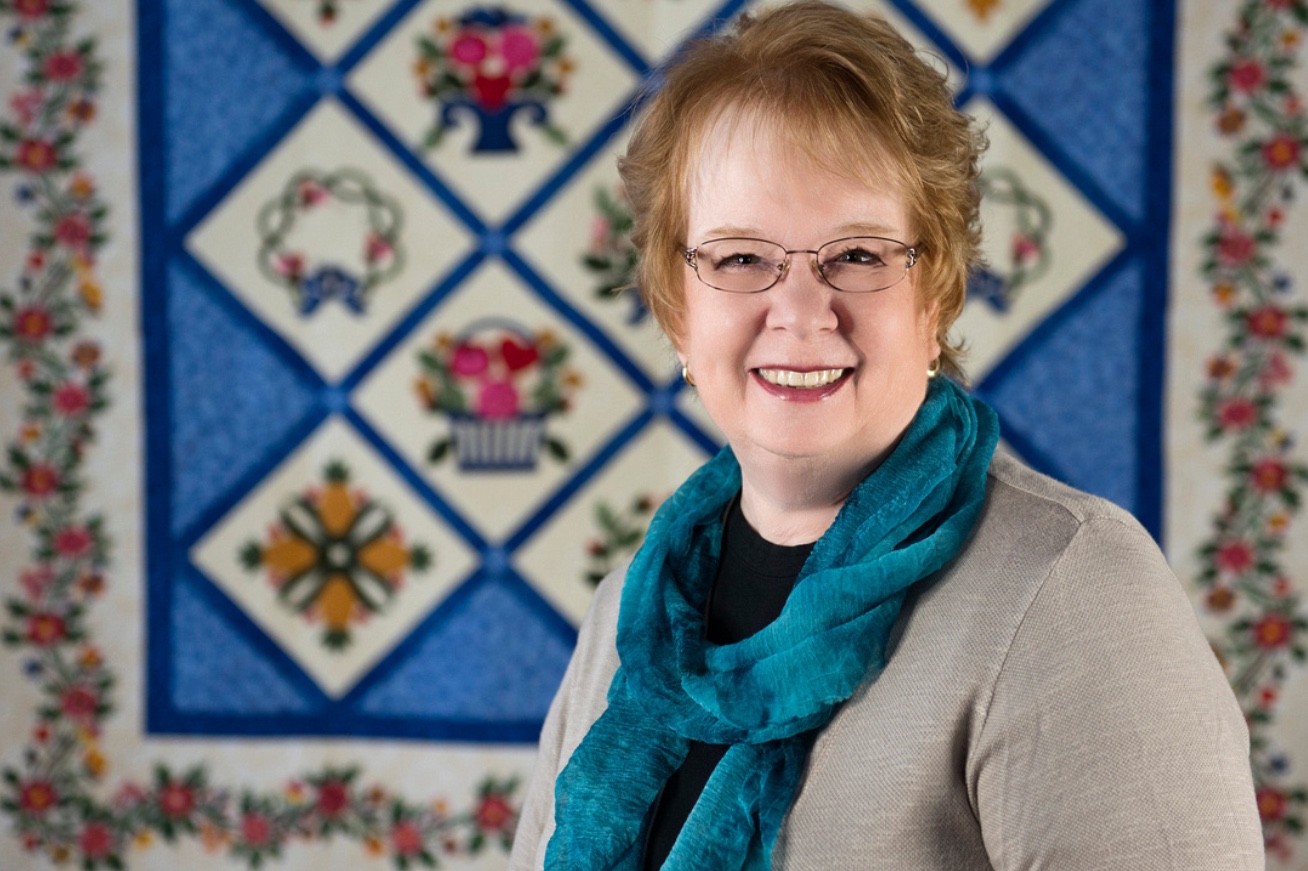
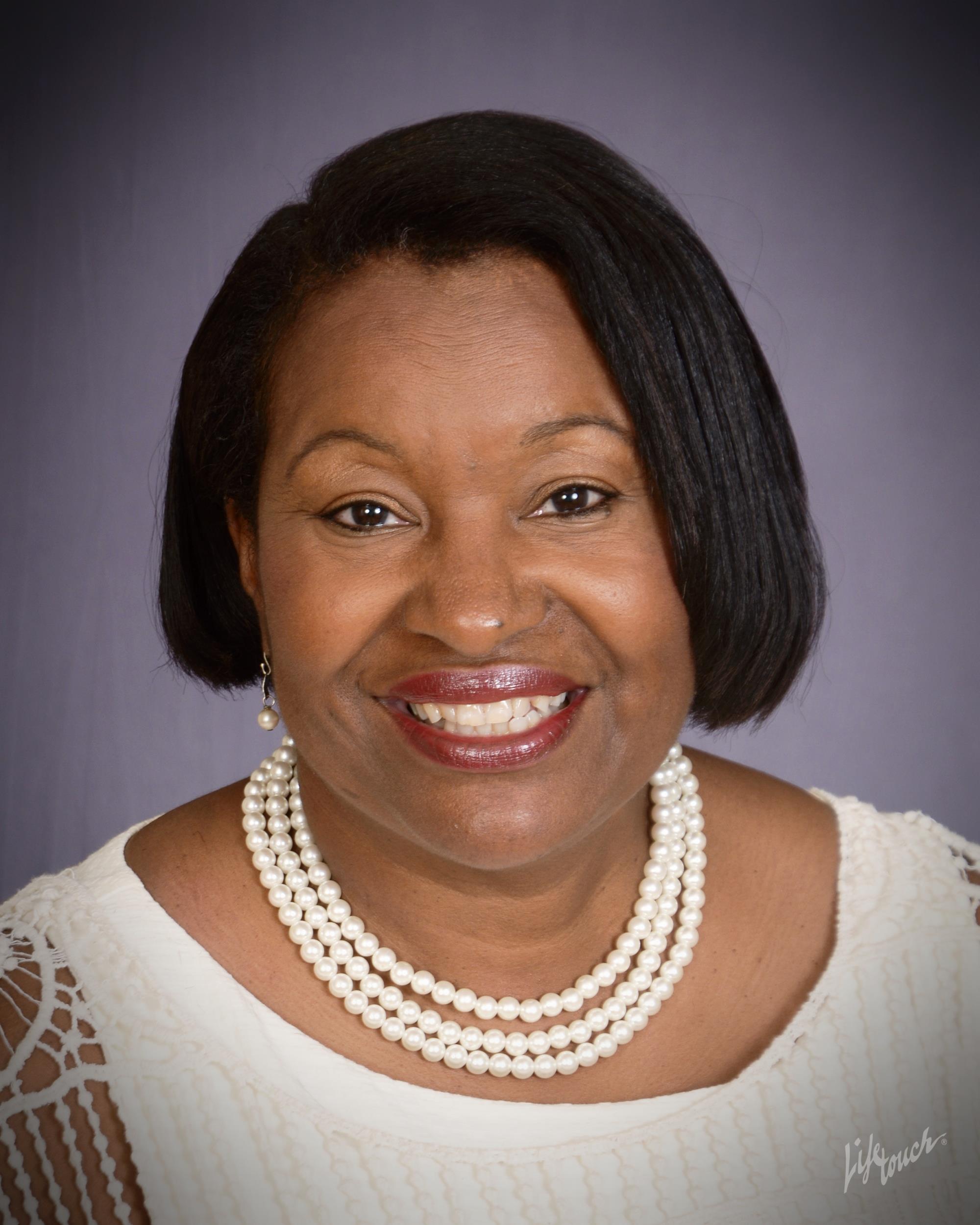
As senior lecturer and undergraduate program director in the Department of Chemical, Biochemical, & Environmental Engineering, Dr. Mariajosé Castellanos’ reach extends far beyond the classroom. From core undergraduate to advanced graduate coursework, Castellanos serves as “a doorway into our department,” and “doorway from our department into the world,” according to UMBC professor and department chair Dr. Mark Marten.
Notably, Castellanos transformed Thermodynamics, a challenging departmental core class, from a traditional lecture style course to a flipped-learning and team-based class in an effort to improve student outcome. She applied the same principles to revamp the senior level capstone design class, again implementing a team-based learning approach incorporating soft skills rarely learned in the classroom yet critical to success beyond graduation.
A 2013 Hrabowski Innovation Fund seed grant recipient, Castellanos has advised 24 undergraduate independent study projects, participates in the Faculty Development Center and professional conferences focused on pedagogy and college-level teaching, and contributes to numerous campus committees and initiatives outside of her department.
Yet Castellanos’ most compelling endorsements come from her students, whose feedback helped Castellanos earn the department’s only exceptional instructor rating from a recent ABET evaluation. For many former students, Castellanos – or Dr. C as she is best known – is more than just a professor. With over 30 former students providing feedback in support of Castellanos’ outstanding faculty award nomination, many cited Castellanos’ support and innovative teaching in a highly challenging course of study as influential.
“Dr. C was the first professor who truly showed me the value in working a problem that I wasn’t sure how to proceed with,” notes nominator Jeremy Drew ’17, chemical engineering. Adds former student Marc Scimonelli ’13, chemical engineering, “Dr. C helped me develop non-technical skills that have helped me work in diverse multidisciplinary groups, build relationships, and consider the whole picture.”
According to Cody Kendig ’17, chemical engineering, “Dr. C cares about the well-being of her students, and adapts to each of their individual needs in order to bring them the most comprehensive education possible.”
Longtime UMBC men’s soccer coach Pete Caringi regularly refers to Retriever Soccer Park as “one of the best kept secrets on campus.” With all due respect to Caringi, it looks like the secret is out.
Retriever Soccer Park features a beautiful Bermuda grass playing surface and lights for night games, but those are just a couple reasons why the venue is special.
“We play at other schools, a lot of which have really nice stadiums, but the fans are far away from the field. Here, you’re so close to the action that you need to be careful because a ball may come up into the stands,” Caringi said. “It’s also unique because of the great support we get from our students and the many soccer fans in the Baltimore area.”
Indeed, the atmosphere gives Retriever Soccer Park its distinctiveness, and there’s no bigger reason for that than the Lot 17 supporter’s group.
Named after the parking lot where students convene before games, Lot 17 gives UMBC a homefield advantage that few other college soccer programs have. The group chants, waves flags and bangs on drums throughout games to support their team.
“Lot 17 is about creating a fun, vibrant atmosphere,” said Bradley Ingram ’18, media and communication studies, one of the main leaders of Lot 17 before he graduated. “Everyone is full of energy and passion. There’s a really strong community element for us too – we’re not just supporting random players, but our fellow Retrievers.”
It’s a passion that’s thoroughly appreciated by UMBC’s soccer programs.
“Some of the kids we have were recruited by schools with bigger reputations, but they came to one of our games and wanted to play soccer in that environment,” Caringi said. “After games, the players always go over to the crowd to clap and show their appreciation. They love playing here.”
From undergraduate student at UMBC to Chief Economist and Under Secretary of Economic Affairs for the Department of Commerce under the Obama administration, Mark Doms ’86, mathematics and economics, has spent his career as an economist focused on economic public policy.
Specializing in monetary policy, forecasting, labor force developments, innovation, big data, and applied microeconomics, Doms has made hundreds of presentations about the U.S. economy and appeared regularly as a subject-matter expert on CNBC’s Squawk Box and Bloomberg. His highly-cited research is published regularly in top journals, earning Doms recognition in the top 3% of economists as measured by citations.
“Mark’s distinguished record of government service, along with a publication and Google Scholar citation count would be the envy of most academic economists,” said David Mitch, professor of economics and chair of the department at UMBC.
While a student at UMBC, Doms worked with the economics faculty to measure the costs and benefits of the Maryland vehicle emissions program. In a position he landed with the help of UMBC faculty, Doms also worked part-time as a student for a private company, assisting with the evaluation of a random design experiment of a welfare to work program.
After graduating from UMBC, Doms went on to pursue a Ph.D. in economics from the University of Wisconsin-Madison. From there, Doms held positions at the Board of Governors for the Federal Reserve in Washington, D.C., before transferring to the Federal Reserve in San Francisco. In 2009, Doms joined the Obama administration as Chief Economist at the Department of Commerce, advising the Administration on a wide variety of issues, including trade, competitiveness, innovation, and education. In this role he oversaw and authored reports on the middle class, intellectual property, broadband adoption, productivity, and STEM education. In January 2013, the U.S. Senate confirmed Doms as Under Secretary for Economic Affairs at the Department of Commerce, a position that oversaw the Census Bureau and the Bureau of Economic Analysis, comprising more than 10,000 staff and budgets exceeding $1 billion.
After leaving the Obama administration, Doms worked for two years at Nomura Securities, Japan’s largest investment bank. There he monitored economic developments, developed economic forecasts, and traveled extensively throughout the U.S. and Asia. While Doms continues exploring his next step professionally, he remains thankful for the wonderful – and affordable – education that UMBC provided.
Mina Cheon MFA ’02, Imaging & Digital Arts, is a Korean American global new media artist, scholar, and educator. Dividing her time between Baltimore, New York, and Seoul, Korea, Cheon produces artwork – “Polipop” – that draws inspiration from global media and popular culture, intersecting politics and pop art in evocative ways, while maintaining her connections to UMBC and the MFA program.
“All of Dr. Cheon’s accomplishments indicate a level of insight, innovation, persistence, and quality of production that serves as a model for what our IMDA grads and alumni might attain at not only a local and national, but also international level,” says nominator Dr. Kathy O’Dell, Associate Professor of Visual Arts and Special Assistant to the Dean for Education & Arts Partnerships at UMBC.
Cheon received a Ph.D. in philosophy of media and communications from1 the European Graduate School at the European University for Interdisciplinary Studies in Switzerland, an MFA in painting from the Hoffberger School of Painting at the Maryland Institute College of Art (MICA), and a BFA in painting from Ewha Womans University in Seoul, Korea.
With a thematic focus on geopolitical and contested spaces, race culture and postcolonialism, and Asia’s relationship to the Western world in global media culture, Cheon has worked on North Korean awareness and global peace projects since 2004. Cheon’s work has been exhibited in or is in the collection of numerous and varied museums and galleries internationally. Represented by Ethan Cohen Gallery in New York, Cheon’s art is currently featured at the international Busan Biennale 2018 in Korea where her art installation of 100,000 choco-pies is meant for the audience to eat. The famous snack loved by North Koreans and produced in South Korea has become the product of the existing cultural loving exchanges between the two Koreas and the work advocates for Korean unification.
The author of Shamanism and Cyberspace, Cheon contributes to a variety of publications and serves on the Board of Directors of the New Media Caucus of the College Art Association. Awarded the 2010 Martin Luther King, Jr. Day and Unity Week Award for her efforts promoting cultural diversity within and beyond her college, Cheon is a full-time Professor at MICA and a mentor of Art-Uni-On, a global mentorship network by Hyundai Co. and the Seoul National University College of Fine Arts.
Despite her global reach, Cheon remains committed to the local Baltimore art scene. Alongside husband and architect Gabriel Kroiz, Cheon owns and operates K-Town Studios in the Remington neighborhood of Baltimore City. Home to their own studios, Cheon and Kroiz rent affordable studio space to artists and creative entrepreneurs. Additionally, the husband and wife team, known professionally as Cheon Kroiz, launched the installation Diamonds Light Baltimoreat the inaugural Light City festival in 2016.
At UMBC, Cheon is known for her support of Intermedia and Digital Arts (IMDA) graduate students, returning to campus for lectures to current students and offering feedback to graduates on current research and creative work. In May, Cheon presented the inaugural IMDA Friends + Alumni MFA Award. Founded and inspired by Cheon, the award recognizes the most outstanding MFA exhibition and written thesis with $1,000 monetary award, with the goal of boosting the emerging career of promising IMDA alumni.
When Saira Khan ’09, English, was accepted into UMBC, she had just moved back to the United States form Pakistan. As Khan reacclimated to the country, she found UMBC’s welcoming campus a good fit.
“I didn’t want to go to a campus with tens of thousands of students,” says Khan, who spent two and a half years as a student manager for Commonvision, designing and developing media strategy. “UMBC was the perfect choice.”
Since then, Khan has come a long way, achieving in less than a decade more than some aspiring journalists achieve in their careers. In January 2018, Kahn was promoted to Director of Social Media for The New Yorker after leading the publication’s social media team to a significant increase in follows across all social media platforms, the launch of the 24,000-member Movie Club on Facebook, and live-tweeting coverage of events like presidential debates, awards shows, and The New Yorker Festival. In her current role, Khan oversees the development, design, and execution of the publication’s social media strategy. In 2018, Khan’s team at The New Yorker was a finalist for the 2018 Ellie award in social media.
Prior to joining The New Yorker,Khan was a founding member of Facebook’s Trending Team, providing real-time editorial insight and curation for the social media platform. Khan considers her work at Facebook as one of her greatest personal successes, though met challenges. “It was not a rewarding job but the work was important,” says Khan. “My greatest challenge was defending the integrity of this work from misinformation, which resulted in [Facebook CEO and co-founder] Mark Zuckerberg being asked to testify before Senate.”
As a freelance writer, Khan’s journalism – featuring topics ranging from queer artists to cleaning up crime scenes and personal essays about literature, street harassment, and dating – has appeared in A Woman’s Thing, The Atlantic, The Baltimore Sun, Bustle, Dawn, The New York Times, The New York Times Magazine, and newyorker.com.
After graduating from UMBC in 2009, Khan worked in financial publishing and freelance writing for Dawn, an English newspaper in Khan’s native Pakistan, and The Baltimore Sun before moving to New York to pursue a Master of Science at the Columbia University Graduate School of Journalism. In December 2016, Khan co-founded High-Strung, a monthly newsletter + playlist with fellow New York-based creatives; their work has been featured in a variety of local and national publications.
Parents play a critical role in their children’s early math education. They not only can provide math-related toys and games, but serve as role models demonstrating how math is used in everyday activities.
As researchers who study children’s math development, we believe there are five math skills that children should have at the start of kindergarten. Opportunities for learning these skills are everywhere – and there are simple, enjoyable activities that parents can lead to foster these skills.
This will help children acquire the age-appropriate vocabulary and skills needed for learning math, while staying engaged and having fun.
1. Counting and cardinality
According to the college and career-ready standards in our state, Maryland, children are expected to demonstrate simple counting skills before starting kindergarten. These skills include counting to 20; ordering number cards; identifying without counting how many items are in a small set; and understanding that quantity does not change regardless of how a set of items is arranged.
Children also will need to learn cardinality. That means they should understand that the last item counted represents the number of items in the set.
Counting and cardinality can be easily integrated into daily life. Children can count their toys as they clean up or count how many steps it takes to walk from the kitchen to their bedroom. Parents can point out numbers on a clock or phone.
In the grocery store, parents can ask children to find numbers while shopping. In the car, parents can have children read the numbers on license plates or count passing cars. Parents should ask, “How many?” after a child has counted, to reinforce the idea of cardinality.
Board games like Trouble, Hi Ho Cherry-O and Chutes and Ladders are helpful and fun ways to hone counting and cardinality skills. Have children identify the number on the die or spinner when they take their turn and count aloud when they move their piece. Active games that involve counting aloud – like jump rope, hopscotch or clapping – also foster these skills.
2. Operations and algebraic thinking
Kindergartners are expected to solve simple addition and subtraction problems using objects.
Parents can have children do simple math problems during everyday tasks. For example, they can ask children to take out the correct number of plates or utensils when setting the table for dinner. Remember, the math language children hear matters. Parents can ask questions like, “How many more plates do we need?”“
During play, parents can use toys and say things like, “I’m going to give you one of my cars. Let’s count how many cars you have now.” Songs and rhymes that include counting up or counting down, such as Five in the Bed or Teasing Mr. Crocodile, can also be useful for teaching early addition and subtraction.
3. Numbers and operations in base 10
Children need to begin to understand that the number “ten” is made up of 10 “ones.”
Playing with coins can help children learn about numbers.
Photo by rawpixel on Unsplash.
Counting fingers and toes is a great way to emphasize the numbers one through 10. Money, coins in particular, is another great way to emphasize base 10. Parents can play store with their children using pennies and have them “purchase” toys for differing amounts of pennies. During play, they can talk about how many toys they can buy with 10 cents.
4. Measurement and data
Kindergartners are expected to sort objects by their features – like shape, color and size – or identify the feature by which objects have been sorted. They also are expected to order objects by some measurable feature, such as from bigger to smaller.
In the kitchen, children can begin experimenting with measurement using spoons or cups. Children can sort utensils, laundry or toys as they put them away. Card and dice games, such as War, are helpful for talking about number magnitude. Additionally, several inexpensive sorting games, such as Ready Sets Go or Ready Set Woof, are commercially available.
Additionally, kindergartners should be able to compare objects and use language like more than or less than, longer or shorter, and heavier or lighter. Parents can help by using these words to emphasize comparisons. When children are helping with tasks, parents can ask questions like, “Can you hand me the biggest bowl?” or “Can you put the smaller forks on the table?”
5. Geometry
Early geometry skills include naming and identifying 2D shapes like circles, squares and triangles. Children also need to realize that shapes of different sizes, orientations and dimensions are similar. Children should be able to recognize that a circle is like a sphere and use informal names like “box” and “ball” to identify three-dimensional objects.
Parents can draw children’s attention to shapes found in the environment. On a walk, parents can point out that wheels are circles and then have children find other circles in the environment. Commercially available games like Perfection or Tangrams can help children learn to identify simple and more complex shapes. Puzzles, blocks and Legos are another great way to help build early spatial skills.
For many in the UMBC community, “success is never final” has become a familiar motto. Kimberly Ellison-Taylor ’93, information systems management, epitomizes UMBC President Freeman Hrabowski’s familiar words by excelling in her work, while also creating opportunities for women and minorities in her field of technology and accounting.
“Kimberly shares UMBC’s mission of inclusive excellence,” says UMBC development officer Susie Lynch, who nominated Taylor for the award.
As the Global Strategy Director for the Financial and Professional Services Industries for Oracle America, Ellison-Taylor is an influential leader in the continually evolving fields of big data, cybersecurity, and assurance and advisory services. After graduating from UMBC, she went on to earn an an M.B.A. from Loyola University, an accounting certificate from the Community College of Baltimore County, and a Master’s of Science in Information Technology as well as chief information officer certificate from Carnegie Mellon University. Ellison-Taylor’s shared background in accounting and information systems management has led to leadership positions in a multitude of organizations, including the NASA Goddard Space Flight Center; Motorola; KPMG; and Prince George’s County Government, where she served as Chief Information Technology Officer.
In 2016, Ellison-Taylor made history as the first African American Chairman of the American Institute of Certified Public Accountants (AICPA). The youngest ever to be appointed and first AICPA chair from the state of Maryland, Ellison-Taylor’s platform around Technology and Transformation and Next Generation Leadership guided the organization toward increased technology and globalization of the accounting field. She also served as the Chairman of the Association of International Certified Professional Accountants, an organization of more than 670,000 and in 184 countries. The recipient of numerous professional awards, she has been recognized by Accounting Today as a one of the 100 Most Influential People in Accounting annually over the past three years, and as one of the Most Powerful Women in Accounting by CPA Practice Advisor for 2016, 2017, and 2018. Ellison-Taylor also serves as a member of the Robert H. Smith School of Business Advisory Board and is a former member of the UMBC Alumni Association Board of Directors. A charter member of UMBC’s Sigma Gamma Rho, Ellison-Taylor remains active in the organization, serving in local, regional, and national levels over 28 years. She is also an active member of the Maryland Association of CPAs where she is a past Chairman. Ellison-Taylor is a lifetime member of the National Association of Black Accountants.
Ellison-Taylor is married to UMBC alumnus Darius Taylor ’92Modern Languages & Linguistics, and is the dedicated mother of two sons, Darius II and Dominic.
by Amy Bhatt, Associate Professor of Gender and Women’s Studies, UMBC
The Indian Supreme Court has legalized homosexuality, overturning a 157-year ban on consensual gay sex.
In a nearly 500-page unanimous decision issued on Sept. 6, India’s highest court affirmed that “whenever the constitutional courts come across a situation of transgression or dereliction in the sphere of fundamental rights which are also the basic human rights of a section, howsoever small part of the society, then it is for the constitutional courts to ensure that constitutional morality prevails over social morality.”
“Our court, our justice system, really believes in the rights of the people,” said Kalyani Subramanyam, program director for the Naz Foundation, the primary petitioner in the court case, which could open the door to gay marriage.
And the ruling is more than a human rights win. It is also a restoration of ancient Indian sexual norms.
India, homosexuality and the ‘third gender’
In that way, India’s ruling differs from recent court decisions legalizing gay marriage in Colombia, Taiwan and Germany – though for LGBTQ Indians, the impacts may be similarly life-changing.
Yet many gender researchers who study India – myself included – argue that India’s religious and cultural heritage has long been more accommodating to multiple gender and sexual expressions than Western societies.
According to scholars Ruth Vanita and Saleem Kidwai’s groundbreaking 2000 essay collection on same-sex love in India, Hindus embraced a range of thinking on gender and sexuality as far back as the Vedic period, around 4000 B.C.
The Hindu god Shiva has both male and female characteristics. Photo by Jeremy Wermeille on Unsplash
Hinduism’s first sacred texts tell stories of same-sex love and gender-morphing figures. The Hindu deity Shiva is sometimes worshipped as a multi-gendered figure composed of Shiva and his wife Parvati together, in what’s known as his Ardhanarishvara form.
Hindu texts from around 1500 B.C. likewise show that the “third gender” – individuals sometimes called “hijras,” who do not fit into the categories of man or woman – were integrated into India’s political and social life.
In the Kama Sutra, India’s famed erotic guidebook, the character Svairini is described as as a liberated woman who lives either alone or in union with another woman.
“Male-male attraction” is also “one of the themes of pre-colonial Urdu poetry” writes Vanita in her book about Indian Islamic literature from the 18th and 19th centuries.
India’s Khajuraho temples, built in Madhaya Pradesh state between 950 and 1050, even include depictions of homosexual orgies and fellatio, among other erotic sculptures and scenes.
Some scholars of Islam, India’s second-largest religion, also find acceptance of gender fluidity in the Koran, which says that Allah “shapes you in the wombs as He pleases.”
Indeed, in India’s 16th-century Mughal courts, hijras and eunuchs often held positions of high esteem as advisers or emissaries between men and women.
The British preferred the binary
India’s fluid gender and sexual norms did not fit into Britain’s strict Victorian conceptions of appropriate sexual behavior.
As the British empire grew more powerful in the Indian subcontinent in the early 19th century, so did their ideas about culture, society and law. Viewing local notions of sexuality as barbaric, British officials imposed Western, Judeo-Christian sexual norms on colonial subjects.
Before the British, homosexuality was not illegal in India.
But by 1861 the British had consolidated their rule over India and were enforcing Section 377 of their penal code, which could punish those who committed sodomy or other homosexual acts with life in prison.
When India gained its independence in 1947, this statute remained, becoming Section 377 of the Indian Penal Code.
Colonial British rule over India included the imposition of laws mandating strict gender roles. Author unknown
Britain’s anti-gay colonial legacy
India was not the only British colony where formerly acceptable sexual behaviors and identities became criminalized.
Section 377, or a similar statute, was imposed in 42 former colonies, including Pakistan, Bangladesh and Sri Lanka. Nepal, which was never formally colonized by Great Britain, also adopted anti-sodomy laws based on India’s British-influenced penal code.
In 2007, the Nepali government became the first in South Asia to re-recognize a third gender category. Today, Nepal’s Constitution specifically protects LGBTQ people from discrimination and abuse.
Neighboring Pakistan, like former British colonies Bhutan, Uganda and Singapore, still criminalizes homosexuality under Section 377. This “unnatural offense” is punishable with up to 10 years in prison.
But in 2018, Pakistan, a Muslim-majority country, passed the historic Transgender Persons (Protection of Rights) Act, allowing Pakistanis to choose their gender on government documents and prohibits discrimination in employment and public accommodations on the basis of gender identity.
The future of gay rights in India
Despite India’s legalization of gay sex, the path toward full acceptance of LGBTQ rights is complicated.
For more than a decade, India’s right-wing Hindu nationalists – who espouse a fundamentalist interpretation of Hinduism called Hindutva – have worked to portray homosexuality as a reprehensible Western import.
In July, as India’s Supreme Court was preparing to hear arguments on the gay sex ban, Subramanian Swamy, a high-ranking member of Modi’s ruling Bharatiya Janata Party, retorted that homosexuality “is not a normal thing.”
It’s “against Hindutva,” he said.
After the ruling against Section 377, an armed Hindu nationalist group called the Rashtriya Swayamsevak Sangh declared that “same-sex marriages and relations are not in consonance with nature.”
Traditionally,“ read the Sept. 8 public statement, “Indian society has not supported such relations.”
Historic evidence says otherwise.
“India’s pre-colonial sexual history is important,” Chaitanya Lakkimsetti, a Texas A&M professor who has studied the fight to end Section 377, told me.
Yet, she reflects, “This is not just about hearkening back in time.”
For Lakkimsetti, the legal victory shows that “the Indian constitution is a living document that protects minorities.” In legalizing gay sex, then, the Supreme Court is not just recognizing India’s rich past – it’s also “looking forward.”
On September 19, 1966, UMBC opened its doors to students for the first day of classes in the institution’s history. Mimi Dietrich ’70, American studies, was among those “pioneer” students, encouraged by faculty and administrators to take advantage of a campus where everything was both new and possible.
“So many of them were inspiring because they were joining us in this new university,” says Dietrich, who has in her decades as an alumna continued to show her passion for UMBC in a variety of ways.
The pioneering spirit has continued to carry Dietrich to pursue her passion in quilting. After teaching middle school and pre-school for 6 years, Dietrich shifted her focus to teach needlework and quilting. For 50 years, Dietrich has traveled across the United States to teach at guilds, festivals, state conferences, cruises, and an American studies course at UMBC. Dietrich was inducted into The Quilters Hall of Fame in 2015 and was named Professional Quilt Teacher of the Year by the International Association of Creative Arts Professionals in 2013. The author of 17 books and countless publications, Dietrich now teaches a year-long class focused on Baltimore Album Quilts. A founding member of The Village Quilters in Catonsville and the Baltimore Applique Society, Dietrich is preparing for an exhibit of her quilts in 2019.
Alongside her professional successes, Dietrich hasn’t strayed far from UMBC in the decades following graduation. A founding member of the Fab Four, an alumni group comprised of graduates of UMBC’s first four graduating classes, Dietrich took on a pivotal volunteer role engaging the earliest alumni heading into UMBC’s milestone 25th and 50th anniversaries. During UMBC’s 50th anniversary celebration in 2016, The Fab Four hosted several events, and continues to plan initiatives aimed at connecting UMBC’s early alumni with the university.
Dietrich credits her husband and fellow alumnus Robert “Bob” Dietrich ’70, biological science, for keeping her connected to UMBC, where he worked for 40 years. A former member of UMBC’s Alumni Association Board of Directors, Dietrich was named UMBC Volunteer of the Year in 1997, an honor she shared with husband Bob. Together, they’ve raised two sons, Jon and Ryan, who have grown up to be wonderful dads to their three grandchildren.
As we enter the traditional, post-Labor Day sprint in the campaign season, voters may want to consider how much their vote really counts. In the United States, the difference between the popular will and political representation is growing and some votes count more than others.
When voters wield unequal power, that is a problem for democracy.
In the U.S. Senate, some voters count more than others.
This began in the earliest days of the Republic when each state, despite differing population size, was allocated two senators.
At the time of the First Congress in 1789, the population of the largest and smallest state, respectively Virginia and Delaware was 110,936 and 11,783. Those counts only include include free white males over 16, because that’s who got to vote at the time. Virginia had roughly nine times the population of Delaware.
But by the time of the 2016 presidential election, the population of the most and least populous states, California and Wyoming, was respectively 39,254,503 and 585,501. The most populous state had 67 times the population of the least populous state.
This system puts disproportionate influence in the hands of small states. Long-term senators from small states can amass seniority that bestows enormous power beyond their demographic significance.
The current leader of the Senate, Mitch McConnell, represents Kentucky – a state with a total population of only just over 4 million. And while the U.S. population of 325 million is 72 percent white and 13 percent foreign-born, Kentucky is 89 percent white with only 3 percent foreign-born.
More than a quarter of the entire U.S. population lives in just 10 metropolitan areas across only 16 states. Yet Senate representation still reflects the political realities of the largely rural 18th century, when population was spread more evenly throughout the country, rather than the demographic realities of the metropolitan 21st century.The opinions of the metropolitan majority on such issues as gun control, abortion rights or immigration policy are often overruled in the Senate by the preferences of voters in small, rural states.
To be sure, the U.S. was never designed as a direct democracy but as a republic, where multiple sources of governmental power were to be a check on power. But is it democratic when one of the other branches of government, the Supreme Court, can be appointed by a majority of senators who represent a minority of the U.S. population?
The House
Seats in the House of Representatives are, unlike the Senate, allocated on the basis of population, but since the 1960s Democratic voters are pooling into dense areas. That lessens their overall effectiveness as they tend to win big in a few districts while Republicans have a wider national spread.
The current system of winner-takes-all elections – where even the narrowest of winners is the people’s only representative – gives the Republicans an advantage over Democrats.
And that does not factor in partisan gerrymandering, which is the manipulation of voting boundaries to engineer specific political outcomes.
The U.S. Constitution requires each state to establish new congressional districts every 10 years to reflect the population changes measured by the census.
This congressional redistricting is freighted with partisan political interests. Take the case of Utah. The results of the 2010 Census revealed enough population increase in that state to justify increasing the number of congressional districts from three to four.
The Utah Republicans’ redistricting created gerrymandered districts that favored GOP voters. That neutered voters in the more Democratic-leaning Salt Lake City, and in the 2016 congressional election Republicans won just 66 percent of all votes but still swept all four congressional seats. The Democrats picked up over a third of all votes in the state but won no congressional seats.
Gerrymandering also occurred in Democratic-controlled Maryland, where the post-2010 redistricting packed Republican voters into a few districts.
Over a third of all votes cast in the state in the 2016 congressional races were for Republican Party candidates but Republicans won only one out of eight districts.
Primary voters in gerrymandered districts thus count more than the general voting public.
The Electoral College
The president is elected by the Electoral College. There are 538 electors with each state allocated one each for their congressional representatives and senators. California has 55 and Wyoming has three.
All the electors in a state are pledged to the presidential candidate with the majority of votes. Only Maine and Nebraska allow proportional representation. A successful campaign needs to get over 270 Electoral College votes.
After 1888, when Republican Benjamin Harrison won the Electoral College 233 to 168 but lost the popular vote, the system worked well. The popular vote and the Electoral College were in sync for over a century.
However, in both 2000 and 2016, a candidate won the presidency without obtaining a majority of popular votes. If presidents were elected by a simple and obvious popular vote we would have had President Albert Gore and President Hillary Clinton.
The Electoral College overvalues voters in key swing states such as Florida, Pennsylvania, Michigan and Wisconsin and devalues voters in other states.
By not reflecting the popular vote, the Electoral College does not transmit the will of the people. Instead, I believe it is starting to undermine it.
The system is also vulnerable to manipulation. There is mounting evidence that Russian operatives concentrated their cybertactics in 2016 in states where key Electoral College votes were in play.
This suggests that the Electoral College is now identified as a weak point by our enemies.
While there is much talk about the fiscal deficit or the infrastructure deficit, less attention is paid to the mounting democratic deficit. The more undemocratic tendencies of the U.S. electoral system are growing stronger.
The U.S. system faces this deficit because, while all voters get to exercise political choice, only some get to exercise real political power.
Growing up, Zainab Alkebsi ’09, political science, always knew she wanted to become a lawyer. The daughter of Yemeni immigrants, Alkebsi is the first in her family to attend law school, as well as the only deaf member of her family.
As an attorney, Alkebsi hoped she could help break down barriers to accessibility for the deaf and hard of hearing community. Now, as policy counsel for the National Association for the Deaf (NAD), Alkebsi does just that. In her role with NAD, Alkebsi interfaces with government agencies, Congress, coalitions, media, and businesses on all issues affecting the deaf and hard of hearing community.
Advocating for full access for deaf and hard of hearing people across all walks of life, Alkebsi reflects on her greatest professional success – and challenge – with pride. After seven months of grueling negotiation with major airlines for captioning access in flight, Alkebsi reached consensus with the airlines for 100% captioning. “On my next flight,” says Alkebsi, “I saw captioning on in-flight entertainment for the first time. I had goosebumps!”
The Sondheim Scholars Program, along with the small-campus feel, drew Alkebsi to UMBC for her undergraduate coursework. After graduating from UMBC, Alkebsi attended the University of Baltimore School of Law, where she was a policy intern for the Governor’s Office of the Deaf and Hard of Hearing and volunteer Rule 16 student attorney for the Innocence Project Clinic.
After receiving a degree from the Baltimore School of Law, Alkebsi clerked for the Honorable Alexandra Williams before becoming Deputy Director of the Governor’s Office of the Deaf and Hard of Hearing. As deputy director, Alkebsi developed bills for introduction in Maryland’s legislative session, monitored state and federal legislation, conducted legal research analysis, and developed training presentations for law enforcement, hospitals, and other key agencies and organizations that interactive with the deaf and hard of hearing community.
Lending her advocacy efforts to current UMBC students, Alkebsi serves as a guest lecturer in a class focused on deaf community and culture. She also serves on the Board of Deaf VISA, which partners with UMBC’s Signs of Life ASL Club for deaf-friendly events on campus.
Born and raised in Washington, D.C., Alkebsi spends her free time supporting D.C. sports, reading historical non-fiction, and raising her 5-month-old daughter.
Chief Judge Wanda Keyes Heard ’79, political science, was drawn to UMBC by the intimate class sizes and impressive credentials of the political science faculty, but quickly grew to love the campus and remained an on-campus student throughout her undergraduate days.
Today, she is the first female Chief Judge in the history of the 8th Judicial Circuit, appointed to the position after serving the citizens of Baltimore City as a Circuit Court Judge in Baltimore for 19 years. Though 40 years have passed since her time at UMBC, she credits her time as an undergraduate student for her professional successes today.
Former UMBC professor and advisor Philip Brenner encouraged her as a student, leading her to an internship during her junior year for the Honorable Shirley Chisholm, the first black woman elected to the U.S. Congress. It was her internship with Congresswoman Chisholm that provided the confidence she would need to pursue a career in a field then dominated by white men.
“I refused to let anyone say ‘no’ or ‘it’s not possible,’” she said. “There was no glass ceiling I could not break.”
Over her 36-year career, she has received numerous awards and accolades, though she cites receiving the Thurgood Marshall Award for Judicial Excellence by the Baltimore Chapter of the NAACP in 2013 as one of her greatest professional successes.
“My greatest challenges occurred during the ‘70s, ‘80s and ‘90s when faced with and overcoming
the false limitations being placed on me merely because of my race and gender.”
– Baltimore City Circuit Court Chief Judge Wanda Heard ’79
Well known for mentoring law students, interns, and new attorneys, she has mentored more than 25 students from UMBC. She volunteers her time advising and judging mock trial teams for area students, including a now-famous trial program for elementary and middle school students designed to develop critical thinking and civic engagement.
An active UMBC alumna, she is a member of UMBC’s 1966 Society, supporting fundraising efforts for the Second Generation Scholarship, which provides support to outstanding UMBC undergraduates who have demonstrated a commitment to the advancement of minorities. She also remains an active member of the Beta Alpha Tau Zeta Chapter of Zeta Phi Beta Sorority, Inc.
Chief Judge Heard, who resides in West Baltimore with her aptly-named dog Justice, said she considers watching her daughter Whitney grow into an independent, vibrant, and successful young woman her proudest personal achievement and greatest joy.




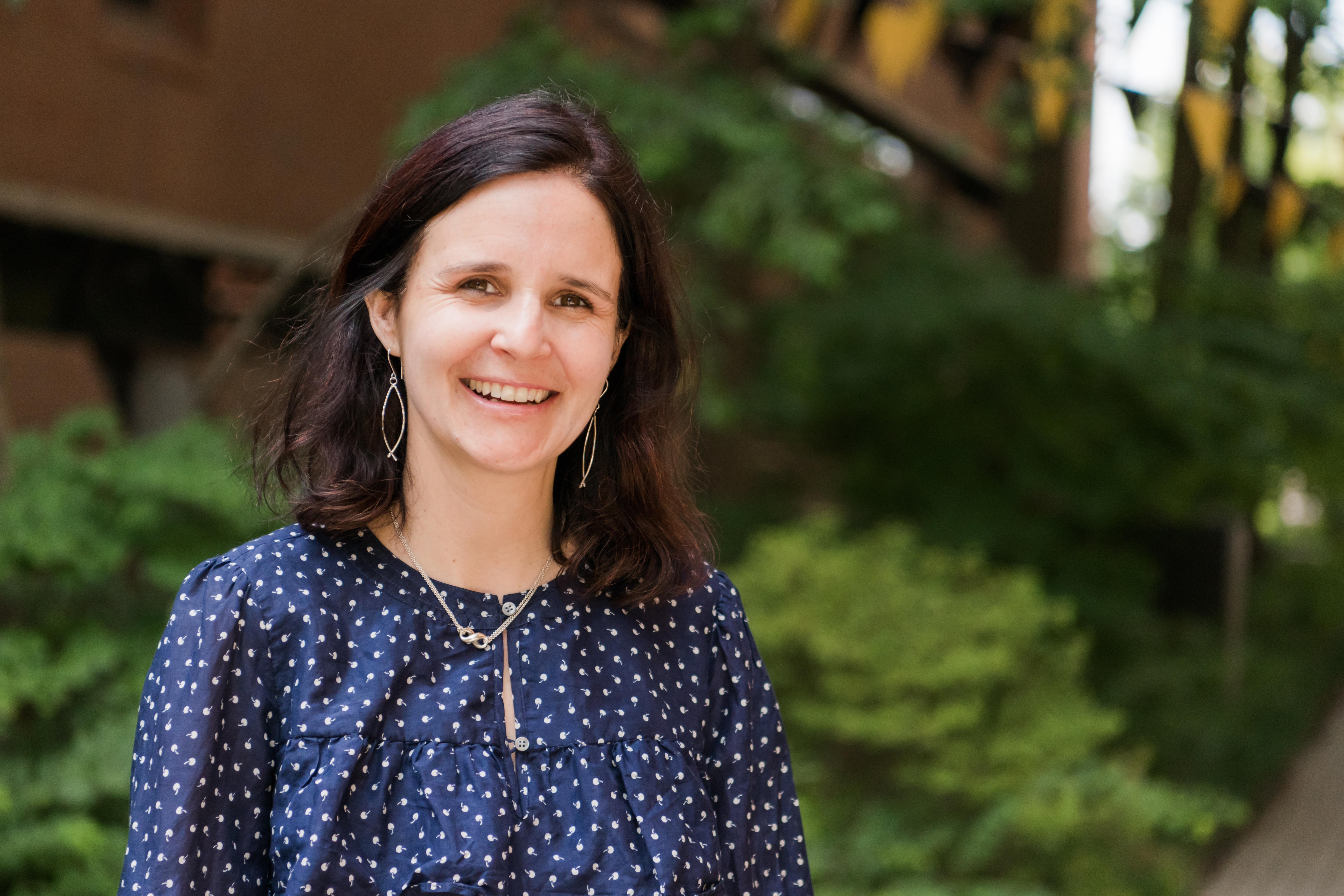 As senior lecturer and undergraduate program director in the Department of Chemical, Biochemical, & Environmental Engineering, Dr. Mariajosé Castellanos’ reach extends far beyond the classroom. From core undergraduate to advanced graduate coursework, Castellanos serves as “a doorway into our department,” and “doorway from our department into the world,” according to UMBC professor and department chair Dr. Mark Marten.