All posts by: Magazine Editor


Q&A with Mary Stuart: Making a Case for Women’s Voting Rights

In 1972, professor Mary Stuart fought to keep her maiden name and vote in Maryland, in what became a landmark case for women’s rights. Forty-five years later, the professor of Sociology, Anthropology, and Health Administration and Policy at UMBC reflects on the experience and the ways it has impacted her teaching at UMBC.  

– Allison Cruz ’18

* * * * *

AC: When did you move to Columbia, Maryland, and why?

MS: I think we moved to Columbia, Maryland, in 1971. I had graduated from college that year and got married. We were locating there because we both had worked with children at a summer camp for children with dyslexia. I taught horseback riding and he was a tutor. There were maybe four or five families who lived in Columbia whose children had been at the camp. They said if we would relocate to Columbia, then they would organize themselves so that he would have a core of students to begin tutoring. That seemed like a reasonable thing to do.

AC: How long have you taught here at UMBC?

MS: I joined the faculty at UMBC in 1996, twenty-one years ago.

AC: What brought you to teach at UMBC?

MS: I actually wanted to come teach at UMBC because I like the culture here. Like many people, I had heard Dr. Freeman Hrabowski speak. I felt like it was a campus where there was support for diversity and there were values that I could support. Because it was a young campus, it was innovative in ways that many older campuses weren’t.

AC: In what field do you teach?

MS: My field is health policy and health services research. I was very interested in helping educate the workforce, especially innovative health policies that could improve care for people and also potentially save money by providing better care for really sick people. Also, I was working with Medicaid data, which are large databases. It was very difficult to hire people with the skills we needed to do the kind of work that needed to be done.

I felt like UMBC had the interdisciplinary combination of departments that could help educate the workforce we needed. I also felt like I had a commitment to women and minorities. I felt that one of the best things you could do to help women and minorities was to educate them in skills that the labor force really needed.

AC: What do your courses generally focus on?

MS: My two favorite courses that I’ve taught are Organization and Delivery of Health Care and the International Field Research Program. The first class is self-explanatory, I think. In the second class, students prepare their research plan during the spring semester, and then I take them to Switzerland for a week and they actually do the research that they’ve planned.

AC: So, you were the landmark case for women’s right to keep their maiden name in marriage and still be able to vote. What was the significance behind your keeping the name Mary Stuart?

MS: The Scottish heritage had been really important in my family. My great-grandfather had raised sheep in Scotland and, in fact, won awards. He actually won a silver tea set that’s engraved to him from the Prince of Wales for the best pen of sheep in the show. Then my grandfather came to the U.S. when he was nineteen.

Growing up, there were many things we did as a family that involved Scottish culture, like going to the Scottish games and hearing the bagpipers, and my father playing the bagpipe music to wake us up. My grandparents would tell stories about Scotland, and I got to meet other relatives who had come from Scotland.

AC: Were there other reasons why keeping your maiden name was important to you?

MS: When I was in high school, I really remember thinking either I keep my own name or I don’t get married because I’m not giving up the name Mary Stuart. It was a famous name because of the Queen of Scotland, Mary Stuart, who was ultimately beheaded but the Scots were very loyal to her.

The name Mary Stuart was me, it was part of my identity.

AC: Did you ever wonder if keeping your name after marriage would cause any problems?

MS: I spoke to a lawyer before I got married, and he said there wouldn’t be a problem. Just be consistent. He said never use your husband’s name. Always use your name.

AC: When did the legal battle to keep your own name and vote begin?

MS: It began when I registered to vote in Maryland, at least I thought I had registered to vote. I got a letter back that said I would have to refer to my husband’s name in order to vote.

AC: What kinds of challenges did you deal with during your fight to keep your name?

MS: One of the hardest challenges, or inconveniences, was when the MVA office revoked my driver’s license because then I couldn’t drive. I also found the media attention difficult to deal with. There was a lot being written because it ultimately became the landmark case in a woman keeping her own name. As it progressed through the stages, there was a lot of local and national media. I got letters from people and some of them were very supportive, but some of them were really nasty.

AC: At the time, did you consider the legal battle to keep your name as being a women’s rights issue or is that something that you considered later?

MS: It’s not like I went out looking for a fight. But when you’re faced with something that’s important to you, it just seemed like a matter of principle. I needed to stand up for what I believed in and then see it through. That was the long and short of it.

AC: When the courts finally did rule in your favor and you were able to keep your name and vote, how did you feel in the end?

MS: Well, I was really grateful and also happy to be able to drive again. It was also very important having the American Civil Liberties Union in New York come in and file a Friends of the Court brief. I learned that Ruth Bader Ginsburg had taken the lead on that for the ACLU in New York. I thought, oh my. Clearly the ACLU recognized that this was not a case to lose, that it was important to win this case.

AC: You were surrounded by lots of media attention during the legal fight, but when was the first revisit back to your experience since then?

MS: The first revisit was the article by The Howard County Times. Their reason for revisiting was for the 50th Anniversary for Howard County, they were reviewing some of the history of the area and they came across this case.

AC: When did it hit you that you were making a statement for women’s rights in Maryland and across the nation as well?

MS: I believed it was important for women’s rights but I didn’t realize that this would be the landmark case in a woman’s keeping her own name. In The Howard County Times article, they mention Sally Gold who is a lawyer in Baltimore. I was actually introduced to Sally Gold at a fundraiser some years after the case was over, and she said, “Oh, Mary Stuart. You’re the landmark case.” That was the first that I really understood that this was a landmark case that somebody would recognize.

But at the time I understood that it was important for me and other women to be able to keep their own name. We needed to win this case.

AC: Is there anything that you would like to add about this whole experience?

MS: Looking back on where we started with this interview, I think that being at UMBC has been a really important chapter in who I am and what I believe and being able to act on what I believe. I think it’s an exciting university that reflects the values that I have.

Most of us only have a small contribution in the river of how culture evolves and how the law evolves. But if each of us does our part, then society will be a better, more equitable place for women, minorities, and people of diversity. This campus really represents that kind of hope.

Alumni Awards 2017: Lauren Mazzoli ’15, Mathematics and Computer Science, and M.S. ’17, Computer Science

In the weeks leading up to the Alumni Awards Ceremony, we’ll be profiling each honoree in more detail here on our blog. Today, meet Lauren Mazzoli ’15, mathematics and computer science, and M.S. ’17, computer science, systems engineer at Northrop Grumman and this year’s recipient of the Rising Star award for outstanding graduates of the last decade.

As a young woman studying in a traditionally male-dominated field, Lauren Mazzoli ’15, mathematics and computer science, and M.S. ’17, computer science, has faced her share of challenges. “There were numerous times where I could have felt overwhelmed or defeated” by the gender ratio in STEM, she writes, “but instead, I was driven to change it.” That drive has led her into a promising career as a cyber software engineer at Northrop Grumman, as well as an advocate and mentor to female engineers at both her workplace and her alma mater. A former Cyber Scholar, Mazzoli has remained involved with both that program and the Center for Women in Technology (CWIT), helping to organize career development and educational opportunities for students interested in cybersecurity. At Northrop Grumman, Mazzoli earned early accolades for her support of a time-sensitive, mission-critical project. She was recently accepted into the company’s 3-year Future Technical Leaders rotational program, and is also Vice Chair of the Women’s Employee Resource Group. Mazzoli was inspired to attend UMBC by its “friendly campus, diversity of thought, and students hungry to learn,” and she credits Dr. Marie desJardins, Dr. Penny Rheingans, and Dr. Anupam Joshi for their inspiration and support on her path through the cybersecurity field.

Join us for the Alumni Awards Ceremony on Thursday, October 5!

Starting the Semester with Grit: AKA alumnae donate over 50 care packages for BSU event

Our alumni are all about giving back to the campus community, and the sorors of the Lambda Phi Chapter of Alpha Kappa Alpha, Inc. are no exception. As part of their 40th anniversary luncheon this past summer, alumnae donated over 50 care packages for the Black Student Union’s Black Student Orientation. AKA alumna Brenda D. White ’79, economics, was there to hand out bags full of snacks, toiletries, and other back-to-school essentials to students at Friday’s event.

“Alumnae members are committed to preserving our legacy and continuing our tradition of scholarship and service on UMBC’s campus,” writes Tamara L. Lewis ’92, psychology, a fellow AKA soror who spearheaded the care package effort. The group is dedicated to supporting students in more than one way: they’ve collectively raised over $10,000 for the Second Generation Scholarship through their annual Homecoming reunion event since its inception, and raised an additional $1,300 for the fund at their summer gathering.

Want to help set our students up for success? Give to a cause you care about today. 

Video: Top 5 Reasons to Catch Retriever Fever

From the bonfire and Alumni Awards, to our soccer game and annual Comedy Show featuring Trevor Noah, UMBC Homecoming is not to be missed! What are YOUR top five reasons for catching Retriever Fever?

UMBC Homecoming 2017 runs October 5-14, right here on campus! Learn more at homecoming.umbc.edu.

Video by Jenny O’Grady.

Alumni Awards 2017: Alejandro Cremaschi ’93, Music

In the weeks leading up to the Alumni Awards Ceremony, we’ll be profiling each honoree in more detail here on our blog. Today, meet Alejandro Cremaschi ’93, music, associate professor of piano pedagogy and chair of keyboard studies at the University of Colorado Boulder, and this year’s Outstanding Alumnus in Visual and Performing Arts.

As a musician, an academic, and a native of Argentina, Alejandro Cremaschi ’93, music, has dedicated much of his life and career to the research and performance of the music of Latin America. In addition to his post as an associate professor of piano pedagogy and chair of keyboard studies at the University of Colorado Boulder, Cremaschi has recorded five albums, both solo and with the string ensemble Trio Cordilleras, that showcase the works of such composers as Alberto Ginastera, Luis Jorge Gonzalez, and Luis Gianneo. Cremaschi enrolled at UMBC as an international student in 1991, and says that his time here had an immense impact on both his musicianship and scholarship. In addition to his study of piano with Dr. Nancy Roldan — “a revelation for me,” he writes — Cremaschi also sang in UMBC’s Camerata, and performed with the group at the National Gallery in Washington, D.C. After graduating, Cremaschi earned both his master’s and doctoral degrees at the University of Minnesota, and taught at Ohio State University for several years before joining the faculty at CU Boulder in 2004. Cremaschi is a past president of the Colorado Music Teachers Association, and has earned accolades for his diversity and community outreach work both on- and off-campus. He says that his greatest success is being able to do what he loves: play, teach, and introduce the music of his homeland to wider audiences. In his personal life, he is proudest of his wife, Marcela, and their two daughters, Carla and Erica.

Alejandro Cremaschi performs live at UMBC on Thursday, September 21. Click here for more information!
Join us for the Alumni Awards Ceremony on Thursday, October 5!

Alumni Awards 2017: Kate Laskowski ’06, Biological Sciences and Chemistry

In the weeks leading up to the Alumni Awards Ceremony, we’ll be profiling each honoree in more detail here on our blog. Today, meet Kate Laskowski ’06, biological sciences and chemistry, scientist at the Leibniz-Institute of Freshwater Ecology and Inland Fisheries, and this year’s Outstanding Alumna in the Natural and Mathematical Sciences.

Kate Laskowski ’06, biological sciences and chemistry, had plans for veterinary school when she enrolled at UMBC, and figured that experience as an undergraduate researcher could only help with the application process. When she got to the lab, however, she realized what she “really wanted to keep doing — which was more research!” As an undergraduate research assistant in Dr. Jeff Leips’ lab, Laskowski helped research genetic aging patterns in the Drosophila species of fruit fly, and kicked off the lab’s work with parasitoid wasps, picking up an Undergraduate Research Award and presenting at an international conference in Wales along the way. In her doctoral program at the University of Illinois at Urbana-Champaign, she studied the evolutionary origins of animal personality traits in the threespine stickleback. Now, as a scientist at the Leibniz-Institute of Freshwater Ecology and Inland Fisheries in Germany, she’s continuing her research into behavior and social interactions among fish species. “It turns out competition and cooperation among group members is a key driver for animal personalities,” she writes, “which I think resonates quite nicely with our own human experience.” In her own human experience, Laskowski, who has been living in Germany for four years with the help of a grant from the German Science Foundation, credits adjusting to life in another country and learning a new language as some of her biggest personal accomplishments.

Join us for the 2017 Alumni Awards Ceremony on Thursday, October 5!

Career Update: Luke Roberts ’12 launches “My Phone Feeds Kids” initiative

“What makes you come alive?”

That’s a question Luke Roberts ’12, M20, mechanical engineering, found himself asking more and more a few years ago. He’d already been making music and producing video in addition to pursuing his engineering graduate program at the University of Maryland, and after completing his master’s degree last year, he decided to forgo a Ph.D. to develop the social enterprise wing of his business.

“It’s important to serve people and get involved,” says Roberts. “Building stuff is great, but it’s not really where my passion lies…[I wasn’t] making the difference I wanted to make in the world.” This, combined with Roberts’ passion for volunteering and interest in serving and empowering others, is how My Phone Feeds Kids was born.

My Phone Feeds Kids applies a tactic typically associated with network marketing companies to a social justice context: users download a smartphone app to purchase a T-shirt that says “My Phone Feeds Kids…Does Yours?,” while $7.50 of that T-shirt’s proceeds is donated to the Maryland Food Bank. When others ask about the shirt’s enigmatic slogan, they’re encouraged to download the app, buy their own T-shirt, and spread the message to others, who can download, donate, and further spread the cause. Users are also given a unique referral code to track the donations they’ve inspired in the app.

“People want to connect with like-minded people, [and] this is a natural way to build those connections,” says Roberts. More connections ideally lead to more donations, and users are given a unique code to track how many their interactions have yielded.

Roberts worked with his father, a longtime programmer, to create the app and form a business plan. The project officially launches at a public event at Sip @ C Street Flats in Laurel on September 8, and if all goes well, Roberts plans to support other nonprofits and more causes in the future.

Started your own business? Working for a cause you care about? We want to know! Send in a class note for a future issue of UMBC Magazine today.

myphonefeedskids

Congratulations to our 2017 Alumni Award Winners!

Each year, the UMBC Alumni Association celebrates alumni and faculty who have made outstanding contributions to their fields, their communities, and the University. Join us for the Alumni Awards Ceremony on Thursday, October 5, at the Earl and Darielle Linehan Concert Hall, as we honor the following individuals:

Outstanding Alumnus, Engineering and Information Technology
Dr. Kafui Dzirasa ’01, Chemical Engineering
Associate Professor of Psychiatry and Behavioral Sciences, Duke University

Outstanding Alumnus, Humanities
Dennis Williams ’14, American Studies
Head of Content Marketing, Skillshare; Oculus Content Fellow; LinkedIn Top Voice 2016

Outstanding Alumna, Natural and Mathematical Sciences
Dr. Kate Laskowski ’06, Biological Sciences and Chemistry
Scientist, Department of Biology & Ecology of Fishes, Leibniz-Institute of Freshwater Ecology & Inland Fisheries

Outstanding Alumnus, Visual and Performing Arts
Dr. Alejandro Cremaschi ’93, Music
Associate Professor of Piano Pedagogy and Chair of Keyboard Studies, College of Music, University of Colorado at Boulder

Outstanding Alumna, Social and Behavioral Sciences
Rear Admiral Sylvia Trent-Adams, Ph.D. ’06, Public Policy
Deputy Surgeon General, Department of Health and Human Services

Distinguished Service
Dr. Steven Storck ’08, Mechanical Engineering and Mathematics, M.S. ’09, Mechanical Engineering, and Ph.D. ’14, Mechanical Engineering
Additive Manufacturing Application Engineer, The Johns Hopkins University Applied Physics Laboratory

Rising Star
Lauren Mazzoli ’15, Computer Science and Mathematics, and M.S. ’17, Computer Science
Systems Engineer, Future Technical Leaders Program, Northrop Grumman

Outstanding Faculty
Dr. Marc Zupan
Associate Professor and Program Director, Department of Mechanical Engineering, UMBC

Learn more about our past award winners

“Enjoy the Process:” Charles Mason III ’14 on art, grad school, and his new “Two Lane Stories” exhibition

Every so often, we’ll chat with an alum about what they do and how they got there. We recently caught up with Charles Mason III ’14, graphic design, an interdisciplinary artist and curator working in Baltimore. His latest exhibition, “Two Lane Stories,” features the work of six black male artists working across Maryland. It opened last Friday at Gallery CA in Greenmount West, and runs through August 31. 

Name: Charles Mason III
Grad Year: 2014
Major: Graphic Design
Current Job Title: Visual Artist and Curator of “Two Lane Stories” at Baltimore’s Gallery CA

Tell me about how this project came about: what made you decide to curate the show? I’ve been working on this exhibition, “Two Lane Stories,” for about a year now. It started in the spring and summer of 2016 […] I was working at Morgan State University, and me and Professor E.L. Briscoe would have conversations about day-to-day life, artists, artists of color, black artists…He gave me this book called 30 Americans to read, and it was about a collection of works from…men, women, all types of people of color. And I was really inspired by that. I was like, “I’m gonna do something talking about the obstacles [facing] black male artists.” […] Originally I did want to do 10 artists. It didn’t work out that way, but I was able to work with and interview six black male artists local to the state of Maryland. […] I felt like it was important, and I felt like telling the side of their story, how they navigate through the systems of being a black artist, and being a black person, and being a black man…how they’re able to convey that in their work…and how it influences them and whether it’s an obstacle.

[…]

In choosing these artists, I was able to reach out to mentors, brothers, uncles, these people that have been influential to my work and my process. [At UMBC] I had a lot of mentors, and a lot of friendships there, but for me, being a black man, I didn’t have a lot of black male artist role models. So when I started to really go after this fine art life and really started to explore creating with painting, photography, design…I started to meet these different artists. When I worked at Morgan State University, I started to meet these really important black men artists who are here in this state, who are very influential.

I went to grad school for a little bit, right after I graduated from UMBC. I went to [the Parsons School of Design], and I was only there for three months, but there I was also introduced to a lot of different artists of color. Going to the Brooklyn Museum, going to the Queens Museum, going to all these different places, I was exposed to so much. And for me personally, it was very important that I did that. Even though I didn’t stay, I got to see fine art through a different lens. For so long, I thought fine art was this very linear thing, when it’s not. I knew abstraction [and expressionism] existed, I knew all these different things existed, but for so long I had not…gone after it. I thought a drawing just had to look like a drawing. Like if I drew a chair, it had to look like that chair. It couldn’t look like anything else, it just had to look like that chair. And that kind of followed me, for so long, but when I was able to go to grad school, it was like…wow. This is what I’ve been missing. This felt like home, like I always should have been doing this.

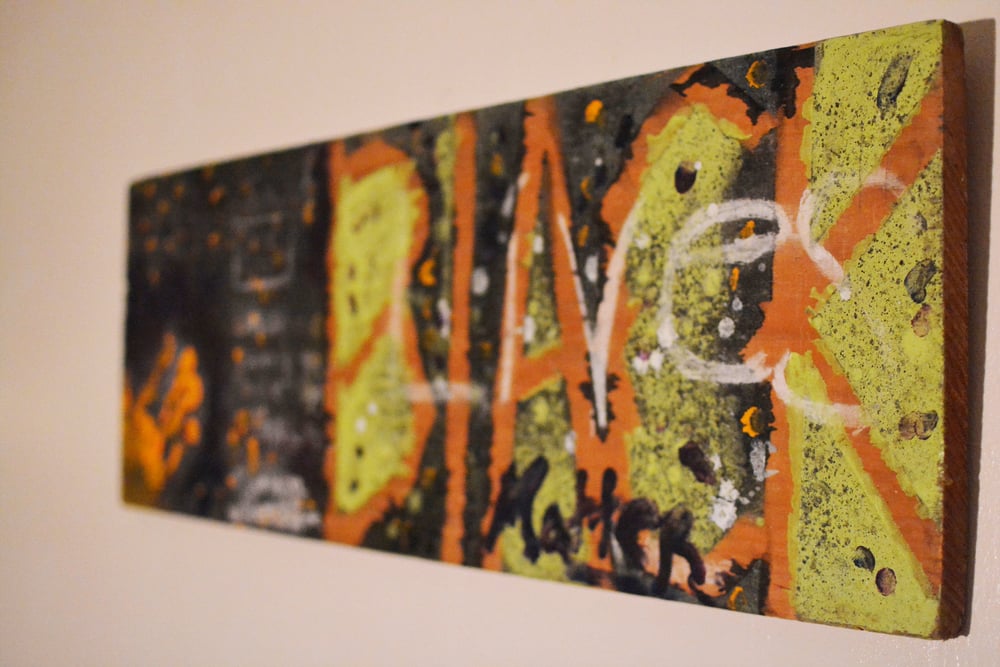
black+lives+side+

Could you tell me more about your own art? What motivates you to create? My own work, again, is a mix between different mediums. Depending on the message I’m trying to convey, my medium will change. Some people might look at that as a bad thing, or others might look at it as a good thing. I look at it as just me being interdisciplinary. I love fine art, but I know for a fact that depending on what I’m trying to talk about, a painting may do it more justice than a photograph, or a photograph may do it more justice than a painting, and so on. I think that’s so important to the way I create. I am so influenced by society today, and historical context. I’m influenced by what happened in the ’60s, the ’70s, the ’80s, the ’90s, the early 2000s, whether it’s from music or whether it’s what’s happening politically…I have to express myself, to get something out, because this feeling is so overwhelming [that] if I don’t create, if I don’t do something, I kind of feel stuck. I kind of feel backed up. It keeps me sane, almost, to create. I’ve done watercolors, I’ve done paintings, I’ve done photographs. Everything has its own tone, but it all ties in back to being…socially, politically, historically aware. Context…is so important to me, and these artists that I’ve interviewed are so important to me, because my practice is this one way, but my mindset is completely different than it’s ever been right now because of the conversations that I’ve had and how they’ve pushed me to be aware of what I’m doing. Once you’re aware, you can never go back. At least I can’t go back to what I used to do, or what I’m used to thinking or perceiving. [My] practice is constantly being influenced, because the work will come, but it’s all about the mindset that sets you apart from different artists. You can have 10 different painters, but all of them paint differently because of their experiences, because of their knowledge, because of their history, because of their culture. All these things are so important to their practice, and same with me.

You are headed off to Pennsylvania for grad school in the fall. What will you be studying and what draws you to it? I will be getting my M.F.A. in fine art, which is an interdisciplinary program at Pennsylvania Academy of Fine Arts. I applied to several programs throughout this nation and overseas…and was fortunate enough to get into five out of the six programs that I applied to. […] There were a lot of really good programs, and it was just about having the best scenario for myself. I mentioned that I went to grad school before, but I kind of went up there half-cocked, because once I graduated college, I really didn’t know what I wanted to do. [New York] was one of the greatest experiences of my life, but I left, and now I feel like I’m in a better headspace, a better mindset.

Were there any particular professors or courses at UMBC that had an impact on you? Tell us a little more about those. There were quite a few professors who challenged me in ways I hadn’t been challenged, who saw something, who were very approachable. [IRC director] Lee Boot was my mentor, a friend of mine, a really good friend who’s introduced me to these really phenomenal artists. I didn’t meet him until I became a McNair Scholar, and Cynthia Hill [and] Dr. April Householder were very influential to me as well, just pushing me. [Kwame Ansah-Brew taught] an African-American music class, but he was just so fun to listen to and to hear talk. […]

I was at UMBC longer than I should have been, honestly, but I figured, since I was here, I would learn different things that I’d always wanted to learn. I always wanted to learn the piano, and I had to literally, like, ask. Because I’m not a music major! I wasn’t a music major, so I had to ask, I had to talk to somebody and express to them that I really wanted to learn. And I did. I learned it, I had fun. I wish piano classes were a little more affordable, or I’d still be learning now. It was very influential to me. All these different people have been important to my growth overall, from undergrad to now. [A] professor by the name of Vin Grabill in the visual arts department, he was very influential. He was my mentor when I became an Undergraduate Research Award recipient. I had a lot of fun at UMBC, mostly because…I found people, and I found things and subject matter that I could get into. That was really important to me.

abstract+i+am+

What’s your number one piece of advice for an incoming UMBC student? Have fun, and don’t rush the process. We get so caught up in wanting to graduate at a certain time, or just do something at a certain time…[You’re] going to learn so much from the classes that you really care about. You may be a biology major, but learn an important life lesson from an art teacher, you know? [We’re] so worried about graduating and finding that job that we forget to actually enjoy our undergraduate [experience]. I’m not even talking about partying and stuff like that…I’m talking about really having fun in the classes that you take. Even if you’re taking all math classes…you may not want to be an artist, but if you love art, take that class! If you love history, take that class. Because you’ll never get this time again, really, to be an undergraduate, to be that young person, just having that experience and being able to fail. And not everyone is looking at you to succeed all the time, because you’re still figuring it out. Even when you’re 30, you’re still trying to figure things out. […]

Creating a diamond takes a lot of pressure, and that pressure that you get from undergraduate or graduate school…is important to your development and you should have fun doing it. Take that time. Enjoy the process.

At UMBC, we create new pathways and transform lives every day. Learn more here.

Alums in the News: Christos FC, home to several UMBC alumni, faces off against D.C. United

Baltimore-area soccer club Christos FC, whose roster features several UMBC alumni, faces off against D.C. United tomorrow as the last amateur team in the Lamar Hunt U.S. Open Cup.

Among Christos’ ranks are Pete Caringi III ’15, psychology (also an assistant coach here at UMBC), Phil Saunders ’15, health administration and policy, Geaton Caltabiano ’14, psychology, and Levi Houapeu ’15, financial economics. 

You can read more about the highly decorated “team that doesn’t practice” in this Baltimore Sun profile. Tickets for tomorrow’s game are available here.

Support tomorrow’s champions by making a gift to UMBC Athletics today.

Ticket to Wine: 12th annual Wine Tasting & Silent Auction raises over $4,800 for student scholarships

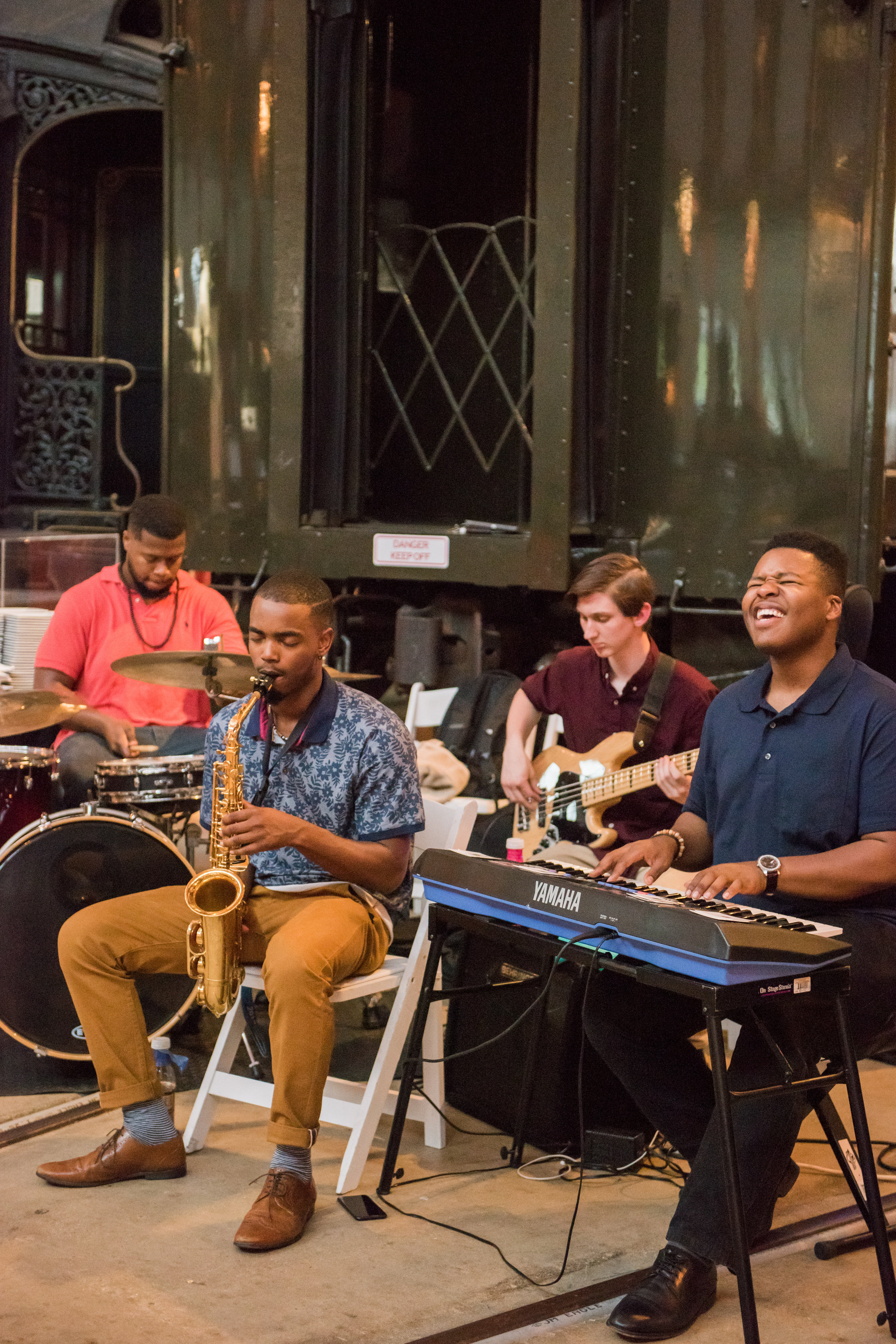
CYA-Wine-Tasting17-9500Who doesn’t love trains? Guests got to revisit their love of the rails at the B&O Railroad Museum on Friday, May 19 for the Chapter of Young Alumni’s 12th Annual Wine Tasting & Silent Auction. Members and supporters of the UMBC community came together for a night of fundraising that raised over $4,800 for student scholarships.
The night featured remarks from Leslie Walker-Wilson ’74, psychology, past president of the UMBC Alumni Association, and Courtney B. Wilson, Executive Director of the B&O Railroad Museum.

Another highlight: a special video message from Dr. Freeman Hrabowski.

CYA-Wine-Tasting17-9223While guests mingled and ate delicious food, they listened to music from UMBC’s own Jazz Ensemble. They also had the opportunity to purchase raffle tickets and bid on silent auction items. Thanks to our local business partners, we featured packages such as Charm City Date Night and Northern MD Wine Tour.
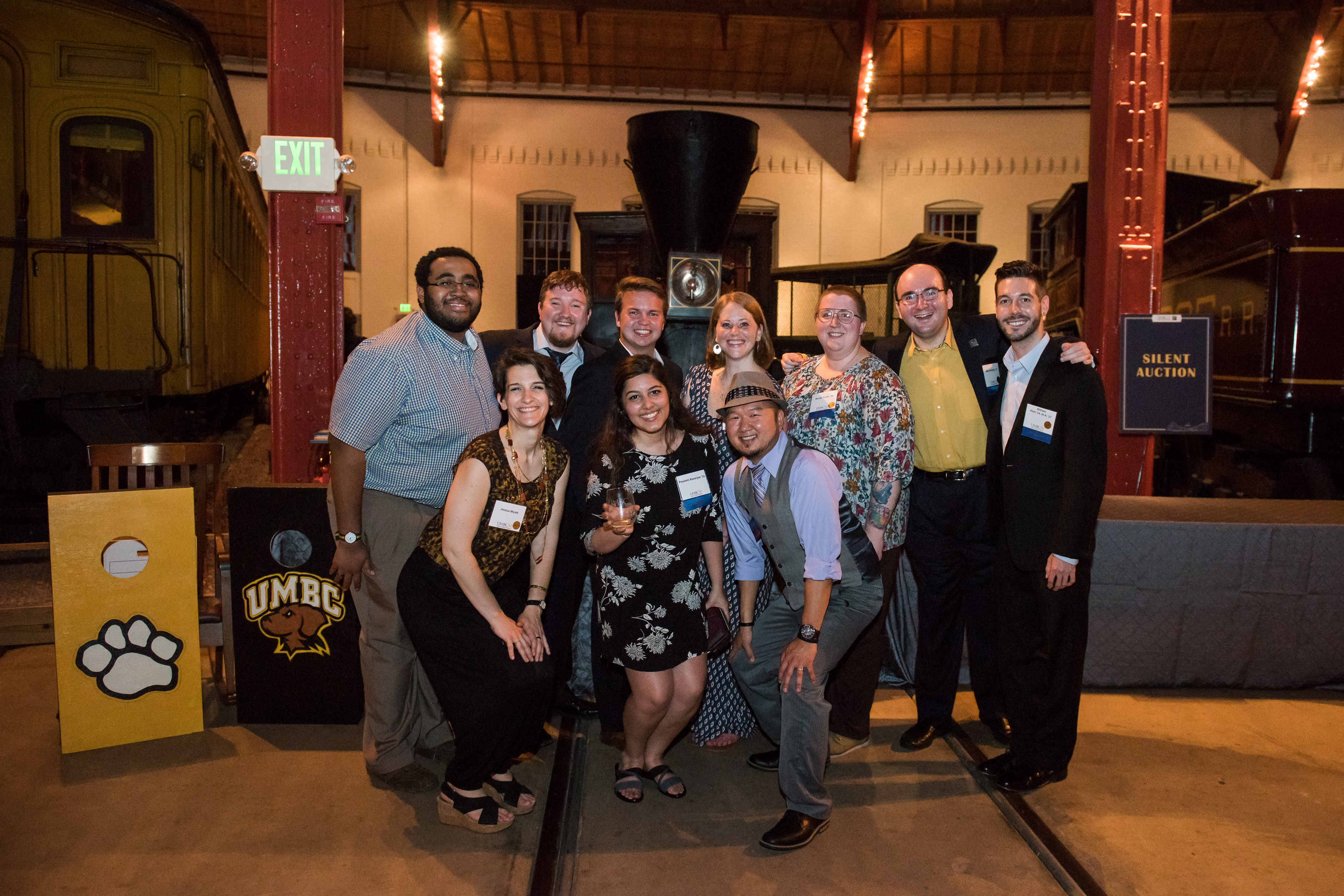
Relive the night by visiting our Facebook album or the Pixilated photobooth gallery.

Want to help us raise more scholarship funds? It’s as easy as 1, 2, 3!

  1. Visit giving.umbc.edu and select Give Now from the menu.
  2. Select Event when asked what prompted you to give to UMBC.
  3. Select Other from the gift designation drop-down, and add Alumni Association Scholarship – Current Use in the field below.

Thank you!

CYA-Wine-Tasting17-9535

— The Chapter of Young Alumni Board

All photos by Marlayna Demond ’11 for UMBC.

Creating a “Pacemaker” for the Brain

Kafui Dzirasa ’01, chemical engineering, is only 38, but is already emerging as a national leader in brain science. His research – which posits that some of the most common mental illnesses might be explained by unexpected connections between electrical patterns in different parts of the brain – could lead to more targeted and effective ways to treat conditions from schizophrenia to autism to depression.

The former Meyerhoff Scholar has also drawn national attention. Last October, as part of a White House panel on research, he found himself explaining to the leader of the free world what it means to think about the brain as an engineered electrical system.

Dzirasa started out at UMBC as a chemistry major but switched to chemical engineering so he could continue using math and computer science, subjects he enjoyed in high school. As graduation approached, he found himself gravitating toward health-related fields, so he stayed on for a fifth year to take pre-med courses and serve as student body president. “I realized it would be useful to learn as much about the body as I could,” he says.

Dzirasa then headed to Duke University to earn his M.D./Ph.D. in bioengineering, with the goal of designing neuroprosthetics—devices that interface with and augment the brain’s abilities and functions. But a stint in Duke’s schizophrenia ward realigned Dzirasa’s plans, awakening him to the huge need for better mental health treatments. “It was not until I got to the clinic that I realized mental illness was a real thing,” he says. “It was tremendous wake-up call.” Instead of giving healthy people additional capabilities, he realized he could help sick people live fuller lives by creating neuroprosthetics for mental illness.

While scientists believe that psychiatric symptoms should map onto underlying physical conditions in the brain, identifying those conditions has been challenging. Scientists still have a limited understanding of the neural basis of most illnesses or why treatments such as antidepressant drugs and electroshock therapy are effective.

Dzirasa, now an assistant professor in Duke’s biomedical engineering and neurobiology departments, hopes to change that by studying the brain’s electrical signals. Though we hear a lot about brain chemicals, the brain is also electrical: Like the information-processing transistors in your computer or phone, each of the roughly 100 billion neurons in your brain transmits information using electrical impulses. Dzirasa takes advantage of this by inducing various conditions—stress, bipolar disorder, even drug addiction—in mice and using tiny implanted electrodes to measure how electrical activity changes.

He uses mathematical and computational tools to find connections between recorded electrical patterns in different brain areas. In the prestigious journal Neuron, he recently reported an instance in which communication between two regions in a mouse’s brain was influenced by activity in a third, seemingly unrelated, one. When he exposed the mice to stress, the communication broke down. “It’s almost like parents sitting in the front seat of a car and kids sitting in the back,” he says. “When the parents are controlling the kids’ communication, everything is fine. But if you tell the kids to stop talking and they don’t, then you’ve got problems. We found that the parent lost the ability to control the kids’ communication.”

Dzirasa’s ultimate goal is to make a “pacemaker” for the human brain. Like the heart implant that restores a regular heartbeat, his dream device would correct faulty electrical signals that underlie debilitating conditions such as schizophrenia and bipolar disorder. “If mental disorders are problems with electricity, we should be able to treat them using electricity,” he says. “I could see a future in which people sleep in a hat” wired with electrodes to stimulate healthy brain function.

A recent discovery may be a step in that direction: Dzirasa and colleagues have figured out a way to not just read but write electrical information from one part of the brain to another. He has a paper coming out and a patent pending on the technique. But challenges remain. For obvious reasons, he cannot stick wires into a living human the way he can in a mouse, and there are significant differences between how mouse and human brains work that need to be accounted for. Translating his findings from mice to humans is “the next step,” he says.

Dzirasa credits UMBC’s Meyerhoff Scholarship program with shaping his career ambitions. And he is now giving back to the program that helped him, returning to campus once or twice a month to mentor scholars in “everything from career advice to life advice, decision-making advice—all the things that go along with helping college students figure out their place in the world.”

It’s yet another set of connections through which Dzirasa is making the world a better, more caring place.

— Gabriel Popkin

Image: Les Todd, Duke Photography

Read more about brain research at UMBC in “Staking Our Claim.”