Jacqueline Wojcik
B.F.A., Visual Arts (animation/interactive media)
Summa Cum Laude, Certificate: Honors College
Hometown: Hollywood, Maryland
Plans: Fulbright researcher, Viking Ship Museum, Norway
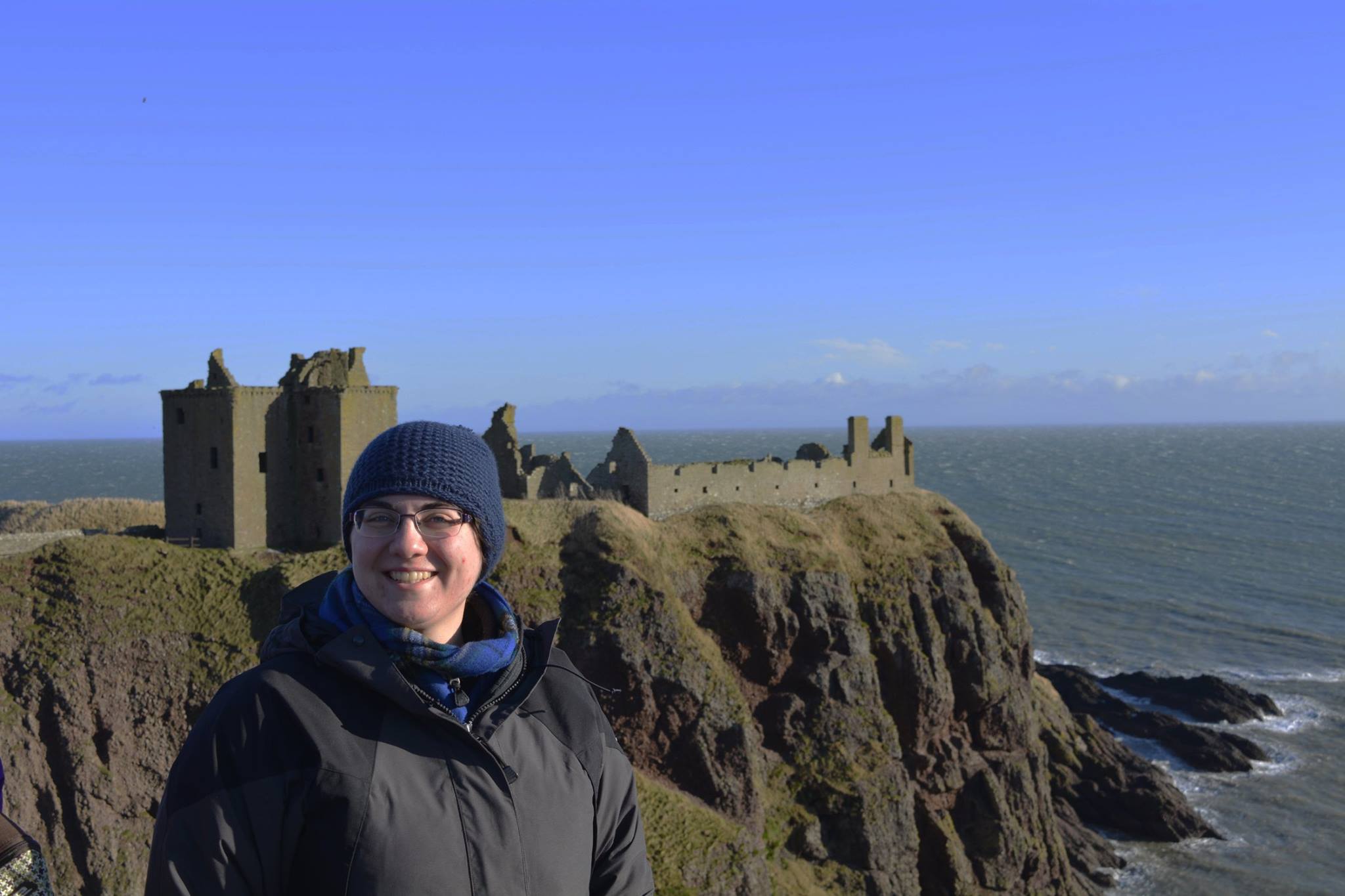
UMBC fostered an interdisciplinary environment that let me pursue my interest in animation, computer science, and history, ultimately combining the three into my Fulbright project.
Jacqueline Wojcik has applied an inquisitive mind to understanding animation in all its diverse aspects, including expertise in three-dimensional and two-dimensional techniques, game design, computer science (her minor), and the social context that informs animated work.
With her imagination sparked by a study abroad experience in Scotland, she applied to the U.S. Fulbright Student Program, winning a research award for 2017-18. Wojcik will spend the next academic year as a Fulbright researcher at the Viking Ship Museum in Oslo, Norway. Her project, “The Gokstad and Oseberg Burials in Digital Space,” will recreate artifacts from two Viking Age ship burials as they would have been used in the lives of their owners. The three-dimensional digital artifacts she creates will exist in a virtual reality game-like environment for visitors to explore.
During her time at UMBC, Wojcik was very active in the award-winning UMBC Game Developers Club, presenting for the club at UMBC’s Undergraduate Research and Creative Achievement Day for two consecutive years. She also presented at Gamescape 2016 and MAGFEST 2017, and participated in the 2016 Baltimore Student Film Showcase with “Beware Bad Footing.” Her entry into UMBC’s 2015 Art Week Motion Challenge Competition won first place, and, on a regular basis, her animations reached wide audiences through work with CommonVision’s iNet display screens found across campus.
Wojcik has also excelled academically, as a member of the Honors College who has been recognized on the President’s List for every semester of her time at UMBC.
Jacob Mueller
B.A., Theatre
Cum Laude
Hometown: Easton, Maryland
Plans: Lighting designer for Catholic University of America and multiple theatre companies
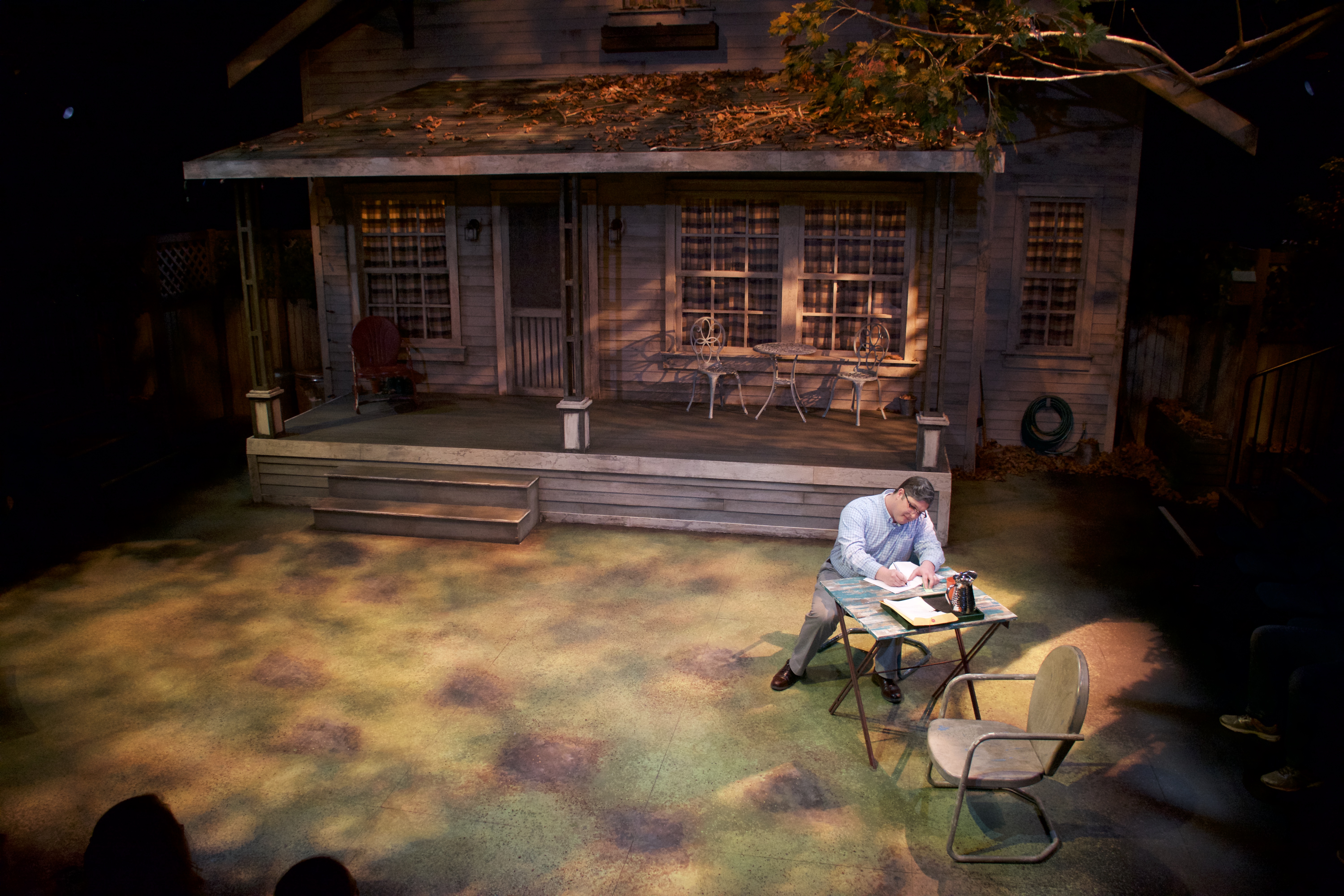
UMBC has prepared me to be a multi-faceted, problem-solving artist. The well-rounded liberal arts degree training has been a catalyst for both my academic and artistic accomplishments…in my field as a theatrical lighting designer.
Jacob Mueller is a Linehan Artist Scholar who has continually distinguished himself at UMBC as a thoughtful and creative lighting designer. Mueller has worked on the student-directed Studio 3 productions Gidion’s Knott and Sister Mary Ignatius Explains It All For You, and was the lighting designer for his department’s Blackbox Theatre production of Proof, a highly competitive opportunity to showcase his growing expertise.
Mueller received the 2016 Outstanding Achievement Award in Design and Production from the theatre department. He also earned a Weissberg Fellowship at the Contemporary American Theatre Festival in Shepherdstown, West Virginia, and completed an internship with the Annapolis Shakespeare Company.
Mueller credits much of his success to his experience as a Linehan Scholar, sharing, “The Linehan Artist Scholars Program fosters innovative and professional young artists and has acted as the keystone for my growth and success here at UMBC.”
Already, Mueller is working professionally as a lighting designer for several venues in Maryland, including the Catholic University of America, Annapolis Shakespeare Company, Theatre Alliance: Anacostia Playhouse, and Crashbox Theatre Company. He plans to continue working with these venues as a lighting designer after graduation, and is also in the final round of consideration for an apprenticeship with Imagination Stage in Bethesda.
Ghazaleh Keshavarz
M.F.A., Intermedia and Digital Arts
Magna Cum Laude
Hometown: Isfahan, Iran
Plans: Continuing to work as an artist in the U.S. for an additional year
As a student coming from abroad to study at UMBC, I have had a great time in the multidisciplinary environment. The knowledgeable and experienced faculty in the visual arts department have helped me adjust to life and study in America. Great facilities of the department and the wonderful archives and media sources in the library, particularly the Special Collections, gave me the chance to broaden my artistic knowledge and view.
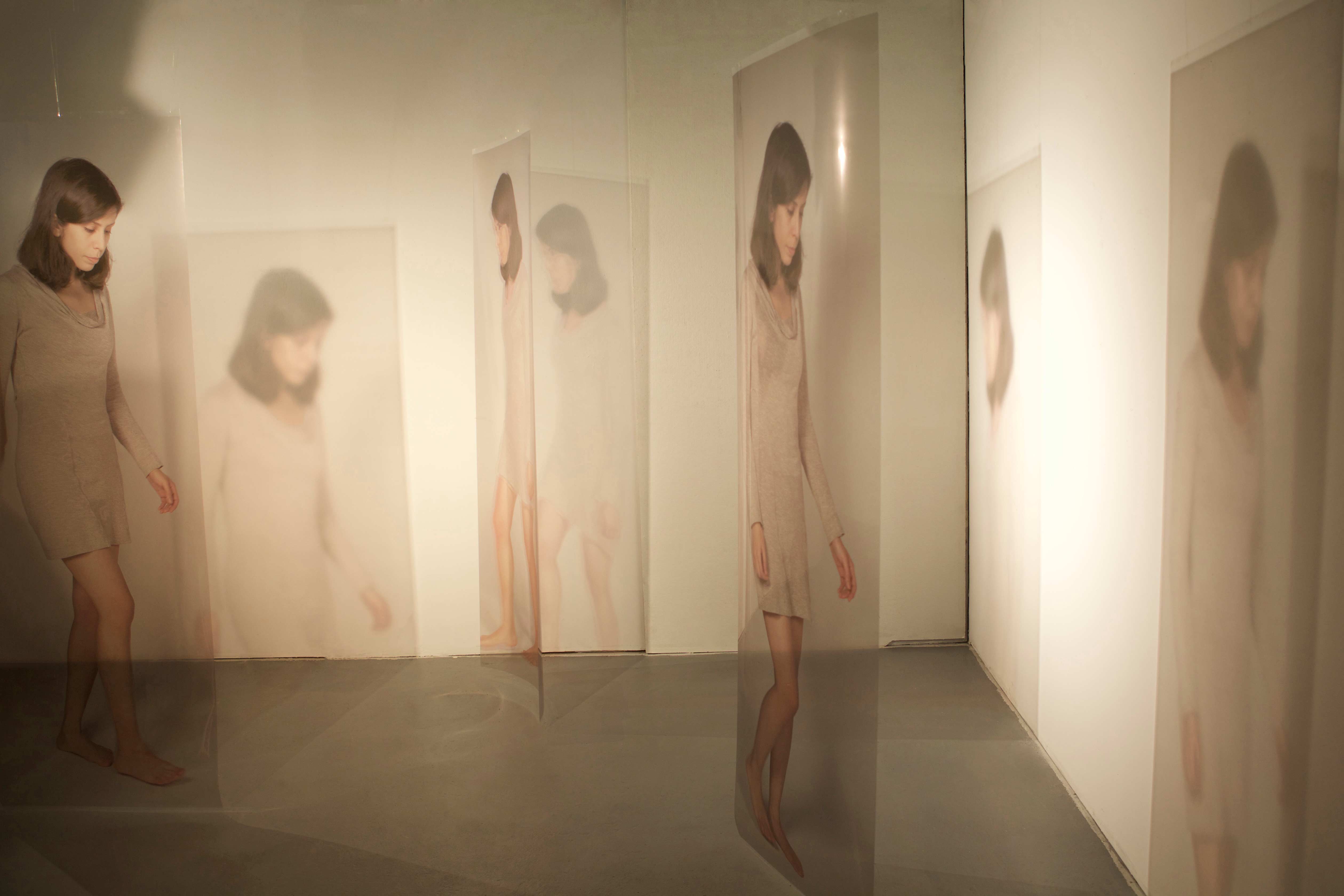
Ghazaleh Keshavarz was invited to the United States from Iran in 2014 for UMBC’s Intermedia and Digital Arts (IMDA) master of fine arts program after receiving a B.A. in photography from Tehran University of Art in Iran. Keshavarz receives her degree as the 2016-17 recipient of the Intermedia and Digital Arts RTKL award. She received this competitive award through a unanimous nomination by visual arts faculty for the tremendous potential of her long-term career success as an artist.
Keshavarz’s research and artistic work during the three years in the IMDA program has centered on the conception and expression of her own identity as an immigrant and her experience in unknown surroundings. In relation to her RTKL Award project Dispersed Moments, she explains that “reproducing the vulnerability and fragility of body and mind, as well as the lasting effects of moving from one place to another, I am exploring physical displacement and its psychological consequences in conjunction with the role and perception of others.”
She exhibited her thesis project Naftoon—an installation related to the profound impact of oil on culture and history in Iran in the last century—at UMBC’s Center for Art, Design and Visual Culture in April. As the RTKL Award Recipient, she also had the opportunity to present a public lecture on that work.
Amy Berbert
B.F.A., Visual Arts (graphic design); B.A., Visual Arts (photography)
Summa Cum Laude
Hometown: Gaithersburg, Maryland
Plans: Media coordinator, Zinnia Films
UMBC has encouraged me to meet professionals who are already working in my fields of interest, to build relationships and gain insight and experience early in my career.
A freshman year spring break service trip through the InterVarsity Christian Fellowship planted a seed in Amy Berbert’s mind. She volunteered with non-profit organizations working in the Baltimore’s Mt. Clare neighborhood, and, though limited in time and scope, the experience gave her a clearer sense of how poverty and racism can impact communities. She reflects, “That trip is what inspired me to create the social justice work I am doing now, three years later.”
Berbert is referring to Remembering the Stains on the Sidewalk, an evocative photography project that memorializes each of the 318 victims of homicide in Baltimore in 2016. The project’s Instagram feed @stainsonthesidewalk describes it as, “An Exploration of Homicide in Baltimore City. Same Day. Same Time. Same Place. One Year Later.” Each victim is remembered through a picture taken precisely one year later at the location of the homicide, with the goal of bringing visibility to the value of lives cut short by violence and structural inequalities.
The project immediately captured the media’s attention for its powerful impact on audiences and has been featured by SPIN, The Baltimore Sun, and ABC2 News. As Berbert’s undergraduate thesis project, Remembering the Stains on the Sidewalk will also be displayed in the 2017 Visual Arts Senior Exhibition at the Center for Art, Design and Visual Culture from May 23 through June 9. Berbert is dedicated to continuing the rigorous project after graduation, through the end of the year, planning her life in 2017 around the lives that were lost in Baltimore in 2016.
In addition to this major project, Berber has worked as student design manager at CommonVision. She has exhibited her work at VisArts Gallery in Rockville and Single Carrot Theater in Baltimore, and was the winner of the University System of Maryland 2013 Foundation Art Contest. Following graduation, she will work full time at the local media company Zinnia Films.
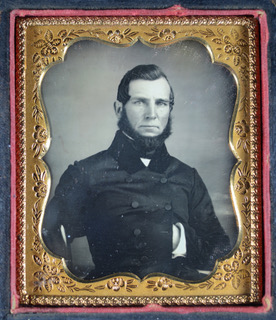
A recent gift by Stanley B. Burns, M.D. substantially increases the holdings of daguerreotypes at UMBC. Dr. Burns, historian, collector, and physician, donated 252 daguerreotypes from his large photography collection, continuing his long relationship with UMBC.
Tom Beck, chief curator of UMBC’s Albin O. Kuhn Library notes that the donated works are both signed and unsigned daguerreotypes:
More than seventy different photographers are represented among the signed works, including recognized daguerreotypists such as Charles Deforest Fredericks, Rufus Anson, John Plumbe, Jr., Samuel Broadbent, and Jessie Whitehurst. The unsigned works are unattributable to any specific artist but hold significant value for the uniqueness of the imagery, the interesting representations of nineteenth century people, and the material culture characteristics.
Having acquired his first photograph in 1975 (a medical image), Burns founded the “Burns Archive” in 1977 at his New York City home. The Archive began receiving recognition in 1978 by such prominent publications as New York magazine, Aperture magazine, and the New York Times. Art& Antiques Magazine labeled Burns “one of America’s Top 100 Collectors.”
As an historian, Burns has written over 1,100 articles and over forty books on subjects ranging from Victorian funeral portraits to early oncology. His books Sleeping Beauty: Memorial Photography In America, and Forgotten Marriage: The Painted Tintype & The Decorative Frame, 1860-1910, A Lost Chapter in American Portraiture both received American Photographic Historical Society awards for best publications, and Sleeping Beauty was praised by Pulitzer Prize winning author John Updike in American Heritage magazine. Images from the Burns Archive have been utilized for such nationally and internationally distributed television programs and motion pictures as The American Experience, Hannibal, The Knick, and Silence of the Lambs.
Images: Header image is UMBC Library, by Marlayna Demond ’11 for UMBC. Daguerreotype is “Sea Captain in Typical Distinguished Pose,” by J. H. Young, 1850s.Photography Collections, Albin O. Kuhn Library & Gallery.
Lisa Moren, professor of visual arts, has received a production fund award from the from Johns Hopkins University’s Saul Zaentz Innovation Fund in Film and Media for the collaborative project NONUMENT 01::The McKeldin Fountain. The award includes $70,000 of funding to develop an augmented reality app.
“The Nonument app is a virtual memorial to the demolished McKeldin Fountain” says Moren. “The spirit of Nonument is to validate public spaces that are important to real people, making stimulating places full of rich textures.”
Viewers will hold up a smartphone or tablet like a protest sign in order to see the lost fountain, hear the waterfalls and nearly forgotten stories from the past 35 years. Sound scores and first-hand stories will remember Occupy Baltimore, the Black Lives Matter movement and protests in the wake of the death of Freddie Gray in the hands of Baltimore Police, the National Guard on the site, the activists group Women in Black, controversial comedians, a marriage proposal, artists using soap bubbles, mermaid performances and many other personal, poetic and political stories imbued with frailty in this tenuous free speech zone.
Videos and animations further illustrate the history of the site in the app.
NONUMENT 01 is part of a larger NONUMENTresearch project conceived by the Museum of Transitory Art (MoTA) in Lubljana, Slovenia. It addresses the perception of public space and its role in urban everyday life. NONUMENT was developed within the ARTECITYA network co-financed by Creative Europe, devoted to artistic and technological innovations with the aim of improving the quality of life in cities.
The NONUMENT 01::The McKeldin Fountain website further explains that NONUMENT is “an international initiative that seeks to honor hidden urban spaces that carry symbolic value for ordinary people.” Rather than using bronze or stone, the project “installs new and emerging media forms in order to capture the transitory nature of everyday experiences.”
NONUMENT01::The McKeldin Fountain is the first implementation of the project in collaboration with Baltimore artists Lisa Moren and Jaimes Mayhew ’10 M.F.A., intermedia and digital arts, and Martin Bricelj Baraga and Neja Tomšič (artist-in residence in UMBC’s department of visual arts in fall 2014). The NONUMENT01::The McKeldin Fountain website, project videos, 3D model, and animations were produced with support from the Imaging Research Center at UMBC, the Saul Zaentz Innovation Fund, LABStudios, and CEC ArtsLink.
The McKeldin Fountain, plaza area, and walkways were built in 1982 and designed to serve as public space at the corners of Pratt and Light Streets, adjacent to the Baltimore Inner Harbor. The redevelopment of the Inner Harbor was the culmination of a period of transformation for the area from an industrial space to a tourist and residential district, envisioned in the 1960s by Mayor Theodore McKeldin.
The plaza was often a public gathering spot for tourists, residents,and workers. It was designated a free speech zone and was a gathering point in the city for demonstrations and protests. The decision byformer Mayor of Baltimore Stephanie Rawlings Blake and the Downtown Partnership to demolish the fountain without concrete future plans was controversial among city residents. The City of Baltimore’s plans for the site remain unknown.
Moren was named among the first cohort of Saul Zaentz Innovation Fund Bold Voice, New Paradigms Incubator Fellows in October 2016 to develop the Nonument app concept. Johns Hopkins founded the fund in March 2016 through a $1 million grant from the Saul Zaentz Charitable Foundation. Zaentz was an Oscar-winning producer who died in 2014. The incubator supports Baltimore artists by networking them with others to develop and realize their ideas in Baltimore. The deadline for applications for the third incubator program, which begins in late April, is March 31.
Image and video: Courtesy of the NONUMENT 01::The McKeldin Fountain artists.
An ambitious and moving photography project by UMBC student Amy Berbert ’17, visual arts, has captured the media’s attention for its powerful impact on audiences across the Baltimore-Washington D.C. region.
Berbert began taking photographs at crime scenes in Baltimore City last year with the goal of bringing visibility to the traumatic impacts of violence on people and communities. After exhibiting some of these photographs in the Montgomery County suburbs around Washington D.C., just 40 miles from the Baltimore neighborhoods she was photographing but distant in many ways, she gained a greater understanding of the potential of her images to tell powerful stories and build connections. She soon set out with a new, much larger, vision: to use photography to memorialize every single person who was a victim of homicide in 2016 in Baltimore.
Berbert has been posting photographs of the project on the Instagram feed @stainsonthesidewalk, describing it as, “An Exploration of Homicide in Baltimore City. Same Day. Same Time. Same Place. One Year Later.”
It is her Instagram sharing that launched a recent flurry of media attention on the project. Though just begun at the start at 2017, the series has been featured by SPIN, the Baltimore Sun, and ABC2 News in the past week.
The photographs “are respectful of the people involved,” she told Mary Carole McCauley in the Baltimore Sun. “They don’t judge anyone. It’s just a moment of silence to remember these people, and the fact that they lived and died in that place.”
In an interview with Skyler Henry from ABC2 News, she explained, “I want to give them more of a legacy than just a couple lines in an article.”
“Amy’s project places her right in the middle of a very real and pressing issue in Baltimore, namely, its high murder rate. The media attention will I think lead to more awareness and dialogue about the issue, as well as paying tribute to the individuals who were killed,” says her professor Lynn Cazabon.
She noted, “The media coverage also shines a light on a great example of the type of unique…work that UMBC visual arts undergraduates are engaged in.”
As her undergraduate thesis project, Berbert’s photography will be displayed in the 2017 Visual Arts Senior Exhibition at the Center for Art, Design and Visual Culture (CADVC) from May 23 through June 9. That exhibit will conclude her college career, but she is dedicated to continuing the rigorous project through the end of the year, planning her life in 2017 around the lives that were lost in Baltimore in 2016.
“I personally prefer to stay behind the camera, so the media attention has been a bit overwhelming but it is worth it,” says Berbert. “I hope that the victims I am memorializing are the ones who get the attention rather than myself,” she continues, explaining her goal to inspire both empathy and action.
By focusing on increasing awareness of lives lost through violence, Berbert hopes to encourage others to engage with and support communities facing challenges. She shares, “As a community we need to educate ourselves and others about the root causes of violence…and then we need to take action. We need to volunteer with programs that are working to make a difference in these communities.”
The broader impacts of Berbert’s work aren’t yet fully realized, but she’s already felt the project’s effects on herself. As she told the Baltimore Sun, “Before I started working on this project, I knew I had stereotypes. But, every time I go out I’m faced with them. I don’t know if this project is going to change anyone else. But, I think it’s changing me.”
Image: Amy Berbert photographing in Baltimore on February 6, 2017. Photo by Skyer Henry, courtesy of WMAR/ABC2NEWS.
Baltimore Dance Project returns to UMBC’s Performing Arts and Humanities Proscenium Theatre for its 33nd year with a dynamic program. The company will premiere several new works: Doug Hamby’s Square Breath for six women with an interactive sound score performed by Eliza Triolo and Christian Hartman; Hamby’s Letting Go, a meditative solo on loss and memory performed by Maia Schechter; Hamby’s Two Songs by John Cage with music performed live by mezzo-soprano Janice Jackson and percussionists Tom Bryant and Josh Miller; Carol Hess’ vibrant LightForest featuring five dancers, colorful projections and score by Timothy Nohe via wearable sound devices; and a new duet by Desiree Koontz-Nachtrieb.
The program also includes encore performances of 2016 favorites Lost, Sandra Lacy’s mysterious solo, and Image in Red, Carol Hess’ reconstruction of Janet Soares’ sumptuously beautiful solo choreographed on Hess in 1980. Hess re-constructed Image in Red and set it on Franki Trout. Trout ’13, dance, now teaches dance in Anne Arundel County’s first Performing and Visual Arts Magnet Program at Annapolis High School.
These works will appear on stage February 9–11. Integrating innovative sound and visuals through collaborations with artists such as Nohe, professor of visual arts, they reflect the company’s deep commitment to an interdisciplinary approach.
Baltimore Dance Project is a professional modern dance company dedicated to presenting the creative work of Doug Hamby and Carol Hess, professors of dance at UMBC who are described as “two of the most exciting choreographers in Maryland.” Formed in 1982 under the name Phoenix Dance Company, the company is known for its edgy collaborations with composers, directors, sound artists and visual artists, and for infusing visual media and technology into riveting dance performance. The company features outstanding professional dancers and has been honored with numerous grants and awards. Hamby, Hess, and company veteran Sandra Lacy have received a total of twelve individual artist awards from the Maryland State Arts Council, and their work has appeared in theaters and film festivals across the United States.
Conductor E. Michael Richards, professor of music, and the UMBC Symphony have been awarded honorable mention in the college/university division of The American Prize’s Ernst Bacon Memorial Award in the Performance of American Music for their 2016 performance and recording of William Grant Still’s “Afro-American Symphony.” Alan Wonneberger, lecturer and director of recording for the department of music, mastered the recording of the live performance.
Among the many contests hosted by The American Prize, the Ernst Bacon Memorial Award for the Performance of American Music focuses exclusively on works by American composers from any period and in any style.
The American Prize notes, “the award is named in honor of American composer Ernst Bacon (1898 – 1990) who was among the pioneering generation of composers who, along with Thomson, Copland, Harris, and others, found a voice for American music. Ernst Bacon set out to create compositions that expressed the vitality and affirmative spirit of our country.”
“Afro-American Symphony” was a milestone in Still’s career and in American musical history as it was the first symphony by a black composer to be performed by a major orchestra, premiered in 1931 by the Rochester Philharmonic Orchestra. The symphony for full orchestra was remarkable for blending not only jazz but also blues and spirituals into a classical form, groundbreaking at the time.
“I am grateful that the Symphony’s diverse program has received this recognition,” Richards says. “One of our goals is to not only study and perform the masterworks of the common practice period, but also the lesser known, high-quality, and relevant music of twentieth and twentieth-first century composers – music of our time.”
Founded in 1973 by conductor/violinist Robert Gerle, the UMBC Symphony is an ensemble of 90 students and community members that performs music from the 17th to 21st centuries. E. Michael Richards assumed leadership of the UMBC Symphony in the fall of 2007. Richards previously served as conductor of the Hamilton College Orchestra for 17 years, the Bowdoin College Orchestra, and as assistant conductor with the La Jolla Civic Orchestra (San Diego). He has also guest-conducted the Syracuse Society for New Music. Fanfare Magazine heralded a recording on the Opus One label of Masataka Matsuo’s Hirai V that Richards led with the Hamilton College Orchestra as “a staggering achievement.”
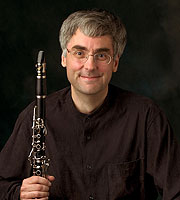
Images: UMBC Symphony and E. Michael Richards; photos by Marlayna Demond ’11 for UMBC.
Experts from National Geographic, NPR, and other national leaders in the arts, humanities, and sciences connected by webcam last week to discuss a series of ten powerful images for “How Science is Pictured in the Media and Public Culture.” UMBC and Reading the Pictures jointly produced the panel as part of the year-long Seeing Science project, which explores the role photography plays in shaping, representing, and furthering the sciences.
To prepare, explains Marvin Heiferman, Seeing Science curator at UMBC, “Meg Handler, editor-at-large at Reading the Pictures, and I spent a couple of months looking at the year’s worth of photographs that appeared in magazine articles and online pieces about the sciences to…see the various ways, from stock photography to photojournalism, that the sciences were represented.”
The discussion on December 1 took place on Google HangOut, accommodating live audio and video with viewer participation via live chat. Drawn from the ranks of curators, photo editors, visual scholars, and scientists, the panel included Rebecca Adelman, associate professor of media and communication studies, UMBC; Michael Shaw, publisher, Reading the Pictures; Max Mutchler, manager, Space Telescope Science Institute Hubble Heritage Project; Marvin Heiferman; Kurt Mutchler, senior editor for science photography, National Geographic; Corey Keller, curator, SFMOMA; and Ben de la Cruz, multimedia editor, NPR Science Desk, with moderator Nathan Stormer, professor of rhetoric, University of Maine.
The series of ten images they discussed represented a broad range of science disciplines, were visually distinct from one another, and varied in their goals and purposes. Together, Stormer argued, they demonstrated how “science becomes visible to us when science is helping us see things —that is when it becomes apparent to us that we depend on it, live within it as much as we do.”
The conversation began with a colorful and formally engaging photograph of a massive general-purpose detector within the Large Hadron Collider at CERN, in Switzerland. Subsequent photographs included a new view of the Pillars of Creation from the Hubble Space Telescope; a human embryo being modified; four women from NASA’s most recent astronaut class; the early 20th century Chart of Physical Traits alongside photographs of faces overlayed with facial recognition software mapping grid points; an overhead view of a toxic algae bloom in Florida; a 4-month-old baby with microcephaly, published during the Zika outbreak; President Obama with a boy and his marshmallow cannon at the White House Science Fair; and two visitors wearing virtual reality gear at The Void in Times Square.
The depth and spectrum of the panelists’ expertise created a fascinating discussion that began with initial emotional and intellectual responses to the images and quickly delved into, as Adelman described, “how the photograph acts as a visual metaphor for how science gets communicated to audiences of non-scientists.”
“What was interesting and revealing to me was to listen to the various ways people with different relationships to science and imaging looked at and responded to the images discussed,” says Heiferman. “Since Seeing Science is an interdisciplinary look at how images function, that variety of responses is what gives a discussion like the one we had its depth and richness.”
Melissa Cormier ’17 M.F.A., intermedia and digital arts, tuned in to the event from the on-campus viewing party hosted by UMBC’s Center for Art, Design and Visual Culture (CADVC.) “My current thesis work deals with co-opting traditionally scientific aesthetics and methods of display and observation, so it was an opportunity to witness how those types of images are spoken about and discussed by the various panel members,” says Cormier.
Reflecting on the live chat function of the Google HangOut, Cormier shares, “It was a great experience to be able to interact with such a distinguished panel and feel included in the conversation. It also gave me some new research avenues to pursue in my work, as well as affect the language I will use to discuss my work.”
Reading the Pictures’ salon archive now features in slideshow format the ten photographs that formed that backbone of the event. A video of the discussion is available on YouTube.
Through #SeeingScience, readers can also explore fifty additional media images that Reading the Pictures featured on Twitter and Instagram in the weeks leading up to the event.
Header image: New view of the Pillars of Creation, visible light, detail, 2014; courtesy of NASA/ESA/Hubble and the Hubble Heritage Team (STScI/AURA)/J. Hester, P. Scowen (Arizona State U)
Many years ago Eric Dyer, associate professor of visual arts, worked professionally as an animator by day, and at night created his own experimental films. He explained in his recent TEDxCharlottesville talk that spending very long days in front of a screen left him wanting and needing to find a way to limit his screen time and once again use his hands in the creation of his work.
He considered the possibilities of the zoetrope, a device widely popular in the late 19th century for creating the illusion of motion before the arrival of filmed animations. Various configurations of the zoetrope all made static sequences of drawings around a spinning inner cylinder appear to be in motion when viewed through slits. He took this idea with him to Copenhagen, Denmark for a year on a Fulbright Fellowship and upon his return began a course of work that has underpinned his research of the last decade.
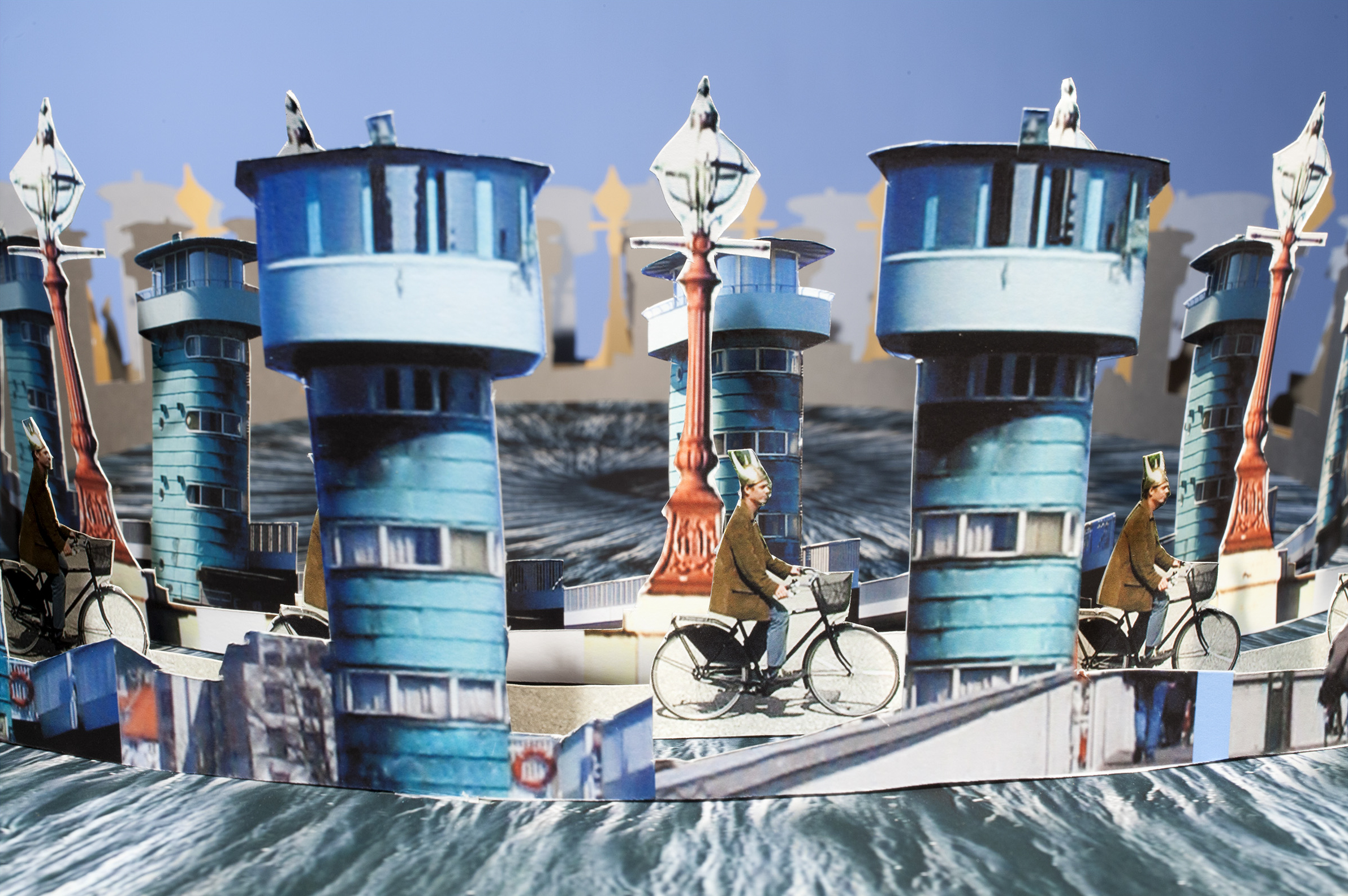
Dyer printed sequences of stills from his Copenhagen videos on long strips of inkjet paper and for his own take on the zoetrope he replaced the slits with a video camera. He went on to make cylindrical paper sculptures the size of bicycle wheels from these strips, he estimates 25 in all, recording the animated sequence each created for his 2006 film Copenhagen Cycles. This new approach to animation “helped me get my life back,” Dyer said. “Instead of 12-15 hours a day with my face plastered to a screen I was having little adventures.”
“But video flattens sculpture so I tried to imagine a way that animated sculpture could be experienced as such, and as a completely immersive animated sculpture,” said Dyer.
He came up with the concept of a zoetrope tunnel—the zoetrope turned inside out with the viewer inside the cylinder with a handheld strobe walking through the sculpture. Dyer estimates the full-scale realization of the elaborate structure he envisions creating will take years, but in the meantime he has built a half-scale prototype that he uses for animation tests.
Dyer lies inside the prototype, attaching 3D printed “sequences” with Velcro to the inside of the tunnel. The construction of the device has lead people to comment that it reminds them of an MRI machine. The medical connection spoke to Dyer because “at the age of 14 I was diagnosed with a degenerative retinal condition that is slowly taking my vision away and I’d never responded to that in my work.”
This recognition inspired the creation of his next sculpture, Implant. Dyer describes it as his “science fiction fantasy cure” for his incurable disorder: “a super-magnified medical device that fits around the optic nerve.” With a handheld strobe, viewers explore the animating sculpture and discover thousands of cell-size robots hard at work “weaving in and out of the optic nerve.” Indeed what they are looking at are the tiny static 3D printed and painted elements Dyer has arranged precisely to create the illusion he describes.
Dyer shared that “now vision loss has helped to take me away from things that disconnect me from the world. Instead of being sealed off in an automobile, I ride my bike, take buses and trains, and walk a lot. And instead of visually intensive processes in the studio I am also getting outdoors a lot more and using more of my senses.” At the same time, he has been steadfast in exploring experimental processes to create innovative work and the support necessary to do so, receiving a Creative Capital Grant and Guggenheim Foundation Fellowship along the way.
Two recent examples of his innovative work are Mud Caves and Octopi. Mud Caves is a multi-layered print piece with an animation hidden within the artwork-a zoetrope laid out flat, revealed only by video. Octopi, commissioned by the Aurora Picture Show and recently installed in Houston, is a 17-foot diameter static installation that pops to animated life on the screen when visitors turn a tiny crank. It’s a new kind of zoetrope (dubbed the “real-time zoetrope”) that Dyer developed through work at UMBC’s Imaging Research Center.
A survey of Dyer’s work, ”The Material Instant” is currently exhibited at the Spagnuolo Gallery at Georgetown University and runs through December 11. Included in the exhibition are working zoetropes, maquettes, and videos. An artist talk (5 – 6 p.m.) and reception (6 – 8 p.m.) are scheduled for Thursday, November 17.
Watch Dyer’s TEDxCharlottesville talk below, beginning at 2:48:00.
Header image: Artist and filmmaker Eric Dyer introduces the zoetrope to the TEDxCharlottesville audience. Photo by Edmond Joe, courtesy of TEDx Charlottesville. CC BY-NC-ND 2.0.
A new partnership between UMBC and the Peabody Institute of The Johns Hopkins University will bring Peabody Conservatory students Mauricio Rey Gallego, cellist, and Teodora Adzharova, pianist, to UMBC to coach chamber music students and to perform in the Earl and Darielle Linehan Concert Hall this fall.
Together Rey Gallego and Adzharova will lead three class sessions under the mentorship of UMBC music faculty member Airi Yoshioka in which they will coach UMBC chamber music students on musical and career preparation skills. The residency will culminate in a free, public performance by Rey Gallego and Adzharova on Sunday, November 13, featuring works by Beethoven, Bach, and Brahms.
“Bringing together the different kinds of students that we each have at our schools in a meaningful way is an important goal of this partnership,” says UMBC Department of Music Chair Linda Dusman. “Our undergraduate students will benefit from working with more advanced students and having the opportunity to envision careers in music through contact with Peabody’s young professionals.”
“One of the strengths of this collaboration stems from the fact that UMBC’s music program focuses on new music, on experimentation, and innovation—and does so in a gorgeous new concert hall,” says Sarah Hoover, special assistant to the dean for innovation, interdisciplinary partnerships and community initiatives at Peabody. “We hope that our partnership will help build audiences for Linehan Concert Hall while providing important developmental experience for Peabody students.”
UMBC’s Dean of the College of Arts, Humanities, and Social Sciences Scott Casper notes, “This partnership represents a remarkable opportunity for students at UMBC and the Peabody Institute to learn and grow by working together. We look forward to the future collaborative opportunities that will emerge from this beginning.”
Mauricio Rey Gallego was born in Madrid (Spain) in 1991, and began playing the cello when he was eight years old, studying at the Conservatorio Profesional de Música in Valladolid until he was 17. He completed his undergraduate studies at the Real Conservatorio Superior de Música in Madrid. A student of Amit Peled, he completed the master of music degree at Peabody in 2015 and is currently pursuing a doctor of musical arts degree at Peabody. As an orchestral musician, Mauricio has performed in Spain, France, Germany, Finland, and the United States. He was a member of JONDE (National Youth Orchestra of Spain) for three years, performing with the orchestra in the Auditorio Nacional de Madrid and in the Young Euro Classic Festival in Berlin, Germany. Rey Gallego has also participated in a number of festivals and music courses throughout Europe and the United States, including the Fórum de Violoncellos de España, Escuela y Festival Internacional de Música Ciudad de Lucena PRESJOVEM, and Cursos Superiores de Música Unicaja, the Touquet International Music Masters Festival, Interlochen, Chautauqua, and the International Cello Festival at Towson University.
Teodora Adzharova was born in Plovdiv, Bulgaria and began piano study at the age of seven. By the time she graduated from high school, she had won both national and international competitions in Bulgaria, France, Germany, Macedonia, and the Czech Republic. She has studied at the Conservatory in Bulgaria and the University of Central Arkansas. After earning a master’s degree at Peabody, she joined the Peabody Conservatory and Preparatory faculties and is currently pursuing a doctor of musical arts degree in the studio of Ellen Mack. She is the accompanying coordinator at the Peabody Institute.
Information on the November 13 recital at UMBC by Rey Gallego and Adzharova can be found on the Arts & Culture calendar.
Images: UMBC Symphony in the Earl and Darielle Linehan Concert Hall. Photo by Marlayna Demond ’11 for UMBC. Teodora Adzharova and Mauricio Rey Gallego. Courtesy of The Peabody Institute.