All posts by: Catherine Borg


Alum Paul Tschirgi releases new mobile game Deliverance

1522858_10203400515561990_232404133_oThree years in the making, the mobile game Deliverance by Paul Tschirgi ’15, visual arts, is now available for download on the App Store and Google Play.

In this satirical game, players need to deliver fresh pizza to save the world from fake food, which requires excellent weaponry and driving skills to fend off world destruction. “The goal of this project was to bring a fully formed story into the mobile market and talk about the importance of fresh food vs. artificial food in a hilarious and action packed world,” says Tschirgi. In the three weeks since the game was published, the app has garnered positive reviews on both platforms.

Tschirgi invested savings from freelance work for Autodesk and selling 3D models on TurboSquid to fund the music, voice acting, and licensing necessary to make the game but he hopes to generate enough interest in Deliverance to gain outside financial support to work on another game. “I love working on games and my goal is to slowly hire on more team members to make more beautiful and fun games,” he says. “I have several more game ideas that I was able to make pieces of during my time in college on my website.”

Tschirgi developed his skills and a lot of the game during his final two years at UMBC, working closely with many faculty and students through classes and independent study. He notes that working with visual arts professor Eric Smallwood was critical in creating the animated cutscenes, cinematic sequences that are not part of the interactive gameplay controlled by the player and often are narrative interludes to introduce characters or new elements and set the mood.

“Smallwood helped me set milestones so that I was able to finish work on the cutscenes during that semester,” said Tschirgi, noting that the modeling, texturing, rigging, and animating of 3D characters as well as directing the voice acting and musical scoring of these scenes were completed during the independent study.

The hardest thing about making this game specifically was the incredible amount of time it takes to make 3D games combined with animated lip sync cutscenes and more than two hours of gameplay. Making a character in three dimensions takes about 10 hours. You start with a cube and then add more and more points until you can morph the cube into the shape of a human or whatever I need to make. Then I had to make it move in a convincing way, fire weapons and fit dialogue in—without making phones struggle to render it all. There are about 20 characters in the game, 25 roadway courses to drive on and all lots of exciting monsters and effects that I modeled and animated.

Additional collaborative study opportunities through the Linehan Scholars program and interactive media classes helped him refine his animation and programming skills. Tschirgi was also an active member of the Game Developer’s Club at UMBC, finding resources and encouragement to help him get through the thousands of hours he worked on the game. “Anyone who is curious about what game development is like or what it takes needs to visit the GDC on Wednesdays at noon during the free hour in Engineering 005A,” says Tschirgi.

I’ve done a lot of research on what are realistic goals and right now I’m working really hard to get at least 100 ratings/reviews on both the iOS and Android platforms. At that magic number I might be able to get high enough in the listings of games for people who have never heard of my game to stumble across it just by scrolling all the way down some of the app categories and then I could be reaching hundreds of thousands of people.

The next game project he would like to produce is Black Fowl. He estimates it will take about 6,000 hours to complete.

Images: Courtesy of Paul Tschirgi
Deliverance on the App Store

Deliverance on Google Play

In groundbreaking move, NEH extends tour of acclaimed exhibit “For All the World to See”

For the past five years, For All the World to See: Visual Culture and the Struggle for Civil Rights, an exhibition organized by UMBC’s Center for Art, Design and Visual Culture (CADVC) in partnership with the Smithsonian National Museum of African American History and Culture, has traveled the nation through the National Endowment for the Humanities’ NEH on the Road program. Now, the NEH has extended the exhibition’s tour for an addition five years, marking the first time that the NEH on the Road program has doubled to ten years a tour period for an exhibition. 

Through a host of media— including photographs, television and film, magazines, newspapers, posters, books, and pamphlets — the project explores the historic role of visual culture in shaping, influencing, and transforming the fight for racial equality and justice in the United States from the late-1940s to the mid-1970s. 

The first full-scale version of the exhibition opened at the International Center of Photography in 2010 and traveled to six venues through 2013, including the National Civil Rights Museum, the National Museum of African American History and Culture, the DuSable Museum of African American History, and UMBC.

The NEH on the Road version of the show opened in Kansas City in April 2012, and has toured to more than 20 venues since then, including stops in Chattanooga, Tennessee; Wilmington, North Carolina; Richmond, Virginia; Las Cruces, New Mexico; Eu Claire, Wisconsin; San Antonio, Texas; and Wichita, Kansas.

Maurice Berger, research professor and chief curator at the CADVC, noted:

…the role of the National Endowment for the Humanities, as the principal funder of For All the World to See, has been extremely important. But no more so than its support of the NEH on the Road version of the exhibition. By allowing the show to travel across the United States, to more than 50 venues, the NEH will also allow its novel ideas about the civil rights movement to reach many more people.

So much research and writing about the modern civil rights movement — and so many exhibitions — have focused on photography or have ignored visual culture completely. The NEH on the Road version of For All the World to See will help thousands of new visitors to understand the powerful role that visual media — including film and television, graphic art and posters, advertising, photography, and even toys — played in altering prevailing ideas about race in America. By 2023, more than a million visitors will have seen both iterations of the show.

Image: Ernest C. Withers, Sanitation Workers Assemble in Front of Clayborn Temple for a Solidarity March, Memphis, TN, March 28, 1968; Smithsonian National Museum of African American History and Culture, Museum Purchase, ©Ernest C. Withers, Courtesy Panopticon Gallery, Boston MA

Baltimore Museum of Art features Christos Palios in Sondheim finalist exhibition

Christos Palios ’02, visual arts, is among the seven talented finalists vying for the Janet & Walter Sondheim Artscape Prize, which recognizes a working artist in the Baltimore region with $25,000 to further their career. The Baltimore Museum of Art (BMA) has included his work in a Sondheim Prize finalist exhibition on view now through July 31.

Each year the museum hosts this exhibition in the Thalheimer Galleries. The exhibit enables finalists to present their work to the public and also to the contest jurors. The diverse finalists produce an eclectic array of work each year—work often as significant as that in a solo show.

Artist Portrait
Palios, born in Baltimore, is a fine art photographer “whose work probes ideas and aspects of identity, memory, and isolation within urban, industrial, and natural spaces.” His work can be found in public and private collections all over the country, and has appeared in such online publications as F-Stop Magazine and Dotphotozine. For the Sondheim exhibition at the BMA, he presents photographs from two series he developed while visiting family in Greece.

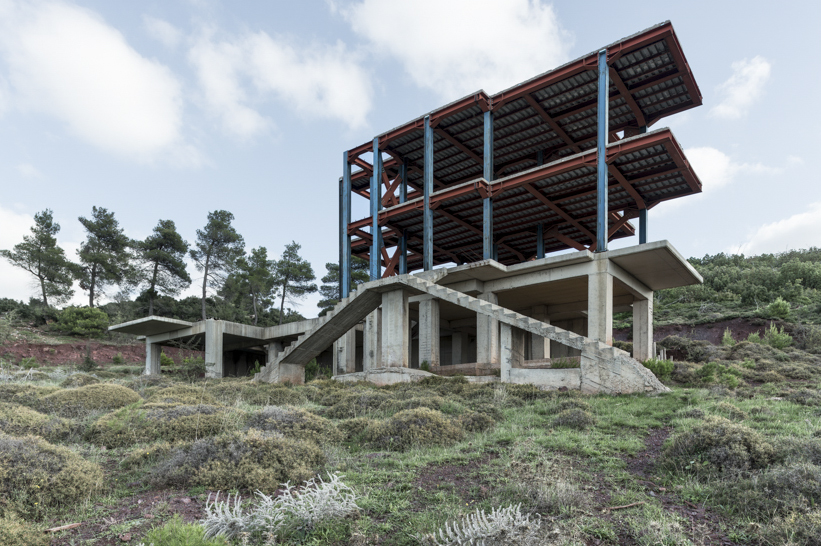
UN-FINISHED // Contemporary Ruins is a collection of obviously abandoned unfinished concrete buildings on otherwise empty landscapes in the Greek countryside. Together the pictures are a bizarre and fascinating collection that Palios says are “pillars of stalled progress,” testament to both the current economic struggles and perhaps an ethos, comparable to the American Dream, that fueled it.

Dervenochoria

Palios’ second series in the exhibition is also devoid of people, but feels far less abandoned. In Conversations, a series of vivid still lives of post-meal tables seen from overhead embody the vitality of the diners just out of view but with their cell phones, keys and other personal items still on the table. The pictures capture their presence and the taste, smells and sounds of the meal and conversation they’ve just shared. Palios is particularly interested in the tech on the table and how our fixation with these devices might be changing the dynamic of the dinner table, recently commenting to the Baltimore Sun “I remember my 87-year-old grandfather picking up a flip phone to look at the time, even though he had a watch on.”

An independent panel of jurors chooses the finalists and semifinalists. This year’s jurors are Tim Griffin, executive director and chief curator at The Kitchen; Rujeko Hockley, assistant curator of contemporary art at the Brooklyn Museum; and Mia Locks, co-curator of The Whitney Museum of American Art’s 2017 Whitney Biennial. The prestigious award is named after the late Baltimore civic leader Walter Sondheim and his late wife, Janet, and presented in conjunction with the Artscape arts festival.

The winner will be announced at an award ceremony followed by a reception on Saturday, July 9 at 7 p.m. In addition, M&T Bank has partnered with the Baltimore Office of Promotion & the Arts to grant the M&T Bank Sondheim Finalists’ Awards, which provide a $2,500 honorarium for each of the remaining finalists not selected for the fellowship.

Several UMBC community members will also be presenting work in the 2016 Sondheim Semi-Finalist Exhibition, including Marian Glebes, M.F.A. ’09, intermedia and digital arts; Jason Hughes, M.F.A. ’15, intermedia and digital arts; Vincent Carney ’06, visual arts; Ben Marcin ’80, economics; and Lynn Cazabon, associate professor of visual arts. That exhibition is on view at the Decker and Meyerhoff galleries of MICA from Friday, July 15 through Sunday, July 31, 2016. An opening reception for the semifinalist exhibition takes place July 14, 2016, 6-9 p.m. at MICA.

Images, top-bottom: Bittersweet Inevitable, 2016; portrait of artist Christos Palios by Geoffrey Baker; and Dervenochoria, Greece, 2015. All images courtesy of Christos Palios.

The Glass Knife exhibit animates the life and work of cell biologist Dr. Keith Porter

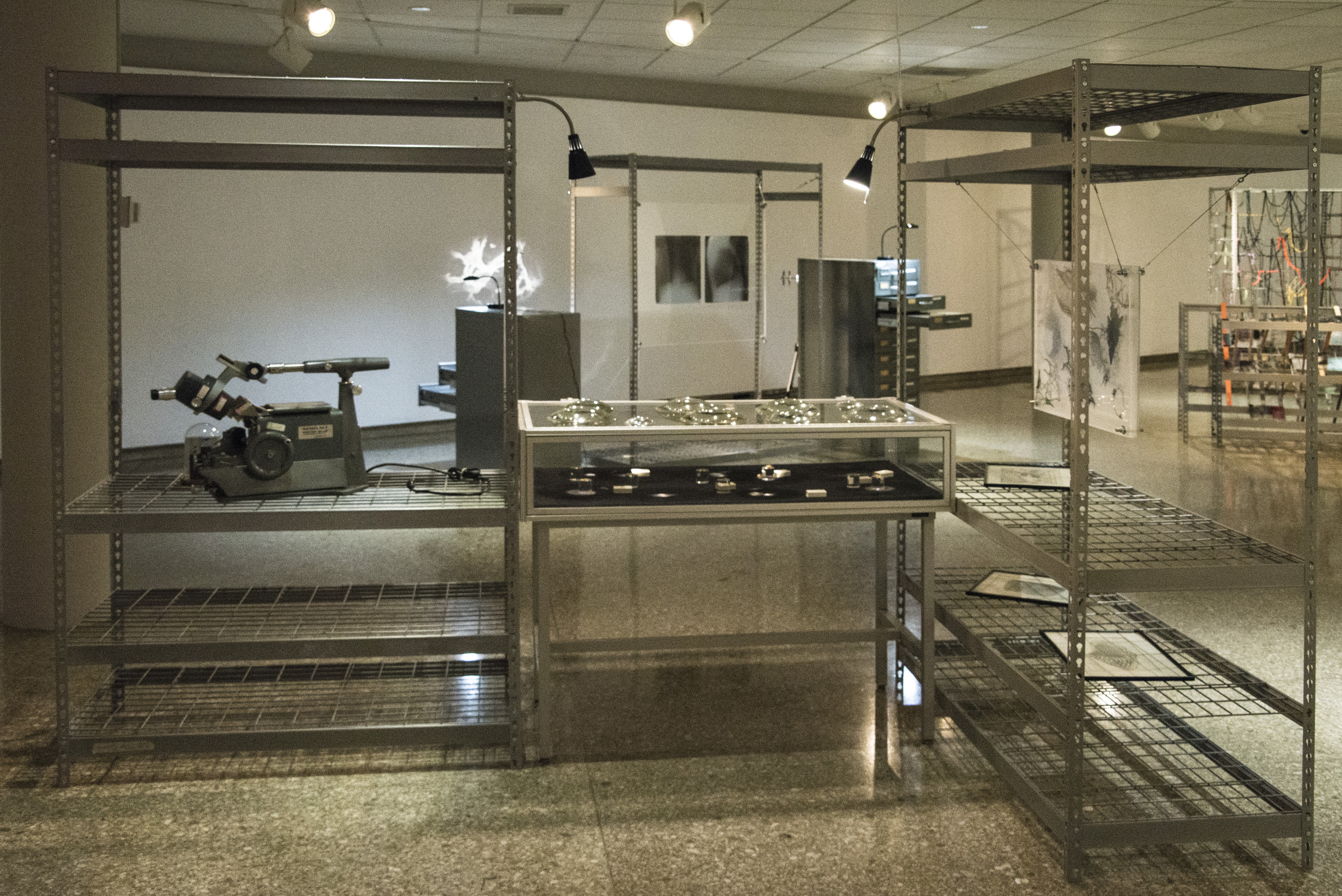
There is a hum that accompanies the current exhibition, The Glass Knife, by Stephen Bradley and Kathy Marmor in the Albin O. Kuhn Library Gallery. The installation is structured by the artists to illuminate Keith Porter’s life-long relationship with the micro world of cells, integrating select elements from Porter’s archive within a series of sculptures that allude to his scientific laboratory setting. Both visually and aurally, these works build a sensory experience of discovery as homage to a creative life in science.

“With The Glass Knife, Bradley and Marmor propose a model of imagination that embraces a vision mediated by technology that extends our seeing,” says Emily Hauver, curator of the library gallery exhibitions. “The artists as curators offer metaphoric insight into Porter’s scientific inquiry made possible with his groundbreaking use of the electron microscope that changed the world of cellular science.”

_DSC7121


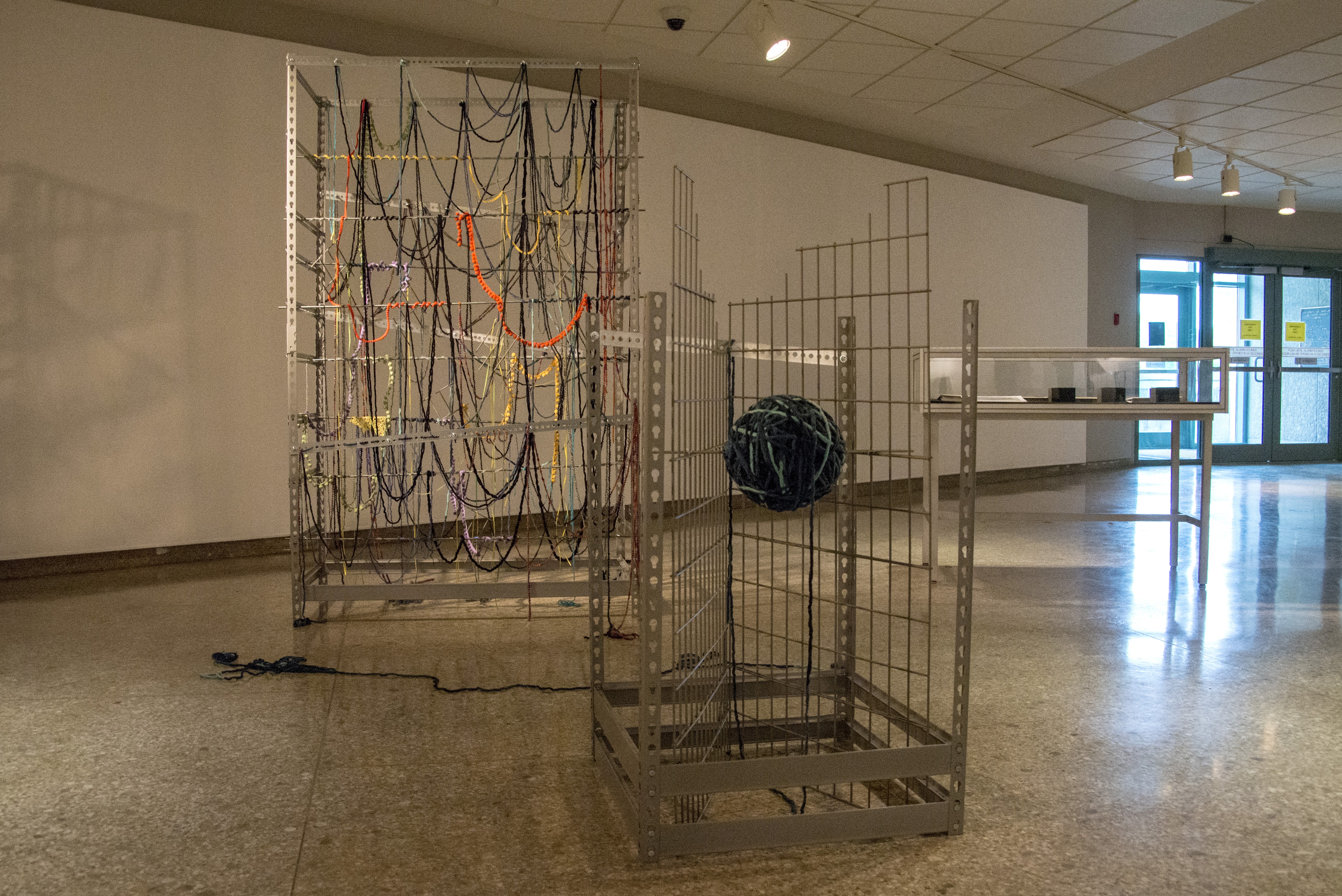
Entering the installation viewers find several workstations, each uniquely presenting a way through rather than a mere reflection of Porter’s working methods and invention. In some, actual artifacts — specimens, images, illustrations, and tools — are embedded within these works alongside the studied re-imaging of the artists.

Porter was the chair of biological sciences at UMBC from 1984 to 1988; today the university’s Keith R. Porter Core Imaging Facility is dedicated to him. He was one of the first scientists to study whole cells and the first to make photographs of tissue cells with the aid of an electron microscope. At the Rockefeller Institute in the 1940s, he produced the first image of an intact cell, made possible by his development of an innovative slicing technique and specimen preparation for viewing and photographing with the electron microscope. The exhibition title “The Glass Knife” refers to the sharp wedge-shaped glass tool he invented.

“It must be evident by now to even the most confirmed skeptic,” Porter said in 1956, “that electron microscopy is destined to have a profound influence on the future development of biology and related sciences.”

His in-depth experience in experimental embryology and histology, along with his talent to interpret these highly magnified images, enabled him to infer the functional activities of cell organelles such as the endoplasmic reticulum (which he discovered and named) and microtubules. Considered among the founders of the modern field of cell biology, Porter was awarded the National Medal of Science in 1977, some referring to him as the “Father of Cell Biology.”

_DSC7046From a research career spanning more that five decades, he accumulated an extensive archive of research images and personal papers. Planning was already underway for a historically contextualized exhibition, but curators Tom Beck and Emily Hauver’s curatorial vision for the exhibition expanded and led them to invite the artists to work with the archive.

Excited to bounce ideas back and forth, Marmor and Bradley’s collaboration began with a list of topics to discuss and consider as they explored the archive: observation, categorization, logic of inquiry, the subjects of inquiry, artifacts, innovation and limitations, bias, and transformation.

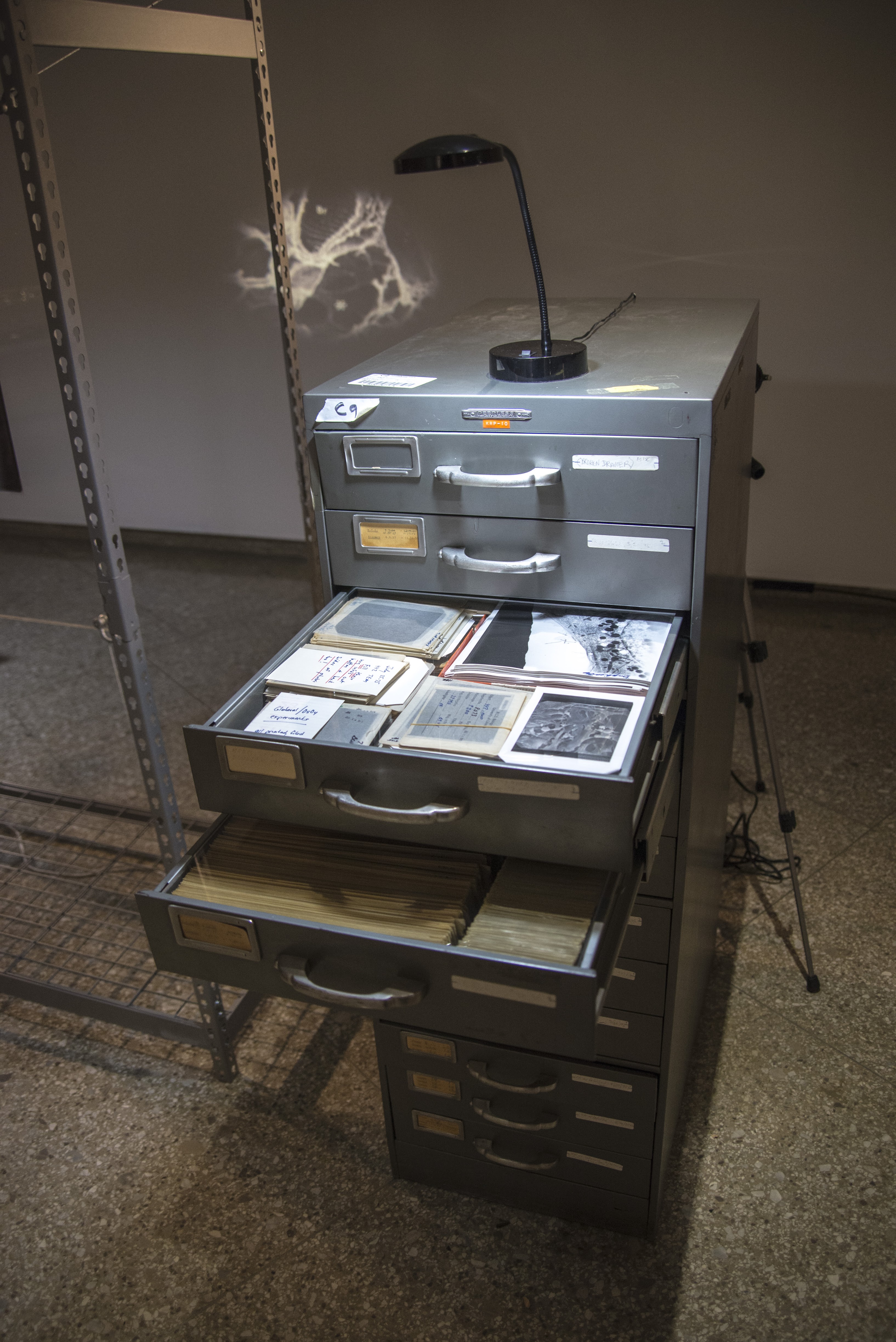
Ultimately they came back to the notion of observation, interpretation and resolution as their framing concept for the series of sculptures they made: an immersive experience through Porter’s archive that would reflect his work and also the man himself. The resulting sculptures in the installation incorporate some artifacts from the archive, but it is the artists’ interpretation through their own processes —  such as sampling images and illustrations to create their own images and gestures in other materials, and recording sound from tools such as an operational electromagnetic electron microscope to create sound elements -— that heighten the experience of discovery in the exhibition.

They selected a mutable metal shelving system as the support structure for many of the sculptures, finding the material worked formally as a reference for the lab setting they intended to invoke with formal qualities that mimic cell structure and their lattice and scaffolding organization.

_DSC7153


Marmor says the exhibition is “a tribute to Porter’s creativity” and Bradley chimes in, adding “and persistence.” He is referring to evidence in the archive that Porter would re-image a cell over and over in an effort to see it more clearly, to push as far as he could to “see.” Both relate as artists to this extended process of repetition and adaption that they saw in Porter’s imaging work and the desire for more and clearer images.

Marmor also calls aspects of her work in the exhibition a “tip of the hat to the women” that worked with Porter. She found examples of their contributions in the archive, including the illustration of the microtrabeculae by Catherine A Verhulst in the exhibition and a photograph of Dr. Mary A Bonneville, Porter’s colleague at University of Colorado, Boulder who operated the electron microscope.

Both artists, says Marmor, wanted to offer a historical glimpse into the “situation of his life, a sense of the man…a guy of the 1950s.” One sculpture includes an x-ray of Porter’s lungs showing the damage from tuberculosis he suffered in the 1940s. In another, a personal letter offers rare insight into the life of a renowned scientist.

Also on view is a complementary exhibition of Life magazines, designed by curator Emily Hauver, illustrating achievement in the sciences in the mid-20th Century. The display contextualizes the era Porter worked in and illustrates the important role scientific imaging was playing is shaping culture around scientific discovery.

The exhibition runs through June 30 in the Albin O. Kuhn Library Gallery. Gallery hours are Monday–Friday10:00–4:30 p.m., and in June open on Sunday: 12:00 p.m.–5:00 p.m.

The Glass Knife is part of SEEING SCIENCE a year long project connecting photography, science and visual culture online and at UMBC through April 2017.

Installation images by Stephen Bradley

Robert Pawloski’s script “Bronze” wins prize at Nashville Film Festival

At film festivals the flickering lights on screen get most of the attention, but film projects also almost universally begin with the written word — either a script or, for documentaries, a detailed synopsis. This essential document serves as both a road map to make the movie and a tool to hunt for necessary funding.

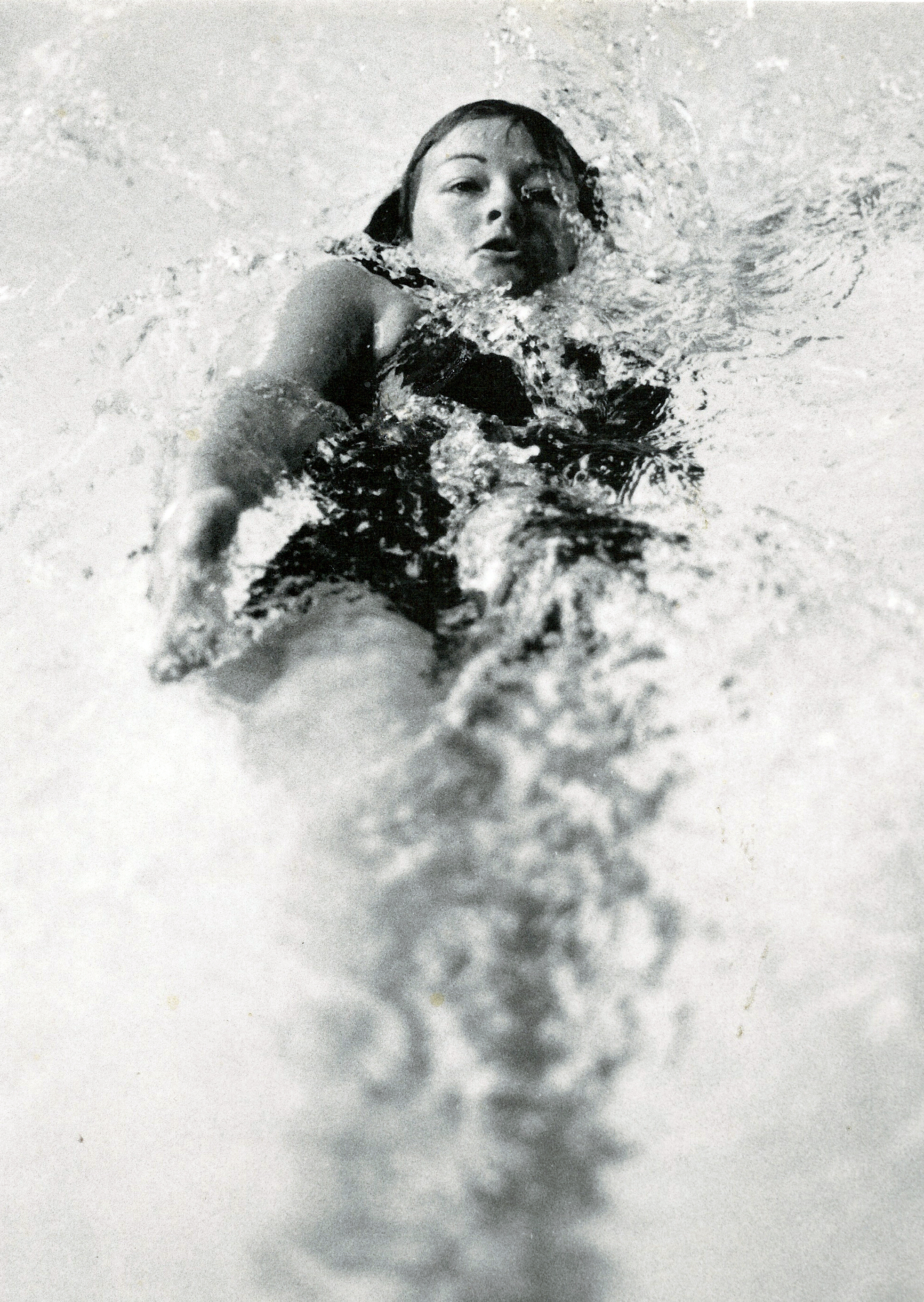
Entering and winning screenwriting competitions can help a film project find the backing needed to move from page to screen. Robert Pawloski ’92, visual arts, and adjunct faculty in visual arts, recently won an award at the Nashville Film Festival Screenwriting Competition for his script Bronze, co-written with Australian writer Kerri-Anne Weston. Bronze, which was the winner in the “Feature: Inspirational” category, is based on Kerri-Anne Weston’s life story: an athletic young woman loses the use of her legs but fights back to win five swimming medals at the 1984 Summer Paralympics in Stoke Mandeville, U.K.

Backstroke bwPawloski, who currently teaches screenwriting, film history and the history of animation, says he met Weston through his work as a story editor, initially helping her craft some early stories she hoped to turn into screenplays.  After she worked with another editor to realize her inspirational story as a book, she returned to adapt the story into a screenplay.

Pawloski explains, “We worked together in a collaborative, back and forth fashion until we felt we had a worthy screenplay.” Asked about what happens next for the project, he says that after the festival win his agent at Zero Gravity Management sent the script to their production department for review. In addition to representing talent, the company is also a full-service production company capable of handling the development, finance, execution, and sale of projects.

Pawloski entered the Nashville Film Festival Competition for the first time in 2015 with Illuminate, a short film script that won Best Dramatic Short Screenplay. He says, “it’s a quirky but touching story of a woman who must find the lost table lamp where she’s convinced her father’s soul resides and honor his dying wishes.” He plans to produce and direct this 20-minute short himself and is preparing to fund-raise.

In addition to teaching, Pawloski is an award-winning screenwriter and story editor with 15 years of experience in Los Angeles before his return to Maryland in 2011. He is still actively writing, rewriting, and polishing screenplays and estimates that since 1996 he has evaluated over 2,000 screenplays for a wide range of clients that have included New Regency and Polygram Films studios, as well as established independent producers. In 2003, he started RP Story Consulting to provide development notes and consulting for writers, directors, and producers at all levels.

The Nashville Film Festival, which ran this year from April 14 to 23, is one of the oldest and largest film festivals in the United States and holds the important distinction of being an Academy Award qualifying festival. In 2016 the festival received over 6,000 entries over the three competitions they run in in film, web series and screenwriting, and 1,500 of those entries were in screenwriting.

Images: Portrait by Catherine Borg; Kerri-Anne Weston swimming, courtesy of Weston.

Cinematic arts student Matt Myslinski presents “Lightyears” at Cannes Film Festival

A student film project can easily fly under the radar as an “extracurricular,” until it lands the filmmaker at one of the most acclaimed international film festivals in the world.

Matthew “Matt” Myslinski ’17, visual arts, the writer and director of the short film Lightyears (2015), is at the 69th Cannes Film Festival this week to screen his film internationally on the French Riviera.  Professor Timothy Nohe, visual arts, notes, “Matt will be missing his final in my Sound Design class, but I think a screening at Cannes is a pretty justifiable excuse.”

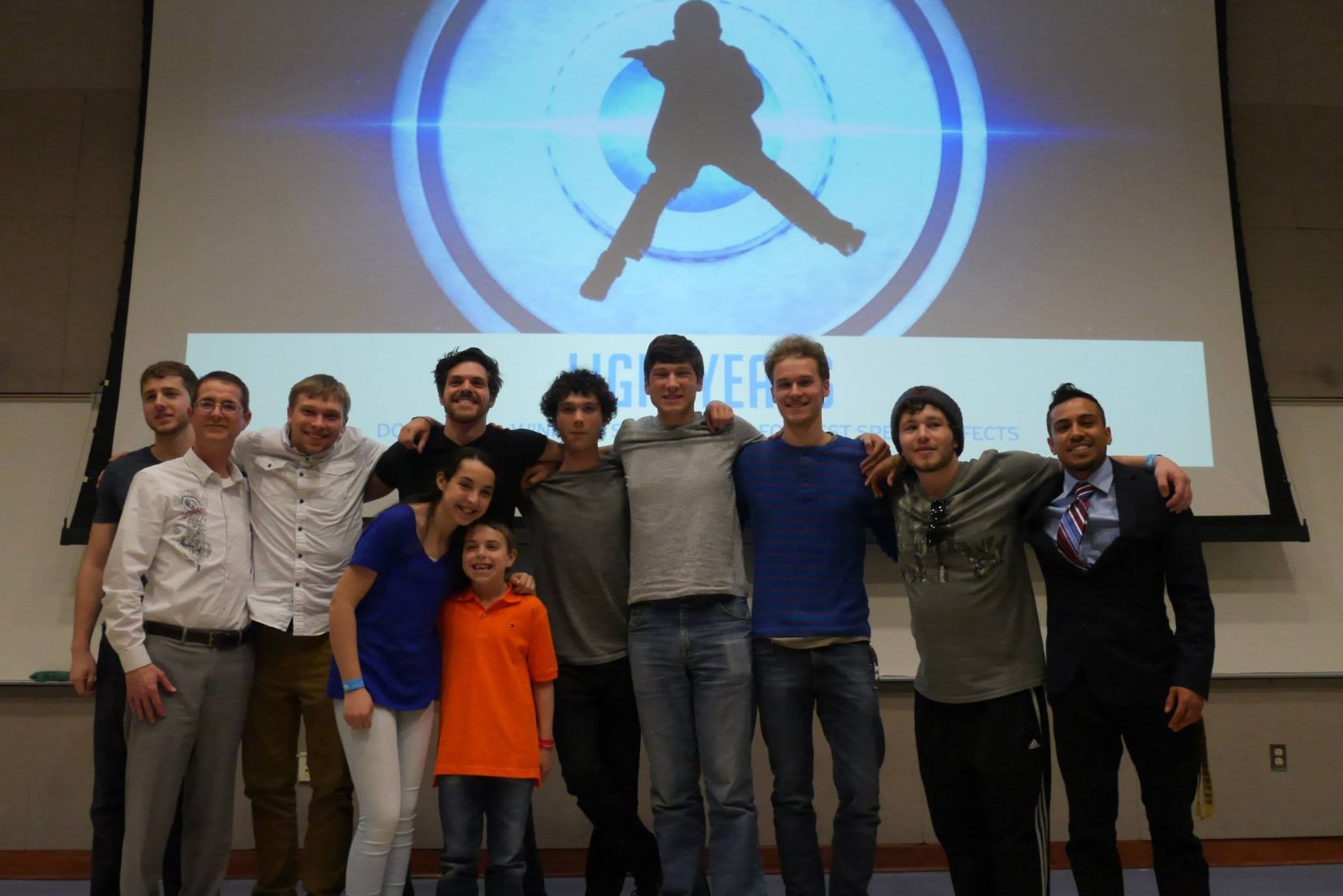
lightyearsMyslinski made Lightyears, with a crew of several other UMBC students collectively as Donut Guy Productions, for the nationwide 2014-15 Campus MovieFest (CMF) competition. As an award winner (Jury Award, GTA Nominee – Special Effects, and Campus Finalist) the film has already been shown in-flight on Virgin America. For the 9th year the top CMF films are also being presented at the Short Film Corner at the Cannes Film Festival.

This is an amazing opportunity for student filmmakers to show their work to thousands of attendees, network with filmmakers from across the globe, and attend workshops about the business of filmmaking. From Cannes via email Myslinski says, “It’s been such a privilege to come out and be a part of it all.”

Campus MovieFest (CMF) is the world’s largest student film festival. Students at over 30 participating colleges and universities compete, creating five-minute films in one week solely with crew from their school. Top films from the campus festivals move on to the Campus MovieFest Grand Finale competition. Lightyears was the Donut Guy group’s third submission to CMF and it competed against 23 films from UMBC.

Myslinski  shares:

The Campus MovieFest has really been a life-changing experience for me. The competition itself is stressful and hectic. But at the end of the day, getting it done and doing what you love with your friends in a highly creative environment like that is what makes it so special. It’s also given me the chance to meet some incredible new friends over the years, and afforded me incredible opportunities to travel and show my work at noteworthy venues…

Asked about what inspired the concept for the film, Myslinski said:

Lightyears was born out of the desire to make a science fiction film. As a student filmmaker, I try to do something different every project I do to gain experience telling a variety of different stories. I had never done a film of that genre and felt as though now was the best time to produce one. The story itself, as well as the tone, was heavily inspired by the British television series Black Mirror as well as science fiction classics like Close Encounters of the Third Kind and Fire in the Sky.

A pivotal scene in the film, likely recognizable to physics majors, was shot in the astronomical observatory atop UMBC’s Physics Building.

Myslinski says his filmmaking began with Lego, making stop motion shorts as a youngster. He gradually developed his skills and won his first film prize in a Howard County film festival open to middle and high school students.

Now working on much more complex film projects, Myslinski speaks passionately about the importance of collaborating with skilled, creative, and committed team. He shares:

I have always been gifted with an incredibly talented group of friends and associates with whom I can collaborate and produce projects…this film was no exception. I worked alongside an immensely talented team of individuals who all brought a unique craft to the table that helped bring this complex story to life. We are a collective who look to push the boundaries of what is possible in student, as well as independent, filmmaking and tell the most compelling stories possible.

lightyearscrew

 
Watch Lightyears online through Campus Movie Fest.

Update: On June 1, 2016, The Baltimore Sun reported that Lightyears would screen at the new Columbia Film Festival.

Images: Courtesy of Matthew Myslinski.


Visiting artists inspire collaboration at UMBC

Award winning composer Susan Botti and poet Linda Gregerson will be on campus this week, presenting several events on April 27 and 28 that highlight their collaboration and interdisciplinary approaches in the arts. These will include a Meet the Composer talk and q&a with with Susan Botti;  Resonating Poetry, Words with Music with Botti and Gregerson discussing the collaborative process of creating a work together; and Twice Told Tales: Adapting Ancient Stories in Contemporary Arts, a talk by Linda Gregerson, currently UMBC writer-in-residence in the English department.

The culmination of their visit to UMBC will be Moon and Myth, a concert of contemporary vocal chamber music by Susan Botti. Renowned musicians Airi Yoshioka (violin), James Wilson (cello), and Carsten Schmidt (piano) will join Botti in her work Dido Refuses to Speak, featuring the poetry of Linda Gregerson. The world premiere of a new work for voice and violin, Mangetsu, commissioned by Yoshioka/UMBC will also be a highlight of the program.

Composer and soprano Susan Botti has an eclectic background which is reflected in her music. Her musical explorations have encompassed traditional, improvisational and non-classical composition and singing styles. Among Botti’s awards are a Guggenheim Fellowship, the Rome Prize, and grants from Meet The Composer, the National Endowment for the Arts, The Aaron Copland Fund, The Mary Flagler Cary Charitable Trust, and the NY Foundation for the Arts. Her commissions include works for the New York Philharmonic, the Orpheus Chamber Orchestra, and the Cleveland Orchestra.

Linda Gregerson is the author of several collections of poetry and literary criticism. She is a Renaissance scholar, a classically trained actor, and a devotee of the sciences. Her awards include the American Academy of Arts and Letters Award in Literature, the Consuelo Ford Award from the Poetry Society of America, three Pushcart Prizes, and the Levinson Prize from Poetry magazine. She has also received fellowships from the Guggenheim Foundation, the Mellon Foundation, the Rockefeller Foundation Bellagio Center, the Institute for Advanced Study, the National Humanities Center, and the National Endowment for the Arts.

These events are sponsored by the Vice President for Undergraduate Education; the Dean of the College of Arts, Humanities, and Social Sciences; the Dresher Center for the Humanities; CIRCA; and the Departments of Music, English, and Ancient Studies:

Wednesday, April 27th, 4:30 p.m.
Meet the Composer: Susan Botti
Music Department Conference Room (246 PAHB)

Thursday, April 28th, 10:00 a.m.
Resonating Poetry, Words with Music: Susan Botti and Linda Gregerson
The Music Box (151 PAHB)

Thursday, April 28th, 4:00 p.m.
Twice Told Tales: Adapting Ancient Stories in Contemporary Arts: Linda Gregerson
Dresher Center Conference Room (216 PAHB)

Thursday, April 28, 2016, 8:00 p.m.
Moon and Myth: Works by Susan Botti
Earl and Darielle Linehan Concert Hall

Images: Left, Susan Botti; Right, Linda Gregerson

Sayre Posey, 2016 Maryland Teacher of Promise, shares how she came to realize love of teaching

Sayre Posey
B.A., History, Education Certificate
Magna Cum Laude
Hometown: Myersville, Maryland
Plans: 9th grade U.S. history teacher in Baltimore City

I am passionate about eliminating inequalities in low-income communities and opening students’ eyes to the amazing world of possibilities available to them, like going to college. UMBC has provided me with ample opportunities to both mentor students in Baltimore and study the achievement gap in high-needs school districts.

Sayre Posey is a Sondheim Public Affairs Scholar and Honors College member graduating with an exceptional academic record and big plans to serve Baltimore City as a history teacher.

Posey has received numerous honors and awards, including the 2016 Joseph Reese Best Essay Prize from the history department; Samson, Rosetta A., and Saddie Feldman Award for demonstrating citizenship through community service; and 2016 Maryland Teacher of Promise award from the Maryland State Department of Education.

A freshman year volunteer experience with The Choice Program at Augusta Fells Savage Institute in Harlem Park helped Posey realized “the only career I wanted…was teaching.” Since then she has served in a several afterschool and summer programs designed to provide enrichment and support for Baltimore students. She has mentored at-risk high school girls with The Choice Program, tutored Burmese students through Refugee Youth Project, spent a year teaching reading and mathematics to elementary and middle school students at the Y of Central Maryland’s College Gardens Youth Program, and worked at the Johns Hopkins University Center for Talented Youth.

sayre-posey

“Volunteering at after-school programs in Baltimore was a central part of my UMBC experience, and I can credit the myriad of service opportunities through The Shriver Center for sparking my passion for teaching,” says Posey.

This spring Posey completes her student teaching internship at Patapsco Middle School, teaching 8th grade U.S. history. She has accepted a placement to teach 9th grade U.S. history in the fall at Edmondson-Westside High School, a Baltimore City public school.

Images: Sayre Posey with her students at the College Gardens Youth Program before the annual Turkey Trot around the Irvington/Beechfield neighborhood; photo courtesy Sayre Posey. Portrait by Marlayna Demond ‘11 for UMBC.

Samuel Winnie, Linehan Artist Scholar, to continue music composition studies in the Netherlands

Samuel “Sam” Winnie
B.A., Music Composition
Summa Cum Laude
Hometown: Joppa, Maryland
Plans: Graduate studies in music composition at the Hogeschool voor de Kunsten Utrecht

UMBC has provided countless opportunities for me to travel, learn, collaborate, and develop my craft.

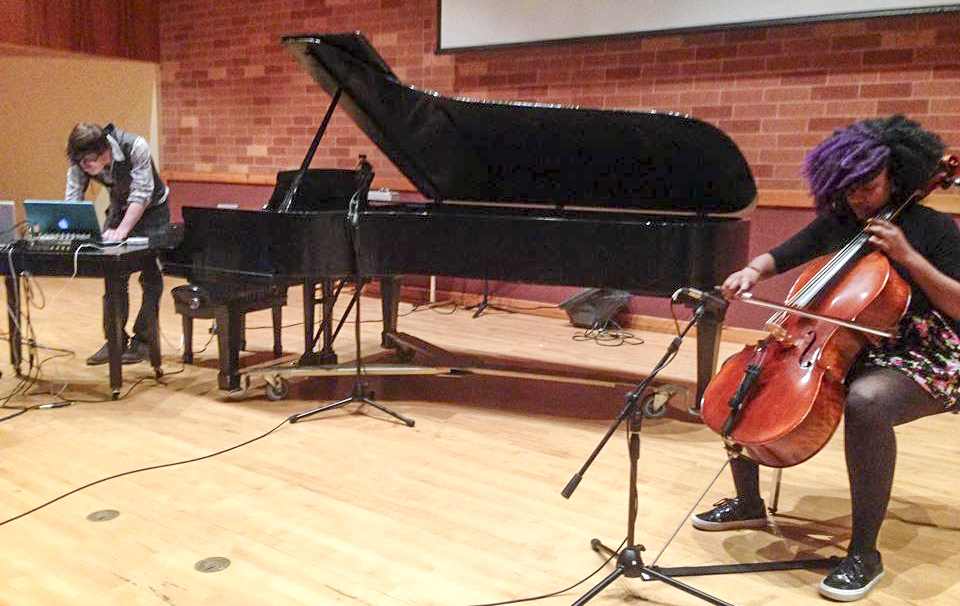
Sam Winnie is a trombonist, bass player, and composer—a multi-talented musician who has collaborated with dancers, filmmakers, and game developers. His work has been recognized by fellow musicians in his field. Most recently, the jury of the National Student Electronic Music Event accepted a piece of his for performance at the University of Oklahoma.

samuel-winnie

Winnie is Linehan Artist Scholar, recipient of the UMBC Achievement Award, and member of Phi Kappa Phi Honors Society and the National Society of Collegiate Scholars.

For his study abroad experience he attended the Conservatorio G. Nicolini in Piacenza, Italy. Since then he has worked in UMBC’s Study Abroad office, assisting other students in developing their plans for enriching study abroad experiences. Winnie will return to Europe for graduate studies in music composition at the Hogeschool voor de Kunsten Utrecht in the Netherlands this fall.

Images: Sam Winnie and cellist Chanel Whitehead at the University of Oklahoma, performing a work for solo cello and live electronics for the National Student Electronic Music Event; photo courtesy Sam Winnie. Portrait by Marlayna Demond ’11 for UMBC.

Avanti Mehta, Sondheim Public Affairs Scholar heading to medical school, says UMBC taught her grit and perseverance

Avanti Mehta
B.A., Anthropology
Cum Laude
Hometown: Clarksburg Maryland
Plans: M.D., George Washington University School of Medicine

“My sophomore year was incredibly difficult…medical school seemed impossible. I considered lightening my course load [but] my faculty and staff mentors disagreed; they told me that I hadn’t worked so hard for so many years to take the safe route… It was an incredibly difficult semester but I…learned that I thrived under pressure. Now, as a senior on my way to medical school in the fall, I can say with confidence that I look forward to all the challenges that life throws my way because UMBC has taught me to have grit and always persevere.”

Avanti Mehta has a lot to be proud of during her time as a Sondheim Public Affairs Scholar and Honors College member at UMBC: making Dean’s List and President’s List, serving as vice president of the Oxfam Club and vice president of the Phi Mu Fraternity for Women. But she shares that the greatest reward she takes with her as she graduates from UMBC is her grit.

Mehta’s mother earned her Ph.D. at UMBC in molecular biology in 1993, so she grew up hearing stories about UMBC her entire life. When Mehta herself became a Retriever, she enjoyed all of the opportunities UMBC offered, but sometimes found it challenging to balance her diverse interests. Mehta was one of the first Sondheim Scholars on the pre-med track; she enjoyed studying anthropology, biology, and Spanish, she worked on campus and served as a student coordinator for an education-based Latino outreach group through the Shriver Center.

Sometimes Mehta’s confidence in her ability to juggle it all waivered. At one point, Mehta realized that because her mother graduated from UMBC, the Albin O. Kuhn Library would have a copy of her dissertation. In moments of stress, Mehta would work in that library, studying near her mother’s dissertation to draw strength from her mother’s experience completing a Ph.D. while working full-time and starting a family. She shares that her mother’s legacy has inspired her to always strive to become her best self.

Mehta will attend medical school at George Washington University this fall. She also plans to earn a master’s of public health to better support medically underserved populations.

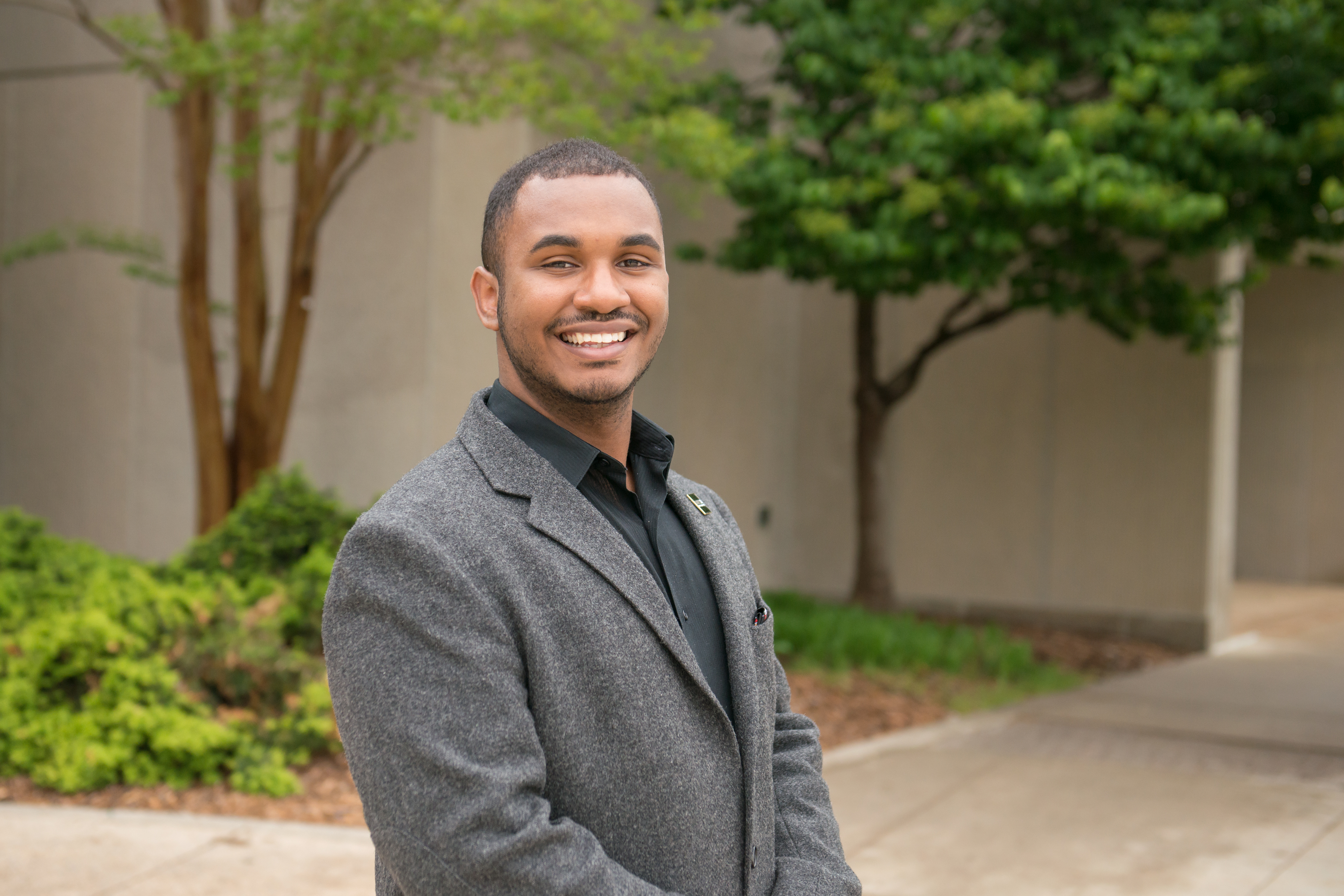
Image: Portrait by Marlayna Demond ‘11 for UMBC.

Markus Proctor, founder of EduPal, is ready for career as an entrepreneur

Markus-Proctor-1228

Markus Proctor
B.S., Interdisciplinary Studies
Cum Laude
Upper Marlboro, Maryland
Plans: CEO of EduPal, Inc.

UMBC is an institution that fosters academic excellence, inspires creative thinking, and nurtures character in every student. There are opportunities for students to achieve their highest academic potential at UMBC no matter what their goals are in life. UMBC has allowed me to craft my own journey through the INDS program and that has prepared me more than I could have ever imagined.

Markus Proctor is walking the walk with his interdisciplinary studies degree. He created his own major, Technology Entrepreneurship and Organization Management, not just to prepare for a career as a tech entrepreneur, but while founding and building his own company: EduPal, Inc.

Proctor’s work on EduPal has already earned him several accolades, including 3rd prize in the Cangialosi Business Innovation Competition, 2015-16 UMBC Entrepreneur Scholar of the Year, 2015-16 PNC Entrepreneur Scholar, and 2nd prize in the SEFA National Design Competition. He is also the 2015-16 Joseph and Frieda Faiman Eisenberg/VPC Scholar and was featured as a speaker on the panel “Youth and Diversity in Entrepreneurship” at Baltimore’s inaugural Light City U Creative Innovation Conference in April 2016.

Proctor plans to continue operating EduPal after graduation, transitioning it into a nonprofit “that provides free, innovative technology for students in order to support their rise to academic and career excellence.”

In addition to his entrepreneurial work, Proctor has served as vice president of the Interdisciplinary Studies Council of Majors. He has been invited to serve with the UMBC Alumni Council, UMBC’s Chapter of Black & Latino Alumni, and the Baltimore Emerging Leaders Roundtable.

Images: Markus Proctor with his mentors Greg Cangialosi ’96, English, and Vivian Armor ’73, American Studies; photo courtesy of Markus Proctor. Portrait by Marlayna Demond ‘11 for UMBC.

Brielle Levenberg, distinguished artist and scholar, eager to begin career in theatre

brielle-levenberg-1149

Brielle Levenberg
B.F.A., Acting; B.A., Modern Languages and Linguistics
Summa Cum Laude
Hometown: Greenlawn, New York
Plans: Teaching at From Stage to Screen Performing Arts Academy and auditioning for roles in New York

Every professor demonstrates support and encouragement for the success of all of their students. The theatre department in particular has prepared me for a career. Since the department conducts all classes, rehearsals, and shows as if they were professional productions, there are no surprises when entering the field.

Brielle Levenberg has excelled in her academic and artistic undergraduate career. A Premiere Award launched her time at UMBC and she has continued to distinguish herself as a member of the Honors College, Phi Kappa Phi and Phi Beta Kappa, with a 4.0 GPA. Her numerous awards include the 2015 Theatre Department Award for Outstanding Academic Achievement, 2016 Theatre Department Award for Outstanding Achievement in Performance, and 2016 Modern Languages and Linguistics Overall Academic Achievement Award.

Levenberg has been an active student leader, serving the Musical Theatre Club as president, 2014-2016, and as treasurer for the AF Theatre Company. She was nominated for the Irene Ryan Acting Competition at the Kennedy Center American College Theatre Festival for Region II based on her work in the world premiere of Voracious by Susan McCully, senior lecturer in theatre.

After graduation Levenberg plans to audition for roles in the New York area, and to teach and work as an administrator at From Stage to Screen Performing Arts Academy in Huntington, New York. Levenberg eventually plans to pursue TV and film work in California.

Images: Theatre’s 2013 performance of Eurydice, Brielle Levenberg’s first production at UMBC. “I am reaching forward in the picture, which says to me that the best is yet to come.” Photo courtesy of Brielle Levenberg. Portrait courtesy of Marlayna Demond ‘11 for UMBC.